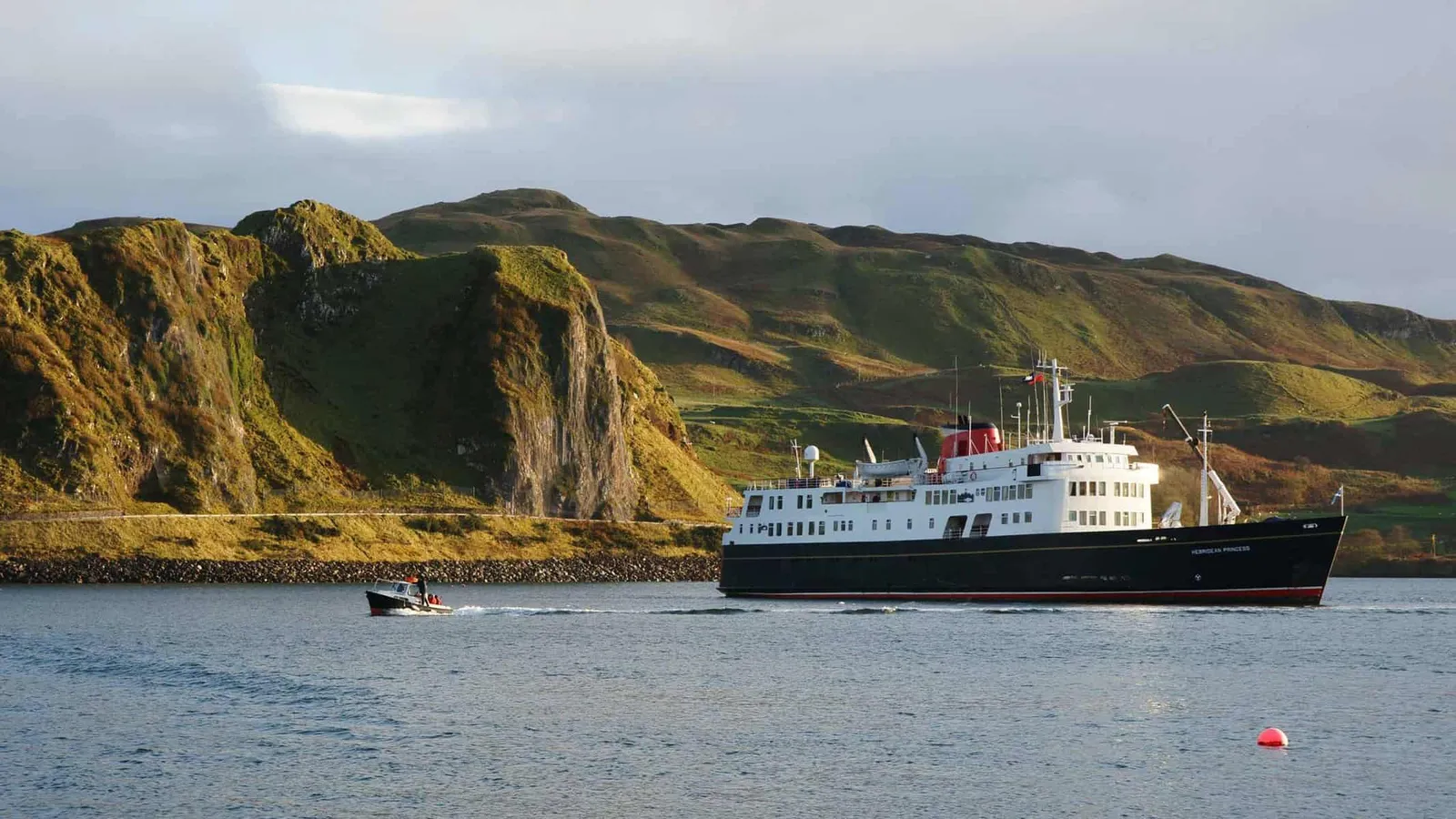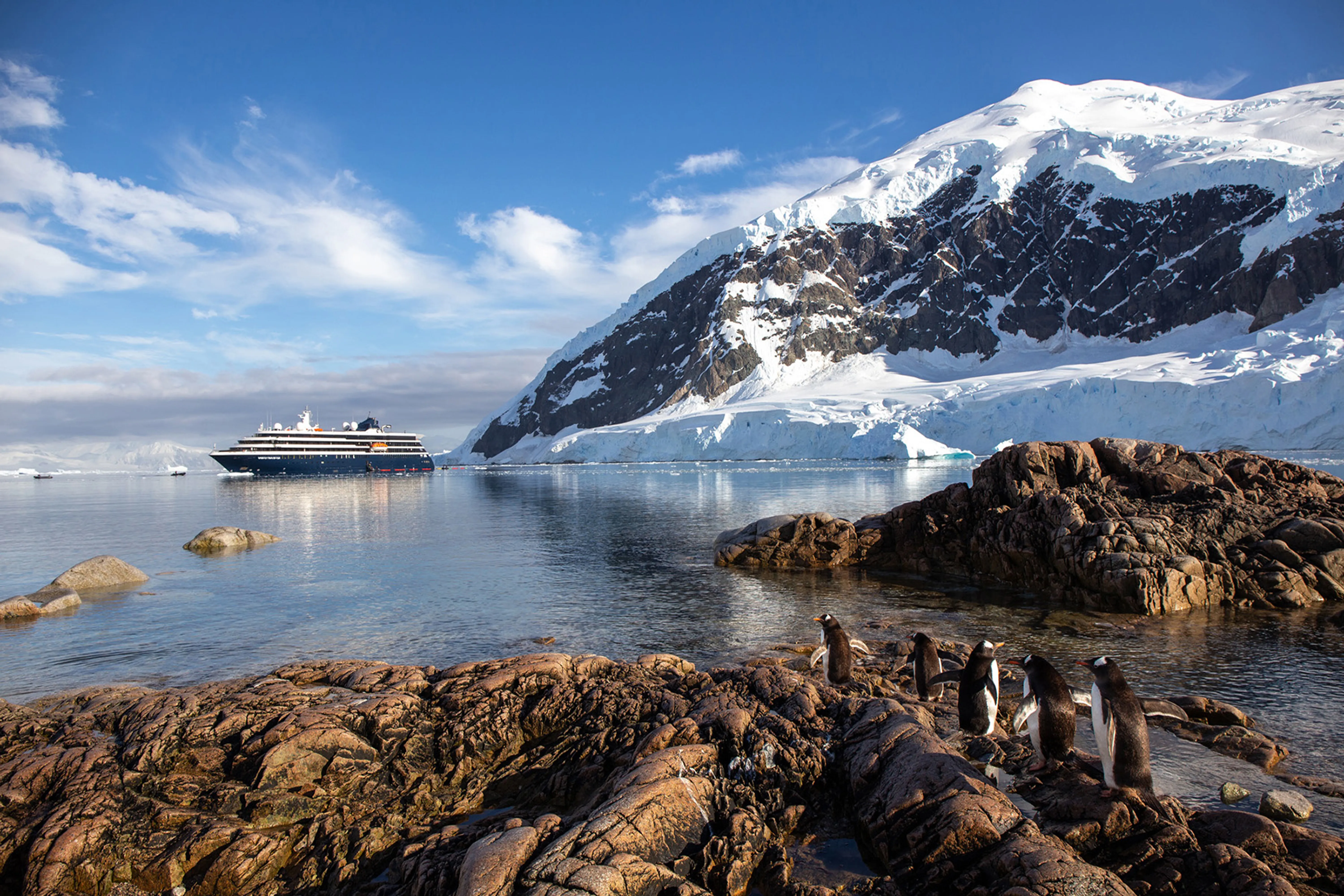
Atlas Ocean Voyages and Windstar Cruises both deliver small-ship, casual-luxury cruising — but they approach it from entirely different directions. Atlas is an expedition line with polar-class vessels, Zodiac landings, and included flights. Windstar is a sailing heritage line with computer-controlled sails, a watersports marina, and the romance of wind-assisted cruising. Jake Hower compares what each line offers Australian travellers choosing between polar adventure and barefoot elegance.
| Atlas Ocean Voyages | Windstar Cruises | |
|---|---|---|
| Category | Expedition / Luxury | Yacht-Style / Luxury |
| Rating | ★★★★☆ | ★★★★☆ |
| Fleet size | 3 ships | 7 ships |
| Ship size | Small (under 500) | Yacht (under 300) |
| Destinations | Antarctica, Arctic, Mediterranean, Caribbean | Mediterranean, Caribbean, Alaska, French Polynesia |
| Dress code | Resort casual | Resort casual |
| Best for | All-inclusive luxury expedition travellers | Romantic small-ship and sailing enthusiasts |
Atlas Ocean Voyages is the right choice for travellers drawn to polar expedition and off-the-beaten-path adventure — the included flights, Zodiac landings, and polar-class ships deliver genuine expedition capability wrapped in casual luxury for just 196 guests. Windstar is the right choice for travellers seeking the romance of sailing, hidden Mediterranean harbours, and active watersports — the computer-controlled sails, retractable marina platform, and year-round Tahiti programme create an experience no other line replicates. Both are intimate, both are casual, and both reject the mega-ship model entirely. For Australians wanting Antarctica or the Arctic, Atlas. For Australians wanting Tahiti, the Med, or Japan under sail, Windstar.
The core difference
Atlas Ocean Voyages and Windstar Cruises both promise intimate, casual-luxury cruising on small ships — but the similarity ends at the gangway. These are fundamentally different products built for fundamentally different travellers, and understanding that distinction before booking will save you from choosing the wrong one.
Atlas is an expedition line. Founded in 2019 and operating under the Mystic Invest Holdings umbrella (a Portuguese maritime conglomerate), Atlas runs three expedition ships carrying approximately 196 guests each. The ships carry polar-class ratings, Zodiac landing craft, and expedition teams comprising naturalists, marine biologists, and polar historians. The defining commercial proposition is the included international flights — Atlas bundles airfare into its expedition packages, eliminating one of the largest ancillary costs in polar travel. The cuisine reflects the Portuguese heritage of the ownership group, and the atmosphere is deliberately casual, adults-oriented, and expedition-focused. You are here for the ice, the wildlife, and the Zodiac landings — the ship is your base camp, not your destination.
Windstar is a sailing line. Operating since 1986, now owned by Xanterra Parks and Resorts, Windstar runs seven ships across three classes — and three of them carry actual sails. Wind Surf (342 guests), Wind Star (148 guests), and Wind Spirit (148 guests) are motorised sailing yachts with computer-controlled sails that unfurl at every departure and deploy whenever conditions permit. The Star Plus class motor yachts (Star Breeze, Star Legend, Star Pride, each 312 guests) and the new-build Star Seeker (224 guests, arriving 2026) complete the fleet. Windstar’s identity is barefoot elegance — watersports marinas that lower into the ocean, the James Beard Foundation culinary partnership, Candles dining under the stars, and access to harbours that even Atlas’s expedition ships do not visit. You are here for the romance of sailing, the Mediterranean sunset, and the hidden harbour.
For Australian travellers, the practical question is destination-driven. If Antarctica, the Arctic, or polar expedition is your goal, Atlas is purpose-built for it. If Tahiti, the Mediterranean, Japan, or warm-water cruising under sail is your priority, Windstar delivers an experience that no other line can replicate.
What is actually included
The inclusion models reflect the different market positions — Atlas bundles aggressively to simplify expedition pricing, while Windstar offers a base fare with an optional All-In add-on.
Atlas Ocean Voyages includes international flights from nominated gateway cities, all dining, an open bar (beer, wine, spirits, cocktails), Wi-Fi, gratuities, Zodiac excursions and expedition landings, kayaking on expedition sailings, a complimentary expedition parka on polar voyages, and port charges. The bundled flights are the standout — positioning to Ushuaia or Longyearbyen typically costs AUD $2,000 to $4,000 per person, and Atlas absorbs that cost. Spa treatments and premium shore excursions beyond the standard expedition programme are additional.
Windstar’s base fare includes all dining across every restaurant without surcharges, 24-hour room service, non-alcoholic beverages including speciality coffees, complimentary watersports marina access (kayaks, paddleboards, snorkelling gear, water skiing), group fitness classes, and onboard enrichment. The base fare excludes alcoholic beverages, Wi-Fi, and crew gratuities (USD $16 per person per day). The All-In package bundles unlimited beer, wine, cocktails, and spirits, unlimited Wi-Fi for two devices, and prepaid gratuities for USD $99 per person per day when purchased before sailing.
The net effect: Atlas is more comprehensively inclusive — flights, drinks, tips, and expedition activities all bundled. Windstar requires the All-In package to reach comparable beverage and gratuity inclusion, but the base fare already covers all dining and the watersports marina. For a 10-night voyage, the All-In package adds roughly AUD $1,600 per person to the Windstar total.
Dining and culinary experience
Both lines serve quality food to small passenger counts, but the culinary philosophies diverge significantly.
Atlas draws on its Portuguese ownership heritage. The dining programme features regional Portuguese and Mediterranean-influenced cuisine alongside international dishes. The main restaurant serves open-seating meals with menus that reflect the expedition itinerary — expect local ingredients and regional specialities when sailing warmer waters, hearty fare during polar voyages. The intimate scale means the kitchen is cooking for fewer than 200 guests, which translates to fresher preparation and more attentive service. There is no speciality dining surcharge — all venues are included.
Windstar’s culinary programme is anchored by the James Beard Foundation partnership, now in its eleventh year. On every sailing, the dinner menu at Amphora features a rotating Signature Recipe from the cruise’s resident James Beard Foundation-affiliated chef, built around local market ingredients. Select sailings bring James Beard Award-recognised chefs aboard for cooking demonstrations, hosted dinners with wine pairings, and local market tours. Candles, the signature open-air restaurant on the Star Deck, serves steak and seafood under the stars — consistently cited as one of the most romantic dining experiences at sea. Cuadro 44 by Anthony Sasso serves Spanish-influenced cuisine on Star Plus class ships, transitioning to Basil + Bamboo on Star Seeker. Star Seeker introduces five dining venues in total, all included.
The culinary edge goes to Windstar. The James Beard Foundation partnership provides genuine chef-driven pedigree, Candles under the stars has no equivalent on Atlas, and the venue count is higher. Atlas feeds you well with honest, well-prepared cuisine — but Windstar has made food a defining element of the brand.
Suites and accommodation
The accommodation comparison reflects different ship design priorities — Atlas builds for expedition practicality, Windstar builds for yacht-style comfort.
Atlas staterooms are functional and well-appointed, designed for travellers who spend their days on Zodiac excursions, kayaking, and expedition landings rather than in their cabins. Entry-level staterooms offer comfortable twin or double configurations with en-suite bathrooms, ocean views, and adequate storage for expedition gear. Suite categories provide larger living spaces with sitting areas. The ships are relatively new and the fit-out is contemporary.
Windstar’s Star Plus class ships are all-suite vessels with entry-level suites starting at 277 square feet. Classic Suites offer 400 square feet with separate bedroom and living areas. Owner’s Suites span 575 to 820 square feet. The sailing yachts are more compact — Wind Surf’s deluxe suites reach 376 square feet with two bathrooms, while Wind Star and Wind Spirit carry staterooms at approximately 188 square feet with portholes rather than windows. Star Seeker introduces twelve suite categories, from Oceanview Suites with queen beds to Horizon Owner’s Suites at 796 square feet with wrap-around verandahs.
For cabin comfort and variety, Windstar wins — particularly on the Star Plus class and Star Seeker, where the accommodation approaches luxury-line standards. Atlas’s accommodation is expedition-practical rather than resort-luxurious, which is entirely appropriate for its purpose.
Pricing and value
The pricing comparison requires accounting for what is bundled — and Atlas’s included flights significantly alter the arithmetic.
Atlas expedition voyages run approximately AUD $800 to $1,400 per person per night, depending on destination, cabin category, and season. A 10-night Antarctic expedition might cost AUD $12,000 to $18,000 per person all-inclusive — with flights, drinks, gratuities, and expedition activities bundled. Strip out the flight component (roughly AUD $2,000 to $4,000 per person for polar positioning), and the cruise-only per-diem runs roughly AUD $600 to $1,100 per night. This represents competitive expedition pricing.
Windstar’s per-diem varies by ship class and destination. Entry-level pricing on Wind Class sailing yachts starts from approximately USD $250 to $400 per person per night for 7-night Mediterranean or Caribbean itineraries. Star Plus class ships command a slight premium. Adding the All-In package (USD $99 per person per day) brings the total per-diem to approximately AUD $500 to $750. Star Seeker pricing reflects its new-build status.
These lines do not truly compete on price because they serve different purposes. Atlas’s value proposition is expedition simplification — one price covers everything including flights. Windstar’s value proposition is sailing romance and culinary quality at a competitive small-ship per-diem. Compare Atlas to other expedition lines and Windstar to other yacht-style operators for a meaningful price assessment.
Spa and wellness
Both lines offer spa facilities scaled to their intimate ship sizes, though neither is a wellness-focused brand.
Atlas ships carry compact spa facilities with treatment rooms offering massages, facials, and body treatments. The fitness centre provides basic equipment. The expedition focus means the wellness offering is practical — stretch after a day of Zodiac landings, receive a massage after kayaking. The ships carry outdoor observation areas and hot tubs suited to polar-viewing relaxation.
Windstar’s spa offering varies by ship class. Star Plus class ships feature the World Spa with treatment rooms, sauna, steam room, therapy shower, heated loungers, and fitness equipment. Star Seeker elevates the experience with a full-service spa and modern fitness facility. On the sailing yachts, spas are more compact. The standout wellness differentiator is the watersports marina — kayaking, paddleboarding, snorkelling, sailing, and water skiing from the ship’s retractable stern platform. For active, ocean-based wellness, Windstar has no peer in this comparison.
Entertainment and enrichment
Neither line sells itself on evening entertainment — both are destination-focused operations where the journey and surroundings provide the spectacle.
Atlas’s enrichment programme is expedition-driven. Naturalists, marine biologists, historians, and expedition leaders deliver lectures, briefings, and guided landings. The enrichment is the expedition itself — Zodiac outings to penguin colonies, kayaking past icebergs, polar bear sightings from the observation deck. Evening talks recap the day’s discoveries and preview tomorrow’s landings. The atmosphere after dark is quiet and social — cocktails, conversation, and the shared intensity of expedition travel.
Windstar’s enrichment is destination-focused and experiential. The James Beard Foundation culinary sailings bring guest chefs for cooking demonstrations and market tours. Local musicians and cultural performers come aboard in port. The signature sail-away ceremony — watching the computer-controlled sails unfurl as the ship departs — is genuine theatre that no other cruise line offers. The deck barbecue on warm-weather itineraries adds casual social energy. Evenings feature acoustic music in the lounges. There are no production shows, no casino, no formal nights.
Both lines reward travellers who are interested in where they are going rather than what happens onboard after dinner. Atlas adds the intensity of expedition. Windstar adds the romance of sailing.
Fleet and destination coverage
The fleets serve almost entirely non-overlapping geographies, which makes this comparison more about choosing your destination than choosing your line.
Atlas Ocean Voyages operates three expedition ships carrying approximately 196 guests each, with polar-class ratings suitable for Antarctic and Arctic operations. The fleet deploys across Antarctica, the Arctic (Svalbard, Greenland, Iceland), and seasonal warm-water expedition destinations. The focus is expedition-first — these ships go where ice, wildlife, and remote landings demand purpose-built vessels.
Windstar operates seven ships across three classes (growing to eight with Star Explorer in 2026). Wind Spirit operates year-round from Papeete in French Polynesia. Wind Surf sails the Mediterranean and Caribbean under five masts of sail. Star Plus class ships cover the Mediterranean, Alaska, Japan, Australia, and the Caribbean. Star Seeker adds ice-strengthened expedition capability while maintaining the yacht-style experience. The fleet visits over 330 ports worldwide.
For Australian travellers, Windstar offers greater destination breadth and year-round Tahiti departures with a direct 8-hour flight from Sydney. Atlas serves the polar-expedition niche that Windstar cannot reach. The lines are complementary rather than competitive.
Where each line excels
Atlas Ocean Voyages excels in:
- Polar expedition. Purpose-built polar-class ships with Zodiac fleets, kayaking programmes, and expedition teams deliver genuine ice-edge capability.
- Included flights. Bundled international airfare eliminates one of the largest ancillary costs in expedition cruising and simplifies budget planning.
- All-inclusive expedition pricing. Flights, drinks, gratuities, and expedition activities in one fare — no arithmetic required.
- Intimate expedition scale. At 196 guests, the ships are small enough for meaningful Zodiac landing rotations and personal attention from the expedition team.
Windstar excels in:
- Sailing heritage. The only cruise line operating motorised sailing yachts with computer-controlled sails. The sail-away ceremony and wind-assisted cruising create an emotional connection no motor vessel can replicate.
- Watersports marina. Complimentary kayaking, paddleboarding, snorkelling, sailing, and water skiing from the retractable stern platform — unique in the upper-premium segment.
- Culinary programme. The James Beard Foundation partnership and Candles under-the-stars dining deliver genuine chef-driven pedigree.
- Year-round Tahiti. Wind Spirit operates from Papeete permanently — the most accessible luxury South Pacific cruise for Australians, with direct flights from Sydney.
- Port access. The smallest Windstar ships anchor in harbours and coves that even expedition ships do not typically visit — hidden Greek islands, intimate Caribbean bays, shallow Polynesian lagoons.
Standout itineraries for Australian travellers
Atlas Ocean Voyages
Antarctic Explorer (10–14 nights, departing Ushuaia, November–March season). The signature Atlas expedition with included flights to the gateway city, Zodiac landings on the Antarctic Peninsula, kayaking among icebergs, and wildlife encounters with penguins, seals, and whales. Australian travellers connect via Buenos Aires or Santiago.
Arctic Svalbard (8–12 nights, departing Longyearbyen, June–August). Polar bear territory in the high Arctic. Zodiac cruising among glaciers, walrus colonies, and Arctic fox sightings. Included flights from nominated European gateways. Connect from Australian cities via London or Oslo.
Windstar
Wind Spirit: Tahiti and French Polynesia (7 nights, year-round, roundtrip Papeete). The 148-guest sailing yacht explores Moorea, Raiatea, Taha’a, Bora Bora, and Huahine under sail. Air Tahiti Nui operates direct Sydney to Papeete flights in approximately 8 hours. The most accessible luxury South Pacific cruise for Australians.
Star Seeker: Alaska (7–12 nights, May–August 2026, Vancouver to Juneau or Seward). The new-build 224-guest vessel brings ice-strengthened capability and Signature Expeditions including hiking, kayaking, and skiff outings. Connect via Air Canada or Qantas to Vancouver.
Star Breeze: Australia and New Zealand (seasonal, from Sydney, Melbourne, or Cairns). Coastal voyages and trans-Tasman crossings on the all-suite 312-guest motor yacht. No international flights required for departure.
Wind Surf: Mediterranean (7 nights, multiple departures, roundtrip Rome or Athens). The world’s largest motor-sailing yacht exploring the Italian and French Rivieras, Greek islands, and Dalmatian coast under five masts of sail.
Ship-by-ship recommendations
Atlas Ocean Voyages
Any of the three ships delivers a consistent expedition experience at 196 guests. The ships are purpose-built for polar and expedition operations with Zodiac fleets and expedition infrastructure. Choose based on itinerary and departure date rather than ship — the onboard product is consistent across the fleet.
Windstar
Wind Spirit (148 guests) — The year-round Tahiti yacht. Four masts of computer-controlled sails, 101 crew for 148 guests, and the watersports marina in lagoon waters. The purest Windstar experience.
Wind Surf (342 guests) — The flagship sailing yacht and the world’s largest motor-sailing vessel. Five masts and the most spacious sailing yacht accommodation. Choose for Mediterranean and Caribbean.
Star Breeze (312 guests) — The all-suite motor yacht deployed for Australian and New Zealand seasons. Entry-level suites from 277 square feet. The closest-to-home Windstar experience.
Star Seeker (224 guests, arriving 2026) — The first purpose-built Windstar vessel with ice-strengthened hull, twelve suite categories, and five dining venues. Choose for Alaska and Japan.
For Australian travellers specifically
Windstar is more accessible for Australians on several dimensions. Star Breeze has sailed from Sydney, Melbourne, and Cairns on seasonal deployments. Wind Spirit operates year-round from Papeete with a direct 8-hour Air Tahiti Nui flight from Sydney — one of the shortest international connections to any luxury cruise. Windstar maintains an Australian website (windstar.com.au) with AUD pricing through Travel the World Group, the line’s General Sales Agent in Australia for over thirty-eight years.
Atlas requires more planning from Australia. The included flights originate from Northern Hemisphere gateways, so Australians must book connecting flights to reach the departure city. Antarctic sailings from Ushuaia require routing via Buenos Aires or Santiago — roughly 18 to 22 hours from Australian east coast cities. Arctic sailings require European connections. The value of the included flights remains significant, but the journey to the starting point is longer.
Currency and budgeting favour Windstar for domestic and Tahiti sailings priced in AUD through Australian channels. Atlas packages are typically denominated in USD, and the AUD-to-USD exchange rate around 0.62 to 0.64 amplifies the sticker price. Both lines benefit from early-booking promotions that can meaningfully reduce total cost.
The onboard atmosphere
Atlas’s atmosphere is expedition-focused and social. With just 196 guests, everyone shares the intensity of expedition landings, wildlife encounters, and polar landscapes. The crew-to-guest ratio enables personal attention. Dress code is resort casual — expedition gear during the day, comfortable clothing at dinner. No formal nights. The passenger demographic is well-travelled, adventurous, and drawn to genuine exploration. Evenings are quiet — recap lectures, cocktails, and early nights before the next day’s Zodiac programme. The atmosphere rewards curiosity and physical engagement with the destination.
Windstar’s atmosphere is barefoot elegance. With never more than 342 guests — and just 148 on the sailing yachts — the intimacy is pronounced. Staff know your name by the second day. The Yacht Casual dress code means sundresses and sandals. No formal nights, no casino, no pretension. The passenger mix includes couples, honeymooners, and active travellers drawn to the watersports marina and sailing heritage. Evenings feature acoustic music, cocktails on the open deck watching the sails, and dinner at Candles under the stars. The atmosphere is quietly romantic and adventurous without being physically demanding.
The bottom line
Atlas Ocean Voyages and Windstar Cruises share a commitment to small-ship, casual-luxury cruising with no formal nights and genuine intimacy — but they serve entirely different travel motivations.
Choose Atlas when polar expedition is the purpose of your cruise. Choose it for Zodiac landings on the Antarctic Peninsula, kayaking among Arctic icebergs, and the simplicity of included flights, drinks, and gratuities in one expedition fare. Accept that the ships are functional rather than resort-luxurious, that the dining is honest rather than chef-driven, and that reaching the departure port from Australia requires significant transit.
Choose Windstar when the romance of sailing, the warmth of the watersports marina, and the intimacy of a yacht-style experience drive your decision. Choose it for year-round Tahiti with a direct flight from Sydney, for the James Beard Foundation culinary programme, for Candles under the stars, and for the unforgettable sight of computer-controlled sails catching the wind at every departure. Accept that alcoholic drinks, Wi-Fi, and gratuities cost extra unless you purchase the All-In package, and that the sailing yachts are three to four decades old.
For Australian travellers, these lines complement perfectly. A Windstar Tahiti sailing for the romance, followed by an Atlas Antarctic expedition for the adventure, covers two of the world’s most compelling cruise experiences from a single Australian starting point. I recommend both to different clients for different reasons, and neither has ever disappointed when matched to the right traveller.