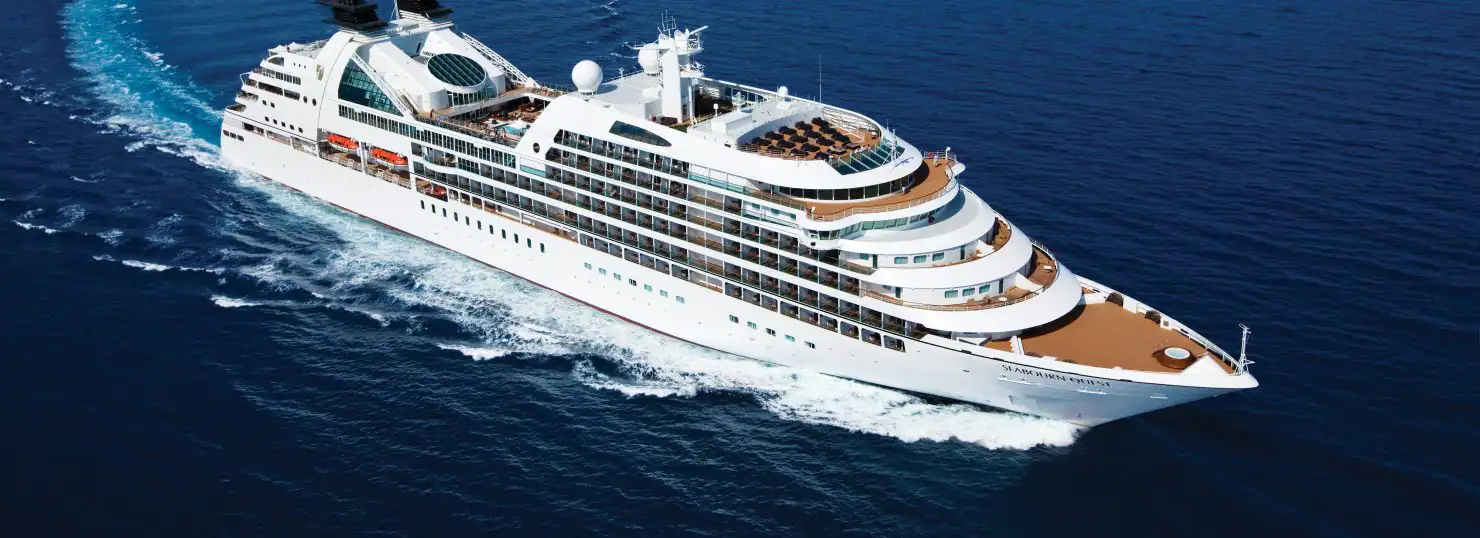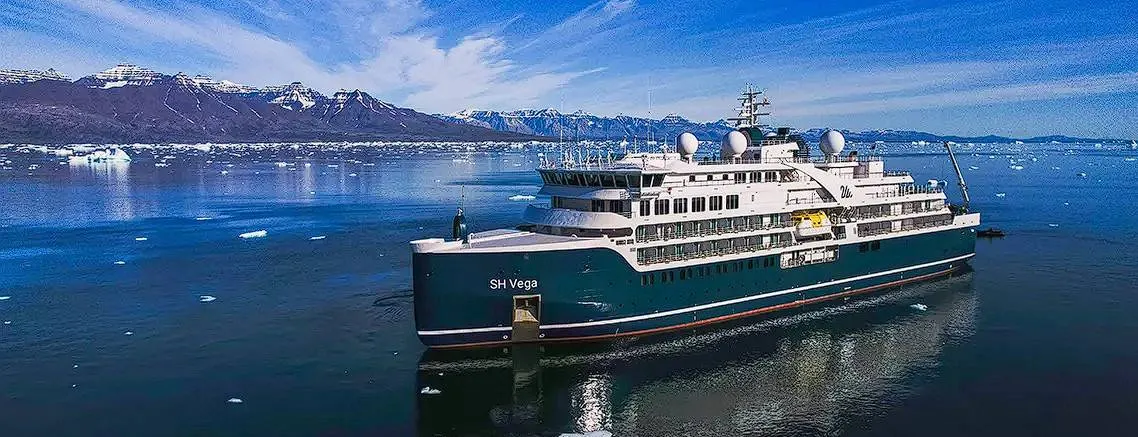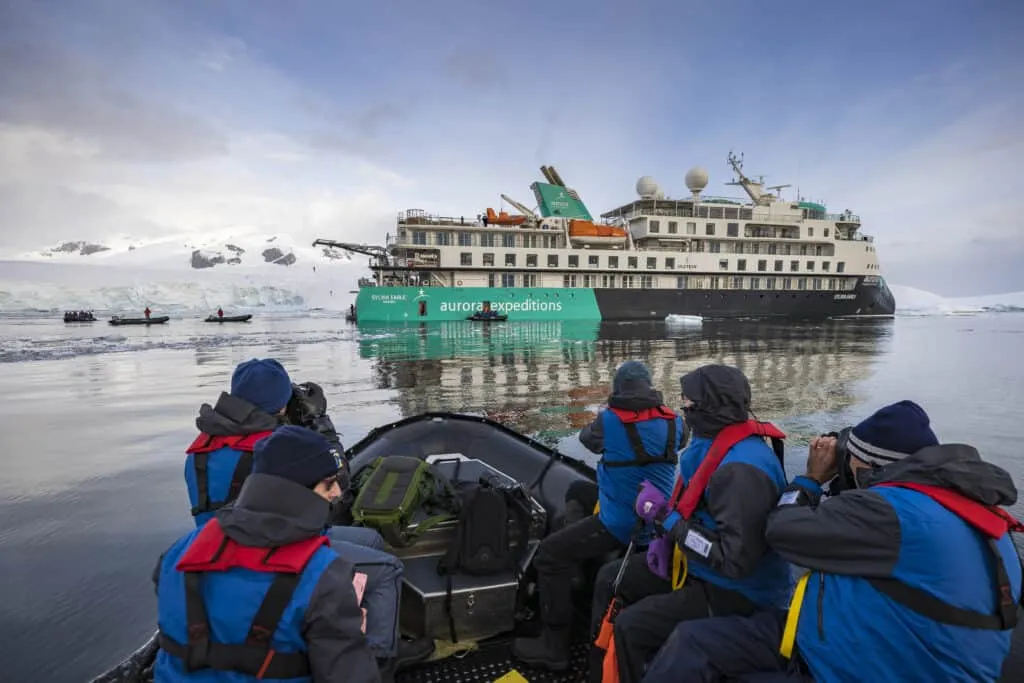
Aurora Expeditions and Silversea Cruises represent the two ends of the expedition spectrum — Australian-owned adventure on purpose-built 130-passenger X-BOW ships versus ultra-luxury butler-serviced exploration on vessels carrying up to 274 guests. Jake Hower compares expedition teams, landing logistics, inclusions, pricing, and the fundamental question of whether you want your expedition built around the Zodiac or the suite.
| Aurora Expeditions | Silversea Cruises | |
|---|---|---|
| Category | Expedition | Expedition / Ultra-Luxury |
| Rating | ★★★★☆ | ★★★★★ |
| Fleet size | 3 ships | 12 ships |
| Ship size | Small (under 500) | Small (under 1,000) |
| Destinations | Antarctica, Arctic, Patagonia, Japan | Mediterranean, Antarctica, Asia-Pacific, Arctic |
| Dress code | Relaxed | Casual elegance |
| Best for | Small-ship polar expedition adventurers | Ultra-luxury all-inclusive travellers |
Aurora Expeditions is the right choice for travellers who want the expedition itself at the centre of everything — small ships, maximum time ashore, adventure activities from ice camping to scuba diving, world-leading citizen science, and a genuinely Australian ethos at a significantly lower price point. Silversea is the right choice for travellers who refuse to compromise on personal comfort while exploring the wildest places on Earth — butler service in every suite, fully inclusive premium beverages, six dining venues, and a crew-to-guest ratio approaching one-to-one. The price gap is substantial, but so is the difference in daily experience. Choose with your priorities clear.
The core difference
This is the expedition world’s defining matchup: adventure versus luxury, and neither label is reductive.
Aurora Expeditions is adventure-first expedition cruising built by Australians who understand wild places. Founded in 1991 by Greg Mortimer OAM — the first Australian to summit Everest without supplementary oxygen — Aurora operates three purpose-built X-BOW vessels carrying a maximum of 130 passengers on expedition voyages. The company is privately held, Australian-owned, headquartered in Sydney, and certified as a B Corporation. Aurora was the first to introduce ice camping, kayaking, commercial climbing, and scuba diving in Antarctica. The ships are platforms to launch from, not destinations in themselves. The focus is relentlessly on what happens off the ship — in the Zodiac, on the ice, underwater, on the summit.
Silversea Cruises is ultra-luxury expedition cruising backed by the resources of Royal Caribbean Group. The expedition division operates four ships — the flagship Silver Endeavour (200 guests), Silver Cloud (254 guests), Silver Wind (274 guests), and the Galapagos-dedicated Silver Origin (100 guests). Every cabin on every Silversea ship is a suite with butler service, a daily-restocked minibar, and marble bathroom. The all-inclusive fare covers premium spirits, champagne, gratuities, and 24-hour in-suite dining. The philosophy is “exploration without compromise” — expedition activities during the day, white-tablecloth service in the evening.
For Australian travellers, the question is straightforward: do you want the expedition to be the point, with comfortable ships supporting the adventure? Or do you want the luxury to be constant, with expedition activities layered on top? Both approaches deliver Antarctica, the Arctic, and the Kimberley — but the daily experience is profoundly different.
Expedition team and guides
The expedition team is the beating heart of any expedition cruise, and both lines invest heavily — but in different models.
Aurora’s expedition team numbers fifteen to twenty specialists per voyage, delivering a guide-to-guest ratio of approximately 1:7 to 1:8. With only 130 passengers, this creates genuinely intimate encounters — shore excursion groups of ten to twenty with a dedicated specialist leading each. Many Aurora team members have been with the company for over a decade; several for more than twenty years. The team includes marine biologists, glaciologists, ornithologists, historians, and — critically — dedicated activity leaders for kayaking, diving, climbing, and snowshoeing. A Photography Guide sails on every expedition at no extra charge, offering composition workshops, editing sessions, and informal one-on-one tuition during landings. Aurora’s citizen science programme is among the most comprehensive in the industry, with seven active projects including HappyWhale whale identification, NASA GLOBE Cloud observations, FjordPhyto phytoplankton sampling, and the pioneering Thermal Imaging of Polar Ice (TIPI) programme. The Sylvia Earle and Douglas Mawson both feature dedicated Citizen Science Centres — purpose-built onboard spaces where passengers contribute real data to ongoing research.
Silversea’s expedition teams are larger in absolute numbers — up to twenty-eight specialists on Silver Endeavour — but serve more passengers, producing ratios of approximately 1:7 on Silver Endeavour, 1:10 on Silver Wind, and 1:12 on Silver Cloud. The team composition mirrors Aurora’s range of specialists: marine biologists, geographers, historians, wildlife biologists, ornithologists, and photographers. Silversea’s institutional advantage is its partnership with the Royal Geographical Society (with IBG), which provides bespoke, itinerary-focused scientific and historical content for every voyage — archival material, briefing documents, and enrichment resources curated specifically for each route. Lectures are described as “conversational” rather than academic. There is no equivalent to Aurora’s structured citizen science programme, though expedition naturalists do encourage observation and recording.
The practical difference: on Aurora, you are more likely to have extended personal conversations with specialists and to participate in hands-on science. On Silversea, the enrichment is polished and well-resourced through the RGS partnership, but with more passengers per guide, individual attention is diluted — particularly on Silver Wind and Silver Cloud.
Ships and expedition hardware
Both fleets are purpose-built or purpose-converted for expedition work, but the design philosophies are distinctly different.
Aurora’s three-ship fleet — Greg Mortimer (2019), Sylvia Earle (2022), and Douglas Mawson (2025) — are all Infinity Class vessels built at China Merchants Heavy Industry and chartered from SunStone Maritime Group. The defining feature is the Ulstein X-BOW inverted hull design, which Aurora was the first to use on an expedition passenger ship. The X-BOW splits wave energy rather than punching through it, significantly reducing slamming, vibration, and ocean spray. Captains and passengers consistently report noticeably smoother Drake Passage crossings compared to conventional hulls. All three ships carry Ice Class 1A (Polar Code 6) certification, diesel-electric propulsion with Wartsila generators, dynamic positioning, and zero-speed stabilisers. Each carries fifteen Zodiacs with four dedicated boarding doors for rapid deployment. The Douglas Mawson — the newest — adds a heated outdoor swimming pool, a two-storey atrium, a panoramic forward-facing lounge, Indikon microplastic filtration capturing ninety-nine per cent of laundry microfibres, and CounterCurrent AI navigation.
The passenger capacity is the critical number. At 130 on expedition voyages, Aurora sits firmly in IAATO Category C1 with full landing rights. Under IAATO’s rule limiting one hundred passengers ashore simultaneously, Aurora can land virtually all passengers in a single rotation — or at most two quick rotations. This translates directly into more time on the ice and less time waiting on the ship.
Silversea’s expedition fleet is more varied. Silver Endeavour (200 guests, PC6, 20,449 GT) is the flagship — built in 2021 as Crystal Endeavor, acquired from Crystal’s bankruptcy in 2022, and refitted in 2023 with Master Suites and Signature Suites. It carries eighteen Zodiacs and fourteen kayaks, with a crew-to-guest ratio approaching 1:1. Silver Wind (274 guests, Ice Class 1C, refitted 2021) and Silver Cloud (254 guests, Ice Class 1C, expedition-converted 2017) are older vessels — Silver Cloud in particular has attracted community feedback noting ageing hardware, with reports of leaking pipes and dated fixtures despite consistently excellent service. Silver Origin (100 guests, purpose-built 2020) is dedicated exclusively to the Galapagos. None of the Silversea expedition ships carry helicopters, submarines, or ROVs — a distinction worth noting for travellers who might assume otherwise given Silversea’s luxury positioning.
The fleet comparison in numbers: Aurora has three near-identical modern ships (all built 2019–2025) versus Silversea’s four ships spanning build years from 1994 to 2021. Aurora’s fleet consistency is an advantage — every passenger gets the same modern hardware regardless of which ship they board. Silversea’s Silver Endeavour is a genuinely impressive vessel, but the experience on Silver Cloud is measurably different from the experience on Silver Endeavour.
Landing experience
This is where Aurora’s small-ship advantage becomes most tangible.
Aurora conducts two landings or Zodiac excursions per day when conditions permit, with the possibility of three in favourable conditions. With fifteen Zodiacs and four boarding doors per ship, deployment is fast — passengers are on shore rapidly. Time ashore averages two to three hours per landing, with walking groups of ten to twenty led by individual guides. The 130-passenger capacity means virtually no waiting, no rotation anxiety, and maximum flexibility. If a pod of whales appears, the Expedition Leader can extend a Zodiac cruise or redirect the entire programme. This agility is Aurora’s single greatest operational advantage.
Aurora’s activity programme on shore is significantly broader than Silversea’s. Beyond the standard Zodiac cruises and guided walks, Aurora offers — at no additional charge — camping on Antarctic ice, snowshoeing, polar plunge, bird watching, and citizen science participation. Paid optional activities include sea kayaking, scuba diving, snorkelling, stand-up paddleboarding, ski and snowboard touring, alpine trekking and climbing, rock climbing, and the multi-day Shackleton’s Crossing trek across South Georgia. Aurora pioneered commercial scuba diving in Antarctica over twenty years ago — no Silversea ship offers diving.
Silversea typically conducts two landings per day, with approximately one to one-and-a-half hours ashore per landing. With ships carrying 200 to 274 passengers, IAATO’s one-hundred-person shore limit means multiple rotations are required. While Silversea manages this professionally — Zodiac groups of approximately twelve with one expedition team member per group — the mathematics are clear: more passengers means more rotations, which means less individual time at each site. Activity options include Zodiac cruising, kayaking (included), guided hikes, snorkelling in select regions, and stand-up paddleboarding on select itineraries. There is no diving, no ice camping, no climbing, and no ski touring.
For travellers whose primary motivation is maximising time in wild places doing active things, Aurora wins decisively. For travellers who value the shore experience but are equally drawn to the comfort of returning to a butler-serviced suite and a champagne toast, Silversea delivers the expedition within a luxury framework.
What is actually included
The inclusion models are structured very differently, and understanding the detail matters for comparing total cost.
Aurora’s base fare includes: all meals, snacks, tea, coffee, soft drinks, and juices throughout the day; beer and house wine with dinner; Captain’s Farewell reception with house cocktails, beer, and wine; all shore excursions including Zodiac cruises, guided walks, and included activities (camping, snowshoeing, photography programme); a complimentary 3-in-1 polar expedition jacket that passengers keep; complimentary insulated waterproof Muck boots on loan; Starlink Wi-Fi; port surcharges, permits, and landing fees; the full enrichment lecture programme; and one night’s pre-voyage accommodation with airport transfer on Antarctic voyages. Junior Suites and Captain’s Suites add a stocked minibar, champagne, binoculars, and included gratuities (US$15 per person per day).
Aurora’s base fare does not include: international flights to embarkation ports; gratuities in standard cabins (US$15 per person per day, added automatically); premium spirits and cocktails beyond house wine and beer at dinner; optional adventure activities (kayaking, diving, skiing); laundry; travel insurance; and personal expenditure.
Silversea’s all-inclusive fare includes: butler service in every suite; champagne, wines, spirits, beer, soft drinks, and daily-restocked in-suite minibar; all dining across multiple restaurants (except La Dame at US$60 per person); 24-hour in-suite dining with white-tablecloth service; all expedition landings, Zodiac cruises, guided hikes, and kayaking; complimentary expedition parka to keep; full kayak equipment; Starlink Wi-Fi; gratuities fully included; door-to-door Blacklane chauffeur transfers up to eighty kilometres from home to airport; and enrichment lectures and entertainment.
Silversea’s fare does not include: waterproof boot rental at US$98 per cruise plus US$100 refundable deposit; La Dame fine French dining at US$60 per person; waterproof over-pants rental; spa treatments; medical consultations; laundry (complimentary after 100 Venetian Society days); and flights to embarkation ports (unless booking the All-Inclusive Plus fare, which adds charter flights and hotel stays).
The boot rental fee is a perennial point of community discussion. On a product positioning itself as ultra-luxury and all-inclusive, charging US$98 for essential expedition equipment strikes many travellers as incongruous — particularly when Aurora includes equivalent boots at no charge. Conversely, Silversea’s inclusion of premium spirits, butler service, gratuities, and door-to-door transfers across all suite categories represents a genuinely comprehensive all-inclusive model that Aurora’s base fare cannot match.
Destination coverage
Aurora and Silversea overlap significantly in core expedition destinations but diverge in some important areas.
Antarctica is the primary product for both lines. Aurora operates all three ships in the Antarctic Peninsula season (October to March), offering classic Peninsula voyages from Ushuaia, South Georgia and Falklands combinations, Weddell Sea itineraries, and — uniquely — East Antarctica and Ross Sea departures from Hobart, visiting Mawson’s Hut at Commonwealth Bay and the Ross Ice Shelf. Aurora’s Fly the Drake option provides charter flights between Punta Arenas and King George Island, eliminating one or both Drake Passage crossings. Silversea deploys Silver Endeavour, Silver Cloud, and Silver Wind to Antarctica (approximately thirty-eight to forty voyages for the 2025–2026 season), with fly-cruise options from Puerto Williams (replacing Punta Arenas from 2026 once The Cormorant at 55 South hotel opens). Silversea covers Peninsula, South Georgia, Falklands, and Grand Antarctica voyages — but does not offer East Antarctica or Ross Sea from Hobart.
The Arctic is covered by both lines across Svalbard, Greenland, and the Northwest Passage. Silver Endeavour completed its inaugural Northwest Passage transit during the 2025 Arctic season — a notable milestone. Aurora deploys to Svalbard, Greenland, Iceland, Norway, the Faroe Islands, Scotland, and the British Isles.
The Kimberley is a point of direct competition. Aurora has been visiting the Kimberley since 1998, operating eleven-day itineraries between Darwin and Broome during June and July. Silversea’s Silver Cloud makes its Kimberley debut in 2026 with seven sailings from May to August across ten-, sixteen-, and seventeen-day itineraries.
The Galapagos is exclusively Silversea territory via Silver Origin — the only purpose-built luxury expedition ship dedicated year-round to the archipelago. Aurora does not visit the Galapagos.
Other destinations where Aurora operates and Silversea’s expedition fleet does not include: Indonesia (Raja Ampat, Borneo — three new itineraries for 2026), Costa Rica and Panama, Tasmania (Douglas Mawson’s inaugural season), and the New Zealand sub-Antarctic islands (Auckland Islands, Campbell Islands). Silversea’s expedition fleet covers some of these through broader South Pacific deployments but without the same focus.
For Australian travellers specifically, Aurora’s Hobart departures for East Antarctica and sub-Antarctic voyages are unique and eliminate the need for international flights entirely. Silversea’s Galapagos offering via Silver Origin is a destination Aurora simply cannot deliver.
Cabins and accommodation
The accommodation philosophies reflect the broader brand divide — expedition functionality versus luxury comfort.
Aurora’s cabin categories across the fleet range from the Aurora Stateroom Twin (approximately 170 to 245 square feet, Deck 3, porthole or obstructed view) to the Captain’s Suite (approximately 479 square feet with walk-in wardrobe and large lounge). Approximately eighty-five per cent of cabins on the Greg Mortimer and Sylvia Earle have balconies, with a similar proportion on the Douglas Mawson. The Douglas Mawson introduces ten different stateroom types — the most variety in the fleet — including fifty-eight connecting balcony staterooms for families and three solo cabin configurations (some with portholes, Deck 7 solos with French balcony). There is no butler service in any category. Junior Suites and Captain’s Suites include a stocked minibar, champagne, binoculars, and included gratuities.
Aurora has made exceptional provision for solo travellers: ten dedicated solo cabins on every sailing from the 2026–2027 season with no single supplement, a cabin-share programme pairing like-minded solo travellers (solo supplement waived if no match is found), and a blanket solo supplement waiver across all 2025/26 Antarctica, Arctic, and Global Discovery voyages. Solo travellers represent approximately thirty per cent of Aurora’s passenger base — a remarkably high proportion that reflects the company’s deliberate cultivation of this segment.
Silversea’s all-suite concept means every cabin is classified as a suite with butler service, private balcony, marble bathroom, pillow menu, and daily-restocked minibar. On Silver Endeavour, the entry-level Classic Veranda Suite is 304 square feet — substantially larger than Aurora’s entry cabin — with identical layouts across Classic, Superior, Deluxe, and Premium Veranda designations (the names reflect deck location, not room differences). Silver Suites offer 457 square feet. The 2023 refit added Signature Suites (721 to 850 square feet), Master Suites (1,163 square feet with 270-degree views and whirlpool bath), and the Owner’s Suite at 1,868 square feet with two bedrooms. Silver Cloud and Silver Wind offer a similar hierarchy.
The accommodation gap is clear. Silversea’s entry suite is nearly double Aurora’s entry cabin in square footage, and every Silversea guest receives butler service regardless of category. For travellers who spend significant time in their cabin — reading, resting between excursions, enjoying in-suite dining — Silversea’s accommodation is transformatively better. For travellers who view the cabin as a place to sleep and store gear between Zodiac landings, Aurora’s accommodation is perfectly functional and the savings can fund a second expedition.
Pricing and value
The price gap between these two lines is significant and worth understanding clearly.
Aurora’s directional pricing for an approximately eleven-day Antarctic Peninsula voyage (Spirit of Antarctica) ranges from approximately US$13,195 to US$14,000 per person for the entry Aurora Stateroom Twin to US$35,000 to US$42,000 for the Captain’s Suite. In Australian dollars at typical exchange rates, entry-level Antarctic voyages start from approximately AUD $20,000 to $22,000 per person. Aurora regularly runs sales of up to thirty-five per cent off published fares, and early booking is strongly advised. Longer voyages including South Georgia and the Falklands range from US$19,000 to US$60,000-plus depending on cabin and duration. Gratuities in standard cabins add US$15 per person per day (approximately US$165 for an eleven-day voyage). Optional activities like kayaking and diving carry additional fees.
Silversea’s directional pricing for a Silver Endeavour Antarctic Peninsula fly-cruise (six nights) starts from approximately US$16,100 per person for the Classic Veranda Suite. Traditional ten- to twelve-day Peninsula sailings start higher. Falklands, South Georgia, and Peninsula voyages of eighteen to twenty days command significant premiums. In Australian dollars, entry-level Antarctic fly-cruises start from approximately AUD $25,000 to $30,000 per person. Silver Cloud Kimberley sailings (ten days) are contact-for-pricing. Boot rental adds US$98. La Dame dining adds US$60 per visit. Solo supplements start at twenty-five per cent above double-occupancy fares, though promotional rates as low as ten per cent — and occasionally zero — appear on select sailings.
The total cost comparison for a standard eleven-day Antarctic Peninsula voyage, entry-level cabin, two passengers:
Aurora (Aurora Stateroom Twin): approximately AUD $20,000 to $22,000 per person. Add gratuities (approximately AUD $250), optional kayaking (enquire direct), and personal bar tab. Total: approximately AUD $20,500 to $23,000 per person.
Silversea (Classic Veranda Suite, Silver Endeavour): approximately AUD $25,000 to $35,000 per person, fully inclusive of butler service, premium drinks, gratuities, and door-to-door transfers. Add boot rental (approximately AUD $150) and optional La Dame dining. Total: approximately AUD $25,500 to $35,500 per person.
Aurora is approximately thirty to fifty per cent less expensive than Silversea at entry level for comparable Antarctic itineraries. The premium buys a larger suite, butler service, unlimited premium beverages, included gratuities, and door-to-door transfers. Whether that premium represents value depends entirely on how much you value luxury comfort versus expedition breadth.
Onboard enrichment and science
Both lines invest in enrichment programming, but Aurora’s approach is more participatory and science-driven while Silversea’s is more curated and institutional.
Aurora’s enrichment programme centres on its seven active citizen science projects — a scale unmatched in expedition cruising. Passengers photograph individual whales for HappyWhale, record bird observations for eBird, document cloud conditions for NASA GLOBE Cloud, measure water clarity for the Secchi Disk Study, photograph snow algae sites, collect phytoplankton samples for FjordPhyto, and contribute to the pioneering Thermal Imaging of Polar Ice project. The Sylvia Earle and Douglas Mawson both feature dedicated Citizen Science Centres — purpose-built spaces where passengers analyse data, attend briefings, and contribute meaningfully to ongoing research. Beyond citizen science, the lecture programme covers geology, wildlife, climate, history, and photography, delivered by the same specialists who lead shore excursions. The Photography Guide on every voyage provides workshops, editing sessions, and landing-time tuition. Special photography-themed voyages feature guest photographers including Canon Master Richard I’Anson. Research partnerships with New Scientist, the Polar Citizen Science Collective, Oceanites, Friedlaender Lab, and Reef Life Survey lend scientific credibility.
Silversea’s enrichment programme leans on the Royal Geographical Society partnership for bespoke, voyage-specific content — archival material, scientific briefings, and historical enrichment curated for each route. Daily briefings by the Expedition Leader prepare guests for upcoming excursions, and evening recaps review the day’s discoveries. Lectures are described as conversational and accessible rather than academic. There is no structured citizen science programme equivalent to Aurora’s, and no dedicated onboard science centre. A Photo Studio is available on Silver Wind, and photography guidance is provided by team members, though not with the same dedicated-guide-on-every-voyage commitment.
For travellers who want to actively contribute to scientific research and participate rather than observe, Aurora’s citizen science programme is a decisive advantage. For travellers who prefer polished, professionally curated enrichment content without the participatory element, Silversea delivers a well-resourced programme backed by genuine institutional partnerships.
Dining on expedition
Dining is a secondary consideration for most expedition bookers — but the difference here is substantial enough to influence the choice for food-motivated travellers.
Aurora’s dining is best described as hearty expedition fare with aspirational touches. The Greg Mortimer offers two venues: Gentoo (main restaurant — buffet breakfast and lunch, a la carte dinner) and Tuscan Grill (intimate steakhouse-style dinner, limited capacity, reservations fill quickly). The Sylvia Earle has Gentoo and Rockhopper. The Douglas Mawson adds two restaurants and two bars including a heated pool bar. Cuisine is sustainably sourced — organic fruit and vegetables, free-range chicken and eggs, Argentinian grass-fed beef. Aurora has taken the distinctive step of banning all salmon from menus due to the environmental impacts of salmon farming. Open seating at all meals encourages socialising. Tea, coffee, soft drinks, and juices are included all day. Beer and house wine are included with dinner. Premium spirits and cocktails are additional. Room service is not a significant feature.
Silversea’s dining operates at a categorically different level. Silver Endeavour offers six dining venues: The Restaurant (open-seating a la carte), La Dame (fine French dining, US$60 supplement, twenty seats), Il Terrazzino (handmade Italian), The Grill (poolside), Arts Cafe (casual), and 24-hour in-suite dining via butler with white-tablecloth service. Silver Cloud and Silver Wind offer The Restaurant, La Terrazza (Italian), La Dame, The Grill, and in-suite dining. All beverages are included — champagne, premium spirits, wines, cocktails — not just house selections. Dietary requirements are accommodated across all vessels with advance notice.
The dining gap is real. Silversea provides more venues, finer cuisine, premium beverages, and round-the-clock butler-delivered in-suite dining as standard. Aurora provides good, honest, well-prepared food designed to fuel adventurous days — but it is not Silversea’s fine-dining level. The La Dame supplement of US$60 per person is a point of community criticism at Silversea’s price point, though it is the only supplemented venue on the ship. For travellers who consider dining a core part of the expedition experience, Silversea is the clear choice. For travellers who view meals as fuel for the next landing, Aurora delivers well.
Standout itineraries for Australian travellers
Aurora Expeditions
Spirit of Antarctica (approximately 11 days, Ushuaia round-trip, from approximately AUD $20,000) — The entry-level Antarctic voyage. Multiple departures across all three ships from October to March. Greg Mortimer, Sylvia Earle, or Douglas Mawson. Two landings per day, Zodiac cruises, included snowshoeing and camping on selected departures. Optional kayaking, diving, ski touring. The most accessible Antarctic expedition on the market.
East Antarctica and Ross Sea (approximately 28 days, departing Hobart) — Uniquely available from an Australian port. Visit Mawson’s Hut at Commonwealth Bay, the Ross Ice Shelf, sub-Antarctic islands. No international flights required — Hobart departure eliminates the Ushuaia routing entirely. Rare itineraries that few operators offer.
Kimberley Coast (11 days, Darwin to Broome or reverse, June–July) — Aurora has sailed the Kimberley since 1998. King George Falls, Montgomery Reef, Indigenous cultural encounters on 130-passenger ships. Domestic flights only from any Australian capital.
Antarctic Peninsula: Fly the Drake (approximately 8 days, Fly/Fly from Punta Arenas) — Charter flights eliminate the Drake Passage crossing entirely, maximising time in Antarctica. Includes two nights’ hotel in Punta Arenas, airport transfers, and all flights. Ideal for time-poor travellers or those concerned about rough seas.
Antarctica Complete (approximately 20 days, Ushuaia round-trip) — The definitive voyage combining the Antarctic Peninsula, South Georgia, and the Falkland Islands. King penguin colonies on South Georgia, elephant seals, Shackleton’s grave. From approximately AUD $30,000 to $50,000 depending on cabin category.
Silversea Cruises
Silver Endeavour: Antarctic Peninsula Fly-Cruise (6 nights, from approximately AUD $25,000) — The ultra-luxury express option. Charter flights from Puerto Williams (from 2026) to King George Island, six nights of butler-serviced expedition cruising, then fly back. Maximum Antarctica, minimum transit. The most luxurious short-format Antarctic voyage available.
Silver Cloud: Kimberley (10 to 17 days, Darwin–Broome, May–August 2026) — Silversea’s Kimberley debut. Twenty Zodiacs, ten kayaks, full expedition team. Seven sailings including extended departures via Fremantle. Butler service and included premium beverages in the Kimberley — a combination no other operator in the region matches.
Silver Origin: Galapagos (7 days, round-trip from San Cristobal or Baltra, from approximately AUD $18,000) — The only purpose-built luxury expedition ship dedicated exclusively to the Galapagos. Year-round departures. Ecuadorian naturalist guides at a 1:10 ratio. Dedicated snorkelling deck with all equipment complimentary. A destination Aurora does not serve at all.
Silver Endeavour: Falklands, South Georgia and Antarctic Peninsula (18–20 days) — The grand Antarctic voyage with king penguin colonies, elephant seals, and Shackleton’s grave, delivered in ultra-luxury with butler service and fine dining throughout. A significantly more comfortable way to experience this demanding itinerary.
For Australian travellers specifically
Both lines have meaningful Australian connections, though Aurora’s are intrinsic to the brand while Silversea’s are operational.
Aurora Expeditions is Australian. Headquartered in Sydney. Founded by an Australian explorer. Named after Douglas Mawson’s Antarctic ship. The company’s DNA — unpretentious, adventure-first, egalitarian, environmentally conscious — carries a distinctly Australian character. For Australian travel advisors, Aurora is a home-grown success story in a category dominated by European and American operators. The Hobart departures for East Antarctica and sub-Antarctic voyages are uniquely relevant — no international flights, no long-haul connections, just board in Tasmania and head south. The three-ship fleet operates from Darwin and Broome for the Kimberley, and the Douglas Mawson was christened in Sydney Harbour in November 2025.
Silversea maintains an Australian office at Level 6, 8 Spring Street, Sydney (phone: 02 9255 0600). The company regularly offers Australian-market promotions including reduced solo supplements, fly/stay/cruise packages, and Kimberley-specific packages with pre/post hotel stays. The door-to-door Blacklane transfer programme covers Australian cities — a chauffeur-driven car from your home to the airport, included up to eighty kilometres, is a genuine luxury touch for Australian travellers. Silver Cloud’s 2026 Kimberley deployment provides direct Australian access without international flights.
Getting to Antarctic embarkation ports from Australia requires planning. Ushuaia is typically reached via Buenos Aires (Qantas/LATAM) or Santiago (LATAM/Qantas) — a two-leg, full-day journey. Punta Arenas via Santiago adds a domestic Chilean connection. Silversea’s shift to Puerto Williams from 2026 adds a further connection. Universal advice: arrive a day early. A missed ship due to a flight delay in polar expedition territory is unrecoverable.
Travel insurance is essential and non-standard. Most standard Australian travel insurance policies exclude Antarctica and expedition activities. Purpose-specific policies with minimum AUD $500,000 medical coverage and AUD $250,000 evacuation coverage are strongly recommended. Aurora and Silversea both require proof of adequate insurance before departure.
The loyalty pathway favours different travellers. Aurora’s three-tier programme (Bronze after one voyage, Silver after two, Gold after three-plus) delivers five per cent off, escalating onboard credits, and complimentary stateroom upgrades — meaningful for repeat Aurora travellers. Silversea’s Venetian Society accumulates days-at-sea with milestone rewards including complimentary voyages after 350 days. The cross-brand status matching with Royal Caribbean and Celebrity Cruises is particularly relevant for Australians who sail Royal Caribbean domestically — existing Crown & Anchor Society status transfers to Silversea.
The onboard atmosphere
The cultural feel of these two lines is the largest non-technical difference, and it shapes every hour of the voyage.
Aurora’s atmosphere is Australian expedition. With 130 passengers, everyone knows each other by day two. The expedition team mingles with guests at meals and drinks. There is no formal social hierarchy, no class distinction, no VIP stratification — the Captain mixes with passengers. The dress code is casual expedition: most passengers wear the same clothes from the day’s adventures to dinner. No formal nights. Optional smartening up for the Captain’s Welcome and Farewell, but no pressure. Evenings are low-key and social — drinks at the bar, sharing the day’s stories, enrichment lectures. No organised entertainment in the traditional cruise sense: no shows, no casino, no theatre. The lecture programme is the evening attraction. The typical Aurora passenger is more likely to be a bushwalker than a black-tie diner. Solo travellers represent thirty per cent of passengers. The atmosphere is unpretentious, communal, and energised by shared adventure. Expedition leaders wear parkas, not white uniforms.
Silversea’s atmosphere is ultra-luxury expedition. The 1:1 crew-to-guest ratio on Silver Endeavour means staff learn names and preferences rapidly. Butler relationships develop quickly — your butler knows how you take your coffee by day two. The dress code is “Elegant Casual” — smart trousers or skirt with a nice top for dinner. No formal nights on expedition ships, and significantly more relaxed than the ocean fleet. Evenings feature the Show Lounge or Venetian Lounge with smaller-scale entertainment, evening recaps by the Expedition Leader, and a bar scene where guests share expedition stories over champagne. The Connoisseur’s Corner on Silver Endeavour caters to premium spirits enthusiasts. Demographics skew affluent, well-travelled, and fifty-five-plus, with a growing segment of younger high-net-worth travellers. No casino on expedition ships. The overall feel is convivial rather than glamorous — the shared expedition experience creates camaraderie that transcends the luxury setting. But it is undeniably more polished, more attentive, and more comfortable than Aurora’s cheerful expedition informality.
The distinction matters. If you want your evenings spent in hiking boots with a beer, swapping stories with the glaciologist who led your morning walk, choose Aurora. If you want those same stories told over champagne in a butler-maintained suite with marble fittings, choose Silversea.
The bottom line
Aurora Expeditions and Silversea Cruises both deliver genuine expedition experiences to the world’s wildest places — but they do so from fundamentally different starting points.
Choose Aurora Expeditions when the expedition is the reason you travel. When you want the smallest ships (130 passengers), the most time ashore (two to three hours per landing), the broadest adventure activities (ice camping, diving, climbing, skiing), world-leading citizen science, and an Australian-owned company founded by a genuine explorer. Choose Aurora when you want to depart from Hobart for East Antarctica without an international flight, when you are a solo traveller who values no-supplement cabins, and when you want to spend your budget on the expedition itself rather than the suite. Aurora delivers approximately thirty to fifty per cent more expedition per dollar.
Choose Silversea when you want expedition without compromise on personal comfort. When butler service in every suite, premium spirits at every bar, six dining venues, and a 1:1 crew-to-guest ratio are essential to how you travel. Choose Silversea when you want the Galapagos on Silver Origin — a destination Aurora cannot deliver — or when the door-to-door Blacklane transfer from your home to the airport matters. Choose Silversea when your existing Royal Caribbean or Celebrity loyalty status transfers across, and when the fly-cruise option from Puerto Williams lets you maximise Antarctic time in ultra-luxury comfort.
Both lines deserve respect. Aurora has built something genuinely rare — an Australian expedition company with purpose-built modern ships, authentic adventure DNA, and B Corp sustainability credentials. Silversea has proven that you can explore Antarctica, the Arctic, and the Kimberley without sacrificing a single creature comfort. The question is not which line is better. The question is what kind of expedition traveller you are.