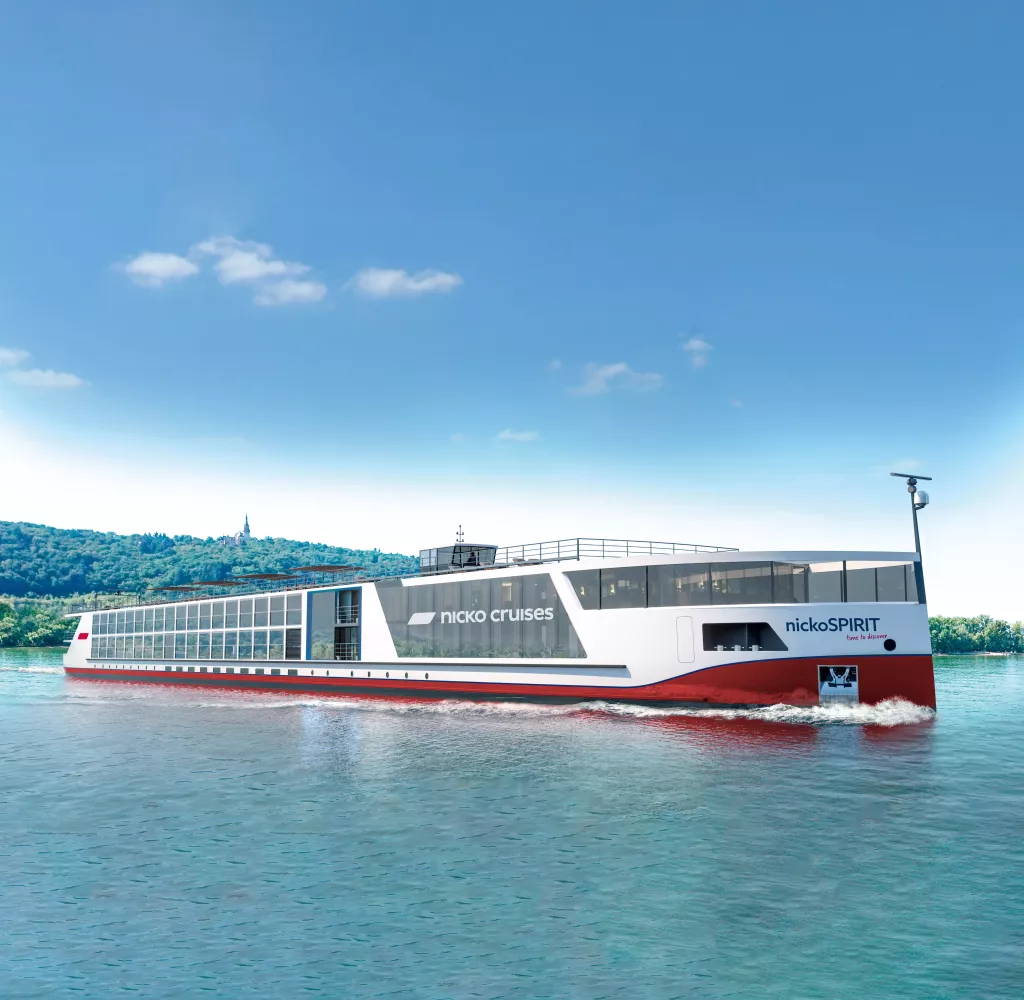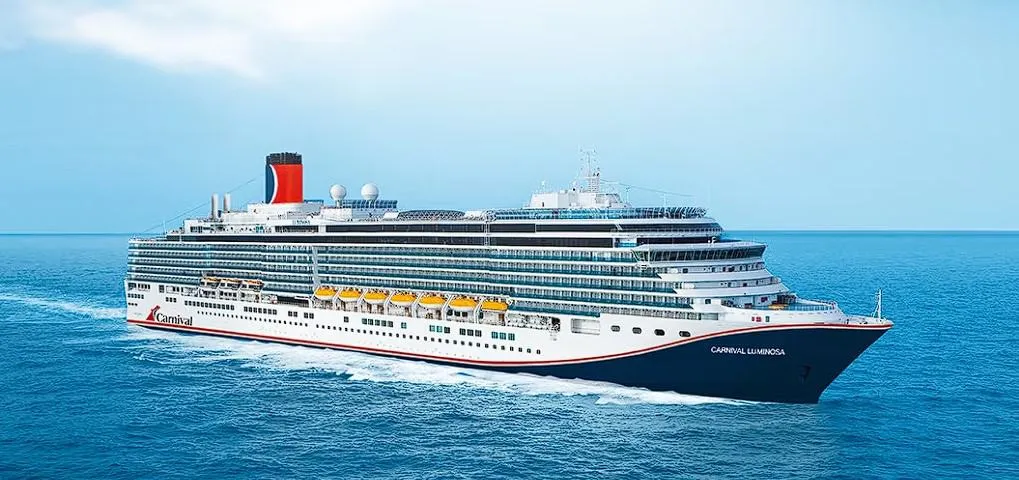
Carnival is the world's largest cruise line — American, loud, and built for fun at the lowest price. Fred. Olsen is a traditional British cruise line with three smaller ships, a warm personal atmosphere, and scenic itineraries from UK ports. These lines represent opposite ends of the mainstream spectrum, and choosing between them means choosing a fundamentally different cruise philosophy. Jake Hower compares both for Australian travellers.
| Carnival Cruise Line | Fred. Olsen Cruise Lines | |
|---|---|---|
| Category | Mainstream | Mainstream |
| Rating | ★★★★☆ | ★★★★☆ |
| Fleet size | 29 ships | 3 ships |
| Ship size | Large (2,500-4,000) | Mid-size (1,000-2,500) |
| Destinations | Caribbean, Mexico, Alaska, Mediterranean | Northern Europe, Norwegian Fjords, Mediterranean, Canary Islands |
| Dress code | Resort casual | Smart casual |
| Best for | Budget-friendly fun-seeking families | British travellers seeking scenic itineraries |
Carnival delivers budget-friendly mega-ship entertainment with waterparks, comedy clubs, celebrity dining, and seasonal Australian departures. Fred. Olsen delivers traditional, unhurried British cruising on smaller, friendlier ships with wraparound promenade decks, scenic fjord itineraries, and the best solo traveller programme in mainstream cruising. For Australian families wanting maximum entertainment per dollar, choose Carnival. For mature travellers and solo cruisers seeking a quieter, more personal cruise with destination-focused itineraries — particularly in Northern Europe — choose Fred. Olsen. Both are UK-accessible for Australians visiting Britain.
The core difference
Carnival Cruise Line and Fred. Olsen Cruise Lines represent two ends of the mainstream cruise spectrum — and the gap between them is so wide that a traveller who loves one will almost certainly not enjoy the other. This is not a quality comparison. Both lines are good at what they do. But what they do is entirely different, and understanding the distinction is essential before booking either.
Carnival is the party ship. Twenty-nine vessels carrying up to 5,200 guests, packed with entertainment from the BOLT roller coaster to the Punchliner Comedy Club, Guy Fieri’s burgers to Shaq’s chicken, waterparks to deck parties. The atmosphere is American, casual, loud, and designed for families, groups, and first-timers who want a holiday where fun is the explicit product. Carnival is the world’s largest cruise line, and it has achieved that scale by making cruising accessible and affordable for people who might never have considered it.
Fred. Olsen is the country house at sea. Three ships — Bolette, Borealis, and Balmoral — each carrying no more than 1,300 guests, sailing from UK ports with an atmosphere that is warm, personal, and unhurried. Founded in Norway in 1848 and still Norwegian-owned, Fred. Olsen is nevertheless thoroughly British in character — two-sitting dinners, proper libraries, wraparound promenade decks with steamer chairs, and enrichment lectures rather than game shows. Borealis is adults-only. The fleet carries over 50 dedicated solo cabins across its ships and runs a daily social programme for guests travelling alone. The itineraries are scenic rather than destination-heavy — Norwegian Fjords, Canary Islands, British Isles, and longer voyages to Iceland and the Arctic.
For Australian travellers, neither line is primarily accessible from home. Carnival deploys Carnival Luminosa seasonally from Brisbane and Melbourne, but the bulk of its fleet sails from US ports. Fred. Olsen sails almost exclusively from UK ports. Both lines become relevant when Australians are planning travel to the US or the UK — and in those contexts, this comparison helps identify which personality suits best.
What is actually included
The inclusion models reflect the different markets these lines serve.
Carnival’s base fare includes the main dining room, buffet, complimentary casual venues (Guy’s Burgers, BlueIguana Cantina, Shaq’s Big Chicken on Excel-class ships), basic room service, pool access, entertainment, and fitness centre. Beverages, specialty dining, Wi-Fi, and excursions are extra. The Cheers! package runs approximately USD $60 to $70 per person per day. Gratuities are USD $16 per person per day.
Fred. Olsen’s fare includes the main dining room, buffet, room service, and — from 2026 — drinks at mealtimes (wine, beer, and soft drinks with lunch and dinner). This is a meaningful recent addition that brings Fred. Olsen closer to a partially inclusive model without the full add-on pricing complexity. Bar prices throughout the day are notably lower than Carnival’s and most other cruise lines. Gratuities are not included but are at the guest’s discretion — Fred. Olsen does not auto-charge. Specialty dining options are limited but available on some ships. Entertainment is included. Shore excursion pricing is competitive.
The net effect is that Fred. Olsen delivers a lower total onboard spend for moderate drinkers and diners, even though the base fare may be comparable to or slightly above Carnival’s equivalent. For Australian travellers accustomed to inclusive Australian cruise pricing, Fred. Olsen’s recent mealtime drinks inclusion and lower bar prices feel more aligned with expectations than Carnival’s American add-on model.
Dining and culinary experience
The dining comparison reflects the cultural gap between these lines as clearly as any other section.
Carnival’s dining is built around variety and casual accessibility. Guy’s Burgers is available fleet-wide at no charge. BlueIguana Cantina, Shaq’s Big Chicken, the pizza station, and the deli ensure round-the-clock casual options. The main dining room serves a multi-course rotating menu that is solid if unexceptional. Specialty restaurants (Fahrenheit 555, Bonsai Sushi, Ji Ji Asian Kitchen) charge per visit. The food strategy is breadth — many options, many times of day, with quality aimed at the middle of the mainstream market.
Fred. Olsen’s dining is traditional British cruise fare with a growing regional emphasis. The main dining room operates two-sitting dinners (an increasingly rare format in mainstream cruising) with multi-course menus featuring dishes from the destinations being visited alongside reliable British favourites — roast dinners, fish and chips, and traditional puddings. Recent investment has improved the culinary standard, and the line now incorporates regional specialities from the ports of call. The buffet is simpler than Carnival’s but competent. Dining is a social event rather than a refuelling stop — guests dress for dinner (smart casual), sit at assigned tables, and build relationships with tablemates over the course of the voyage.
For Australian travellers, Carnival offers more food at more times for less money — the casual dining variety is unmatched. Fred. Olsen offers a more traditional dining experience that appeals to travellers who enjoy the ritual of dressing for dinner, being seated with the same tablemates, and building a rapport with the serving staff over the course of a longer voyage.
Suites and accommodation
The accommodation comparison is shaped by the age and scale of the ships rather than by any philosophical difference in cabin design.
Carnival’s accommodation spans from compact inside cabins to the Excel Presidential Suite at roughly 1,120 square feet. Newer ships feature modern amenities, USB charging, and updated bathrooms. The Loft 19 suite sundeck on Excel-class ships provides a dedicated retreat for suite guests. The cabin variety across 29 ships is enormous — but quality varies significantly between the newest and oldest vessels.
Fred. Olsen’s accommodation on Borealis and Bolette (both former Holland America ships) offers notably generous space-per-guest ratios. Borealis achieves a passenger space ratio of 45.5 — significantly above Carnival’s Excel-class ships and closer to premium cruise lines. Cabins feature classic ocean liner-style design with warm wood tones. Suites are available but modest by mega-ship standards. The over 50 dedicated single cabins across the fleet — purpose-designed with full-size beds and adequate storage — are a genuine distinguishing feature for solo travellers.
For Australian solo travellers, Fred. Olsen’s dedicated single cabins are a compelling proposition. Most mainstream lines — Carnival included — offer limited or no purpose-built solo accommodation, forcing single travellers to pay double-occupancy supplements. Fred. Olsen’s commitment to solo travellers is reflected in both the cabin design and the daily social programme that helps single guests connect.
Pricing and value
The pricing comparison depends heavily on where you board and what you value in your total holiday cost.
Carnival is cheaper per night for equivalent cabin categories, with seven-night Caribbean cruises starting from approximately AUD $1,000 to $1,400 per person. Australian deployments from Brisbane and Melbourne start from roughly AUD $800. Carnival’s pricing is the lowest in mainstream cruising, though add-on costs for beverages, Wi-Fi, and specialty dining can increase the total significantly.
Fred. Olsen’s pricing sits in the middle of the mainstream range — seven-night sailings from UK ports start from approximately GBP $700 to $1,200 per person (roughly AUD $1,400 to $2,400). The included mealtime drinks, lower bar prices, and no automatic gratuity charges mean the onboard spend is typically lower than Carnival’s equivalent. Fred. Olsen’s ex-UK sailing model also eliminates flight costs for UK-based travellers — a significant value that is not reflected in the headline cruise fare.
For Australian travellers, both lines require international flights unless using Carnival’s domestic deployment. Flights to the UK (AUD $1,500 to $3,000 return) or to US East Coast ports (AUD $2,000 to $3,500) are comparable in cost. The cruise fare comparison on its own favours Carnival, but when total holiday spend including onboard costs is calculated, the gap narrows — Fred. Olsen’s included mealtime drinks and lower bar prices partially offset the higher headline fare.
Spa and wellness
The spa comparison reflects the scale and purpose differences between these lines.
Carnival’s Cloud 9 Spa is a full-service operation with thermal suites, thalassotherapy pools, saunas, steam rooms, and comprehensive treatment menus. Cloud 9 Spa staterooms include unlimited thermal suite access. The Serenity Adult-Only Retreat provides a complimentary quiet pool and sundeck.
Fred. Olsen’s spa offers standard treatment rooms, a sauna, and fitness equipment. The facilities are modest by mega-ship standards — no thermal suite, no thalassotherapy pool, no dedicated adult retreat. The wellness experience on Fred. Olsen comes from the scenic cruising — watching Norwegian Fjords slide past from a wraparound promenade deck is a form of renewal that no spa treatment can replicate.
Carnival offers categorically more spa infrastructure. Fred. Olsen offers a different kind of wellness — the quieter, slower, more contemplative experience of scenic cruising on a smaller ship where the pace of life is the treatment.
Entertainment and enrichment
The entertainment philosophies are diametrically opposed — and both are successful for their respective audiences.
Carnival’s entertainment is the most extensive in mainstream cruising. Comedy clubs, game shows, waterparks, roller coasters, deck parties, poolside DJs, karaoke, and stage shows create constant activity. The entertainment is participatory, social, and designed to create communal moments across ships carrying thousands of guests.
Fred. Olsen’s entertainment is enrichment-focused. Guest speakers and lecturers cover topics related to the destinations being visited — historians on Norwegian Fjord sailings, naturalists on Arctic voyages, authors and scientists on longer expeditions. The new RWS Global entertainment partnership is refreshing the onboard shows, but the Fred. Olsen atmosphere will always lean toward convivial evenings in the bar, scenic cruising commentary, and the quiet pleasure of reading in the library rather than Broadway-style productions. Classical music recitals, afternoon tea dances, and bridge tournaments fill the programme.
For Australian travellers, the choice is personality-driven. Carnival entertains you constantly — there is never a moment without something scheduled. Fred. Olsen leaves you space — the entertainment exists but does not insist. If you bring a book, you will find time to read it.
Fleet and destination coverage
Carnival’s 29 ships provide global coverage across the Caribbean, Mediterranean, Alaska, and Australian waters. The fleet spans from older ships to the Excel-class flagships at 180,000 gross tonnes. Multiple US homeports, private island destinations, and hundreds of itineraries per year offer enormous flexibility.
Fred. Olsen’s three ships — Bolette, Borealis, and Balmoral — sail primarily from UK ports with a focus on scenic itineraries. Norwegian Fjords, Canary Islands, British Isles, Iceland, the Mediterranean, and longer voyages including 108-night round-the-world sailings compose the programme. The ships’ modest size (no more than 1,300 guests) allows access to ports and waterways that mega-ships cannot reach — deep fjord channels, small British harbour towns, and Arctic anchorages.
For Australian travellers, Carnival offers domestic departures and global reach. Fred. Olsen offers a uniquely British cruise experience best combined with a UK holiday — board in Southampton, cruise the Norwegian Fjords or Canary Islands, and return to Britain without flying. The no-fly model is Fred. Olsen’s primary value proposition for its core British market, and Australians visiting the UK can take advantage of it with no additional flights beyond the Australia-to-UK journey.
Where each line excels
Carnival excels in:
- Per-night value. The cheapest mainstream cruise per night with complimentary casual dining that further reduces onboard costs.
- Entertainment scale. Comedy clubs, waterparks, roller coasters, game shows, and deck parties on ships carrying up to 5,200 guests.
- Australian departures. Carnival Luminosa from Brisbane and Melbourne for domestic cruising.
- Family facilities. Camp Ocean kids’ clubs, family dining options, and entertainment designed for all ages.
- Availability. Twenty-nine ships with hundreds of departure dates per year across multiple homeports.
Fred. Olsen excels in:
- Solo traveller programme. Over 50 dedicated single cabins across the fleet with a daily social programme for guests travelling alone — the best in mainstream cruising.
- Scenic itineraries. Norwegian Fjords, Canary Islands, British Isles, Iceland, and Arctic voyages on ships small enough to access narrow waterways and intimate ports.
- Personal atmosphere. Ships carrying no more than 1,300 guests with a warm, country-house atmosphere and crew who know your name.
- Traditional cruising. Two-sitting dinners, wraparound promenade decks, libraries, steamer chairs, and enrichment lectures — a style of cruising that most modern lines have abandoned.
- Adults-only sailing. Borealis is a dedicated adults-only ship — a rarity in mainstream cruising.
- Ex-UK sailing. No flights from UK ports, with regional departures from Southampton, Liverpool, Dover, and Edinburgh.
Standout itineraries for Australian travellers
Carnival Luminosa: South Pacific from Brisbane or Melbourne (7 to 10 nights, seasonal) — Carnival’s domestic programme at AUD $800 to $1,200 per person. The most practical option in this comparison for Australians who want to cruise without international flights.
Carnival Celebration: Caribbean from Miami (7 nights, year-round) — The Excel-class flagship experience with BOLT, themed zones, and celebrity dining. Fly to Miami from Australian cities. Fares from approximately AUD $1,200 per person.
Fred. Olsen Borealis: Norwegian Fjords from Southampton (7 to 14 nights, seasonal) — The adults-only ship exploring deep fjord channels inaccessible to larger vessels. Scenic cruising through narrow waterways with enrichment lecturers providing context. Combine with a London stay before or after the cruise. For Australians visiting the UK, a Fred. Olsen fjord cruise adds a distinctive Scandinavian dimension to a British holiday. Fares from approximately GBP $900 per person (roughly AUD $1,800).
Fred. Olsen Bolette: Canary Islands from Southampton (14 nights, winter season) — A winter sun escape calling at Madeira, Tenerife, Gran Canaria, Lanzarote, and La Palma. The mid-size ship docks in compact harbours that mega-ships bypass. For Australians visiting Britain in the UK winter, a Canary Islands cruise adds warmth and variety. Fares from approximately GBP $1,200 per person (roughly AUD $2,400).
Ship-by-ship recommendations
Carnival
Carnival Celebration or Carnival Jubilee (Excel class, 180,000 GT, approximately 5,200 guests) — The flagships representing the best of modern Carnival. Choose for the most feature-rich Carnival experience.
Carnival Luminosa (92,000 GT, approximately 2,260 guests) — The Australian deployment ship. Choose for domestic departures.
Fred. Olsen
Borealis (approximately 1,300 guests, adults-only) — The standout ship in the fleet. Adults-only designation, the highest space-per-guest ratio at 45.5, and the former Holland America pedigree translate to a spacious, refined atmosphere. Choose for Norwegian Fjords and for the adults-only experience.
Bolette (approximately 1,300 guests) — Sister ship to Borealis with a similar space-per-guest ratio but welcoming families. Choose for family-friendly Fred. Olsen sailings and Canary Islands itineraries.
Balmoral (approximately 1,300 guests) — The most traditional of the three ships with a slightly lower space-per-guest ratio (32.9 versus 45.5 for Borealis). Still a solid choice, particularly for longer voyages and round-the-world sailings where the traditional pace suits the extended time aboard.
For Australian travellers specifically
Neither line is primarily an Australian cruise brand, and both require different logistical approaches from Australian travellers.
Carnival’s domestic deployment is the only option in this comparison that lets Australians cruise without leaving the country. Carnival Luminosa from Brisbane and Melbourne serves South Pacific and New Zealand itineraries at competitive prices. For Australians considering a Caribbean Carnival cruise, fly-cruise logistics through the United States are straightforward but lengthy (18 to 24 hours each way).
Fred. Olsen is best accessed during a UK visit. Australian travellers who regularly visit family or holiday in Britain will find Fred. Olsen’s ex-UK sailing model particularly convenient — board in Southampton, cruise to Norway or the Canaries, and return to Britain without additional flights. The line’s British atmosphere, traditional dining, and enrichment-focused programming may appeal to Australians who grew up with British cultural touchstones or who enjoy a more reserved, conversational cruise environment.
Solo Australian travellers should pay particular attention to Fred. Olsen. The dedicated single cabins, daily solo social programme, and warm shipboard community make Fred. Olsen one of the best options for Australians travelling alone — a marked contrast to Carnival’s group- and family-oriented culture where solo travellers can feel peripheral.
Neither line’s loyalty programme crosses to the other. Carnival’s VIFP Club rewards repeat cruising across Carnival Corporation brands. Fred. Olsen’s Oceans loyalty programme provides tier-based benefits including onboard credits and cabin upgrades. Both are standalone programmes with no cross-recognition.
The onboard atmosphere
The atmosphere gap between these lines is one of the widest in any comparison in this series.
Carnival’s atmosphere is the American pool party. Loud music, large drinks, game shows, deck parties, and a demographic that skews younger and more family-heavy. The dress code is resort casual — board shorts and singlets are standard. The social energy is high, participatory, and designed to bring strangers together.
Fred. Olsen’s atmosphere is the British country house. Quieter, more conversational, and structured around the rhythms of traditional cruising — morning coffee on the promenade deck, a lecture before lunch, afternoon tea, scenic cruising through fjords, dressing for dinner, and an after-dinner drink in the bar with fellow guests. The dress code is smart casual with occasional formal evenings on longer sailings. The demographic is predominantly British, mature (the average age is higher than Carnival’s), and returns year after year — repeat guest rates are high.
For Australians, Carnival’s energy suits families and social travellers who enjoy the irreverence of American holiday culture. Fred. Olsen’s pace suits Australians who prefer the British conversational style — a gentler, more considered approach to leisure that values destination, enrichment, and personal connection over spectacle.
The bottom line
Carnival and Fred. Olsen are not competing for the same traveller, and this comparison exists to clarify a distinction rather than declare a winner. Carnival is the world’s largest cruise line, built for maximum entertainment at minimum cost. Fred. Olsen is a traditional British cruise line, built for scenic itineraries and personal service on smaller ships that feel like travelling with friends rather than attending a festival.
Choose Carnival for the most fun per dollar in mainstream cruising. Choose it for waterparks, comedy clubs, celebrity dining, and a festive atmosphere where the holiday starts the moment you board. Choose it for Carnival Luminosa from Brisbane and Melbourne. Choose it for families with children who need stimulation, entertainment, and activities from dawn to midnight. Accept the noise, the crowds, and the American cultural orientation.
Choose Fred. Olsen for traditional British cruising at its most personal. Choose it for Norwegian Fjords on ships small enough to navigate narrow channels. Choose it for Borealis if you want an adults-only ship with a 45.5 space-per-guest ratio. Choose it if you are a solo traveller who wants dedicated single cabins and a daily social programme designed specifically for you. Choose it for ex-UK sailing with no flights — board in Southampton and return to Britain with fjord memories and new friends. Accept that the ships are older, the entertainment is modest, and the atmosphere is quieter than most modern cruise lines.
For Australian travellers, these lines serve different contexts. Carnival is the domestic option and the budget-friendly family choice. Fred. Olsen is the UK-visit enhancement — a distinctly British addition to a broader travel itinerary that delivers a cruise experience unavailable from any mainstream line sailing from American or Australian ports.