Cunard Line and Holland America Line are two of cruising's most storied heritage brands — founded in 1840 and 1873 respectively, both now under Carnival Corporation, and both attracting mature travellers who value enrichment over spectacle. Jake Hower compares the formal British elegance of the Four Queens against Holland America's warmer, music-driven American premium experience.
| Cunard Line | Holland America Line | |
|---|---|---|
| Category | Luxury | Premium |
| Rating | ★★★★★ | ★★★★☆ |
| Fleet size | 4 ships | 11 ships |
| Ship size | Mid to Large | Mid-size (1,000-2,500) |
| Destinations | Global | Caribbean, Alaska, Northern Europe, Mediterranean |
| Dress code | Formal evenings | Smart casual |
| Best for | Tradition lovers | Classic cruise enthusiasts and mature travellers |
These two Carnival Corporation siblings share the same Vista-class hull platform on some ships, yet deliver fundamentally different experiences. Cunard is formal British elegance — Gala Evenings, ballroom dancing, the Grills class hierarchy, and the world's only scheduled Transatlantic Crossing. Holland America is warmer American premium cruising — Music Walk live entertainment, a Culinary Council of celebrity chefs, the Have It All bundled package, and unmatched Alaska expertise. For Australians, Holland America is now the more accessible line with Noordam and Westerdam homeporting in Sydney for 2026/27, while Cunard has withdrawn Australian homeporting entirely, making it a fly-cruise proposition outside of world voyage segments.
The core difference
Cunard Line and Holland America Line are two of the oldest names in ocean travel. Cunard was founded in 1840 by Sir Samuel Cunard, establishing the first scheduled transatlantic steamship service between Liverpool and North America. Holland America followed in 1873 as the Netherlands-America Steamship Company, originally carrying immigrants from Rotterdam to New York — over 400,000 of them by its twenty-fifth anniversary. Both lines have survived world wars, corporate acquisitions, and the jet age. Both now sit within Carnival Corporation’s portfolio. Both attract mature, educated travellers who value enrichment, culinary quality, and a refined atmosphere over water slides and rock-climbing walls.
Yet the onboard experience could hardly be more different.
Cunard is formal British elegance. The brand identity is rooted in 185 years of maritime heritage — ocean liners, Gala Evenings, white-gloved afternoon tea, ballroom dancing in the Queens Room, and a class-based hierarchy where your cabin category determines your restaurant, your lounge, and your level of service. Cunard operates the world’s only remaining scheduled transatlantic liner service aboard Queen Mary 2, the only purpose-built ocean liner still in commission. The dress code matters here. Tuxedos appear on Gala Evenings. The Grills system creates a visible distinction between Britannia, Princess Grill, and Queens Grill guests that echoes the First, Second, and Third Class traditions of the golden age of ocean travel. Cunard positions itself as “the most famous ocean liner company in the world,” and the onboard atmosphere earns that claim.
Holland America is classic American premium cruising. The Dutch heritage survives in ship names ending in “-dam” (Rotterdam, Koningsdam, Noordam), the green-white-green house flag derived from Rotterdam’s city flag, and the Grand Dutch Cafe serving stroopwafels and Dutch coffee. But the brand identity is American warmth blended with cultural enrichment — Music Walk live entertainment, BBC Earth In Concert screenings, America’s Test Kitchen cooking demonstrations, and a Culinary Council of seven celebrity chefs shaping the menus fleet-wide. The evening dress code is Smart Casual most nights, with occasional Gala Nights that feel relaxed compared to Cunard’s black-tie expectations. There is no class system, no segregated dining hierarchy, and no butler service at the lower tiers. Holland America is refined but not rigid — a distinction that matters enormously to the people who choose it.
What makes this comparison particularly interesting for insiders is the shared engineering. Cunard’s Queen Victoria and Queen Elizabeth were built on modified Vista-class hull platforms — the same fundamental design as Holland America’s Zuiderdam, Oosterdam, Westerdam, and Nordaam. Same Italian shipyard. Same basic hull form. Entirely different ships once you step aboard. That fact alone illustrates how much brand, service culture, and design philosophy shape the cruise experience beyond the steel and machinery.
What is actually included
Both lines operate a base-fare model where accommodation, main dining, and entertainment are included, with drinks, speciality dining, Wi-Fi, excursions, and spa treatments at additional cost. The structures differ in how they bundle and present those extras.
Cunard’s base fare includes: stateroom accommodation in the chosen category; breakfast, lunch, and dinner in the assigned main dining venue (Britannia Restaurant, Britannia Club, Princess Grill, or Queens Grill depending on cabin grade); the daily afternoon tea service in the Queens Room; tea, coffee, water, and fruit juice throughout the day; Golden Lion pub food (most items included); all entertainment including shows, enrichment lectures, and ballroom dancing; use of pools, gym, and library; room service breakfast between 7am and 10am for all categories; and 24-hour room service for Grills and Britannia Club guests. Gratuities are charged at approximately USD 17 per person per night for Britannia guests and USD 19 for Grills guests. Notably, from June 2025, Britannia guests are now charged for room service outside breakfast hours — a change that generated significant passenger backlash.
Cunard’s fare types add complexity. The Saver Fare is the lowest price with no extras. The Cunard Fare costs more but includes choice of stateroom number, onboard spending credit, complimentary shuttle buses in port, and car parking or return coach transfers. Grills suite promotions currently add a complimentary drinks package and inclusive service charges on voyages of five-plus nights.
Holland America’s base fare includes: stateroom accommodation; breakfast, lunch (on select days), and dinner in the main dining room; Lido Market buffet for all meals plus late-night snacks; casual venues including New York Pizza, Dive-In burgers, and Grand Dutch Cafe light bites; afternoon tea service; 24-hour room service with a basic complimentary menu; fitness centre and pools; all World Stage productions and live music; enrichment lectures, America’s Test Kitchen shows, EXC Talks, and BBC Earth In Concert screenings. Gratuities are charged at USD 17 per person per day for non-suite guests and USD 19 for suite guests.
Holland America’s Have It All package is the key differentiator. Priced from approximately USD 55 per person per day when purchased before the cruise, it bundles a Signature Beverage Package (wines, beers, spirits, and cocktails up to USD 11 per drink with a 15-drink daily limit), speciality dining (one dinner on 6-to-9-night cruises, two on 10-to-20-night, three on 21-plus nights), Wi-Fi Surf package, and a shore excursion credit (USD 100 per person on shorter cruises, USD 200 on longer ones). The periodic Have It All Early Booking Bonus upgrades this further to include prepaid gratuities, Premium Wi-Fi, the Elite Beverage Package, and up to USD 300 in excursion credits.
The practical effect is that Holland America’s Have It All provides a structured, bundled approach to the extras most travellers want, priced transparently before boarding. Cunard’s approach is more a la carte, with promotional bundles appearing periodically rather than as a permanent fixture. For travellers who want to know the total cost before they step aboard, Holland America’s packaging is simpler. For travellers who genuinely do not drink or want shore excursions, Cunard’s base fare may deliver better value because you are not paying for inclusions you will not use.
Dining and culinary experience
Both lines serve food that sits well above mainstream cruise standards, but the dining philosophy and structure are fundamentally different.
Cunard’s dining is class-stratified. Your cabin category determines your restaurant, and this hierarchy is the defining feature of the Cunard experience. Britannia guests dine in the grand, two-deck-high Britannia Restaurant — Art Deco touches, wood panelling, set menus with traditional and contemporary options, and assigned tables at fixed seatings. Britannia Club guests (a step up in cabin grade) access a smaller, more intimate restaurant with flexible dining times, a la carte options, and a reserved table throughout the voyage. Princess Grill Suite guests dine in the exclusive Princess Grill — single-seating, open dining, elevated service, and an enhanced menu with premium ingredients. Queens Grill Suite guests occupy the pinnacle — a fully a la carte restaurant where menus can be customised to personal preference, dining times are entirely flexible, and a dedicated table is reserved for the voyage. The food itself is consistently good and rises to genuinely excellent in the Queens Grill, where butler service and bespoke preparation create fine-dining occasions every evening.
Cunard’s speciality dining carries surcharges. Queen Anne introduced the most contemporary options: Sir Samuel’s Steakhouse and Grill (USD 58.50 pre-booked, USD 65 onboard), Aranya Indian cuisine (USD 31.50 pre-booked), Tramonto Mediterranean (USD 18.50 pre-booked), and Aji Wa Japanese with a seven-course omakase tasting menu at USD 62. The older ships offer the Steakhouse at The Verandah (USD 45 for dinner, USD 25 for sea-day lunch). Michel Roux, holding two Michelin stars, has designed the Golden Lion pub menu and the Gala Evening menus on Queen Elizabeth following her 2025 refit. All speciality restaurants offer a ten per cent discount when pre-booked through My Cunard.
Then there is the afternoon tea. Served daily at 3:30pm in the Queens Room, with white-gloved waiters in formal uniforms, fine china, starched linen, silver trays, finger sandwiches, warm scones with clotted cream and jam, a selection of cakes and pastries, and Twinings tea served to live harp or piano music. This is arguably the single most iconic Cunard ritual, and it is complimentary for all guests. No other cruise line delivers afternoon tea with this level of ceremony.
Holland America’s dining is egalitarian and chef-driven. All guests share the main Dining Room regardless of cabin category, with a rotating multi-course menu that reflects the influence of the Culinary Council — seven world-class chefs including Master Chef Rudi Sodamin, three-Michelin-starred Jonnie Boer, sushi master Andy Matsuda, chocolate master Jacques Torres, and others who shape menus and appear on select Culinary Cruises throughout the year. The main dining room quality is a genuine step above most premium lines, and the Culinary Council’s involvement gives it a creative edge that Cunard’s more traditional menus do not attempt.
Holland America’s speciality venues are well regarded. Pinnacle Grill is the signature steakhouse and seafood restaurant (USD 46 dinner, USD 19 lunch). Rudi’s Sel de Mer, refreshed in 2025 as a relaxed Mediterranean bistro concept, serves Rudi Sodamin’s French-Mediterranean dishes (USD 55). Tamarind delivers pan-Asian cuisine — wok-seared lobster, panang red curry — in a dramatic top-deck setting (USD 35). Canaletto offers Italian trattoria dining (USD 29). Nami Sushi, praised by Conde Nast Traveler, serves Japanese omakase (USD 55). An 18 per cent service fee applies to all speciality cover charges.
Club Orange is Holland America’s premium dining programme — complimentary for Neptune and Pinnacle Suite guests, available as a purchasable add-on (USD 25 per person per day on shorter cruises, USD 15 on longer ones) for everyone else. It provides a dedicated restaurant section with the same menu plus additional options and more attentive service, along with an enhanced room service breakfast menu featuring dishes like steak and eggs and smoked salmon Benedict. It is not a separate restaurant in the Cunard Grills sense — it is a premium lane within the main dining ecosystem — but it creates a noticeable upgrade in daily dining quality without requiring a suite booking.
America’s Test Kitchen rounds out the culinary programming with complimentary live cooking shows and hands-on workshops across the fleet.
The bottom line on food: Cunard peaks higher at the very top — the Queens Grill experience, with butler service and bespoke menus, rivals anything at sea. Holland America delivers more consistent everyday quality across the fleet, more culinary creativity through the Culinary Council programme, and more accessible speciality dining at moderate surcharges. Both lines serve food that justifies the premium price point.
Suites and accommodation
Both lines offer a range from inside cabins through to expansive suites, but the structures and philosophies differ.
Cunard’s accommodation hierarchy is directly linked to the dining and lounge experience. Britannia Inside staterooms start from approximately 152 square feet. Britannia Oceanview cabins range from 133 to 201 square feet. Britannia Balcony staterooms sit at approximately 228 to 472 square feet. Britannia Club Balcony (248 to 470 square feet) adds the dedicated Britannia Club Restaurant, flexible dining, 24-hour complimentary room service, a pillow concierge menu, velour bathrobes, and priority embarkation.
The Grills suites represent a step change. Princess Grill Suites (335 to 513 square feet) unlock the exclusive Princess Grill restaurant, the Grills Lounge and Terrace, Grills Courtyard on Queen Victoria and Queen Elizabeth, concierge service, and priority everything. Queens Grill Suites start at approximately 484 square feet for a Queens Suite, rising through Penthouse Suites (532 to 647 square feet) and Grand Suites (up to 1,440 square feet on Queen Anne) to the Grand Duplex on Queen Mary 2 at 2,249 square feet across two levels. Queens Grill guests receive personal butler service, a complimentary in-suite minibar, fresh flowers, daily canapes, pressing of formal wear, and the fully bespoke Queens Grill restaurant.
The Grills concept is Cunard’s most powerful selling point for high-end travellers. It creates a genuine ship-within-a-ship: separate dining, separate lounges, separate outdoor spaces, dedicated concierge, and butler service. You access all public areas of the ship — the theatre, the library, the shops, the pools — but your private life aboard exists in a premium enclave. It is the closest thing in the premium segment to a luxury-line experience, and on current promotions that include a complimentary drinks package and service charges for Grills bookings, the value proposition is strong.
Holland America’s accommodation is more straightforward. Inside Staterooms range from 143 to 225 square feet. Ocean View Staterooms sit at 175 to 282 square feet. Verandah Staterooms (228 to 405 square feet including the verandah) are the most popular category. Spa Verandah staterooms, located near the Greenhouse Spa, add yoga mats and upgraded bath amenities. Lanai Staterooms on Pinnacle-class ships offer a unique feature — direct access to the Promenade Deck from the cabin. Vista Suites (260 to 356 square feet) are the entry-level suite with a private verandah and whirlpool bath. Neptune Suites (465 to 502 square feet) add a separate living area, dual-sink bathroom, and the full suite benefits package. The Pinnacle Suite, at approximately 1,290 square feet with a private verandah whirlpool, is the flagship cabin.
Neptune and Pinnacle Suite guests receive Club Orange dining, Neptune Lounge access (with concierge, continental breakfast, afternoon hors d’oeuvres, and complimentary refreshments), priority embarkation and disembarkation, priority tendering, complimentary laundry and pressing, and an in-suite minibar. The Neptune Lounge creates a suite-guest enclave, but it is less extensive than Cunard’s Grills system — there is no dedicated restaurant in the Cunard sense (Club Orange is a premium section within existing venues), and there is no butler service.
For travellers who want the most elevated suite experience between these two lines, Cunard’s Queens Grill is the clear choice — the butler service, bespoke dining, and exclusive lounges are unmatched at this price point. For travellers who want a comfortable suite with meaningful perks but without the formality and class structure, Holland America’s Neptune Suites deliver excellent value.
Pricing and value
Both lines sit in the upper-premium pricing tier — above Princess, Celebrity, and mainstream lines, but below the true luxury segment of Silversea, Regent, and Seabourn. Comparing headline fares between Cunard and Holland America is useful only if you account for what each fare includes.
Cunard’s directional pricing for a 7-night Transatlantic Crossing on Queen Mary 2: Britannia Inside from approximately USD 1,200 per person (roughly USD 170 per night), Britannia Balcony from approximately USD 2,000 to 2,800 per person (roughly USD 285 to 400 per night). A 14-night Mediterranean on Queen Victoria: balcony from approximately USD 2,739 per person (roughly USD 196 per night). Queens Grill Suites on a 7-night Transatlantic start from approximately USD 4,475 per person, rising to USD 19,000 or more for Grand Duplex accommodation.
Holland America’s directional pricing for a 7-night Mediterranean: inside from approximately USD 115 to 150 per person per night, ocean view from approximately USD 140 to 175, verandah from approximately USD 175 to 230, Neptune Suite from approximately USD 350 to 500. Longer voyages reduce the per-diem: a 14-night Mediterranean inside drops to approximately USD 100 to 135 per night. The Have It All package adds from approximately USD 55 per person per day to the base fare.
On a per-night basis, the two lines are similarly positioned for comparable cabin categories. Cunard’s Transatlantic Crossing can represent particularly strong value given the iconic nature of the voyage — seven nights at sea on the world’s only ocean liner, with the full Cunard programme of Gala Evenings, Insights lectures, afternoon tea, and ballroom dancing.
Where the value equation shifts is in the extras. Holland America’s Have It All package bundles drinks, Wi-Fi, speciality dining, and excursion credits into a single per-day charge that makes the total cost predictable. Cunard’s a la carte approach means drinks packages, Wi-Fi, speciality dining, and excursions are all additional — and Cunard’s drinks packages range from USD 49.50 to 85.50 per person per day, which is notably higher than the Have It All bundle. For travellers who want drinks, dining, and connectivity included, Holland America’s packaging delivers better transparency and, in most cases, better value.
Cunard’s value proposition peaks at the Grills level. Current promotions including a complimentary drinks package and service charges for Queens Grill and Princess Grill bookings effectively transform these suites into quasi-all-inclusive products. A Princess Grill Suite with inclusive drinks and gratuities starts to look competitive against luxury-line pricing, with the added benefit of Cunard’s enrichment programme and heritage atmosphere.
For Australian travellers, both lines price in USD, so the Australian dollar exchange rate affects the perceived value equally. Holland America’s Have It All package, combined with Sydney homeporting that eliminates the cost of international flights, gives it a tangible cost advantage for Australians who would otherwise need to add return airfares to a Cunard sailing departing from Southampton or New York.
Spa and wellness
Both lines offer spa facilities operated under partnerships with established wellness brands, but neither includes thermal suite access in the base fare.
Cunard’s Mareel Wellness and Beauty was developed in partnership with Canyon Ranch and is now rolled out across all four ships. Queen Anne, as the newest ship, has the most comprehensive facilities: a wellness suite with sea-view massage beds, infrared sauna with ocean views, steam room, Himalayan salt sauna, dry sauna, cold room, a private couples suite with steam room and soaker bath, a state-of-the-art fitness centre with sprung floor and spin studio, and the Pavilion Wellness Studio for yoga and meditation with ocean views. Queen Anne also introduced cryo-body therapy and micro-needling facials — firsts for any Cunard ship. The Harper’s Bazaar Wellness at Sea programme, launched in January 2024, offers three wellness packages combining spa treatments, nutritional menus, and ELEMIS products.
Cunard’s thermal suite (the Aqua Therapy Centre) includes a hydrotherapy pool, saunas, steam room, ice room, foot spas, and experience showers. Access is not complimentary: pricing is USD 49 per two-hour session on Queen Victoria and Queen Elizabeth, USD 59 on Queen Mary 2 and Queen Anne, or approximately USD 179 for a weekly pass. Treatment pricing is comparable to other premium lines — a Mareel Massage runs USD 179 to 209 for 50 to 100 minutes. The gym and swimming pools are complimentary.
Holland America’s Greenhouse Spa and Salon operates on all eleven ships with a natural, earth-inspired wellness philosophy using botanically sourced products. Facilities include a thermal suite with hydrotherapy pool, heated ceramic lounge chairs, steam room, aromatherapy steam room, dry sauna, rain showers, and full-length ocean-view windows. Spa Staterooms and Suites, located near the Greenhouse Spa, include wellness amenities such as yoga mats and upgraded bath products.
Holland America’s thermal suite is similarly not included in the base fare. Day passes run approximately USD 49, and voyage passes approximately USD 149 to 299 per stateroom for seven days. One notable exception: Five-Star Mariner Society members receive one complimentary thermal suite day pass per cruise. Treatment pricing starts from approximately USD 159 for a 50-minute massage and USD 149 for a facial.
The spa comparison is relatively even. Cunard’s Queen Anne has the more impressive physical facility, with cryo-therapy and the Pavilion Wellness Studio adding genuinely contemporary touches. Holland America’s Greenhouse Spa is consistent across the fleet and the botanical product philosophy appeals to wellness-oriented travellers. Neither line includes thermal suite access for all guests — a contrast to Viking Ocean Cruises, which provides complimentary LivNordic Spa access to every passenger. For spa-focused travellers choosing between Cunard and Holland America, the decision is unlikely to be made on spa facilities alone.
Entertainment and enrichment
This is where the two lines diverge most sharply, and where personal preference should drive the decision.
Cunard’s entertainment is intellectual, theatrical, and traditional. The Cunard Insights programme is the flagship enrichment offering — in 2024, over 430 notable experts delivered more than 2,000 exclusive talks across the fleet, covering history, politics, science, exploration, arts, and current affairs. This is one of the most comprehensive at-sea lecture programmes in the industry and a genuine draw for intellectually curious travellers. The speakers are not cruise-ship generalists — they are acclaimed authors, historians, diplomats, scientists, and filmmakers delivering substantive content.
The Royal Academy of Dramatic Art partnership is unique to Cunard. RADA-trained professionals lead acting workshops, dramatic readings, and masterclasses, allowing guests to discover performance skills in a setting that no other cruise line offers. The Illuminations planetarium on Queen Mary 2 — the only seagoing planetarium in the world — presents daily shows including “Cosmic Collisions” and “Stars Over the Atlantic” under a full-dome projection system. The Royal Court Theatre hosts West End-style productions, classical concerts, comedy acts, and guest performers across the fleet.
And then there is the ballroom. The Queens Room on each Cunard ship is a grand ballroom — 10,500 square feet on Queen Mary 2, the largest at sea — with Art Deco design, tall ceilings, chandeliers, and a sprung dance floor. Nightly ballroom and Latin dancing with a live orchestra (up to eight pieces on Gala nights) is a Cunard signature. Dance hosts are available for solo travellers. For guests who love to dance — or who aspire to learn — the Queens Room is a powerful reason to choose Cunard.
Holland America’s entertainment is music-forward and destination-driven. Music Walk is the signature concept — a cluster of adjacent live music venues on the entertainment deck, branded as “The Best Live Music at Sea.” B.B. King’s Blues Club features an eight-piece blues band performing authentic Memphis blues on the five ships equipped with the venue. Rolling Stone Rock Room puts a seven-piece band through classic rock, pop, and R&B. Rolling Stone Lounge, expanded in 2024 to additional ships including Nieuw Amsterdam and Eurodam, delivers a similar energy on Vista-class vessels. Billboard Onboard is an interactive piano bar featuring chart-topping hits across all ships except the two oldest. Lincoln Center Stage brings classical music performances from Lincoln Center-trained musicians as a travelling ensemble performing on the World Stage.
The World Stage itself is Holland America’s main theatre, featuring large-scale production shows with 270-degree floor-to-ceiling LED screens on Pinnacle-class ships. BBC Earth In Concert projects breathtaking natural history footage — Planet Earth and beyond — on the big screen accompanied by live orchestral scores composed by Hans Zimmer, Jacob Shea, and Jasha Klebe. This is available fleet-wide and is a genuinely moving experience, particularly on sea days.
Holland America’s enrichment programming centres on Explorations Central (EXC): destination talks by expert speakers, EXC Encounters where local cultural representatives board before port (steel drums, flower leis, tai chi demonstrations), and port guides produced in partnership with AFAR Media. A new Regional Soloist programme launched in 2025 brings culturally specific live performances to each itinerary — folk guitar in Alaska, steel pan in the Caribbean, mariachi in Mexico.
The divide is real. Cunard’s entertainment rewards formal engagement — dressing up for Gala Evenings, attending a RADA workshop, sitting in the planetarium, dancing a waltz in the Queens Room. Holland America’s entertainment rewards relaxed participation — settling into a blues club with a bourbon, watching BBC Earth footage on the big screen, singing along at the piano bar. Both lines are enrichment-heavy compared to mainstream lines, but the character is genuinely different: Cunard is British and academic; Holland America is American and experiential. Neither is objectively superior — they serve different moods.
Fleet and destination coverage
The fleet comparison reveals different strategies around size, consistency, and deployment flexibility.
Cunard operates four ships — the Four Queens. Queen Mary 2 (2004, 149,215 gross tonnes, 2,695 guests) is the flagship and the world’s only purpose-built ocean liner, designed specifically for North Atlantic conditions with 40 per cent more steel than a typical cruise ship, four 70-tonne stabilisers, and a service speed of 26 knots. Queen Anne (2024, 113,000 gross tonnes, 2,996 guests) is the newest and largest by passenger capacity, introducing contemporary dining concepts and refreshed design while maintaining the Grills hierarchy. Queen Elizabeth (2010, 90,400 gross tonnes, 2,081 guests) and Queen Victoria (2007, 90,049 gross tonnes, 2,061 guests) are near-sisters built on modified Vista-class platforms.
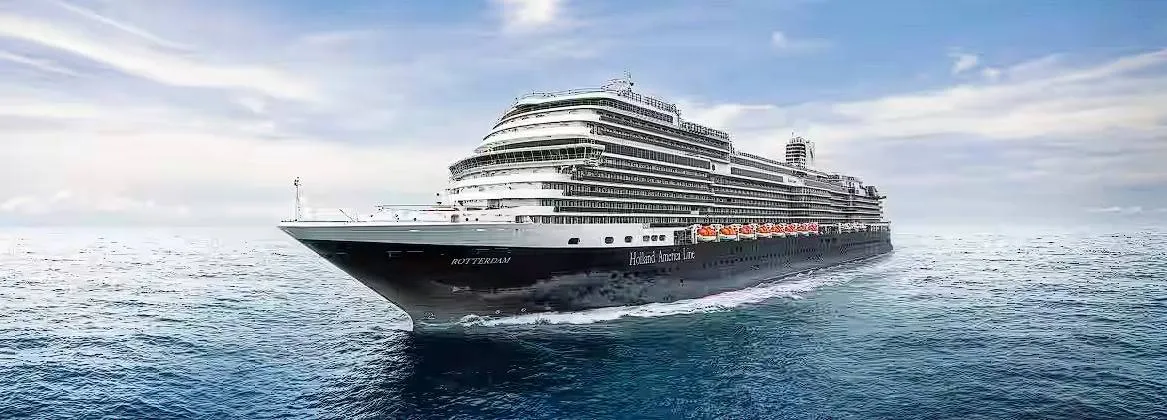
Holland America operates eleven ships across four classes spanning 27 years of construction. The three Pinnacle-class ships (Rotterdam 2021, Nieuw Statendam 2018, Koningsdam 2016) at approximately 99,500 gross tonnes carrying 2,650 guests are the largest and most contemporary, introducing Music Walk, Rudi’s Sel de Mer, and the World Stage. Two Signature-class ships (Eurodam 2008, Nieuw Amsterdam 2010) at 86,700 gross tonnes carry approximately 2,100 guests. Four Vista-class ships (Zuiderdam 2002, Oosterdam 2003, Westerdam 2004, Noordam 2006) at approximately 82,300 gross tonnes carry around 1,960 guests. Volendam (1999, 61,396 gross tonnes, 1,432 guests) is the fleet’s oldest and smallest ship.
Holland America has no new ships on order as of early 2026 — the last delivery was Rotterdam in July 2021. The fleet is being maintained through ongoing dry dock refurbishments: Zuiderdam received a Crow’s Nest redesign and new staterooms in December 2025, Oosterdam underwent a major upgrade in April 2025, and Zaandam was refreshed in February 2025. Cunard’s fleet is smaller but includes the genuinely unique Queen Mary 2 and the brand-new Queen Anne, giving it both heritage distinction and contemporary product.
Destination coverage overlaps in several key regions but each line has a signature territory.
The Transatlantic is Cunard-exclusive from this pairing. Queen Mary 2’s scheduled 7-night crossings between Southampton and New York, operating approximately monthly in each direction from April to December, represent a product no other ship in the world can replicate. This is not a repositioning voyage — it is a destination in itself, with five full sea days for immersion in the Cunard programme.
Alaska is Holland America’s flagship region. HAL has sailed Alaska since 1947, deploys six ships each summer from Seattle, Vancouver, and Whittier, holds more Glacier Bay National Park permits than any other line, and offers cruisetour extensions to Denali, Fairbanks, and the Yukon. Cunard’s Queen Elizabeth will sail 15 roundtrip Alaska voyages from Seattle in 2026, but this is described as among the “last opportunities” on that ship for the region.
Both lines are strong in the Mediterranean and Northern Europe. Cunard deploys Queen Victoria and Queen Anne seasonally with departures from Southampton and European ports, including 19 maiden calls in the 2025 season. Holland America sends three ships to Europe in 2026 with five Mediterranean homeports and 80-plus ports across 20 countries in Northern Europe, plus 28 Collectors’ Voyages of 14 to 27 days.
Both are world cruise specialists with long pedigrees. Cunard has offered world voyages since 1922. Holland America’s Grand Voyages date from the 1950s. In 2026, Cunard ran two simultaneous world voyages for the first time — Queen Mary 2 (108 nights westbound, including the ship’s first-ever Panama Canal transit) and Queen Anne (108 nights eastbound). Holland America’s 2026 Grand World Voyage on Volendam covers 133 days, 47 ports across 39 countries, and uniquely includes a four-day Antarctic experience — a differentiator from most world cruises.
Where each line excels
Cunard excels in:
- The Transatlantic Crossing. Queen Mary 2 is the only ship offering a scheduled transatlantic liner service. The seven-night crossing is the quintessential “journey is the destination” experience — five sea days for afternoon tea, Insights lectures, ballroom dancing, planetarium shows, and immersion in the Cunard lifestyle. No competitor can replicate this.
- The Grills experience. Butler service, bespoke a la carte dining in the Queens Grill, exclusive lounges and terraces, and dedicated concierge create a luxury-line experience within a premium-priced ship. Current promotions including complimentary drinks and service charges make this genuinely competitive.
- Formal heritage and atmosphere. Gala Evenings, ballroom dancing, white-gloved afternoon tea, the class-based hierarchy, and 185 years of tradition deliver an atmosphere that appeals to travellers who want occasion and elegance.
- Enrichment depth. Over 430 Insights speakers across the fleet, RADA acting workshops, and the world’s only seagoing planetarium create an intellectual programme that few lines match.
- World voyage prestige. Sailing a Cunard world voyage on Queen Mary 2 or the newest Queen Anne carries a cachet that is part of the brand’s century-long tradition.
Holland America excels in:
- Alaska. Seventy-five-plus years of experience, six ships deployed, more Glacier Bay permits than any competitor, and cruisetour extensions to Denali and the Yukon make Holland America the definitive Alaska cruise line.
- Music Walk entertainment. B.B. King’s Blues Club, Rolling Stone Rock Room, Billboard Onboard, and Lincoln Center Stage deliver the best live music programme at sea. No premium line matches this for nightly variety and quality.
- The Have It All package. Drinks, speciality dining, Wi-Fi, and excursion credits bundled into a single per-day charge provide transparent, competitive pricing that simplifies the booking decision.
- Culinary Council programme. Seven celebrity chefs shaping menus fleet-wide, plus select Culinary Cruises where the chefs appear in person, give Holland America a creative culinary edge that Cunard’s more traditional approach does not attempt.
- Fleet size and deployment flexibility. Eleven ships across four classes provide more itinerary options, more departure dates, and more regional coverage than Cunard’s four-ship fleet.
- Australian accessibility. Sydney homeporting with Noordam, expanding to two ships with Westerdam for 2026/27, makes Holland America the more accessible line for Australians who prefer to board locally.
Standout itineraries for Australian travellers
Cunard
QM2 Transatlantic Crossing (7 nights, Southampton to New York or reverse). The voyage that defines Cunard — the only scheduled ocean liner service in the world. Five sea days at cruising speed of 26 knots, the full Insights programme, Gala Evenings, ballroom dancing, and arrival into New York harbour. Requires flights from Australia to Southampton but pairs brilliantly with a London stay pre-cruise or a New York exploration post-cruise. Multiple departures from April to December.
QM2 Full World Voyage 2026 (108 nights, departing Southampton January 2026). Cunard’s most ambitious world voyage — the first-ever QM2 Panama Canal transit, 30 ports across five continents, overnights in Los Angeles, San Francisco, Sydney, Hong Kong, Singapore, and Cape Town. Segments are bookable from five nights, joining from New York, Los Angeles, Auckland, Sydney, Hong Kong, or Cape Town. The Sydney overnight makes this particularly appealing for Australians wanting to board or disembark locally on a shorter segment.
Queen Anne World Voyage 2027/28 (111 nights, Western Circumnavigation from Southampton). Via North and Central America, Hawaii, Australia, Asia, South Africa, and the Canary Islands. Another option for Australians to board a segment when the ship calls at Australian ports.
Queen Elizabeth Alaska from Seattle 2026 (7 to 12 nights, roundtrip Seattle, May to September). Fifteen roundtrip voyages covering Ketchikan, Glacier Bay, Juneau, Sitka, Tracy Arm Fjord, and Haines. Extended voyages of up to 42 nights combine Alaska with the Caribbean and the Panama Canal. Described as among the last opportunities to sail Alaska on Queen Elizabeth. Requires a flight to Seattle, but Los Angeles transit is straightforward from Australian gateways.
Queen Victoria Mediterranean (7 to 14 nights, from Southampton or European ports, summer 2026). Cunard’s primary Mediterranean deployment, with western, eastern, and full Mediterranean itineraries. A 14-night balcony from approximately USD 196 per night represents solid value for the level of product.
Holland America
35-Day Legendary Australia Circumnavigation (Noordam, departing 15 November 2026). A full circumnavigation of Australia with four ports in Papua New Guinea, overnights in Fremantle and Hobart, and late-night stops in Adelaide, Phillip Island, and Melbourne. This is a signature itinerary for Australian travellers who want to explore their own coastline in depth from a premium ship departing Sydney.
14-Day Australia and New Zealand (Noordam, multiple departures January to March 2027). The core Holland America Australian season itinerary, sailing between Sydney and Auckland with ports including Melbourne, Hobart, and New Zealand highlights. A strong option for travellers wanting a manageable two-week voyage from Sydney without international flights.
133-Day Grand World Voyage (Volendam, departing 4 January 2026, Fort Lauderdale roundtrip). Fifty-one ports across 23 countries on five continents, including a four-day Antarctic experience, Chilean fjords, Easter Island, and nine overnight ports. Segments bookable from 21 to 55 days — Australians can join from Sydney or Singapore. The Antarctic inclusion distinguishes this from most world cruises.
28-Day Legendary Arctic Circle Solstice (Noordam, departing 7 June 2026, roundtrip Seattle). Thirteen ports across Alaska and British Columbia, two days of Inside Passage scenic cruising, remote ports including Nome and Dutch Harbor, overnight Anchorage, and Great Bear Rainforest cruising. A once-in-a-lifetime extended Alaska voyage from Holland America’s signature region.
45-Day Ultimate Mediterranean and Atlantic Passage (Volendam, roundtrip New York). Twenty-one ports in twelve countries, overnight Alexandria, overnight Istanbul with late departure, and a comprehensive sweep of Gibraltar, Portugal, Spain, France, Italy, and Malta. An excellent option for Australians who want to combine a transatlantic crossing with deep Mediterranean exploration.
Ship-by-ship recommendations
Cunard
Queen Mary 2 — The ship to choose if you want the Transatlantic Crossing or a world voyage. QM2 is not a cruise ship — she is an ocean liner, purpose-built for the North Atlantic with a reinforced hull, deeper draft, and more powerful engines than any cruise vessel afloat. The Illuminations planetarium, the largest ballroom at sea, and the Kennels (the only facility of its kind on any cruise ship) are unique to this ship. QM2 received a USD 132 million refit in 2016 that added balcony staterooms and single-occupancy cabins. This is the definitive Cunard experience.
Queen Anne — The newest ship, delivered April 2024, and the best introduction to contemporary Cunard. Fifteen dining options — the most of any Cunard ship — including Aji Wa Japanese, Aranya Indian, and Sir Samuel’s Steakhouse. Mareel Wellness with cryo-therapy, micro-needling, and the Pavilion Wellness Studio. The design language is refreshed while maintaining the Grills hierarchy. Currently deployed to Northern Europe and the Mediterranean. Made her Australian debut in February 2025 on her maiden world voyage.
Queen Elizabeth — Freshly refitted in early 2025 at Seatrium Singapore with a refreshed Queens Room, updated Commodore Club, new Pavilion Wellness Cafe, Michel Roux Gala Evening menus, and Grills suite upgrades. Now sailing year-round from North America — Alaska from Seattle in summer, Caribbean from Miami in winter. The 2026 Alaska season represents a strong opportunity to experience this ship in one of cruising’s most spectacular regions. Built on the same Vista-class platform as Holland America’s mid-fleet ships but feels entirely different aboard.
Queen Victoria — The older sister to Queen Elizabeth, refreshed in mid-2024. Primarily deployed to the Mediterranean, Canary Islands, and Northern Europe from Southampton. A good choice for travellers who want Cunard’s Mediterranean programme at a slightly lower price point than Queen Anne.
Holland America
Rotterdam — The fleet flagship, launched 2021, and the newest ship in the fleet. Full Music Walk with B.B. King’s Blues Club, Rolling Stone Rock Room, and Billboard Onboard. World Stage with 270-degree LED screens. Rudi’s Sel de Mer as a standalone restaurant, refreshed in 2025. The most contemporary Holland America experience. Primarily deployed to Northern Europe from Rotterdam.
Koningsdam or Nieuw Statendam — The other two Pinnacle-class ships, carrying the same Music Walk venues and World Stage. Koningsdam is the top-rated ship on Cruise Critic for service, food, and entertainment. Nieuw Statendam is the third most popular in the fleet. Either is an excellent introduction to Holland America. Koningsdam sails Alaska in summer; Nieuw Statendam serves Northern Europe.
Noordam — The primary ship for Australian seasons. A Vista-class vessel from 2006, she is the lower-rated ship in the fleet on Cruise Critic, with some reviewers noting signs of aging. However, ongoing refurbishments have kept her current, and the advantage of Sydney homeporting — no international flights required — is significant. For Australians wanting Holland America without the cost and complexity of flying to an international port, Noordam is the practical choice.
Westerdam — Joining Noordam in Australia for the 2026/27 season, doubling Holland America’s capacity in the region. Also a Vista-class ship (2004), refreshed through recent dry dock upgrades. Rolling Stone Lounge for live music. The addition of a second ship demonstrates Holland America’s investment in the Australian market.
Volendam — The oldest and smallest ship in the fleet (1999, 61,396 gross tonnes, 1,432 passengers), but assigned to the 2026 Grand World Voyage — a 133-day circumnavigation including Antarctica. The smaller size creates a more intimate world voyage experience, and the ship has been refurbished to extend her service life. A good choice for travellers who value the itinerary over the ship’s newness.
For Australian travellers specifically
This is where the comparison becomes most consequential for our market, because the two lines have moved in opposite directions regarding Australian deployment.
Holland America is investing in Australia. Noordam has homeported in Sydney for the Australian cruise season, and for 2026/27 the line is adding Westerdam — doubling capacity to two ships with 26 itineraries ranging from 13 to 35 days. Ports include Sydney, Auckland, Melbourne, Hobart, Fremantle, Adelaide, Phillip Island, and Papua New Guinea. The 2027/28 season has already been announced with further itinerary expansion including the Great Barrier Reef and Fiji. Holland America lined Sydney’s Overseas Passenger Terminal with tulips for the 2025/26 season launch — a nod to its Dutch heritage and a clear signal of commitment to the Australian market. The Australian sales office operates through Carnival Australia, with agents able to book through the POLAR Online engine.
Cunard has withdrawn from Australian homeporting. Queen Elizabeth’s final Australian season concluded in February 2025, and the ship has been redeployed to year-round North American operations. The decision was controversial among Australian cruisers — some attributed it to the formal dress code deterring the Australian market, others to unfavourable economics and exchange rates. Whatever the reason, Cunard is now primarily a fly-cruise proposition for Australians. The line has affirmed that Queen Mary 2 and Queen Anne will continue to visit Australian ports on world voyage segments, with Sydney typically featuring as an overnight stop. But this is a fundamentally different proposition from a homeported ship offering regular roundtrip departures throughout the summer season.
For Australians who want to cruise from Sydney without international flights, Holland America is the clear choice from this pairing. For Australians who are willing to fly to Southampton, New York, or Seattle for a Cunard experience — and particularly for the Transatlantic Crossing or a Grills suite voyage — Cunard remains very much worth the effort.
Loyalty programmes for Australian travellers differ in practical accessibility. Holland America’s Mariner Society is easier to build credits in from Australia because ships homeport locally — you can accumulate cruise days without flying internationally each time. Cunard’s World Club is harder to progress through when every voyage requires a long-haul flight to an embarkation port. Neither programme offers cross-brand recognition with other Carnival Corporation lines, which remains a competitive disadvantage compared to Royal Caribbean Group’s cross-brand matching across Royal Caribbean, Celebrity, and Silversea.
The currency question affects both lines equally. Both price in USD for the international market, so the AUD/USD exchange rate shapes the perceived value of either line. Holland America’s Australian office prices some sailings in AUD for the local market, and the Have It All package converts reasonably when booked through Australian channels.
The onboard atmosphere
Formality is the single biggest differentiator between these two lines, and it shapes every aspect of the onboard experience — from what you pack to how you feel at dinner.
Cunard’s atmosphere is formal, regal, and deliberate. From 6pm, Smart Attire is required in most bars, restaurants, and entertainment venues. On Gala Evenings — at least one per voyage of three nights or more — tuxedos and evening gowns are encouraged. Themed Gala Evenings follow one of four themes: Black and White, Red and Gold, Masquerade, or Roaring 20s. Guests participate enthusiastically. The Queens Room fills with ballgown-clad dancers, the orchestra plays, and the chandelier light catches crystal glasses. The class system creates visible social stratification — Queens Grill guests move through the ship with a different relationship to the crew than Britannia passengers, and the separate lounges and terraces reinforce this distinction. The library is well stocked and well used. Conversations tend toward the intellectual — the morning’s Insights lecture, the day’s port, the political situation in the region being sailed. The passenger base is predominantly British (65 per cent on Transatlantic Crossings), with the proportion even higher on world voyages. Solo travellers find a welcoming environment, with dance hosts available and an inclusive social programme. The atmosphere rewards those who enjoy formality as a form of self-expression — dressing up is not an obligation on Cunard so much as a pleasure that the setting was designed to accommodate.
Holland America’s atmosphere is refined, warm, and comfortably social. Smart Casual is the evening norm — collared shirts and trousers for men, elegant tops and skirts or trousers for women. Blazers are appreciated but not required. Gala Nights bring suits and cocktail dresses, but tuxedos are far less common than on Cunard, and guests who prefer to avoid the formality can dine at the Lido Market in casual attire. There is no class system and no visible hierarchy by cabin category — a couple in an inside cabin and a couple in a Neptune Suite share the same main dining room, the same pool deck, and the same Music Walk. The evenings centre on live music: settling into B.B. King’s with a bourbon, singing along at Billboard Onboard, or watching BBC Earth footage on the World Stage. The passenger base is predominantly American, with a more international mix on European and Australian sailings. The average age is 55 to 75, and the atmosphere is best described as a gathering of well-travelled, curious people who enjoy good food, good music, and good company without needing to dress to the nines. Conversations are warm and approachable rather than formal and cerebral.
For Australians specifically, the dress code question is worth considering honestly. Australian travel culture tends toward the casual end of the spectrum. Many Australian cruisers find Cunard’s Gala Evenings delightful — a genuine occasion that elevates the holiday. Others find the dress code stressful, especially when packing formal wear for a fly-cruise that already involves long-haul flights and luggage constraints. Holland America’s Smart Casual standard is closer to what most Australians would consider “dressed up for a nice restaurant” — achievable without a dedicated suit bag. Neither approach is right or wrong, but the packing implications for a 24-hour flight from Sydney to Southampton are practical, not trivial.
The bottom line
Cunard and Holland America are sister lines under the same corporate parent, built on shared hull platforms, and serving overlapping demographics of mature, educated travellers who value substance over spectacle. The similarities are real. So are the differences.
Choose Cunard if you love British tradition, formal evenings, and the theatre of Gala Nights. Choose it for the Transatlantic Crossing — there is no other experience like seven nights aboard the world’s only ocean liner, arriving into New York harbour at dawn. Choose it for the Grills experience, which delivers genuine luxury-line service with butler, bespoke dining, and exclusive lounges at a premium-line price point. Choose it for the Cunard Insights programme, RADA workshops, and the world’s only seagoing planetarium. Choose it for world voyages on prestigious ships with a century-long tradition. Accept that Cunard no longer homeports in Australia, that every voyage now requires international flights, that the class system creates visible stratification, and that the formal dress code demands more of your luggage allowance than most premium lines.
Choose Holland America if you want warmer American-style hospitality, outstanding live music every evening, and a refined-but-relaxed atmosphere where Smart Casual is genuinely casual. Choose it for the Have It All package that bundles drinks, dining, Wi-Fi, and excursions into a single transparent price. Choose it for Alaska — seventy-five-plus years of expertise, six ships deployed, Glacier Bay permits, and cruisetour extensions to Denali. Choose it for the Culinary Council programme and speciality dining that punches above its weight. Choose it for Sydney homeporting — Noordam plus Westerdam for 2026/27, with no international flights required. Accept that the fleet has no new ships on order, that the oldest vessels show their age despite refurbishment, that entertainment on non-Pinnacle-class ships can feel limited, and that the line lacks Cunard’s heritage cachet and formal-evening atmosphere.
For most Australian travellers weighing these two lines, the practical question comes down to accessibility. Holland America sails from your doorstep. Cunard requires you to fly halfway around the world to board. If Sydney homeporting matters — and for many Australians, it is the deciding factor — Holland America is the simpler, more convenient, and more cost-effective choice. If you are willing to invest in the flights and the formality, Cunard offers an experience that Holland America does not attempt and cannot replicate: the world’s only ocean liner, the world’s largest ballroom at sea, and a 185-year tradition of British elegance that has no peer in modern cruising.