Disney Cruise Line and MSC Cruises are both major family-focused cruise lines, but they approach the market from opposite directions — Disney with premium American storytelling and MSC with European-style value cruising on some of the largest ships afloat. Jake Hower compares the two for Australian families weighing Disney magic against MSC's growing presence in our region.
| Disney Cruise Line | MSC Cruises | |
|---|---|---|
| Category | Mainstream | Mainstream |
| Rating | ★★★★☆ | ★★★★☆ |
| Fleet size | 7 ships | 23 ships |
| Ship size | Large (2,000–4,000) | Mega (4,000+) |
| Destinations | Caribbean, Alaska, Mediterranean, Northern Europe | Mediterranean, Caribbean, Northern Europe, Middle East |
| Dress code | Cruise casual | Smart casual |
| Best for | Families seeking Disney magic at sea | European-style family cruisers |
Disney delivers the most immersive family cruise experience available, with rotational dining, world-class kids' clubs, and entertainment that only Disney's intellectual property can provide. MSC counters with significantly lower pricing, a massive fleet of 23 ships including the newest mega-ships afloat, a growing Australian presence, and the Yacht Club ship-within-a-ship product that offers genuine luxury at a fraction of comparable alternatives. For Australian families wanting the ultimate once-in-a-lifetime cruise, Disney is unmatched. For families wanting excellent value, European flair, and increasingly accessible sailings from our region, MSC is the smarter long-term choice. Disney Adventure from Singapore brings Disney closer to Australia, but MSC's expanding local programme makes it the easier line to sail repeatedly.
The core difference
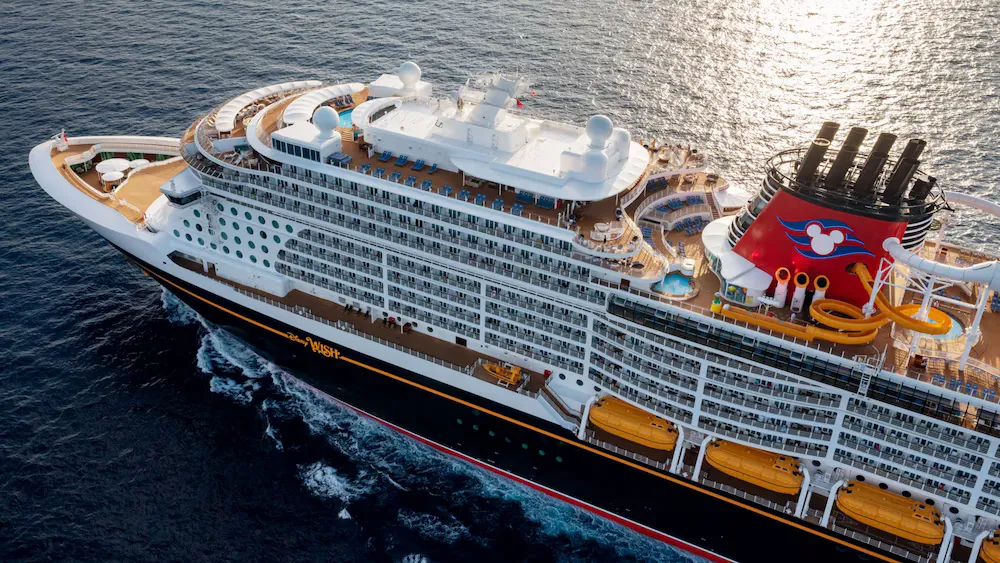
Disney Cruise Line is a premium family experience built on the most valuable entertainment brand in the world. Seven ships (eight from March 2026 with Disney Adventure from Singapore) deliver immersive storytelling through rotational dining, Broadway-calibre shows, character experiences, and themed environments that transform a cruise from a holiday into an event. Disney commands the highest fares in the mainstream segment and makes no apology for it — the product justifies the price for families who value the Disney magic above all else. The fleet is relatively small, the itineraries are curated, and the experience is tightly controlled.
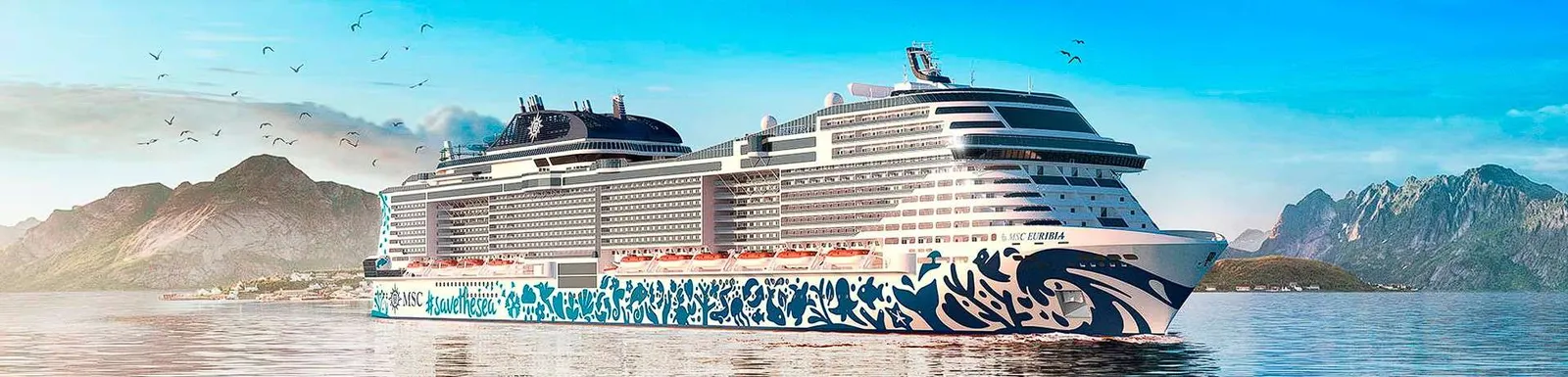
MSC Cruises is the world’s largest privately owned cruise line, with 23 ships and a growth trajectory that rivals any company in the industry. Founded in Naples in 1987 and still controlled by the Aponte family, MSC brings distinctly European sensibility to mega-ship cruising — Swarovski crystal staircases, Italian-designed interiors, Mediterranean cuisine, and a cosmopolitan atmosphere where announcements come in five languages. The World Class ships (MSC World Europa and MSC World America) carry nearly 7,000 passengers across 22 decks, making them among the largest vessels afloat. MSC’s pricing sits well below Disney’s, often dramatically so.
The core distinction for Australian families is between paying a premium for curation and immersion (Disney) versus maximising onboard scale and value (MSC). Both lines deliver excellent family programming, waterparks, and children’s facilities. But the experience of walking aboard a Disney ship — where every detail tells a story — is fundamentally different from boarding an MSC mega-ship, where the sheer scale and European design create a different kind of spectacle. Neither approach is objectively superior, but they serve different family priorities.
What is actually included
Disney Cruise Line includes all standard dining across three rotational restaurants and the buffet, room service, kids’ club programming from six months through seventeen, character meet-and-greets, Broadway-calibre stage shows, water attractions (AquaMouse or AquaDuck), and themed deck parties. Gratuities are added at approximately USD $14.50 per person per day. Speciality restaurants, alcoholic beverages, Wi-Fi, and spa treatments are extra. There is no casino.
MSC Cruises includes main dining room meals, the buffet, basic room service, kids’ club programming, pool access, and main-stage entertainment shows. MSC’s pricing model is heavily promotional, with regular packages bundling drinks, Wi-Fi, and spa credits at discounted rates. The Easy, Aurea, and Yacht Club fare tiers offer escalating inclusions — Aurea adds premium drinks, spa access, and priority embarkation, while Yacht Club includes all-inclusive beverages, butler service, and the dedicated luxury enclave. MSC’s gratuities run approximately EUR 12 to 14 per person per day in the Mediterranean.
The inclusion gap between Disney and MSC is less dramatic than the fare gap suggests. Disney’s higher price buys a genuinely inclusive family entertainment programme — character experiences, kids’ clubs, and shows carry no surcharge. MSC’s lower base fare requires add-on packages for drinks and Wi-Fi, but even with these packages the total cost per night typically remains well below Disney. For a family of four on a seven-night cruise, MSC with an all-inclusive drinks package is often AUD $5,000 to $10,000 cheaper than a comparable Disney booking — a difference that represents return flights to Singapore or a significant upgrade in cabin category.
Dining and culinary experience
Disney’s rotational dining is the standout feature of the cruise experience. Three themed restaurants per ship — each with unique decor, menus, and atmosphere — and your dedicated serving team follows you through all three over the voyage. On the Wish-class ships, Arendelle brings Frozen to life with live entertainment during dinner, Worlds of Marvel is an interactive Avengers dining experience, and 1923 pays elegant tribute to Disney’s founding year. The food quality is consistently above mainstream standards, with children’s menus that go beyond chicken nuggets and adult options that are genuinely well-prepared. Palo Steakhouse and Enchante offer adults-only premium dining at additional cost.
MSC’s dining programme reflects the line’s Mediterranean heritage. The main dining rooms serve multi-course Italian-influenced menus with a formality that Disney’s themed restaurants deliberately avoid — proper bread baskets, pasta courses, and a wine list that takes Italian regional varietals seriously. Speciality restaurants vary by ship but typically include a steakhouse, Asian fusion, seafood, and the signature Hola! Tacos and Cantina on newer vessels. The World Class ships expand dining dramatically, with themed food courts, international street food concepts, and premium venues. MSC’s Yacht Club guests dine in a dedicated restaurant with enhanced menus and service. The quantity of dining choice on MSC’s largest ships rivals or exceeds Royal Caribbean.
Disney wins on family dining innovation — no other line offers the rotational concept with dedicated waitstaff who know your family by name. MSC wins on European culinary authenticity and sheer breadth of choice on the mega-ships. For families with younger children who thrive on routine and relationship, Disney’s system is transformative. For families with adventurous eaters or teenagers who want to explore independently, MSC’s variety and flexibility is the better fit.
Suites and accommodation
Disney Cruise Line offers a well-defined cabin hierarchy from Inside Staterooms (approximately 169 to 184 square feet) to the Tower Suite on Wish-class ships (over 1,900 square feet). Family-focused design touches are standard — split bathrooms, pull-down bunks, and staterooms that sleep four or five without feeling impossibly cramped. The Concierge tier unlocks a dedicated lounge, priority services, and personalised attention. Disney’s cabin product is consistently well-maintained and thoughtfully designed for families, though the range of categories is narrower than MSC’s.
MSC Cruises offers an enormous range of accommodation across 23 ships spanning five generations of design. Standard cabins are competitive in size, and the modern Meraviglia and World Class ships feature balcony staterooms with contemporary European styling. The Yacht Club suites are the standout — spacious accommodations with butler service, premium amenities, and access to the private Yacht Club enclave including a dedicated pool, restaurant, and lounge. On MSC World Europa, Yacht Club suites start at approximately 280 square feet with balcony, and the Royal Suite tops 700 square feet. The Yacht Club concept is available on 15 ships across the fleet, making it one of the most widely available ship-within-a-ship products in the industry.
The MSC Yacht Club deserves specific attention in this comparison because it solves a problem Disney does not address. Families who want a luxury cruise experience with premium accommodation, butler service, and a private retreat — but also want their children to have access to waterparks, kids’ clubs, and the full entertainment programme of a mega-ship — find the Yacht Club delivers both at a price point well below dedicated luxury lines. Disney’s Concierge level is a service upgrade; MSC’s Yacht Club is a fundamentally different accommodation product.
Pricing and value
Disney Cruise Line is the most expensive mainstream cruise line, with seven-night Caribbean sailings in a Verandah Stateroom starting from approximately AUD $3,500 to $5,000 per person. Wish-class ships and peak-season sailings command premiums. Disney rarely discounts aggressively, and the line’s brand power ensures strong demand even at elevated fare levels.
MSC Cruises is among the most competitively priced large-ship lines in the world. Seven-night Mediterranean sailings in a Balcony Stateroom start from approximately AUD $1,200 to $2,500 per person, with promotional offers frequently pushing pricing lower. Caribbean sailings are similarly competitive. Australian-departure sailings from Sydney are priced for the local market and often represent exceptional value. MSC Yacht Club fares — which include the all-inclusive luxury enclave — start from approximately AUD $2,500 to $4,500 per person for a seven-night sailing, often matching or undercutting Disney’s standard Verandah Stateroom pricing while delivering a substantially elevated product.
The value equation for Australian families is stark. MSC’s base pricing allows a family of four to cruise for the cost of a single couple on Disney. The Yacht Club tier brings luxury-adjacent accommodation at mainstream pricing. And MSC’s growing Australian presence means the flight cost premium that Disney requires (except from Singapore) does not apply for domestic departures. For families who cruise annually or biannually, MSC’s pricing model supports repeat bookings in a way Disney’s premium positioning does not.
Spa and wellness
Disney Cruise Line operates the Senses Spa and Salon — an adults-only retreat with the Rainforest Room featuring heated stone loungers, steam rooms, and aromatic showers. Treatments include massage, facials, and body wraps. The fitness centre is well-equipped but compact. The spa serves primarily as a parental escape from the family programme.
MSC Cruises delivers spa and wellness at a scale befitting the size of its ships. The MSC Aurea Spa operates across the fleet with thermal areas, treatment rooms, and relaxation lounges. On the World Class and Meraviglia Class ships, the spa complexes are substantial — featuring saunas, steam rooms, snow rooms, and heated stone loungers alongside a comprehensive treatment menu. The Aurea fare tier includes spa access and one treatment in the cruise fare, creating genuine value for wellness-oriented travellers. Fitness centres on the newest MSC ships are large and well-equipped.
MSC’s spa facilities are more extensive than Disney’s, reflecting the larger ships and the European emphasis on wellness as part of the cruise experience. Disney’s Rainforest Room is a lovely space, but it is modest compared to the thermal suites aboard MSC World Europa or MSC Grandiosa. For travellers who consider spa and thermal facilities an important part of the cruise experience, MSC delivers more. For parents who simply need a quiet adults-only hour with a massage, Disney’s Senses Spa is perfectly adequate.
Entertainment and enrichment
Disney’s entertainment is its greatest competitive advantage. Broadway-calibre original productions — Frozen, Tangled, Hercules — feature professional casts and production values that rival West End and Broadway originals. Pirate Night with fireworks at sea is a signature experience unique to Disney (the only cruise line permitted to launch fireworks from a ship). Character meet-and-greets with Mickey, Marvel heroes, Star Wars characters, and Disney princesses run throughout the day. First-run films screen in the onboard cinema. The entertainment is immersive, consistent, and impossible for any competitor to replicate — Disney owns the characters and the stories.
MSC’s entertainment is broader in scope and more European in character. Cirque du Soleil at Sea performs original shows in a purpose-built theatre on the Meraviglia Class ships — a genuine headline act that represents one of the most ambitious entertainment partnerships in the cruise industry. Main-stage production shows feature acrobatics, dance, and music with high production values. For families, the onboard activities are extensive — waterparks with elaborate slides, sports courts, bumper cars, virtual reality experiences, Formula One simulators, and LEGO-themed play areas on newer ships. The evening atmosphere includes multiple bars, nightclub venues, and a full casino — creating an adult entertainment scene that Disney deliberately avoids.
Disney wins comprehensively on family theatrical entertainment — nothing in the MSC fleet approaches the quality of a Disney Broadway production. MSC wins on scale of family activities and adult nightlife. The Cirque du Soleil partnership is MSC’s strongest entertainment asset, delivering a unique experience that no other cruise line offers. For families weighing character magic against onboard activity volume, the choice is clear: Disney for the shows, MSC for the sheer amount of things to do.
Fleet and destination coverage
Disney Cruise Line operates seven ships (eight from March 2026) sailing the Caribbean and Bahamas, Alaska, the Mediterranean, Northern Europe, and Southeast Asia from Singapore. The fleet is growing but remains relatively small and tightly curated. Two private island destinations in the Bahamas — Castaway Cay and Lookout Cay at Lighthouse Point — are exclusive to Disney guests. Disney does not sail in Australian waters.
MSC Cruises operates 23 ships across the Mediterranean (where MSC dominates), Caribbean, Northern Europe, the Middle East, South America, Asia, and with seasonal deployments to Australia. The fleet spans five generations of ship classes, from the older Lirica Class to the World Class mega-ships. MSC’s Mediterranean programme is the most extensive of any cruise line, with home-port advantages in Barcelona, Genoa, Marseille, and Naples delivering excellent itineraries through waters the company knows intimately.
For Australian travellers, MSC’s growing domestic presence is a meaningful differentiator. When MSC deploys a ship to Australian waters, families can board from Sydney without flights. The Mediterranean programme is accessible via flights to European hubs. Disney requires flights to Port Canaveral, Barcelona, Vancouver, or Singapore for every sailing. Disney Adventure from Singapore (eight hours from Australian east coast cities) narrows the gap, but MSC’s multi-region fleet and Australian deployments provide more options for Australians overall.
Where each line excels
Disney Cruise Line excels in:
Character-driven family magic. No cruise line can replicate Disney’s intellectual property. The meet-and-greets, the themed dining, the Broadway shows, and the private island experiences create an immersive family holiday that exists nowhere else at sea. For children who love Disney, this is the only choice.
Rotational dining. The concept of moving through three themed restaurants with your dedicated waitstaff following you is unique in the industry and creates a dining experience that families — particularly those with young children — consistently rate as a cruise highlight.
Kids’ club quality. The Oceaneer Club is the industry benchmark, with character-driven programming, exceptional staffing ratios, and environments that children genuinely do not want to leave. The nursery accepts infants from six months, and programming extends through seventeen.
MSC Cruises excels in:
Value for money. MSC delivers big-ship cruising at prices that make family holidays genuinely affordable. The gap between MSC and Disney can amount to thousands of dollars per family, with MSC’s onboard facilities — waterparks, kids’ clubs, multiple dining venues — delivering a comprehensive experience at the lower price point.
The Yacht Club. MSC’s ship-within-a-ship luxury product has no equivalent on Disney. Butler service, a private pool and restaurant, and spacious suites inside a mega-ship carrying the full entertainment programme — at fares that often match Disney’s standard cabin pricing.
Mediterranean expertise. MSC’s Italian heritage and home-port advantages in the Mediterranean deliver the strongest programme of any line in the region. For Australian families planning a European cruise holiday, MSC’s Mediterranean sailings are competitively priced and authentically European.
Fleet scale and Australian presence. Twenty-three ships across virtually every cruise region, with seasonal Australian deployments that eliminate flight costs. MSC’s growth trajectory and expanding presence in the Australian market make it increasingly accessible.
Standout itineraries for Australian travellers
Disney Adventure from Singapore (3 and 4 nights, from March 2026) is the most relevant Disney option for Australians. Eight hours from Sydney or Melbourne, Singapore is a manageable gateway for families with young children. The short itinerary length suits families with limited leave or children who may not tolerate a full seven-night cruise. Combine with a few nights in Singapore for the complete holiday.
Disney Fantasy or Disney Treasure: Eastern Caribbean (7 nights, from Port Canaveral) delivers the definitive Disney cruise experience with Castaway Cay, Caribbean ports, and the full entertainment programme. The long flight from Australia is the trade-off — allow a pre-cruise night in the Orlando area. Choose a Wish-class ship (Wish, Treasure, or Destiny) for the newest onboard experience.
MSC from Sydney: South Pacific (various lengths, seasonal) offers Australian families the easiest possible entry to MSC — board from Sydney, cruise to New Caledonia, Vanuatu, or other Pacific destinations, and return home without a flight. The ships deployed to Australia are modern vessels with waterparks, kids’ clubs, and the full MSC entertainment programme.
MSC Grandiosa or MSC Virtuosa: Western Mediterranean (7 nights, from Barcelona or Genoa) provides the quintessential MSC experience through the line’s home waters. Calls at Italian, French, and Spanish ports with the line’s strongest port knowledge and excursion programme. The Meraviglia Class ships carry Cirque du Soleil at Sea, making the onboard entertainment as compelling as the destination.
MSC World Europa: Mediterranean or Arabian Gulf (7 nights, various ports) is MSC’s flagship and the best showcase of the line’s newest innovations. Twenty-two decks, themed districts, and the most extensive onboard activity programme in the fleet. The Arabian Gulf itineraries offer winter-sun cruising accessible from Australia via Middle Eastern hubs.
Ship-by-ship recommendations
Disney Wish, Disney Treasure, and Disney Destiny (approximately 4,000 guests each) are the recommended Disney ships — the newest in the fleet, with the AquaMouse, three immersive rotational restaurants, and the most expansive kids’ club facilities. Choose by itinerary and departure date.
Disney Adventure (approximately 6,000 guests, from Singapore, March 2026) is the largest Disney ship and the obvious choice for Australian families. Purpose-built for the regional market with unique attractions. The most accessible Disney option from Australia by a significant margin.
MSC World Europa and MSC World America (approximately 6,700 guests each) are MSC’s newest and most ambitious ships, with 22 decks of themed districts, waterparks, and dining variety that approaches the scale of a small town. World Europa is the more established of the two. Choose for the most complete MSC mega-ship experience.
MSC Grandiosa and MSC Virtuosa (approximately 6,300 guests each) are Meraviglia Plus class ships featuring Cirque du Soleil at Sea — a genuine differentiator in cruise entertainment. The Mediterranean programme on these ships is MSC’s strongest offering. Good options for Australian families planning a European cruise holiday.
MSC Yacht Club on any equipped ship (15 ships across the fleet) transforms the MSC experience. For families who want the waterparks and kids’ clubs of a mega-ship but the service and privacy of a luxury product, the Yacht Club is the recommended booking approach. Available from approximately AUD $2,500 per person per week — often matching Disney’s standard cabin pricing.
For Australian travellers specifically
The accessibility comparison between Disney and MSC is evolving, and 2026 represents a turning point for both lines in the Australian market.
Disney’s Australian access is concentrated on Disney Adventure from Singapore, launching March 2026. This single ship and port combination changes Disney’s viability for Australian families — an eight-hour flight replaces the 20-plus hours previously required. Beyond Singapore, all other Disney embarkation ports (Port Canaveral, Miami, Barcelona, Vancouver) require long-haul flights. Disney does not have a dedicated Australian sales office, though bookings through Australian travel agents are supported.
MSC’s Australian access is broader and growing. Seasonal ship deployments to Sydney offer direct boarding without flights. The line’s European embarkation ports (Barcelona, Genoa, Marseille) are accessible via Middle Eastern hub connections. MSC has been investing in the Australian market with local marketing and competitive pricing for domestic departures. The fleet’s sheer size — 23 ships — means more opportunities for Australian-relevant deployments as the market grows.
Currency and booking considerations matter for Australian families. Disney prices primarily in USD from US-based booking platforms. MSC offers AUD pricing through the Australian website and local travel agents. The foreign exchange exposure on Disney bookings can create uncertainty — a moving AUD/USD rate can shift the cost of a Disney cruise by hundreds of dollars per person between booking and final payment. MSC’s local pricing provides more certainty for Australian budgets.
Children’s pricing is an area where MSC holds a significant advantage. MSC regularly offers children-sail-free promotions and heavily discounted third- and fourth-passenger rates. Disney’s children’s pricing, while discounted from adult rates, is substantially higher than MSC’s promotional offers. For families of four or more, the savings on children’s fares alone can amount to AUD $2,000 to $4,000 per sailing with MSC.
The onboard atmosphere
Disney Cruise Line feels like stepping into a Disney film. The atmosphere is joyful, immaculately curated, and unmistakably family-oriented. Characters roam the ship, children wear costumes to dinner, and the attention to detail — hidden Mickeys, themed elevator music, the horn playing “When You Wish Upon a Star” — creates a world that enchants children and charms adults. The passenger mix is predominantly American families, with growing international representation. The dress code is cruise casual with themed evenings (Pirate Night, Frozen Night). There is no casino, and the overall atmosphere is wholesome and celebratory.
MSC Cruises feels distinctly European — cosmopolitan, stylish, and multilingual. Announcements come in five or more languages. The design aesthetic is Italian, with Swarovski crystal, marble lobbies, and a colour palette that favours gold, white, and deep blue. The passenger mix draws heavily from Italy, France, Germany, Spain, and the UK, with a growing Australian contingent on domestic deployments. The atmosphere is relaxed and sociable, with a livelier evening scene than Disney — the casino, the nightclub, and the late-night bars create an adult energy that coexists with the family programming. The Yacht Club is a world apart — hushed, attentive, and exclusive.
The atmospheric gap reflects cultural differences as much as product differences. Disney creates an immersive American entertainment experience. MSC creates a cosmopolitan European holiday experience. Australian families may find Disney’s atmosphere more familiar (Australian children grow up with Disney films and characters) while finding MSC’s multilingual, multicultural atmosphere a novelty — or vice versa. For families who want their children immersed in Disney magic, the choice is self-evident. For families who want their children exposed to international diversity and European culture, MSC offers something Disney does not.
The bottom line
Disney Cruise Line and MSC Cruises represent opposite ends of the mainstream family cruise spectrum — Disney as the premium, curated, storytelling-driven experience, and MSC as the value-oriented, European-flavoured, mega-ship alternative. Both deliver excellent family cruises, but they solve different problems for different budgets.
Choose Disney for the magic that only Disney can deliver. Choose it for rotational dining where your waitstaff become part of the family. Choose it for Broadway shows that make children believe in fairy tales. Choose it for the Oceaneer Club where your six-year-old will beg to stay past pick-up time. Choose it for Castaway Cay beaches and character breakfasts and the unmistakable Disney polish that permeates every detail. Choose Disney Adventure from Singapore as the most accessible Disney option for Australian families. Accept the premium pricing, the smaller fleet, the need for international flights (Singapore excepted), and the absence of a casino.
Choose MSC for value that makes family cruising genuinely affordable. Choose it for ships so large that a week is barely enough to explore them. Choose it for the Yacht Club — a genuine luxury experience hidden inside a mainstream mega-ship at a price that matches Disney’s standard cabins. Choose it for Cirque du Soleil at Sea, for Mediterranean itineraries sailed by a company that knows those waters intimately, and for Australian departures from Sydney that eliminate flights and jet lag. Choose it for children-sail-free promotions that make the maths work for larger families. Accept the European service style, the multilingual atmosphere, and the fact that MSC’s entertainment — while impressive in scale — cannot replicate the emotional connection of Disney’s character-driven magic.
For Australian families who can afford one exceptional cruise, Disney Adventure from Singapore is the recommendation. For families who want to cruise regularly, MSC’s pricing, fleet breadth, and Australian presence make it the practical choice for years of family holidays at sea.