Fred. Olsen and MSC Cruises represent opposite ends of the mainstream cruise spectrum — a three-ship British heritage line sailing from UK ports with no more than 1,300 guests, versus a 23-ship European mega-cruise empire carrying up to 7,000 passengers on some of the largest vessels afloat. Jake Hower explains what each delivers and how Australians should weigh the choice.
| Fred. Olsen Cruise Lines | MSC Cruises | |
|---|---|---|
| Category | Mainstream | Mainstream |
| Rating | ★★★★☆ | ★★★★☆ |
| Fleet size | 3 ships | 23 ships |
| Ship size | Mid-size (1,000-2,500) | Mega (4,000+) |
| Destinations | Northern Europe, Norwegian Fjords, Mediterranean, Canary Islands | Mediterranean, Caribbean, Northern Europe, Middle East |
| Dress code | Smart casual | Smart casual |
| Best for | British travellers seeking scenic itineraries | European-style family cruisers |
These lines serve entirely different purposes and will rarely compete for the same booking. Fred. Olsen is for mature British travellers who want traditional, scenic cruising from UK ports on smaller ships with personal service and enrichment-driven programming. MSC is for families and value-seekers who want big-ship entertainment, European-style mega-ship cruising, and global destination coverage at competitive prices. For Australians, MSC is the far more accessible option — it sails globally, offers Mediterranean departures year-round, and the Yacht Club ship-within-a-ship concept delivers genuine luxury. Fred. Olsen makes sense only as part of a UK visit.
The core difference
Fred. Olsen Cruise Lines and MSC Cruises occupy the same broad category — mainstream cruising — but the comparison is almost absurd in its contrasts. One is a three-ship, Norwegian-owned, British-focused heritage line carrying no more than 1,300 guests per vessel. The other is the world’s largest privately-owned cruise company with 23 ships, some exceeding 200,000 gross tons and carrying nearly 7,000 passengers. Comparing them is like comparing a country pub with a Las Vegas resort — both serve food and drinks, both provide accommodation, but the experience has almost nothing in common.
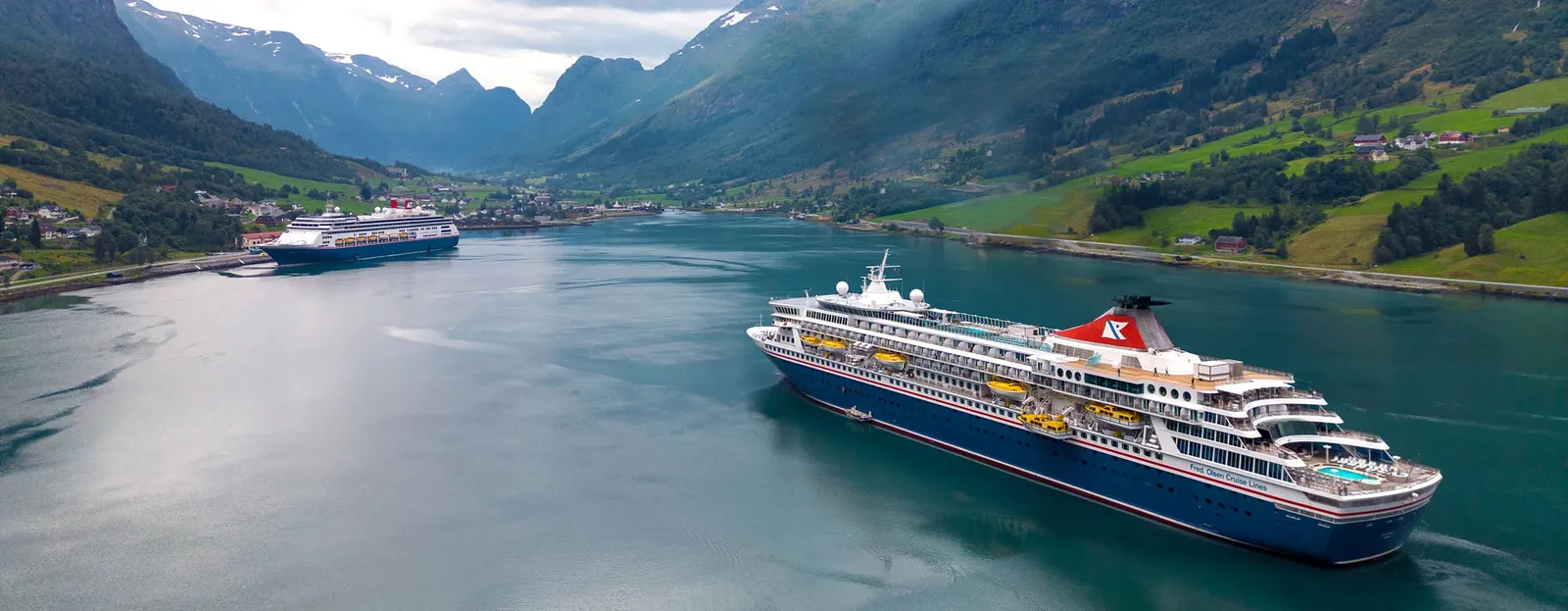
Fred. Olsen was founded in 1848 and still carries the values of traditional, unhurried British cruising. The fleet — Bolette, Borealis, and Balmoral — consists of older, classic-style ships with wraparound promenade decks, two-sitting dinners, enrichment lectures, and the kind of quiet, personal atmosphere where the captain greets you by name and the maitre d’ remembers your table preference. Borealis is adults-only. The fleet carries over 50 dedicated solo cabins. Sailings depart from UK ports — Southampton, Liverpool, Dover, Edinburgh — offering a no-fly option that is the line’s primary selling point for its British core market.
MSC Cruises was founded in Naples in 1987 and has grown under the Aponte family into a global powerhouse. The newest World Class ships — MSC World Europa and MSC World America — are among the largest passenger vessels ever built, with 22 decks divided into themed districts, Swarovski crystal staircases, and entertainment complexes that include aquaparks, go-kart tracks, and robotic rides. The Mediterranean DNA shows in every detail: Italian-designed interiors, multicultural guest mix, and a dining programme that leans into Continental cuisine. MSC sails everywhere — Mediterranean, Caribbean, Northern Europe, Middle East, and beyond.
For Australian travellers, this is not a close contest in terms of accessibility. MSC is a global line with year-round Mediterranean departures easily reached from Australian gateways. Fred. Olsen requires travelling to the UK to board, with no international departures and no Australian presence. The comparison matters most for travellers weighing a UK-based Fred. Olsen cruise against a fly-cruise to the Mediterranean on MSC.
What is actually included
The inclusion models reflect the different scales of operation and different philosophies about pricing.
Fred. Olsen’s fare covers the cabin, all meals in the main dining rooms, and from 2026, drinks at mealtimes — a welcome addition that brings the line closer to genuine value. Drinks outside mealtimes, gratuities, shore excursions, spa treatments, and specialty dining are additional, though bar prices are notably lower than most competitors. The no-fly ex-UK model means no airfare is needed for British travellers, which represents significant hidden value.
MSC’s base fare covers the cabin, meals in the main buffet and dining room, basic entertainment, and access to pools and public areas. Drinks, Wi-Fi, gratuities, specialty dining, and shore excursions are additional. MSC offers various drink packages — the Easy, Premium, and Premium Plus packages range from approximately EUR 30 to 65 per person per day. The MSC Yacht Club fare is substantially more inclusive, covering a dedicated restaurant, butler service, premium drinks in the Yacht Club lounge, and priority services.
The practical difference for Australian travellers is significant. An MSC Mediterranean cruise in a standard balcony cabin with a drink package runs approximately AUD 200 to 400 per person per night all in — competitive pricing for the scale of entertainment and dining available. Fred. Olsen’s seven-night sailings from the UK cost roughly AUD 2,000 to 3,600 per person before adding the cost of getting to the UK. MSC’s Yacht Club, at roughly AUD 400 to 700 per person per night, delivers a quasi-luxury experience at a fraction of dedicated luxury line pricing.
Dining and culinary experience
The dining comparison highlights the gap between intimate traditional service and mass-market variety.
Fred. Olsen serves meals in traditional dining rooms with two sittings, offering a mix of British comfort food and destination-inspired regional dishes. The quality is honest and well-prepared without being exceptional. Menus change daily and reflect the ports being visited — Norwegian specialities on fjord cruises, Mediterranean-influenced dishes in the Med. The dining experience is personal and unhurried, with waiters who learn your preferences and a maitre d’ who remembers where you like to sit.
MSC offers a vast array of dining options, particularly on newer ships. The main dining room and buffet are included, with specialty restaurants charging supplements — options span Italian, Asian, steakhouse, seafood, and more depending on the vessel. The quality in specialty venues is genuinely good, particularly the Italian restaurants where MSC’s Mediterranean heritage shows. On the World Class ships, the sheer number of dining venues can exceed 15. The MSC Yacht Club’s private restaurant delivers the most refined dining experience in the fleet, with dedicated chefs and an atmosphere that feels entirely separate from the rest of the ship.
Fred. Olsen wins on personal service and traditional dining atmosphere. MSC wins overwhelmingly on variety and choice. Australian travellers who value knowing their waiter’s name and having a quiet, consistent dinner experience will prefer Fred. Olsen. Those who want a different restaurant every night for a week will prefer MSC.
Suites and accommodation
The accommodation comparison spans four decades of ship design philosophy.
Fred. Olsen’s fleet offers cabins ranging from inside singles to suites. Borealis and Bolette, former Holland America vessels, provide the best space-per-guest ratios — Borealis achieves 45.5, genuinely spacious for a mid-market ship. Cabins are classic in style with traditional furnishings. The dedicated single cabins — over 50 across the fleet — are purpose-built for solo travellers rather than doubles sold at a supplement. Suite options exist but are modest compared to modern premium lines.
MSC’s accommodation ranges from compact inside cabins on older ships to the extraordinary Yacht Club suites on newer vessels. Standard cabins on MSC’s mega-ships are functional but not generous — the sheer number of guests means space-per-cabin can feel tight in lower categories. The Yacht Club changes the equation entirely: suites with butler service, Jacuzzi balconies on some categories, and exclusive access to the Yacht Club pool, lounge, and restaurant. On MSC World Europa, Yacht Club suites reach over 700 square feet with separate living areas. The newest ships also feature family suites and interconnecting options that Fred. Olsen simply cannot match.
Fred. Olsen offers more consistent cabin quality across its smaller fleet. MSC offers vastly more variety, from budget-friendly inside cabins to genuine luxury suites. The Yacht Club represents the best accommodation value in this comparison — modern luxury suites with butler service at a price point below dedicated luxury lines.
Pricing and value
The pricing comparison is shaped by radically different business models.
Fred. Olsen prices reflect a traditional British cruise line serving a loyal, mature market. Seven-night ex-UK sailings start from roughly GBP 1,000 to 1,800 per person — approximately AUD 2,000 to 3,600 — with longer voyages and premium cabins commanding more. The 108-night world cruise can exceed GBP 10,000 per person. Value is delivered through the no-fly model (saving British travellers GBP 200 to 600 in flights), mealtime drinks inclusion from 2026, and low onboard bar prices.
MSC is one of the most competitively priced major cruise lines globally. Seven-night Mediterranean cruises start from approximately EUR 500 to 900 per person in a standard cabin — roughly AUD 800 to 1,500 — making MSC accessible to budget-conscious travellers. Yacht Club pricing starts from approximately EUR 1,500 to 3,000 per person for seven nights — roughly AUD 2,500 to 5,000 — which delivers butler-served luxury at a fraction of Silversea or Regent pricing. MSC’s aggressive pricing strategy reflects the company’s growth ambitions and its ability to fill large ships at volume.
For Australian travellers, MSC’s Mediterranean departures from Barcelona, Genoa, or Marseille require flights of approximately AUD 1,800 to 3,000 return from Australian gateways. Even with flights added, a week on MSC in the Mediterranean — including a drink package — comes in at roughly AUD 3,000 to 5,000 per person. A comparable Fred. Olsen Mediterranean sailing from the UK, with flights to London and a train to Southampton, would cost AUD 4,500 to 7,000 with significantly less onboard entertainment and smaller ships. MSC wins on value by a decisive margin for Australian travellers.
Spa and wellness
The spa and wellness comparison reflects the scale difference between these lines.
Fred. Olsen offers traditional spa facilities on all three ships — treatment rooms, saunas, and fitness centres. The offerings are straightforward: massages, facials, and body treatments without elaborate thermal suites or hydrotherapy pools. The advantage is availability — on a ship carrying 1,300 guests or fewer, you can often book treatments at short notice and the spa never feels crowded.
MSC provides extensive spa and wellness facilities on its larger ships, operated by the Aurea Spa brand. Thermal suites with saunas, steam rooms, and sensory showers are available on newer vessels. Treatment menus are comprehensive and internationally influenced. Fitness centres are large and well-equipped. On World Class ships, the spa complex spans multiple decks with dedicated relaxation areas. The MSC Yacht Club includes priority spa booking and, on some ships, a dedicated wellness area.
MSC wins on facilities and variety. Fred. Olsen wins on intimacy and ease of access. Australian travellers who prioritise wellness will find MSC’s newer ships significantly more compelling — the Aurea Spa on MSC World Europa alone is larger than Fred. Olsen’s entire spa offering across three ships.
Entertainment and enrichment
This section reveals the most stark philosophical difference between the two lines.
Fred. Olsen prioritises enrichment over entertainment. Guest speakers deliver lectures on history, science, and destinations. Scenic cruising through fjords and along coastlines is treated as an event. Evening entertainment includes modest production shows (enhanced by the new RWS Global partnership), live music, and quiz nights. The real evening draw is the bar — convivial conversation with fellow guests in a sociable but unhurried setting. There are no waterslides, no go-kart tracks, no theme parks. The entertainment is the destination and the company of fellow travellers.
MSC delivers entertainment on a scale that Fred. Olsen cannot begin to approach. The World Class ships feature aquaparks, go-kart tracks, bumper cars, robotic rides, zip lines, and elaborate pool complexes. Production shows in the main theatre are large-scale, multilingual, and heavily produced. Evening entertainment spans multiple lounges with live music, DJs, themed parties, and casino gaming. MSC’s onboard atmosphere is distinctly European and cosmopolitan, with announcements in multiple languages and a vibrant, energetic atmosphere that runs from morning to late at night.
For Australian travellers accustomed to the energy of Royal Caribbean or Norwegian, MSC will feel familiar in its scope. Fred. Olsen will feel like a different world — quieter, more cerebral, and oriented around enrichment rather than stimulation. Neither approach is superior, but they serve fundamentally different desires.
Fleet and destination coverage
The fleet comparison is not a contest — it is a demonstration of entirely different business models.
Fred. Olsen operates three ships — Bolette (1,360 guests), Borealis (1,360 guests, adults-only), and Balmoral (1,325 guests). Despite the small fleet, the itinerary range is impressive: Norwegian Fjords, Canary Islands, British Isles, Iceland, Mediterranean, and expedition-style voyages up to 108 nights. All sailings depart from UK ports. The ships’ mid-size dimensions allow access to smaller ports and narrow waterways.
MSC operates 23 ships across five generations of vessel classes, with more on order. The fleet sails the Mediterranean year-round, plus Caribbean, Northern Europe, Middle East, South America, and beyond. MSC’s home-turf advantage in the Mediterranean — with embarkation from Barcelona, Genoa, Marseille, and other ports — means unmatched frequency and variety in the region. The company’s growth trajectory includes new ships arriving annually through the end of the decade.
For Australian travellers, MSC’s global deployment and year-round Mediterranean programme make it vastly more accessible. Fred. Olsen’s UK-only departures require a specific commitment to travel to Britain first. The only scenario where Fred. Olsen’s fleet coverage works better is for scenic British Isles and Nordic cruising from UK ports — a niche MSC does not serve.
Where each line excels
Fred. Olsen excels in:
Traditional British cruising with personal service. The smaller ships mean crew know your name within days. The enrichment programme appeals to intellectually curious travellers. The no-fly ex-UK model is genuinely valuable for those based in or visiting Britain. Over 50 dedicated solo cabins and a structured solo traveller programme make this one of the best mainstream options for single cruisers. Borealis’s adults-only status creates a quieter, more refined atmosphere. And the Norwegian Fjords itineraries — sailing from the UK on a Norwegian-heritage line — carry an authenticity that MSC cannot replicate.
MSC excels in:
Scale, value, and Mediterranean expertise. Twenty-three ships offer unmatched choice and availability. The Yacht Club ship-within-a-ship delivers genuine luxury at a fraction of premium line pricing. Family facilities are extensive and purpose-built. Mediterranean itineraries benefit from deep regional knowledge and convenient embarkation ports. Competitive pricing makes MSC one of the most accessible entry points to cruising for any budget. And the European design aesthetic — Swarovski crystals, Italian interiors, Continental atmosphere — offers a genuine alternative to American-dominated mainstream cruising.
Standout itineraries for Australian travellers
Fred. Olsen
Borealis: Norwegian Fjords from Southampton (7-14 nights, multiple departures) — The signature Fred. Olsen experience and the most compelling reason for an Australian visiting the UK to consider this line. Adults-only Borealis sails from Southampton into fjords that the line’s Norwegian heritage lends genuine authenticity to. Mid-size ships access narrower channels than MSC’s mega-ships could dream of entering. Fly to London, train to Southampton.
Bolette: British Isles and Iceland (10-14 nights, ex-Liverpool or Dover) — Fred. Olsen’s British Isles cruising covers Scotland, Ireland, Orkney, and Shetland with optional extensions to Iceland and the Faroe Islands. These are itineraries MSC does not offer, in waters where a 1,360-guest ship is the right size. For Australians visiting the UK who want to explore the British coastline by sea, this is a unique proposition.
MSC
MSC World Europa: Western Mediterranean (7 nights, roundtrip Barcelona or Genoa, year-round) — The flagship mega-ship experience on MSC’s home turf. Twenty-two decks, themed districts, world-class entertainment, and the Yacht Club for those wanting a luxury enclave. Fly to Barcelona from Australian gateways via Singapore Airlines, Emirates, or Qatar Airways. Seven nights from approximately AUD 1,200 per person in a balcony cabin — extraordinary value.
MSC Yacht Club: Eastern Mediterranean (7-10 nights, multiple ships, roundtrip Athens or Venice) — The Yacht Club transforms a mainstream cruise into a quasi-luxury experience with butler service, private restaurant, exclusive pool, and priority everything. Eastern Mediterranean itineraries visiting Greek islands, Turkey, and Croatia in a Yacht Club suite represent genuine value for Australians wanting luxury without the luxury line price tag.
Ship-by-ship recommendations
Fred. Olsen
Borealis (1,360 guests, adults-only) — The top choice for the adults-only atmosphere and excellent space-per-guest ratio. Choose for Norwegian Fjords and scenic itineraries where a quiet, adult environment enhances the destination experience.
Bolette (1,360 guests) — Borealis’s sister ship, open to all ages. Same quality of hardware with a broader demographic. Choose when sailing with family or for itineraries Borealis does not cover.
Balmoral (1,325 guests) — The older ship with a lower space-per-guest ratio but a loyal following. Choose when the itinerary is paramount.
MSC
MSC World Europa (6,762 guests) — The newest World Class mega-ship with the full MSC experience including the Yacht Club. Choose for the most modern MSC experience and Mediterranean sailings.
MSC Virtuosa or Grandiosa (6,334 guests) — The Meraviglia Plus class ships offer an excellent balance of entertainment, dining, and Yacht Club facilities at slightly lower pricing than the World Class. Choose for value-conscious mega-ship cruising.
Any ship with Yacht Club — The Yacht Club is available on 15 MSC ships and transforms the experience. For Australian travellers wanting an intimate feel inside a mega-ship, the Yacht Club on any vessel is the recommendation. The dedicated restaurant, butler service, and private deck create a genuine luxury bubble.
For Australian travellers specifically
The Australian perspective on this comparison is straightforward: MSC is accessible; Fred. Olsen is not — unless you are already travelling to the UK.
MSC’s global deployment means Australians can fly to Barcelona, Genoa, Athens, or Miami and board a ship with relative ease. Mediterranean departures are year-round, Caribbean sailings are plentiful, and the line’s competitive pricing means the total holiday cost — flights plus cruise — remains reasonable. The Yacht Club elevates the experience to luxury standards at mid-market pricing, which is a compelling proposition for Australian travellers who want more than standard mainstream cruising without paying Silversea or Regent rates.
Fred. Olsen requires flying to the UK and travelling to a departure port — Southampton, Liverpool, Dover, or Edinburgh. There are no fly-cruise packages from Australian airports, no Australian sales representation, and no Australian-relevant departure points. The line is practical for Australians only when a UK visit is already planned, making the cruise an add-on rather than the destination.
Neither line has a meaningful Australian loyalty programme partnership. MSC’s Voyagers Club is a tiered loyalty programme offering benefits from drink discounts to balcony upgrades, and it works globally. Fred. Olsen’s Oceans loyalty programme rewards repeat sailings with onboard credit and priority booking, but its UK focus limits Australian relevance.
For Australian travellers choosing between these lines, the question is really about what kind of European cruise holiday you want. MSC delivers big-ship Mediterranean cruising at excellent value with the option of Yacht Club luxury. Fred. Olsen delivers intimate, scenic, traditional cruising from UK ports for those who value enrichment over entertainment. They are not competing products — they are different holidays entirely.
The onboard atmosphere
The atmospheric difference between Fred. Olsen and MSC is as pronounced as any pairing in this comparison series.
Fred. Olsen’s atmosphere is quintessentially British — genteel, unhurried, and oriented around conversation and shared experience. The average guest age skews older, with retired couples and solo travellers forming the core demographic. The bar is the social hub, enrichment lectures are well attended, and evening entertainment is background rather than foreground. Dress code is smart casual, interpreted traditionally. The pace is slow by design, and the line attracts people who consider that a feature.
MSC’s atmosphere is distinctly European and cosmopolitan. Announcements are multilingual. The guest mix draws from Italy, France, Germany, Spain, the UK, and increasingly the Americas. The energy level is high — poolside music, bustling restaurants, lively casino, and late-night entertainment. The Yacht Club offers a calm oasis within the energy, but the broader ship atmosphere is vibrant, social, and occasionally chaotic in the best holiday tradition. Dress code is smart casual with gala nights on longer voyages.
Australian travellers will find MSC’s atmosphere more familiar — closer to the energy of P&O Australia or Royal Caribbean. Fred. Olsen will feel like stepping into a different era of cruising — quieter, more formal in spirit, and oriented around a demographic that values tranquillity. Both atmospheres have their advocates, and both deliver what they promise.
The bottom line
Fred. Olsen and MSC Cruises are not competitors in any meaningful sense. They serve different markets, operate at different scales, and deliver fundamentally different cruise experiences. Comparing them is useful only because it illustrates the extraordinary breadth of what mainstream cruising encompasses — from a three-ship British heritage line with 1,300 guests to a global mega-cruise empire with nearly 7,000 passengers per ship.
Choose Fred. Olsen for traditional, scenic British cruising on smaller ships with personal service, enrichment programming, and dedicated solo cabins. Choose it for Norwegian Fjords from UK ports, for adults-only tranquillity on Borealis, and for the kind of old-school cruise experience where the destination and the company of fellow travellers are the entertainment. Accept that you must be in the UK to board, that the ships are older, and that the entertainment will not compete with modern mega-ships.
Choose MSC for big-ship European cruising at exceptional value, for Mediterranean itineraries on the line’s home turf, for family holidays with endless onboard activities, and for the Yacht Club’s remarkable luxury-within-mainstream concept. Choose it for global destination coverage, competitive pricing, and the energy of a cosmopolitan onboard atmosphere. Accept that standard cabins can feel compact, that the sheer number of guests creates crowds at peak times, and that the European service style differs from American lines.
For Australian travellers, MSC is the practical choice — globally accessible, competitively priced, and offering the Yacht Club as a genuine luxury option. Fred. Olsen is the specialist choice — a UK add-on for those who value traditional cruising and are already visiting Britain. Both lines deliver genuine value within their respective niches, but they are answering fundamentally different questions about what a cruise holiday should be.