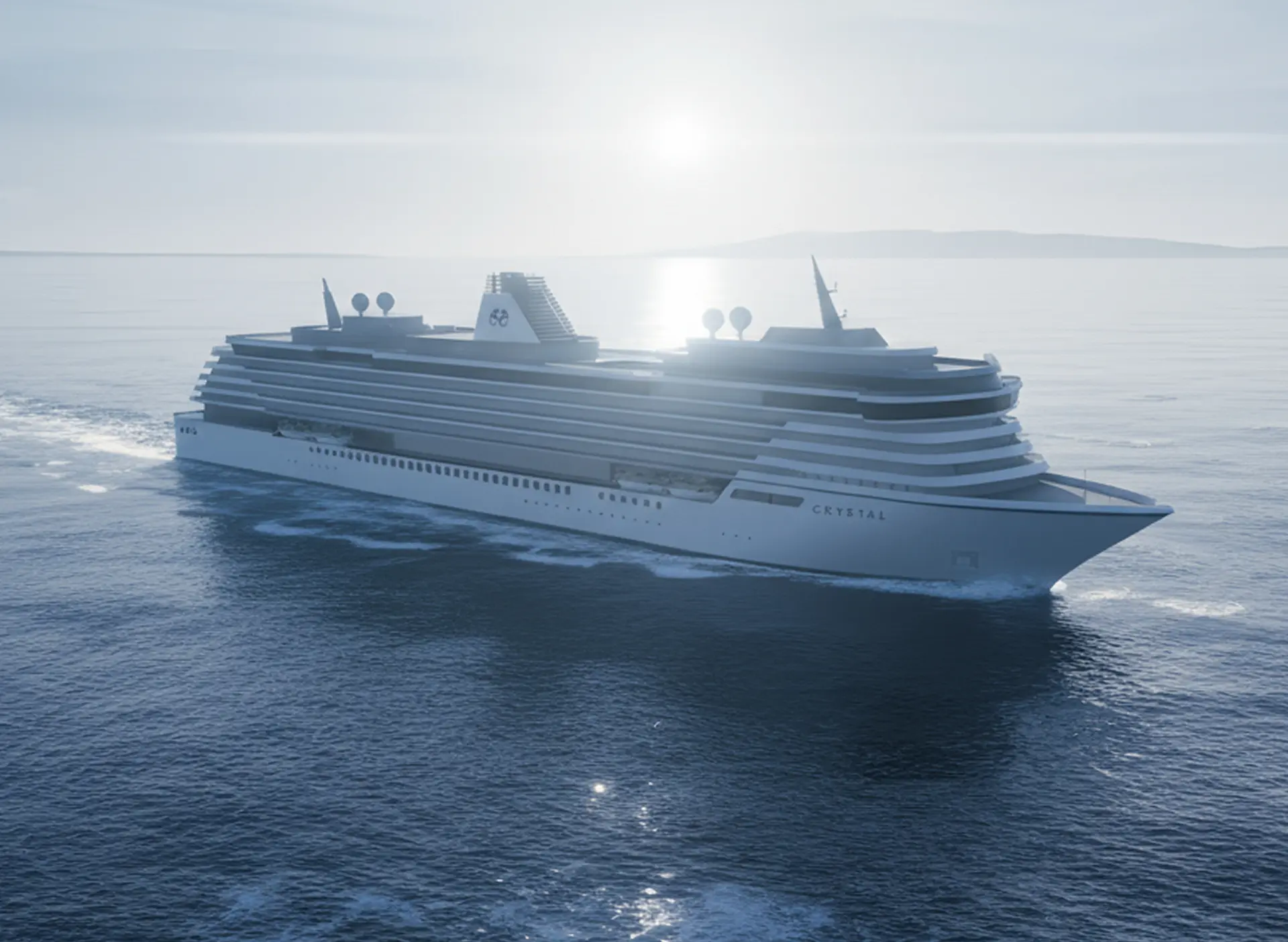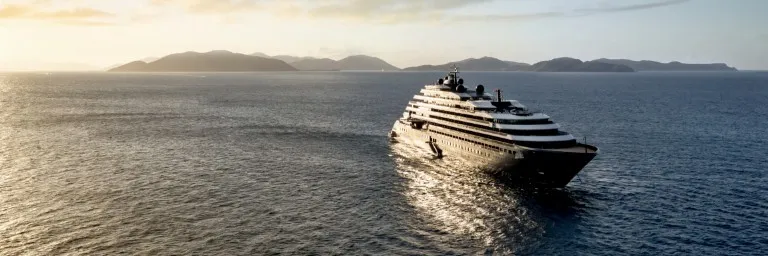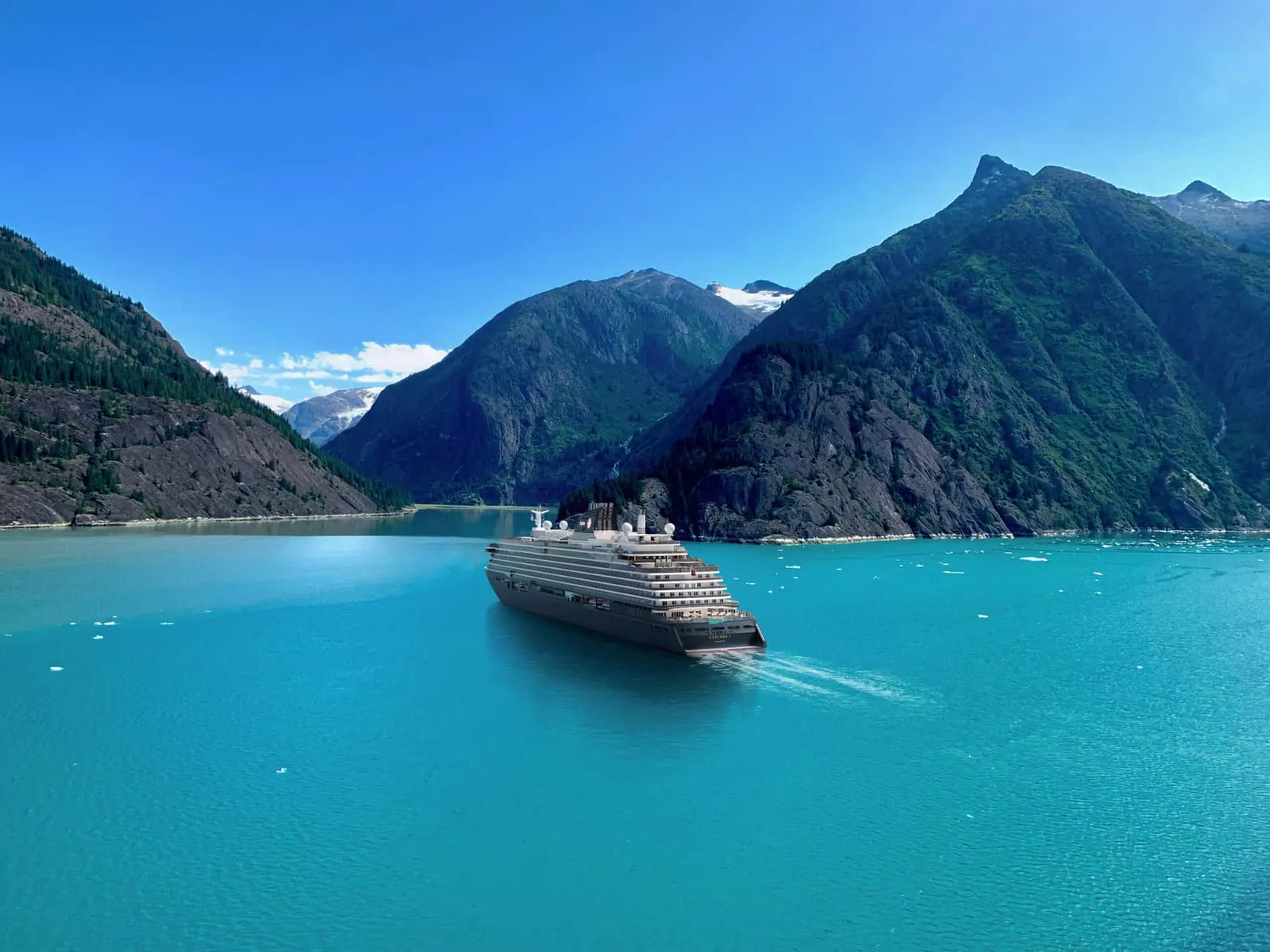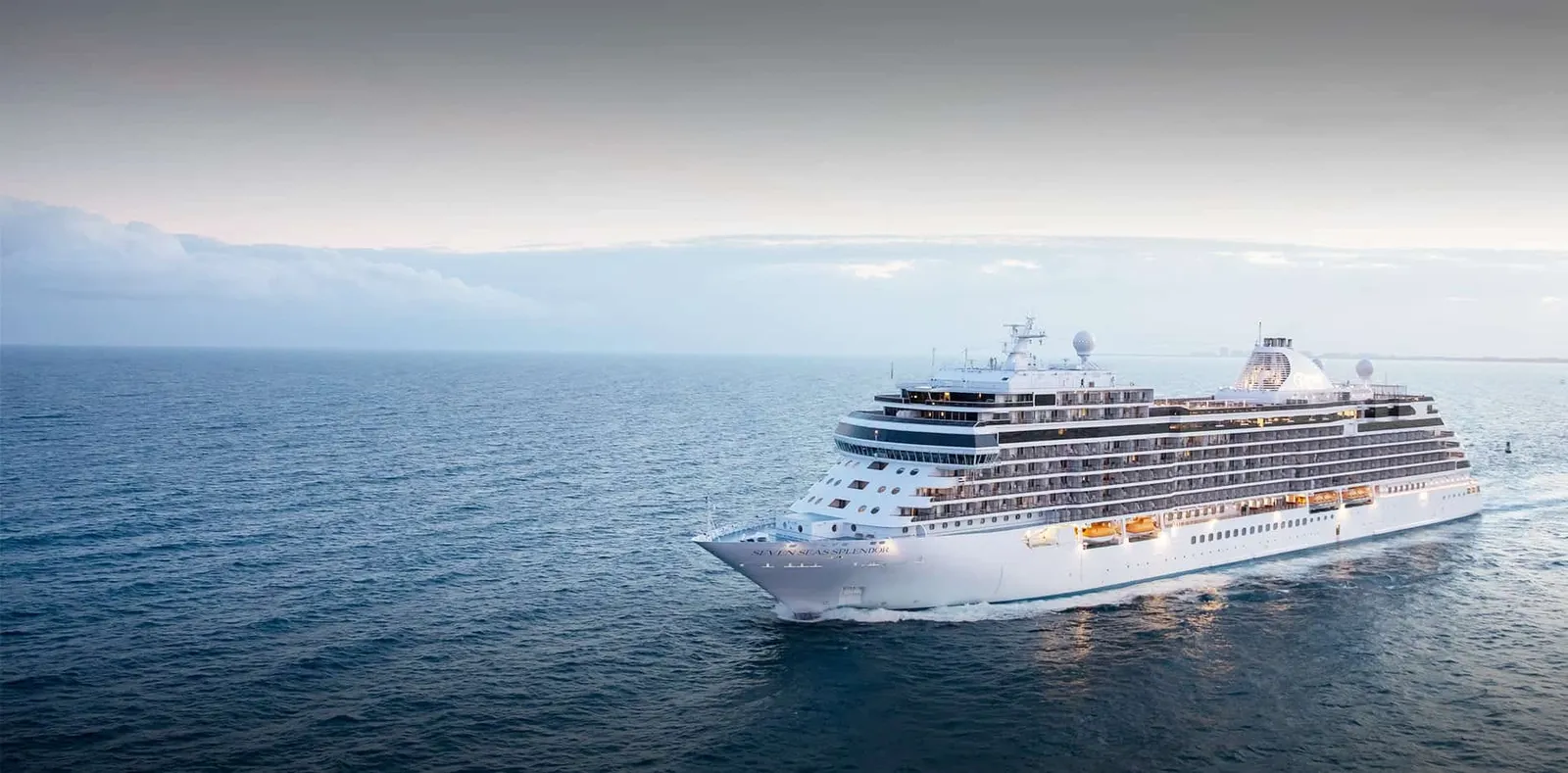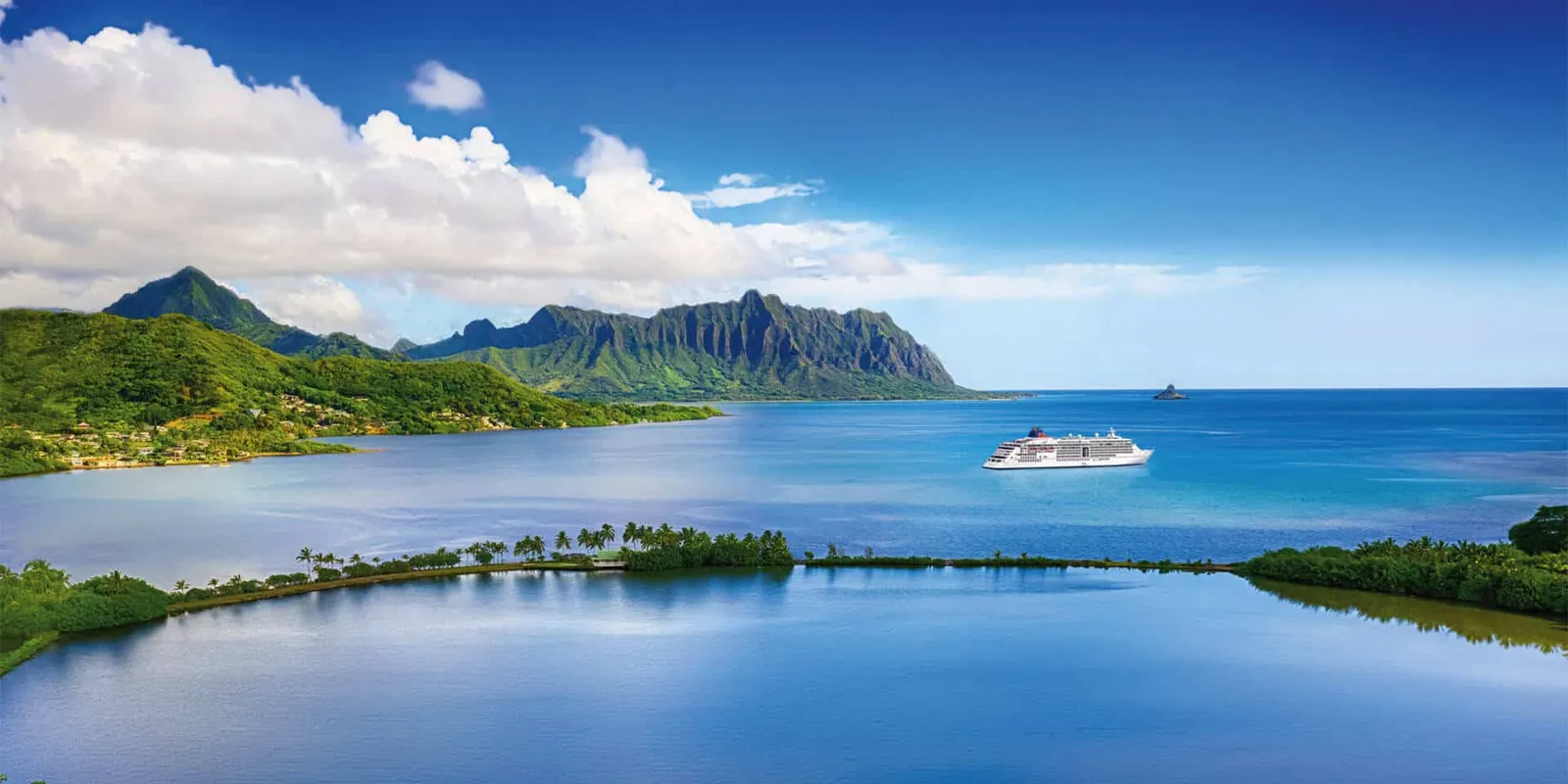
| Hapag-Lloyd Cruises | The Ritz-Carlton Yacht Collection | |
|---|---|---|
| Category | Expedition / Ultra-Luxury | Yacht-Style / Ultra-Luxury |
| Rating | ★★★★★ | ★★★★★ |
| Fleet size | 5 ships | 3 ships |
| Ship size | Small (under 1,000) | Yacht (under 300) |
| Destinations | Worldwide, Arctic, Antarctica, Mediterranean | Mediterranean, Caribbean, Northern Europe, Central America |
| Dress code | Casual elegance | Casual elegance |
| Best for | German-heritage luxury and expedition travellers | Ultra-luxury yacht lifestyle travellers |
Two of the most intimate ultra-luxury brands afloat — one rooted in 175 years of German maritime heritage, the other in one of the world's most trusted hotel brands. Hapag-Lloyd delivers the only three-Michelin-star chef's restaurant at sea, the highest space-per-guest ratio in the industry, a dedicated expedition fleet with the strongest ice class certification for passenger ships, and a distinctly European cruising culture that rewards connoisseurs. Ritz-Carlton delivers brand-new superyachts with Forbes Five-Star recognition (a cruise industry first), a signature water sports marina, Marriott Bonvoy integration, and an atmosphere modelled on a floating luxury hotel rather than a cruise ship. For Australians, both are emerging markets: Hapag-Lloyd's EUROPA 2 makes its first Australian visit in 2027 (Singapore to Perth to Auckland), with a HANSEATIC Kimberley expedition in 2028. Ritz-Carlton opened a Sydney headquarters in 2025 and sails Luminara from Singapore. Neither includes flights. Choose Hapag-Lloyd for expedition, culinary pedigree, and space. Choose Ritz-Carlton for modern hardware, the marina, and hotel-brand familiarity.
The core difference
Hapag-Lloyd Cruises and The Ritz-Carlton Yacht Collection are among the most intimate brands in ultra-luxury cruising — and they arrive at that intimacy from entirely different traditions.
Hapag-Lloyd traces its heritage to 1847 and claims to have operated the first pleasure cruise in history aboard the Augusta Victoria in 1891. Today, under TUI Cruises (a joint venture between TUI Group and Royal Caribbean Group), it operates a deliberately constrained five-ship fleet split between two product lines: the luxury ocean ships EUROPA and EUROPA 2, and three HANSEATIC-class expedition vessels. Every ship holds the maximum five-star rating from the Berlitz cruise guide. EUROPA and EUROPA 2 are the only vessels in the world to hold the five-stars-plus distinction — maintained for over two decades. The line’s philosophy is one of European refinement, culinary connoisseurship, and scientific expedition — EUROPA features the only three-Michelin-star chef’s restaurant at sea, EUROPA 2 displays 890 original artworks, and the HANSEATIC expedition ships carry scientific teams in partnership with the Alfred Wegener Institute for Polar and Marine Research.
Ritz-Carlton took one of the most recognised hotel brands on earth and transplanted it to water. The three purpose-built superyachts — Evrima (298 guests), Ilma (448 guests), and Luminara (452 guests) — are designed to feel like floating Ritz-Carlton properties rather than cruise ships. There is no buffet, no public-address system, no cruise director, and no casino. Wide corridors, an almost one-to-one crew-to-guest ratio, and a deliberate sense of quiet create the atmosphere of a luxury hotel at sea. In February 2026, Ilma became the first cruise vessel in the 68-year history of Forbes Travel Guide to receive a Five-Star rating. A hydraulic marina platform lowers from the stern for swimming, kayaking, paddleboarding, and Seabob riding directly in the ocean — a feature no other ultra-luxury ocean line offers.
For Australian travellers, both lines are emerging markets rather than established options. Neither offers regular Australian departures or included flights. The choice hinges on three questions. First, expedition interest: if Antarctica, the Arctic, or the Kimberley are on your list, only Hapag-Lloyd can take you there. Second, language and culture: Hapag-Lloyd is bilingual German-English from 2026, but German remains the primary language and culture; Ritz-Carlton operates entirely in English. Third, onboard philosophy: Hapag-Lloyd is a European connoisseur’s cruise line; Ritz-Carlton is a luxury hotel that happens to float.
What is actually included
This is where the two lines diverge most sharply — and where the total cost equation for Australians takes shape.
Ritz-Carlton includes: premium spirits, wines, and cocktails throughout the ship; Personal Concierge service in all suite categories; complimentary high-speed Wi-Fi; all gratuities for housekeeping, dining, and bar staff; 24-hour in-suite dining; and complimentary water sports from the marina platform (paddleboarding, kayaking, Seabobs, electric foiling, snorkelling) when conditions permit. Four of five restaurants on each ship are included without surcharge.
Ritz-Carlton does not include: the signature fine-dining restaurant — Seta su Ilma by Fabio Trabocchi (USD 250–260 per person) or S.E.A. by Sven Elverfeld on Evrima (similar surcharge). Flights, shore excursions (USD 100–500 per person per activity), laundry (complimentary only for Marriott Bonvoy Titanium and Ambassador members), Ritz Kids sessions (USD 45–65), and spa gratuities are also excluded.
Hapag-Lloyd includes: all dining at every restaurant on every ship without surcharges, reservation limits, or cover charges — including The Globe by Kevin Fehling on EUROPA and all seven restaurants on EUROPA 2. This is a genuine advantage over Ritz-Carlton. Champagne on arrival. Daily-replenished minibar with non-alcoholic beverages in standard categories, with alcoholic selections in higher suite tiers. From January 2026, complimentary soft drinks throughout the day. Gratuities included. 24-hour room service. On expedition ships, all Zodiac excursions, polar gear, and expert-guided landings are included, and some Antarctic fares include charter flights to Ushuaia.
Hapag-Lloyd does not include: alcoholic beverages at bars and restaurants. This is the single most significant gap versus Ritz-Carlton and every other ultra-luxury competitor. Cocktails and wine at dinner are charged to your onboard account. A beverage package is available for approximately EUR 200 per person per cruise — modest compared to some lines, but an additional cost at a tier where competitors include premium drinks. Wi-Fi beyond 60 free minutes per day requires paid packages (EUR 19 for 1 GB to EUR 225 for 25 GB; unlimited only for Grand Penthouse and Owner Suite guests). Flights, standard shore excursions on ocean voyages, and transfers are not included.
The practical impact for a couple on a 10-night voyage: Two cocktails before dinner and a shared bottle of wine each evening would cost approximately EUR 1,500–2,500 on Hapag-Lloyd — complimentary on Ritz-Carlton. Add Wi-Fi packages (EUR 119–225 per person for meaningful connectivity) and the effective per-diem gap between the two lines narrows considerably. Ritz-Carlton’s higher headline fare buys genuine all-inclusive convenience; Hapag-Lloyd’s lower headline fare conceals meaningful add-ons.
Dining and culinary experience
Both lines deliver exceptional dining, but through fundamentally different approaches — and Hapag-Lloyd has the higher peak culinary distinction.
Hapag-Lloyd EUROPA offers five restaurants, all included. The headline is The Globe by Kevin Fehling — a three-Michelin-star chef who personally joins approximately eight cruises per year and prepares multi-course tasting menus for 26–30 guests per seating. This is the only restaurant at sea where a three-Michelin-star chef regularly cooks onboard — not a licensing deal, not a brand extension, but the chef himself in the galley. Fehling also holds five black toques from Gault&Millau 2025 — the first time this distinction has been awarded. The rebuilt Pearls restaurant serves 15 innovative caviar compositions using spherification alongside traditional caviar. EUROPA Restaurant serves daily-changing international gourmet menus, Venezia offers Italian classics, and Oriental serves Asian fusion from an open show kitchen.
Hapag-Lloyd EUROPA 2 offers seven restaurants plus casual venues, all included. Weltmeere is the main dining room with nearly half its tables set for two — ideal for couples. Tarragon is a French brasserie with signature tableside beef tartare. Elements serves Asian fusion. Serenissima offers Italian regional specialities. Sakura serves high-grade sushi at dinner. Yacht Club is the casual grill. Sansibar provides alfresco dining. Every restaurant, every night, without surcharge or reservation cap.
Ritz-Carlton offers five restaurants on Ilma and Luminara. Tides is the main dining room with destination-inspired seasonal menus, designed as intimate alcoves rather than one large space. Seta su Ilma by Fabio Trabocchi (James Beard Award-nominated) serves modern Italian fine dining — a 28-seat venue with a seven-to-ten-course tasting menu and optional wine pairings (USD 250–260 per person surcharge). The Beach House by Michael Mina (James Beard Award winner) offers Pan-Latin and Caribbean cuisine in an open-air setting. Memori features a 12-seat sushi bar with modern pan-Asian cuisine. Mistral is the poolside steakhouse and seafood grill. On Evrima: S.E.A. by Sven Elverfeld (three Michelin stars at Aqua, Wolfsburg) is the signature European tasting menu. Talaat Nam serves contemporary Asian cuisine.
The comparison: Hapag-Lloyd has more venues (seven on EUROPA 2 versus five on Ilma/Luminara), the higher single-restaurant pedigree (Fehling’s three Michelin stars with the chef physically present), and zero surcharges at any restaurant on any ship. Ritz-Carlton’s chef partnerships are impressive — Trabocchi, Mina, and Elverfeld are accomplished chefs — but the USD 250–260 surcharge for the pinnacle experience is a significant premium, and the included restaurants, while excellent, do not match the breadth or gastro-prestige of Hapag-Lloyd’s offering. If dining is your primary motivation, Hapag-Lloyd has the edge — particularly on EUROPA, where The Globe is genuinely in a class of its own.
Suites and accommodation
Hapag-Lloyd has the space advantage at entry level; Ritz-Carlton has the modernity advantage across the board.
Hapag-Lloyd EUROPA 2 features 251 suites, all with step-out verandas. The entry-level Veranda Suite is 301 square feet plus a 75-square-foot veranda (376 total). Spa Suites at 452 square feet include in-room whirlpool and direct spa access. Grand Penthouse Suites span 840 square feet with separate living and sleeping areas, electric star ceiling, and steam shower sauna. The Owner Suite reaches 1,066 square feet plus a 161-square-foot veranda with whirlpool bath and steam sauna. Butler service for Penthouse and above. EUROPA’s suites were comprehensively refurbished in 2024, with entry-level suites from approximately 291 square feet.
Ritz-Carlton’s Ilma and Luminara feature 224–226 suites, every one with a private terrace. The entry-level Terrace Suite on Ilma is approximately 294 square feet plus a 52–108-square-foot terrace. Signature Suites measure 409 square feet plus terrace. Grand Suites offer 560 square feet with a dining table for four and walk-in wardrobe. Owner’s Suites reach 1,033 square feet with an expansive terrace featuring a private hot tub. On Evrima, the entry-level is 300 square feet plus 67-square-foot terrace, and the unique two-storey Loft Suites (611 square feet) offer a split-level layout found on no other cruise ship. Interior design uses a contemporary neutral palette — grey, taupe, sandstone — and every suite was purpose-built for the brand.
The comparison: Hapag-Lloyd’s entry-level Veranda Suite on EUROPA 2 (376 total) is meaningfully larger than Ritz-Carlton’s entry-level Terrace Suite on Ilma (approximately 346–402 total depending on terrace configuration). EUROPA 2 also holds the highest space-per-guest ratio of any cruise ship at 83 gross tonnes per guest, meaning public spaces feel exceptionally uncrowded. Ritz-Carlton’s compensating advantage is modernity — every suite on every ship was built between 2022 and 2025, with contemporary design and brand-new fittings. EUROPA 2 launched in 2013 and EUROPA in 1999 (refurbished 2024). If you prioritise living space and space ratio, Hapag-Lloyd wins. If you prioritise brand-new hardware and contemporary design, Ritz-Carlton wins.
Expedition versus yacht: two adventure philosophies
This is where the two brands are most distinct — and where the choice reflects fundamentally different ideas about what “adventure” means at sea.
Hapag-Lloyd’s HANSEATIC expedition fleet comprises three purpose-built ships — HANSEATIC nature (2019), HANSEATIC inspiration (2019), and HANSEATIC spirit (2021) — each carrying 230 guests (199 in Antarctic waters). They hold PC6 ice class certification, the highest rating for passenger vessels, enabling safe navigation through first-year ice up to 120 centimetres thick. Each carries 16 Zodiacs (including E-Zodiacs with eco-friendly electric drive systems) for shore landings in the most remote environments on earth. A full team of 16 scientists, naturalists, historians, and expedition leaders deliver daily lectures and guide every landing. The ships operate in Antarctica (including the Weddell Sea), the Arctic and Svalbard, Greenland, the Northwest Passage, Papua New Guinea, the Amazon, the Great Lakes of North America, and from 2028, Australia’s Kimberley coast. Hapag-Lloyd partners with the Alfred Wegener Institute for Polar and Marine Research, enabling genuine citizen science — guests collect data alongside professional researchers.
Ritz-Carlton’s water sports marina is a hydraulic platform that lowers from the stern of each yacht to water level, providing direct ocean access for complimentary paddleboarding, kayaking, Seabob riding, electric foiling, windsurfing, sailing, snorkelling, and swimming. On Luminara, a dynamic floating lounge platform with a central pool lets guests swim directly in the sea. When conditions permit — calm Caribbean anchorages, Mediterranean coves, French Polynesian lagoons — the marina transforms the day. Ritz-Carlton also tends to anchor in quieter coves and smaller harbours rather than busy cruise terminals, creating a sense of discovery even without expedition capability.
The philosophical difference is clear. Hapag-Lloyd’s adventure is about going where few ships can — Zodiac landings on Antarctic beaches, navigating pack ice in the Weddell Sea, watching polar bears in Svalbard from an inflatable boat. It is genuinely challenging, intellectually rigorous, and sometimes uncomfortable. Ritz-Carlton’s adventure is about engaging with the ocean itself — swimming off the yacht in a turquoise bay, paddleboarding through a Caribbean anchorage, kayaking along a Corsican coastline. It is accessible, comfortable, and complimentary. If your idea of adventure involves a parka and a Zodiac, choose Hapag-Lloyd. If your idea of adventure involves a paddleboard and warm water, choose Ritz-Carlton.
Language and culture
This is the critical consideration for Australian travellers — and the one most likely to determine which line you book.
Hapag-Lloyd operates bilingually in German and English from January 2026 across all five ships. Menus, daily programmes, announcements, shore excursions, safety instructions, and parts of the entertainment are available in both languages. EUROPA 2 has been bilingual since its 2013 launch and is the most comfortable ship for English-speaking guests, with a dedicated International Hostess who organises cocktail parties and social events specifically for non-German guests. However, German remains the primary onboard language. The overwhelming majority of passengers are German-speaking — predominantly from Germany, Austria, and Switzerland. Social conversation, bar banter, and dinner companionship will naturally default to German. Crew English is consistently praised as excellent, but the cultural atmosphere is distinctly German: precision, efficiency, understatement.
Ritz-Carlton operates entirely in English. The passenger base is predominantly North American (reflecting the hotel brand’s strongest market), with growing international diversity as Asia-Pacific expansion continues. An Australian will never feel like a linguistic or cultural outsider. The atmosphere — casual elegance, no formal nights, no rigid scheduling — will feel immediately familiar to anyone who has stayed at a Ritz-Carlton or comparable luxury hotel.
The practical difference for Australians: On Hapag-Lloyd, you will be well served and well informed in English, but you will be a guest in a German cultural environment. Some Australian travellers find this enriching — genuine cultural immersion on a ship where the traditions, cuisine, and social customs reflect 175 years of German maritime heritage. Others find it isolating — difficult to connect socially when most fellow passengers are speaking a language you do not understand. On the HANSEATIC expedition ships, language barriers dissolve more easily: shared Zodiac adventures, wildlife encounters, and expedition briefings create connections that transcend language. On Ritz-Carlton, the question of language simply does not arise.
Fleet and ship comparison
Both lines operate small fleets, but the composition differs fundamentally.
Hapag-Lloyd operates five ships across two divisions:
- EUROPA (408 guests, 28,890 GT, built 1999, refurbished 2024) — The German flagship and the world’s highest-rated cruise ship. Five restaurants including The Globe by Kevin Fehling. Historically the most formal and most German-language-dominant ship in the fleet, now bilingual from 2026. Suites from approximately 291 square feet following the 2024 refurbishment.
- EUROPA 2 (500 guests, 42,830 GT, built 2013) — The international flagship. Seven restaurants, 890 original artworks, the 10,764-square-foot OCEAN SPA. Bilingual since launch. Space-per-guest ratio of 83 GT per guest — the highest of any cruise ship. “21 knots without a tie” dress code. The recommended ship for English-speaking Australians.
- HANSEATIC nature (230 guests, 15,650 GT, built 2019) — Expedition. PC6 ice class. Bilingual from 2026.
- HANSEATIC inspiration (230 guests, 15,650 GT, built 2019) — Expedition. PC6 ice class. Bilingual since launch. The best expedition choice for English-speaking first-timers.
- HANSEATIC spirit (230 guests, 16,100 GT, built 2021) — Expedition. PC6 ice class. Adults-only. Confirmed for the 2028 Kimberley deployment. Bilingual from 2026.
No new ships on order.
Ritz-Carlton operates three yachts:
- Evrima (298 guests, 26,500 GT, launched October 2022) — The smallest and most intimate. 149 suites. S.E.A. by Sven Elverfeld (three Michelin stars). Unique two-storey Loft Suites. Had a troubled launch (eight delays, nearly three years late, early complaints about unfinished suites), now much improved. Debuting in French Polynesia winter 2026–2027.
- Ilma (448 guests, 46,750 GT, launched September 2024) — The flagship. 224 suites. Seta su Ilma by Fabio Trabocchi, Beach House by Michael Mina. First cruise ship in history to receive a Forbes Five-Star rating (February 2026). LNG dual-fuel. Passenger space ratio of 102.5 — among the highest at sea.
- Luminara (452 guests, 46,750 GT, launched July 2025) — Near-identical to Ilma with subtle refinements including two exclusive sanctuary suites and an expanded marina with a floating lounge platform. LNG dual-fuel. Deployed to Asia-Pacific (winter) and Alaska (summer 2026). The most accessible yacht for Australians via Singapore.
No additional ships confirmed beyond the current three, though a fourth and fifth yacht have been discussed.
The fleet comparison: Hapag-Lloyd’s fleet is older but uniquely versatile — the only luxury cruise company that spans ultra-luxury ocean voyages and hardcore polar expedition under one brand. Ritz-Carlton’s fleet is brand new and purpose-built, with the youngest average fleet age in ultra-luxury cruising. Both lines are small: a combined 1,598 maximum guests across Hapag-Lloyd’s five ships versus approximately 1,198 across Ritz-Carlton’s three. Both are genuinely intimate by ultra-luxury standards.
Australian accessibility
Neither line is an established Australian brand — both are emerging, with different timelines and strategies.
Hapag-Lloyd’s Australian access is handled through Luxury Travel Marketing, a Perth-based representative agency. The brand joined CLIA Australasia in April 2025, signalling genuine commitment to the Australian market. EUROPA 2’s 2027 deployment through Australian waters represents the line’s most significant local investment:
- Singapore to Perth (17 days, January–February 2027) — Embark Singapore (7.5 hours from Sydney), sail via Semarang, Bali, Lombok, Komodo, Broome, Exmouth, Geraldton, and Fremantle. Hapag-Lloyd’s first dedicated Western Australian itinerary.
- Perth to Auckland (19 days, February 2027) — Embark Fremantle (domestic flight from east coast), sail via Busselton, Albany, Kangaroo Island, Adelaide, Melbourne, Sydney, and Auckland. The most accessible Hapag-Lloyd itinerary ever offered for Australians.
- Auckland circumnavigation (18 days, March 2027) — Comprehensive New Zealand voyage.
- HANSEATIC spirit: Kimberley expedition (18 days, February 2028) — The maiden Kimberley deployment. King George River, Montgomery Reef, Houtman Abrolhos Islands. Adults-only.
The Emirates partnership (announced April 2025) will coordinate flight schedules from Australian gateways for fly-cruise packages from the 2026/27 season — relevant given Emirates’ extensive Australian network and direct Dubai connections to European, African, and Asian embarkation ports.
Ritz-Carlton’s Australian access is more structurally established. The brand opened Asia-Pacific headquarters in Sydney’s Australia Square Tower in 2025, led by Vice President and General Manager Seb Seward, with a five-year lease and plans for up to twelve local staff. Dedicated Australian reservation and sales personnel have been hired. Australian Dollar pricing has been implemented. Luminara’s Asia-Pacific deployment from Singapore brings the brand within easy reach:
- Luminara: Asia-Pacific from Singapore (7–10 nights, December 2025–May 2026) — Multiple voyages visiting Vietnam, Philippines, Malaysia, Indonesia, Thailand, Japan, and Korea. The most accessible Ritz-Carlton experience for Australians — 7.5 hours direct from Sydney or Melbourne.
- Luminara: Expanded Asia-Pacific (winter 2026–2027) — Nineteen voyages with ten new ports. Extended season gives Australians more scheduling flexibility.
- Evrima: French Polynesia debut (winter 2026–2027) — Thirteen voyages through Bora Bora, Moorea, Huahine, and Hawaii. Direct flights from Sydney to Papeete (approximately 8 hours via Auckland) put a Ritz-Carlton yacht in the South Pacific.
- Luminara: Alaska (May–September 2026) — Thirteen voyages from Vancouver and Whittier.
Seward has confirmed the itinerary planning team is “actively” analysing potential Australian destinations. The company expects Asia-Pacific business to double in the coming year.
Pricing and value
Both lines sit in similar ultra-luxury territory, but the value equation differs once you account for what is and is not included.
Hapag-Lloyd EUROPA 2 per-diem ranges from approximately EUR 500–800 per person per night depending on itinerary and season. A 13-day European voyage starts from approximately EUR 599 per night. The Singapore to Perth deployment (17 days, January 2027) starts from approximately EUR 791 per night. These are cruise-only fares that do not include alcoholic beverages, full Wi-Fi, flights, excursions, or transfers. HANSEATIC expedition Antarctic voyages run approximately EUR 830–1,185 per night, with charter flights to Ushuaia included.
Ritz-Carlton per-diem ranges from approximately USD 700–1,000 per person per night for entry-level Terrace Suites, rising to USD 1,200–2,000 for Signature and Grand Suites. Australian online agencies advertise from approximately AUD 823–887 per day. A seven-night Mediterranean voyage in a Terrace Suite costs roughly USD 5,000–7,000 per person. The fare includes premium drinks, Wi-Fi, gratuities, and the marina — making the headline price closer to the true cost.
Total cost for an Australian couple on a 10-night Mediterranean voyage:
Hapag-Lloyd (EUROPA 2 Veranda Suite): approximately AUD 17,000–25,000 for the cruise fare. Add business-class flights from Sydney to Europe: AUD 10,000–18,000. Add onboard beverages: AUD 2,500–4,000. Add Wi-Fi packages: AUD 300–700. Add shore excursions: AUD 1,500–3,500. Add transfers: AUD 500–1,000. Total: approximately AUD 32,000–52,000 per couple.
Ritz-Carlton (Ilma Terrace Suite): approximately AUD 22,000–32,000 for the cruise fare (drinks, Wi-Fi, marina included). Add business-class flights from Sydney to Europe: AUD 10,000–18,000. Add shore excursions: AUD 1,500–3,500. Add one Seta su Ilma dinner for two: AUD 800. Total: approximately AUD 34,000–54,000 per couple.
The total cost is broadly comparable when you factor in Hapag-Lloyd’s add-ons versus Ritz-Carlton’s higher headline fare. Ritz-Carlton delivers more convenience — no supplementary charges to manage, no bar tab at the end of the voyage. Hapag-Lloyd delivers more space per dollar and zero-surcharge dining at every venue. Neither line matches Regent’s value proposition for Australians, which includes business-class air from Australian gateways and unlimited shore excursions.
For Australians sailing from Singapore: The value equation shifts significantly. Ritz-Carlton’s Luminara from Singapore eliminates long-haul flights (7.5 hours from east coast capitals versus 22+ hours to Europe), reducing flight costs by AUD 6,000–12,000 per couple. Hapag-Lloyd’s 2027 deployment also routes through Singapore, offering a comparable accessibility advantage on those specific itineraries.
Loyalty programmes
Ritz-Carlton has a decisive structural advantage through its integration with one of the world’s largest hotel loyalty ecosystems.
Ritz-Carlton is fully integrated with Marriott Bonvoy. Earn 5 points per USD dollar spent on cruise fare. Earn one elite night credit per night onboard — counting toward Marriott Bonvoy status qualification (Platinum, Titanium, Ambassador). Redeem 180,000 points for USD 1,000 off a cruise fare, then 90,000 points per USD 500 increment. Elite benefits onboard include an invitation to an elite reception (all elite members), a welcome gift choice (Gold and above), first-evening laundry pressing (Platinum and above), complimentary laundry (Titanium and above), and priority boarding (Titanium and above). Ambassador members receive early S.E.A./Seta reservations.
For Australians who stay regularly at Marriott, Ritz-Carlton, W, Sheraton, Westin, or other Marriott portfolio properties, the Bonvoy integration is genuinely valuable. Points earned at hotels can fund cruise fare discounts, and nights spent cruising count toward achieving higher hotel status. A 10-night Ritz-Carlton cruise at USD 10,000 per person earns 50,000 Bonvoy points and 10 elite nights. No other ultra-luxury cruise line connects to a hotel loyalty programme of this scale.
Hapag-Lloyd’s Cruises Club requires a paid membership — EUR 170 one-off sign-up fee plus EUR 70 annual fee from the second year. Three tiers (Member, Gold at 15,000 bonus miles, Platinum at 50,000 bonus miles) offer progressively better benefits: bonus miles earned on every cruise, redeemable for onboard credits toward beverages, Wi-Fi, laundry, and spa treatments; exclusive Club cruises; and selected events. The programme is modest by ultra-luxury standards and unusual in charging for membership. It rewards repeat Hapag-Lloyd guests but offers nothing to newcomers and has no connection to any hotel or airline loyalty ecosystem.
The verdict for Australians: If you already accumulate Marriott Bonvoy points through hotel stays or credit card spend, Ritz-Carlton’s integration adds measurable value. If you are choosing purely between these two cruise lines without an existing Bonvoy balance, the loyalty difference should not drive the decision — choose the onboard experience that matches your preferences.
The onboard atmosphere
This is where personal preference matters most — the two lines feel fundamentally different in ways that no specification sheet can capture.
Hapag-Lloyd’s atmosphere is refined European restraint. EUROPA is the most traditional: German cultural traditions are prominent — formal captain’s dinners, gala evenings (two on a seven-night cruise on EUROPA; none on EUROPA 2), jacket and suit required at the EUROPA main restaurant. Passengers are predominantly from Germany, Austria, and Switzerland. Classical music concerts, chamber ensembles, and the annual Ocean Sun Festival set the tone. EUROPA 2 is deliberately different — “21 knots without a tie.” No formal nights. Contemporary European design with 890 original artworks including pieces by Gerhard Richter and Damien Hirst. Piano bar, jazz club, late-night Sansibar lounge. Brisbane-based Circa Contemporary Circus performs on multiple 2026 voyages — a notable Australian connection. The HANSEATIC expedition ships create a communal atmosphere driven by shared adventure — when you have spent a morning in a Zodiac watching humpback whales surface five metres away, language barriers cease to matter.
Ritz-Carlton’s atmosphere is modern luxury hotel at sea. The average passenger age is approximately 53 — younger than most ultra-luxury lines and significantly younger than Hapag-Lloyd’s demographic. Approximately 75 per cent of guests have never cruised before — they are Ritz-Carlton hotel loyalists drawn by brand trust, affluent professionals still working rather than retired, and luxury travellers who would not consider a traditional cruise. There are no formal nights, no cruise director, no overhead announcements, and no scheduled activity pressure. The entertainment is ambient: a pianist in The Living Room, themed evenings like En Blanc and Havana Nights, cocktails in The Observation Lounge with panoramic views. La Rumba brings Latin-influenced poolside ambience with DJs on Ilma and Luminara. The atmosphere is understated, self-assured, and quietly luxurious — closer to a floating private members’ club than either a cruise ship or a resort.
The key distinction: Hapag-Lloyd’s EUROPA 2 feels like the private club of a cultured European family — sophisticated, slightly reserved, intellectually stimulating. Ritz-Carlton feels like a boutique luxury hotel that moves — contemporary, polished, brand-confident. On Hapag-Lloyd, you dress for dinner because Europeans do; on Ritz-Carlton, you dress however you please because the brand trusts you to be elegant without instruction. On Hapag-Lloyd, the evening might be a chamber music concert or a curated arts lecture; on Ritz-Carlton, the evening is whatever you make of it — a cocktail in The Observation Lounge, a DJ set by the pool, or simply the quiet of your suite with the terrace doors open.
Where each line excels
Hapag-Lloyd excels in:
- Expedition cruising. Three PC6 ice-class HANSEATIC ships with 16 Zodiacs each, 16-person scientific expedition teams, and citizen science programmes. Antarctica, the Arctic, Svalbard, Greenland, and the Kimberley by 2028. Ritz-Carlton has no equivalent.
- Culinary pedigree. The Globe by Kevin Fehling (three Michelin stars, chef present on approximately eight voyages per year) is the highest-credential restaurant at sea. The Pearls caviar programme is unique. Every restaurant on every ship included without surcharges.
- Space per guest. EUROPA 2’s ratio of 83 GT per guest is among the highest in the industry. Entry-level suites are larger than Ritz-Carlton’s entry level.
- Cultural depth. Classical music festivals, 890 original artworks, ART2SEA voyages, Circa Contemporary Circus collaborations, Alfred Wegener Institute partnerships. Enrichment rooted in European cultural tradition.
- Unrestricted dining. Seven restaurants on EUROPA 2, five on EUROPA — every one included. No surcharges, no reservation caps, no cover charges.
Ritz-Carlton excels in:
- Ship modernity. Three purpose-built yachts launched between 2022 and 2025. Ilma earned the cruise industry’s first Forbes Five-Star rating. LNG dual-fuel on Ilma and Luminara.
- The marina. The hydraulic water sports platform is unique in ultra-luxury ocean cruising. Paddleboarding, kayaking, Seabobs, electric foiling, and ocean swimming from the yacht’s stern — complimentary and genuinely transformative in the right conditions.
- Intimate scale. At 298–452 guests, Ritz-Carlton’s yachts are comparable to or smaller than EUROPA 2 (500 guests), creating a genuine yacht atmosphere with access to smaller ports and anchorages.
- Marriott Bonvoy integration. The only ultra-luxury cruise line connected to a major global hotel loyalty programme. Earn points, count elite nights, redeem for cruise fares.
- Language and cultural familiarity. English-primary. No language barrier. No cultural adjustment required for English-speaking Australians.
Ship-by-ship recommendations
Hapag-Lloyd
EUROPA 2 (500 guests, 2013) — The recommended ship for English-speaking Australians. Bilingual since launch, dedicated International Hostess, contemporary atmosphere, seven included dining venues, the 10,764-square-foot OCEAN SPA, 890 original artworks, no formal nights. The 2027 Australia/New Zealand deployment makes this the most accessible Hapag-Lloyd experience for Australians. Families welcome — children 11 and under travel free with two full-fare adults.
EUROPA (408 guests, 1999, refurbished 2024) — The German flagship. Five-stars-plus. The Globe by Fehling. More formal and more culturally German. Choose only if you are comfortable in a predominantly German-speaking social environment and appreciate formal dining culture. Now bilingual from 2026, but the cultural atmosphere remains distinctly German. Not recommended as a first Hapag-Lloyd experience for Australians.
HANSEATIC inspiration (230 guests, 2019) — The best expedition choice for English-speaking first-timers. Bilingual since launch. The Nikkei restaurant (first Japanese-Peruvian fusion at sea). Family-friendly.
HANSEATIC spirit (230 guests, 2021) — The newest and only adults-only expedition ship. Confirmed for the 2028 Kimberley deployment. Choose for Antarctica or the Kimberley.
HANSEATIC nature (230 guests, 2019) — Bilingual from 2026. Choose based on itinerary.
Ritz-Carlton
Ilma (448 guests, 2024) — The recommended first Ritz-Carlton experience. Forbes Five-Star. Highest space-per-guest ratio at 102.5. Seta su Ilma by Trabocchi, Beach House by Mina. 11 treatment rooms. Mediterranean and Caribbean deployment.
Luminara (452 guests, 2025) — Near-identical to Ilma with an expanded marina featuring a floating lounge platform. The most accessible option for Australians via Asia-Pacific sailings from Singapore. Choose for Asia-Pacific or Alaska.
Evrima (298 guests, 2022) — The smallest and most intimate. Genuinely yacht-scale at 149 suites. The unique two-storey Loft Suites are a standout. After a troubled launch, the ship has improved significantly. Best for experienced luxury travellers who prioritise intimacy over facilities. Avoid as a first Ritz-Carlton experience — start with Ilma. Choose for the French Polynesia debut season (winter 2026–2027) where the intimate size and marina shine in island lagoons.
For Australian travellers specifically
Both Hapag-Lloyd and Ritz-Carlton require more effort to reach than Silversea or Regent, which have dedicated Australian offices and regular local departures. But both offer compelling reasons to make that effort — and the accessibility gap is narrowing.
The practical accessibility today: Ritz-Carlton is closer. Luminara sails from Singapore (7.5 hours from east coast Australia). Evrima debuts in French Polynesia (approximately 8 hours from Sydney via Auckland). Ritz-Carlton has a Sydney office with a growing team and Australian Dollar pricing. Hapag-Lloyd’s nearest regular embarkation points are Mediterranean and Northern European ports (22+ hours), though the 2027 EUROPA 2 deployment routes through Singapore and Australian waters, temporarily closing the gap.
The unique experiences each line offers Australians: Hapag-Lloyd’s HANSEATIC spirit Kimberley expedition in February 2028 is a genuinely unique proposition — German expedition expertise, PC6 ice class, Zodiac landings, a 16-person scientific team, applied to one of Australia’s most spectacular and remote coastlines. No Ritz-Carlton yacht can match this. Ritz-Carlton’s marina in French Polynesian lagoons — swimming, paddleboarding, and kayaking from the yacht’s stern in Bora Bora or Moorea — is equally unique in a different direction. No Hapag-Lloyd ship offers this kind of warm-water ocean engagement.
When to choose Hapag-Lloyd from Australia: for the Kimberley expedition (HANSEATIC spirit, 2028); for Antarctica with a scientific expedition team and the strongest ice class; for the EUROPA 2 Australian deployment in 2027 (Singapore to Perth, Perth to Auckland); for The Globe by Kevin Fehling if you are a serious gastronome willing to navigate the German-language cultural environment; or for the highest space-per-guest ratio at sea.
When to choose Ritz-Carlton from Australia: for brand-new superyachts with Forbes Five-Star recognition; for the marina water sports experience in warm-water destinations; for complete English-language comfort with no cultural adjustment; for Marriott Bonvoy integration if you are an active hotel loyalty member; or for Asia-Pacific sailings from Singapore that require no long-haul flight.
The bottom line
Hapag-Lloyd and Ritz-Carlton are both intimate, high-quality ultra-luxury brands — but they serve fundamentally different traveller profiles, and each offers genuine strengths the other cannot match.
Choose Hapag-Lloyd if what matters most is the depth of the experience — the only three-Michelin-star chef’s restaurant at sea, expedition ships reaching Antarctica and the Kimberley with scientific teams, the highest space-per-guest ratio in the industry, zero-surcharge dining at every restaurant, and immersion in a European cultural tradition that rewards connoisseurs. Accept that alcoholic beverages and full Wi-Fi cost extra, that the ships are older, and that the onboard language and culture will be predominantly German even with bilingual services. Start with EUROPA 2 for a luxury ocean voyage. Choose HANSEATIC spirit for expedition.
Choose Ritz-Carlton if what matters most is the modernity and brand confidence — Forbes Five-Star yachts built between 2022 and 2025, a signature water sports marina, all-inclusive drinks and Wi-Fi, Marriott Bonvoy integration, and an English-language atmosphere that feels like a floating luxury hotel. Accept that there are fewer dining venues with steeper surcharges for the pinnacle experience, no expedition capability, no formal enrichment programme, and — for now — no Australian sailings beyond Asia-Pacific access from Singapore.
For Australians, neither line is as accessible as Silversea or Regent today. But both are investing in the region. Hapag-Lloyd’s 2027 EUROPA 2 Australian deployment and 2028 Kimberley expedition bring the brand to your waters for the first time — a milestone worth watching. Ritz-Carlton’s Sydney headquarters and expanding Asia-Pacific season signal genuine commitment. Choose the line whose strengths match your priorities, and accept the effort required to reach either.