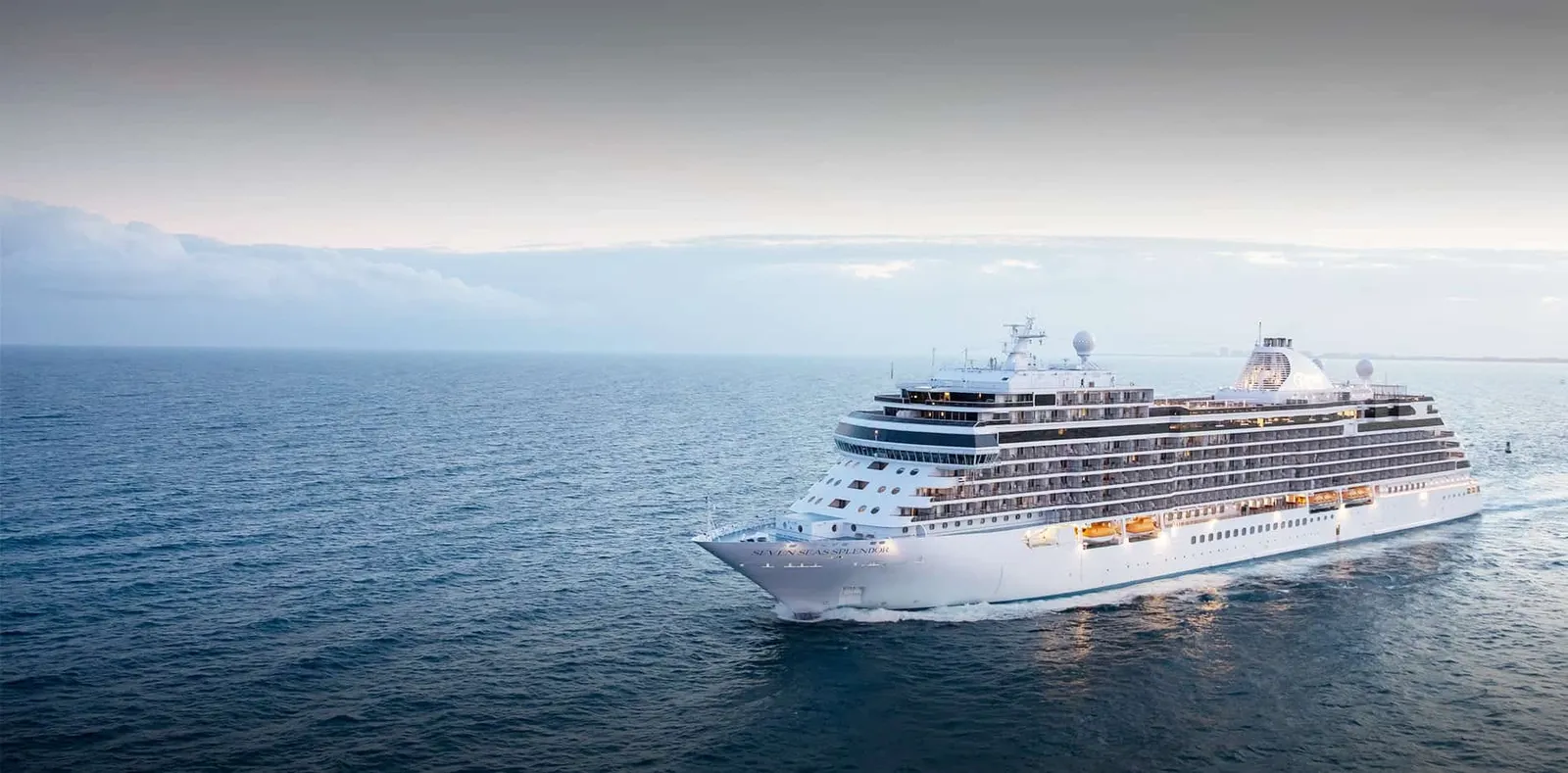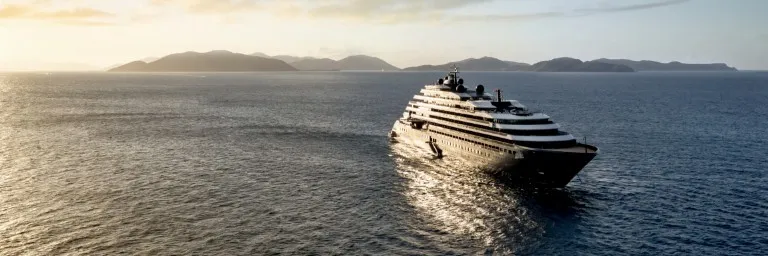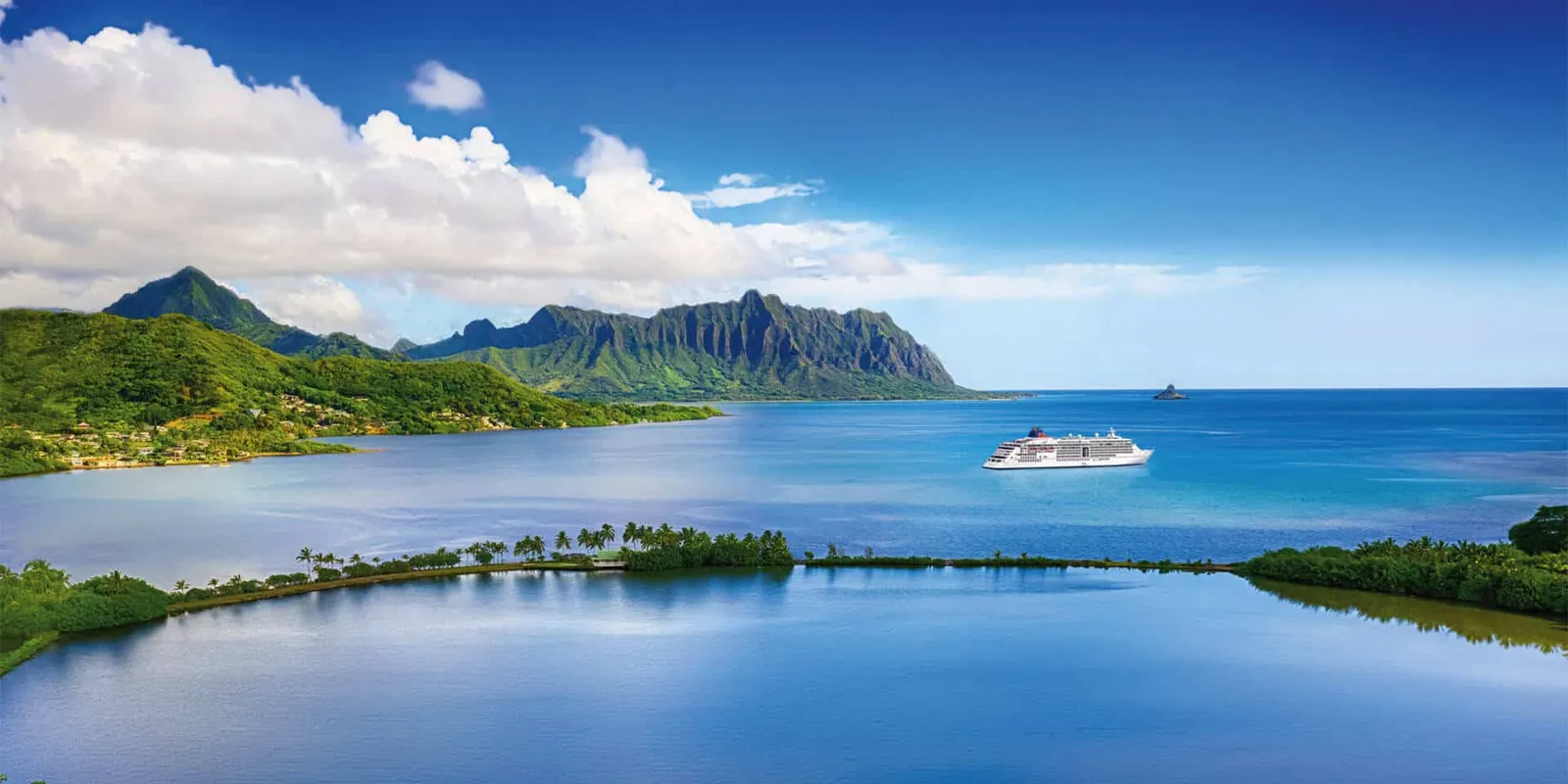
| Hapag-Lloyd Cruises | SeaDream Yacht Club | |
|---|---|---|
| Category | Expedition / Ultra-Luxury | Yacht-Style / Ultra-Luxury |
| Rating | ★★★★★ | ★★★★☆ |
| Fleet size | 5 ships | 2 ships |
| Ship size | Small (under 1,000) | Yacht (under 120) |
| Destinations | Worldwide, Arctic, Antarctica, Mediterranean | Caribbean, Mediterranean, Northern Europe |
| Dress code | Casual elegance | Casual elegance |
| Best for | German-heritage luxury and expedition travellers | Ultra-intimate yacht lifestyle travellers |
This is ultra-luxury cruising's most extreme contrast — not a rivalry but a study in how two lines founded by Norwegians arrived at utterly different definitions of perfection. Hapag-Lloyd delivers German maritime precision across five ships: the Berlitz five-stars-plus EUROPA with Kevin Fehling's three-Michelin-star restaurant, three PC6 ice-strengthened expedition vessels with 16-person scientific teams, and a programme spanning 124 routes from Antarctica to the Kimberley. SeaDream delivers Caribbean yacht intimacy on two 112-guest vessels with a near 1:1 crew ratio, an open bar running from dawn to the small hours, Balinese Dream Beds under the stars, and a retractable marina with jet skis and kayaks. Hapag-Lloyd goes everywhere including both poles; SeaDream focuses on the Caribbean and Mediterranean with total informality. Hapag-Lloyd is the most expensive line in ultra-luxury; SeaDream offers comprehensive all-inclusive value at a fraction of the cost. For Australians, neither line offers regular domestic departures, but Hapag-Lloyd's 2027 Australian debut and 2028 Kimberley expedition bring it closer to home. Choose Hapag-Lloyd for scientific expedition and the finest ship afloat. Choose SeaDream for the most intimate luxury experience at sea.
The core difference
Hapag-Lloyd Cruises and SeaDream Yacht Club are not natural competitors — they occupy opposite ends of the ultra-luxury spectrum in size, formality, destination philosophy, and price. Comparing them is less about choosing between similar products and more about understanding two radically different answers to the same question: what does the finest experience at sea look like?
Hapag-Lloyd answers with scale, precision, and scientific ambition. The line traces its heritage to 1891 and the Augusta Victoria’s maiden pleasure cruise. Today it operates five ships under TUI Cruises: MS EUROPA (408 guests, widely considered the finest ship afloat, the only vessel to hold a Berlitz five-stars-plus rating for over 20 consecutive years), MS EUROPA 2 (516 guests, a more relaxed contemporary sister with six restaurants and 890 original artworks), and three HANSEATIC-class expedition vessels (Nature, Inspiration, and Spirit — 230 guests each, PC6 ice class, 17 Zodiacs per ship, 16-person scientific expedition teams). The fleet spans 124 routes across 2025-2026 from the Mediterranean to Antarctica, the Arctic to the Amazon, and from 2027, Australian waters. The programme is defined by German thoroughness: Kevin Fehling’s three-Michelin-star restaurant The Globe on EUROPA, the Alfred Wegener Institute partnership for polar research, and a standard of physical luxury that independent surveyors have rated above every other ship afloat for two decades.
SeaDream answers with intimacy, informality, and Caribbean perfection. Founded in 2001 by Atle Brynestad — the Norwegian entrepreneur who also founded Seabourn in 1986 — SeaDream purchased the former Sea Goddess I and Sea Goddess II (which had operated under Cunard and then briefly under Seabourn) and reimagined them as the only true mega-yachts in the passenger cruise market. Two twin vessels, each carrying a maximum of 112 guests served by 95 crew, deliver a near 1:1 crew-to-guest ratio unmatched in the industry. The founding philosophy — “It’s yachting, not cruising” — is not a tagline but an operational reality. No fixed seating at dinner. No production shows. No formal dress code — ever. No captain’s gala. No announcements over the PA system. The open bar runs from morning to the small hours with premium wines, champagne, and spirits. The retractable marina platform deploys jet skis, kayaks, paddleboards, Hobie Cat catamarans, and snorkelling gear. Balinese Dream Beds on the top deck invite guests to sleep under the stars as the yacht sails through the night. The signature Champagne and Caviar Splash serves Dom Perignon and caviar on a secluded beach. Forbes Travel Guide rates SeaDream’s restaurant the highest at sea.
For Australian travellers, neither line offers regular domestic departures, which makes this a comparison for the internationally-minded cruise enthusiast. But the choices are starkly different. Hapag-Lloyd brings its fleet to Australia in 2027 and the Kimberley in 2028 — EUROPA 2’s Perth call and HANSEATIC spirit’s Kimberley expedition bring German precision to Australian waters. SeaDream stays in the Northern Hemisphere — Caribbean, Mediterranean, and Norwegian fjords — and an Australian must fly internationally to reach every embarkation port. The question is not which is more accessible from Australia (neither is particularly convenient) but which experience you want when you arrive.
What is actually included
The inclusion philosophies of these two lines are among the most divergent in ultra-luxury — and the contrast illuminates fundamentally different pricing strategies.
SeaDream’s all-inclusive model is one of the most comprehensive in the industry. The fare covers an open bar available at all hours — premium wines, champagne (including Dom Perignon at the signature beach event), spirits, cocktails, beer, and soft drinks served anywhere on the yacht. All dining is included without restriction. Crew gratuities are fully covered — tipping is neither required nor expected. The marina platform’s full complement of water sports equipment — jet skis, kayaks, paddleboards, wakeboards, Hobie Cat catamarans, snorkelling gear, and the floating trampoline — is complimentary. What SeaDream does not include: Wi-Fi (USD $35 per day or USD $99 per week), shore excursions, spa treatments, and flights.
Hapag-Lloyd’s model includes all dining without surcharges at every restaurant — including The Globe by Kevin Fehling — and gratuities. On expedition ships, all Zodiac excursions, expert-guided landings, and expedition activities are included. But Hapag-Lloyd does not include alcoholic beverages — the only ultra-luxury line to exclude them. A beverage package costs EUR 44 per person per day. Wi-Fi is limited to 60 free minutes daily, with extended packages from EUR 19 per day. Butler service is not available in every cabin category — only Penthouse and above on EUROPA 2. On HANSEATIC expedition ships, butler service is not offered.
The practical comparison for a 10-night voyage: A couple sailing SeaDream will pay the fare and have drinks, dining, gratuities, and water sports covered — the only meaningful add-ons are Wi-Fi and shore excursions. The same couple on Hapag-Lloyd’s EUROPA, enjoying wine with dinner and cocktails in the evening, will spend approximately EUR 880 on the beverage package (two people, EUR 44 each, ten nights), plus EUR 380 for extended Wi-Fi (two devices, ten nights) — roughly EUR 1,260 above the fare before any shore excursions or spa treatments. SeaDream’s fare is also lower to begin with, making the total-cost gap substantial. Hapag-Lloyd’s expedition ships add genuine included value through Zodiac excursions and scientific programming — but SeaDream does not compete in the expedition space.
Dining and culinary experience
Both lines deliver exceptional dining — but the concepts are so different that comparing them reveals more about what you value in a meal than which kitchen is objectively superior.
Hapag-Lloyd’s EUROPA features The Globe by Kevin Fehling — the only three-Michelin-star chef’s restaurant at sea. Fehling, whose Hamburg restaurant The Table maintained three Michelin stars for nine consecutive years, personally cooks on eight EUROPA voyages per year, delivering a 12-course tasting menu with wine pairings that food critics have rated among the finest dining experiences available anywhere. Beyond The Globe, EUROPA features three additional restaurants: the continental fine dining room, an Asian-fusion venue, and an Italian restaurant — all included without surcharges. EUROPA 2 expands to six restaurants with a more contemporary, international menu philosophy. On HANSEATIC expedition ships, the single restaurant serves destination-inspired menus, with expedition barbecues on polar shores when conditions permit. Wine at dinner is not included in the fare — an anomaly at this tier that affects the dining experience for guests accustomed to ultra-luxury inclusion.
SeaDream is a private kitchen for 112 guests. A single culinary team prepares everything a la minute — made to order, never pre-prepared or batch-cooked. The Dining Salon on Deck 2 seats 110 for multi-course dinners, and the Topside Restaurant offers al fresco dining where all 112 guests can eat outdoors simultaneously. SeaDream holds the distinction of “Highest Rated Restaurant at Sea” from Conde Nast Johansens and earned Forbes Travel Guide’s four-star dining recognition. The signature Le Menu de Degustation presents a multi-course tasting menu with wine pairings — highlights include Terrine de Foie Gras with pear compote, grilled halibut with gingered white asparagus and caviar beurre blanc, and the celebrated 24-carat gold-leaf-topped Fondant au Chocolat. Wine pairings at dinner are included in the fare. An exclusive 12-tea selection prepared by a master blender rounds out the beverage programme.
The comparison is philosophical: Hapag-Lloyd offers the highest Michelin-star pedigree at sea, more dining venues, and Fehling’s personal presence on select sailings — a unique culinary event available nowhere else in cruising. SeaDream offers the most intimate dining environment afloat: a single kitchen cooking everything from scratch for just 112 guests, with included wine pairings, in a setting that feels like a private dinner party rather than a restaurant. Hapag-Lloyd wins on venue variety and peak chef pedigree. SeaDream wins on the made-to-order precision that only a 95-crew, 112-guest yacht can achieve. The gold-leaf chocolate fondant is not merely a dessert — it is a statement about what a near 1:1 crew ratio can produce in the galley. Fehling’s 12-course tasting menu is not merely dinner — it is a performance by one of the world’s great chefs. Both are extraordinary. They are also utterly different experiences.
Suites and accommodation
The size and age of the vessels create the most obvious contrast — but the philosophies behind each accommodation approach are equally revealing.
Hapag-Lloyd’s EUROPA carries 204 suites from 370 square feet (Ocean Suite with private veranda) to the Owner’s Suite at 914 square feet. Every suite features a private veranda, marble bathroom, walk-in wardrobe, and the understated European elegance — muted palettes, fine fabrics, quality furnishings — that has earned the five-stars-plus rating. EUROPA 2 offers 251 suites from 376 square feet with a more contemporary design — lighter woods, floor-to-ceiling windows, a modern boutique-hotel aesthetic. On HANSEATIC expedition ships, cabins range from approximately 210 to 484 square feet with glass-fronted balconies, functional design, and expedition-ready materials.
SeaDream’s Yacht Club Staterooms average 195 square feet with ocean views through picture windows (Decks 3 and 4) or twin portholes (Deck 2) — no private balconies in any category. The 2022 refurbishment (USD $10 million per yacht) stripped staterooms to bare steel and rebuilt with 55-inch flat-screen televisions, USB charging, Nespresso machines in suites, marble-lined bathrooms, and luxury robes. Commodore Suites combine two staterooms into approximately 390 square feet with two bathrooms. The Admiral’s Suite (375 square feet) features three picture windows and a separate living area. The Owner’s Suite (447 square feet) includes a separate bedroom, soaking tub with ocean views, and a dining area.
The size gap is substantial. Hapag-Lloyd’s entry-level EUROPA suite (370 square feet plus veranda) is nearly double SeaDream’s entry-level stateroom (195 square feet, no veranda). Even SeaDream’s Owner’s Suite (447 square feet) is smaller than Hapag-Lloyd’s Penthouse categories. Every Hapag-Lloyd ocean suite has a private veranda; no SeaDream stateroom has one. But the philosophy differs: SeaDream’s compact cabins reflect a yacht lifestyle where the communal decks — the pool, the Balinese Dream Beds, the Top of the Yacht Bar, the marina platform — are the primary living spaces. Guests spend their days on deck, in the water, or ashore, returning to the stateroom to sleep and shower. On a 112-guest yacht, the entire vessel feels like your suite. On EUROPA, with 408 guests, the private suite is the retreat.
Pricing and value
The pricing difference between these lines is among the widest in ultra-luxury — and it reflects genuinely different products rather than different quality tiers.
Hapag-Lloyd is the most expensive line in the ultra-luxury segment. EUROPA fares start from approximately EUR 700 to EUR 1,200 per person per night for an Ocean Suite, before adding the beverage package (EUR 44 per day) and extended Wi-Fi (EUR 19 per day). A 14-night EUROPA Mediterranean sailing with beverages and Wi-Fi costs approximately EUR 12,500 to EUR 18,500 per person. HANSEATIC Antarctic expeditions start from approximately EUR 18,190 per person for 22 days (approximately EUR 818 per night), with charter flights to Ushuaia included. EUROPA 2 fares run marginally lower but remain premium.
SeaDream’s fares are materially lower — and more inclusive. Per-diem rates run approximately AUD $900 to $1,200 per person per night for Yacht Club Staterooms, with seven-night Caribbean voyages from roughly USD $4,500 to $7,000 per person and Mediterranean sailings from approximately USD $5,500 per person. These fares include the open bar, all dining, gratuities, and water sports — the only meaningful add-ons are Wi-Fi (USD $35 per day), shore excursions, and spa treatments. Norwegian fjord voyages command a 15 to 25 per cent premium.
A direct 10-night Mediterranean comparison: EUROPA in an Ocean Suite with the beverage package and Wi-Fi costs approximately EUR 9,000 to EUR 13,800 per person (AUD $14,500 to $22,000). SeaDream in a Yacht Club Stateroom costs approximately AUD $9,000 to $12,000 per person with the open bar, dining, gratuities, and water sports included. The gap is AUD $5,500 to $10,000 per person — 40 to 80 per cent more for Hapag-Lloyd. That premium buys a Berlitz five-stars-plus ship, Fehling’s three-Michelin-star restaurant, a 370-square-foot suite with veranda, and a more formal European ambiance. SeaDream’s lower fare buys 112-guest intimacy, a near 1:1 crew ratio, an open bar from dawn to the small hours, Balinese Dream Beds, and a marina platform with jet skis. Both are extraordinary value for what they deliver — they simply deliver different things.
Spa and wellness
The spa experiences reflect the broader identity divide: Hapag-Lloyd offers a refined European spa on a world-class ship; SeaDream offers intimate Thai-certified treatments on a yacht where the ocean is the primary wellness facility.
Hapag-Lloyd’s Ocean Spa on EUROPA and EUROPA 2 features treatment rooms, a sauna, steam room, relaxation area, and fitness centre. EUROPA includes a distinctive 38-course golf simulator — the only such amenity in ultra-luxury cruising. EUROPA 2 offers an expanded spa with a broader treatment menu and contemporary design. On HANSEATIC expedition ships, spa facilities are compact — treatment rooms, a sauna, and a small fitness area. The wellness emphasis on expedition ships shifts to active engagement: Zodiac landings, polar hikes, kayaking in fjords, and the physical demands of expedition cruising itself.
SeaDream’s Asian Spa and Wellness Centre is the only Thai-certified spa service at sea. Highly trained Thai-certified therapists offer Traditional Thai Massage, Sisley Paris facial treatments, detoxifying body wraps, and aroma massages for individuals and couples. Two treatment rooms, three steam showers, a sauna, and an open-air massage area on deck where treatments are delivered with ocean breezes. The Fitness Centre carries treadmills, elliptical bikes, and free weights. Complimentary sunrise yoga and tai chi are offered daily on deck — with six participants rather than sixty. Sixteen laps around Deck 6 equals one mile.
The real wellness comparison extends beyond the spa. SeaDream’s retractable marina platform is the line’s most distinctive wellness asset — jet skis, kayaks, paddleboards, wakeboards, Hobie Cat catamarans, snorkelling gear, and a floating trampoline deployed directly from the yacht. Hapag-Lloyd’s HANSEATIC expedition ships offer Zodiac landings and kayaking as expedition activities. SeaDream’s marina equipment is included in the fare and available in warm Caribbean and Mediterranean waters at virtually every anchorage. Both lines offer active, ocean-engaged wellness that conventional spas cannot replicate — but SeaDream’s breadth of marina equipment and the sheer frequency of deployment in warm waters gives it the edge for guests who consider the ocean itself the best wellness facility.
Entertainment and enrichment
Neither line is a floating theatre — both attract travellers who consider the absence of production shows a feature. But the enrichment approaches could not be more different.
Hapag-Lloyd’s enrichment is deeply intellectual. EUROPA features expert lectures on history, culture, science, and geopolitics, delivered by academics, journalists, and diplomats. Classical music recitals in the Belvedere Lounge and jazz performances create evening atmosphere. The onboard library is curated to reflect voyage destinations. On HANSEATIC expedition ships, enrichment reaches its pinnacle: the Alfred Wegener Institute partnership provides genuine scientific programming — marine biologists, glaciologists, ornithologists, and historians deliver daily briefings and lead every excursion. The Ocean Academy science centre features microscopes and specimens. Citizen science programmes engage guests in real research. This is the most intellectually rigorous enrichment programme in ultra-luxury, and it has no equivalent on SeaDream or any other line.
SeaDream’s enrichment is intentionally minimal. There are no production shows, no enrichment lectures in a formal sense, no structured programming that demands attendance. A pianist in the Piano Bar, occasional guitarists and singers, and late-night DJ sets provide evening atmosphere. Trivia games appear in the daily programme. The Casino offers a blackjack table and modest gaming. But the signature SeaDream experience is unstructured — conversation over champagne at the Top of the Yacht Bar, stargazing from the open deck, retreating to a Balinese Dream Bed for the night. The daily programme is delivered to your stateroom, but the unspoken message is clear: your time is your own. The Champagne and Caviar Splash — Dom Perignon and caviar on a secluded beach or from the marina platform — is the closest SeaDream comes to an organised event.
The philosophical divide is total. Hapag-Lloyd believes enrichment should educate, stimulate, and deepen understanding — particularly on expedition ships, where every landing becomes a scientific excursion. SeaDream believes the yacht, the ocean, and the company of 111 fellow guests are the enrichment — no programming required. If you crave intellectual stimulation, scientific depth, and structured learning, Hapag-Lloyd delivers at a level no competitor matches. If you crave freedom from structure, with the open bar and the open ocean as your only agenda, SeaDream’s philosophy is peerless.
Fleet and destination coverage
The fleet gap is decisive — Hapag-Lloyd’s five ships across two divisions reach every continent; SeaDream’s twin yachts focus on three seasonal regions.
Hapag-Lloyd operates five ships spanning 124 routes. The ocean division — EUROPA and EUROPA 2 — covers the Mediterranean, Northern Europe, Caribbean, Africa, Asia, and from 2027, Australia. The expedition division — HANSEATIC nature, inspiration, and spirit — covers Antarctica (including the rarely visited Weddell Sea), the Arctic and Svalbard, Greenland, the Northwest Passage, Papua New Guinea, the Great Lakes of North America, and from 2028, the Kimberley coast. The fleet reaches every continent and both polar regions. PC6 ice class on all three expedition ships enables navigation through first-year ice up to 120 centimetres thick.
SeaDream operates two identical yachts — SeaDream I and SeaDream II — each at 4,253 gross tonnes and 112 guests. The yachts deploy seasonally: Caribbean from November through April, Mediterranean from May through September, and Norwegian fjords in summer. Transatlantic repositioning voyages connect the seasons. SeaDream’s small size grants access to harbours no Hapag-Lloyd ship can enter — downtown Venice via the historic waterway, overnight in Capri, the Corinth Canal, and the intimate coves of the Grenadines. But the range is narrow: no Pacific presence, no polar capability, no Asian deployment, and no Australian waters.
The destination comparison: Hapag-Lloyd offers global coverage across 124 routes including both poles. SeaDream offers Caribbean, Mediterranean, and Norwegian fjord excellence in harbours no larger ship can access. If destination breadth and expedition capability matter, Hapag-Lloyd is in a different league. If accessing tiny harbours in the Caribbean and Mediterranean with 112 guests on a mega-yacht matters more than global coverage, SeaDream reaches places even Hapag-Lloyd’s smallest ships cannot.
Where each line excels
Hapag-Lloyd excels in:
- The finest ship afloat. EUROPA’s Berlitz five-stars-plus rating — held for over 20 consecutive years — is the highest independently verified standard in passenger shipping. No other vessel has achieved it.
- Scientific expedition depth. The Alfred Wegener Institute partnership, 16-person scientific teams, citizen science programmes, and the Ocean Academy create the most academically rigorous expedition experience in ultra-luxury.
- Michelin-star dining. Kevin Fehling’s The Globe — the only three-Michelin-star chef’s restaurant at sea, with Fehling cooking in person on eight voyages per year — is a culinary experience without parallel.
- Destination breadth. Five ships spanning 124 routes across every continent including both polar regions. SeaDream’s two yachts cover three seasonal regions.
- Future Australian access. EUROPA 2 in Australian waters from 2027; HANSEATIC spirit Kimberley debut in 2028. SeaDream has no Australian plans.
SeaDream excels in:
- Intimacy. One hundred and twelve guests served by 95 crew — a near 1:1 ratio unmatched in the industry. Crew know your name within hours. Seventy to eighty per cent of guests on any sailing are repeat travellers.
- All-inclusive beverages. The open bar includes premium wines, champagne, spirits, and cocktails at all hours — genuinely without limits. Hapag-Lloyd charges for every alcoholic drink.
- Harbour access. At 4,253 gross tonnes, SeaDream’s yachts access ports physically impossible for Hapag-Lloyd’s vessels: downtown Venice, the Corinth Canal, overnight Capri, the intimate anchorages of the Grenadines.
- Balinese Dream Beds. Sleeping under the stars on the top deck — with custom-embroidered pyjamas and linens — as the yacht sails through the night. No other line offers this experience.
- The Champagne and Caviar Splash. Dom Perignon and caviar on a secluded Caribbean beach, served by the yacht’s crew while guests swim and sun. Hapag-Lloyd’s expedition barbecues on polar shores offer a different kind of magic — but SeaDream’s champagne-and-beach concept is iconic.
- Marine platform water sports. Jet skis, kayaks, paddleboards, wakeboards, Hobie Cats, snorkelling gear, and a floating trampoline — all included, deployed at virtually every warm-water anchorage.
- Total informality. No formal dress code, no captain’s gala, no rigid schedules, no black-tie expectations — ever. The most relaxed ultra-luxury experience afloat.
Standout itineraries for Australian travellers
Neither line is naturally convenient from Australia, but both reward the journey for different reasons.
Hapag-Lloyd
EUROPA 2: Singapore to Perth (approximately 18 nights, January-February 2027) — Hapag-Lloyd’s Australian debut. Six restaurants, all included. 890 original artworks. The most refined ocean ship to call at Fremantle. Sail via Bali, Komodo, and Western Australian ports. Fly Singapore from Australian capitals in approximately eight hours.
HANSEATIC spirit: Kimberley Expedition (18 days, February 2028) — The maiden Kimberley voyage. King George River, Montgomery Reef, the Horizontal Waterfalls, and the Houtman Abrolhos archipelago. A 16-person scientific expedition team brings the Alfred Wegener Institute’s rigour to Australia’s greatest coastal wilderness. PC6 ice class — vastly more capability than the Kimberley demands, but indicative of the ship’s polar credentials.
HANSEATIC nature or spirit: Antarctica (20-22 days from Ushuaia, multiple annual departures) — The most comprehensive Antarctic programme in ultra-luxury. Including the Weddell Sea itinerary — among the most ambitious Antarctic voyages available. Charter flights to Ushuaia included in the fare. From approximately EUR 18,190 per person. Fly from Australian capitals via Santiago or Buenos Aires.
EUROPA: Mediterranean Grand Voyage (14-21 nights, seasonal departures) — The Berlitz five-stars-plus experience with Fehling’s The Globe. Choose sailings when Fehling cooks in person for the definitive culinary event at sea. Fly to Barcelona, Athens, or Rome from Australian gateways via Singapore, the Middle East, or London.
SeaDream
SeaDream I or II: Best of the Secluded Caribbean (10 nights, San Juan to Barbados, November-April) — The quintessential SeaDream experience. The US and British Virgin Islands, Anguilla, St Barts (with an overnight in Gustavia), St Kitts and Nevis, and the Grenadines. The marina platform deploys at virtually every anchorage. The Champagne and Caviar Splash on a secluded beach. Fly San Juan via Dallas or Miami from east coast capitals.
SeaDream II: Yachting the Norwegian Fjords (7 nights, July-August) — The programme that sells out years in advance. Oslo, Bergen, Alesund, and secluded fjord villages. Kayaking through Ulvesundet, RIB adventures in the Sognefjord. At 112 guests, the yacht penetrates deep fjord channels where no Hapag-Lloyd ship can follow. Doubled 2026 capacity reflects demand. Fly Oslo via London or the Middle East from Australian gateways.
SeaDream I: Grand Mediterranean (14 nights, seasonal) — SeaDream’s first two-week Mediterranean itineraries. St Tropez, Corsica, Taormina, Valletta, Dubrovnik, an overnight in Capri, and downtown Venice via the historic waterway. At 112 guests, visit harbours that EUROPA — at 28,890 gross tonnes — bypasses entirely. Fly Barcelona or Athens from Australian gateways.
SeaDream I or II: Adriatic and Greek Islands (7 nights, May-September) — The concentrated Mediterranean yacht experience. Dubrovnik, Kotor, Corfu, and the lesser-known Greek islands that larger ships cannot access. The marina platform deploys in crystal-clear Adriatic waters. Seven nights suit Australians combining a cruise with a European land holiday.
Ship-by-ship recommendations
Hapag-Lloyd
MS EUROPA (408 guests, ocean) — The finest ship afloat by independent rating. The Globe by Kevin Fehling, four restaurants, the Ocean Spa, the 38-course golf simulator. German-language primary. For the traveller who values the ship as the ultimate expression of maritime luxury and is comfortable in a formal, German-speaking environment. No Hapag-Lloyd ship is remotely comparable to SeaDream in intimacy — EUROPA’s 408 guests outnumber SeaDream’s 112 by nearly four to one.
MS EUROPA 2 (516 guests, ocean) — The more relaxed and bilingual sister. Six restaurants, contemporary design, 890 original artworks, and a dedicated International Hostess. The better choice for English-speaking Australians who want Hapag-Lloyd’s ocean quality without the formality and language intensity of EUROPA. Choose for the 2027 Australian deployment.
HANSEATIC inspiration (230 guests, expedition, PC6 ice class) — The bilingual expedition ship and the most accessible for English-speaking Australians. Scientific expedition teams, the Ocean Academy, and 17 Zodiacs. Choose for Antarctica, the Arctic, and bilingual expedition experiences.
HANSEATIC nature and HANSEATIC spirit (230 guests each, expedition, PC6 ice class) — Transitioning to bilingual operation from January 2026. Spirit confirmed for the 2028 Kimberley debut. Choose by itinerary and language comfort.
SeaDream
SeaDream I or SeaDream II (112 guests each, 1984/1985, refurbished 2022) — The twin yachts deliver an identical experience. Both carry 56 suites, 95 crew, the same marina platform, and the same dining. Choose by itinerary: typically one covers the Caribbean while the other covers the Mediterranean, with both offering Norwegian fjord deployments. For a first SeaDream experience, the Caribbean is ideal — calmer seas, maximum marina deployment, and the Champagne and Caviar Splash on a beach in the Grenadines. For the Owner’s Suite (447 square feet, mid-ship Deck 3 — SeaDream’s most spacious accommodation at roughly one-seventh the size of EUROPA’s Owner’s Suite), book early: 56 suites and a 60 to 70 per cent repeat guest rate means top categories sell out rapidly.
For Australian travellers specifically
Neither line is naturally convenient from Australia — both require international flights to reach most embarkation ports. But the accessibility profiles differ, and the practical considerations for Australians planning either experience deserve careful examination.
Hapag-Lloyd’s Australian relevance is growing. EUROPA 2 makes the line’s first Australian call in January 2027 — Singapore to Perth, then Perth to Auckland — bringing the five-stars-plus standard to Australian ports for the first time. HANSEATIC spirit’s maiden Kimberley expedition in February 2028 introduces Hapag-Lloyd’s scientific expedition programme to Australia’s greatest coastal wilderness. Beyond these deployments, Hapag-Lloyd’s European and polar itineraries require flights from Australian gateways to Mediterranean or South American ports — typically 20 to 30 hours of travel. The German-language primacy is a consideration: EUROPA 2 is the most comfortable for English-speaking Australians, with bilingual operation and a dedicated International Hostess. On EUROPA, gentlemen should pack a dinner jacket.
SeaDream’s Australian relevance is minimal but its appeal is strong. SeaDream does not sail in Australian waters and has no plans to do so. Every voyage requires international flights — Caribbean embarkation from San Juan or Barbados via the United States (24 to 30 hours from Australian east coast capitals), Mediterranean from Barcelona, Athens, or Dubrovnik (20 to 24 hours via the Middle East, London, or Singapore), Norwegian fjords from Oslo or Bergen (24 hours via London or Dubai). There is no Australian office, no AUD pricing, and no domestic departure option. But SeaDream’s 25-year-old proposition — 112 guests on a yacht with a near 1:1 crew ratio, an open bar, Balinese Dream Beds, and the Champagne and Caviar Splash — attracts a devoted Australian following who consider the journey to reach the yacht a small price for the experience aboard.
The total holiday cost comparison for Australians: A 14-night EUROPA Mediterranean voyage in an Ocean Suite with beverages and Wi-Fi costs approximately AUD $14,500 to $22,000 per person plus flights (AUD $4,000 to $8,000 return business class via Singapore or the Middle East). Total: AUD $18,500 to $30,000. A comparable 14-night SeaDream Mediterranean in a Yacht Club Stateroom costs approximately AUD $12,600 to $16,800 per person plus comparable flights. Total: AUD $16,600 to $24,800. The gap narrows when flights are included, but SeaDream remains materially less expensive with a more inclusive fare — though it delivers a smaller suite, no veranda, and 112 guests versus 408.
The choice for Australians is rarely between these two lines. The more typical decision tree is: Hapag-Lloyd versus Silversea or Seabourn for expedition; SeaDream versus Windstar or Ponant for yacht-style intimacy. But for the Australian traveller who has experienced the mainstream and premium segments and is asking “What is the most extraordinary experience at sea?” — these two lines represent genuine answers at opposite extremes. EUROPA is the finest ship afloat by measurable standard. SeaDream is the most intimate luxury experience afloat by simple mathematics. Both claims are verifiable. Neither is wrong.
The onboard atmosphere
The atmospheres these two lines create are among the most divergent in all of cruising — and understanding the social environment is as important as comparing suites and restaurants.
Hapag-Lloyd’s EUROPA is formal European sophistication. The passenger base is predominantly German — cultured, well-travelled, oriented around food, art, and intellectual conversation. Gentlemen wear jackets at dinner. Gala evenings feature suits and evening wear. Classical music recitals fill the Belvedere Lounge. The library is curated. Conversation at dinner centres on culture, travel, and ideas. The atmosphere is refined, restrained, and quietly assured — a floating salon for the European intelligentsia. EUROPA 2 is deliberately more relaxed — younger, more international, casual at dinner — but still unmistakably European. On HANSEATIC expedition ships, the shared intensity of Zodiac landings and scientific briefings creates a camaraderie rooted in intellectual curiosity, where conversations over dinner naturally extend into discussions of what the glaciologist explained that morning.
SeaDream’s atmosphere is a house party on a yacht. With 112 guests, anonymity is impossible — you will know every guest aboard by the third evening and most of the crew by name before that. The Captain dines with guests and walks with them ashore. The dress code is resort casual — no formal evenings, no jacket expectations, not ever. The passenger mix is well-travelled and international — predominantly American and European with a notable Scandinavian contingent reflecting Brynestad’s heritage — skewing to couples aged 45 to 65 with older repeat guests who have sailed ten or twenty times. Evenings are organic: champagne at the Top of the Yacht Bar as the sun sets, dinner al fresco at Topside, a nightcap on deck, and — for the adventurous — a Balinese Dream Bed for the night. Seventy to eighty per cent of guests on any voyage are repeat travellers — a loyalty rate that speaks more powerfully than any marketing claim.
The distinction for Australians: An Australian aboard EUROPA will be a linguistic minority on most sailings, immersed in German cultural formality that is welcoming but unmistakably continental. An Australian aboard SeaDream will be one of 112 guests in a social environment where nationality matters less than shared enthusiasm for the yacht experience — and where the crew’s Norwegian-trained warmth and the open bar’s levelling effect create rapid, genuine connection. If you want to dress for dinner and attend a classical recital after a Michelin-starred meal, EUROPA is unmatched. If you want to fall asleep on deck under the stars in custom pyjamas after champagne with new friends, SeaDream is peerless.
The bottom line
Hapag-Lloyd and SeaDream do not compete for the same guest — they represent opposite answers to the question of what ultra-luxury means at sea, and choosing between them is less about quality (both are exceptional) than about identity.
Choose Hapag-Lloyd for the finest ship afloat and the most intellectually rigorous expedition programme in the industry. Choose it for EUROPA’s Berlitz five-stars-plus standard, maintained for over two decades. Choose it for Kevin Fehling cooking in person — the only three-Michelin-star chef’s restaurant at sea. Choose it for three PC6 ice-class expedition ships reaching Antarctica, the Arctic, and from 2028, Australia’s Kimberley coast with 16-person scientific teams and the Alfred Wegener Institute partnership. Choose it for 124 routes spanning every continent. Accept that it is the most expensive line in ultra-luxury, that beverages are not included, that the onboard culture is primarily German, that formality is expected on EUROPA, and that Australian deployment does not begin until 2027.
Choose SeaDream for the most intimate luxury experience at sea. Choose it for 112 guests on a yacht where the crew-to-guest ratio approaches 1:1 and every guest is known by name within hours. Choose it for an open bar running from dawn to the small hours without add-ons or packages. Choose it for the Champagne and Caviar Splash on a secluded Caribbean beach, the Balinese Dream Beds under a canopy of stars, and the Forbes four-star dining where everything is prepared a la minute. Choose it for the marina platform with jet skis, kayaks, and Hobie Cats deployed at every warm-water anchorage. Choose it for total informality — no formal dress code, no rigid schedules, no pretension. Accept that the yachts are compact (195-square-foot staterooms with no balconies), that Wi-Fi costs extra, that destination coverage is limited to three seasonal regions, that there is no expedition capability, and that every embarkation port requires international flights from Australia.
These are not competing products — they are complementary extremes. The traveller who has experienced EUROPA’s five-stars-plus refinement and SeaDream’s 112-guest intimacy understands something essential: that the finest ship afloat and the most intimate yacht afloat are both peak expressions of luxury at sea — and both deserve to be experienced at least once.