Hurtigruten Coastal Express and P&O Cruises both sail to Norway — but one is a working mail route that has served remote coastal communities since 1893, while the other is Britain's biggest cruise line with mega-ships, celebrity chefs, and a retractable glass-roof entertainment venue. Jake Hower explains why these are fundamentally different products and how each delivers a completely different Norwegian experience.
| Hurtigruten Coastal Express | P&O Cruises | |
|---|---|---|
| Category | Premium | Premium |
| Rating | ★★★★☆ | ★★★★☆ |
| Fleet size | 7 ships | 7 ships |
| Ship size | Mid-size (1,000-2,500) | Large (2,500-4,000) |
| Destinations | Norwegian Coast | Caribbean, Mediterranean, Norwegian Fjords, Canary Islands |
| Dress code | Relaxed | Smart casual |
| Best for | Norwegian coastal voyage travellers | British holiday-makers and families |
This is not a choice between two cruise lines — it is a choice between two fundamentally different types of sea travel. Hurtigruten is a working coastal voyage: 34 ports in 12 days, basic included meals, no entertainment programme, scenery as the sole attraction. P&O is a full-service cruise line with 30-plus restaurants, celebrity chefs, the SkyDome, and a comprehensive social programme. P&O visits four or five major fjord ports over a week; Hurtigruten threads through 34 ports including tiny fishing villages, crosses the Arctic Circle, and reaches the North Cape. Neither sails from Australia, though P&O's world cruises visit Sydney. Choose P&O for a Norwegian holiday with entertainment. Choose Hurtigruten for a once-in-a-lifetime coastal journey.
The core difference
Hurtigruten Coastal Express and P&O Cruises both offer voyages to Norway. That statement is technically accurate and practically meaningless, because the Norwegian experiences these two products deliver are separated by a chasm as wide as the fjords themselves. One is a working mail route. The other is a full-service holiday cruise. Understanding that distinction is the entire point of this comparison.
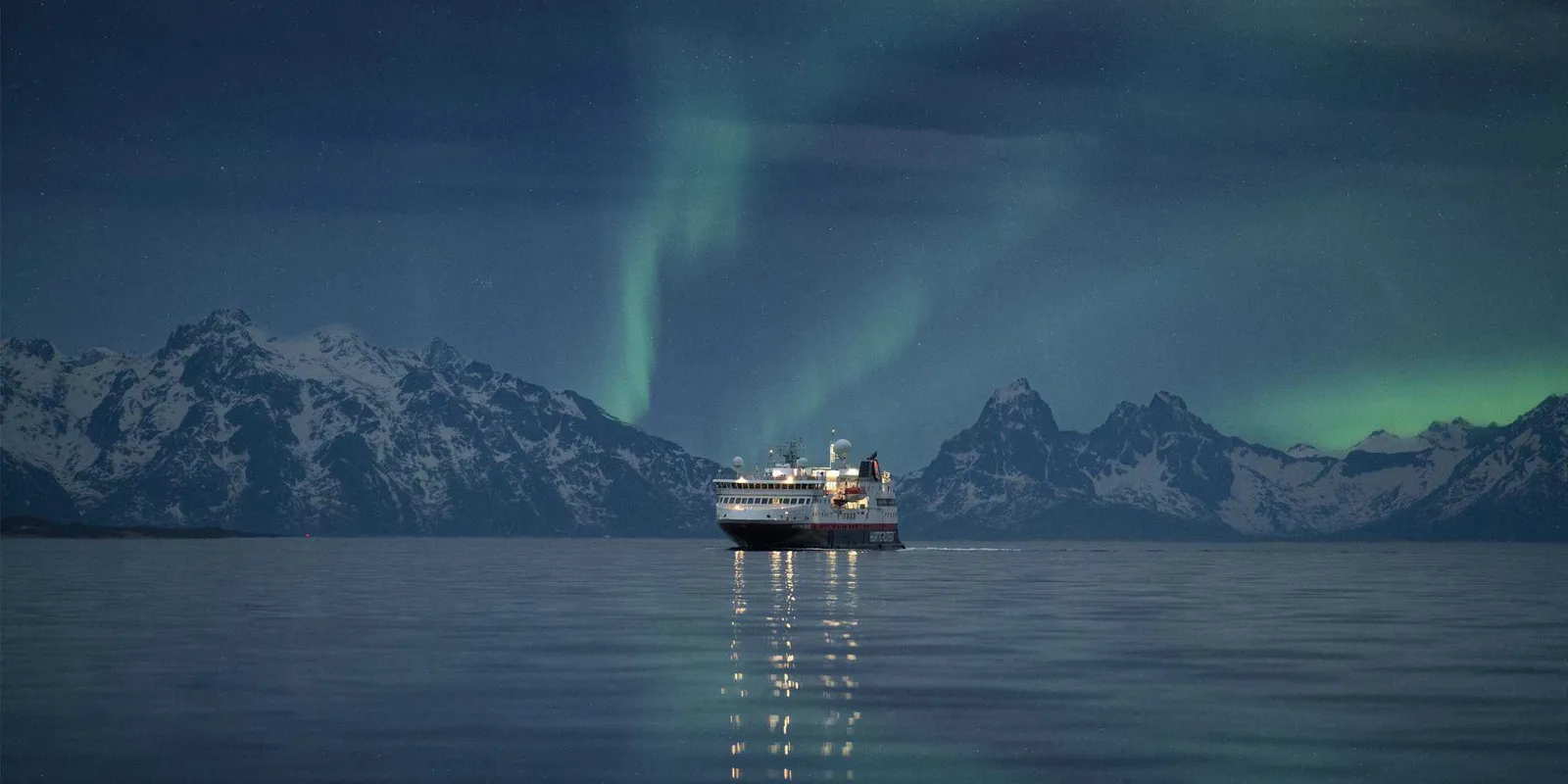
Hurtigruten Coastal Express has operated the Bergen-Kirkenes route since 1893 — over 130 years of continuous service connecting remote Norwegian communities along the western and northern coastline. Seven ships sail the route year-round, departing Bergen daily at 20:30 and arriving in Kirkenes approximately 6.5 days later, calling at 34 ports along the way. The ships carry cargo, local commuters making short hops between towns, and tourists who have booked passage. There is no theatre, no casino, no pool, no spa, and no conventional entertainment programme. The dining room serves included Norwegian meals. The expedition team delivers lectures on history, culture, and nature. The entertainment is the Norwegian coast itself — fjords, the Arctic Circle crossing, the Lofoten Islands, the North Cape, and in winter the Northern Lights.
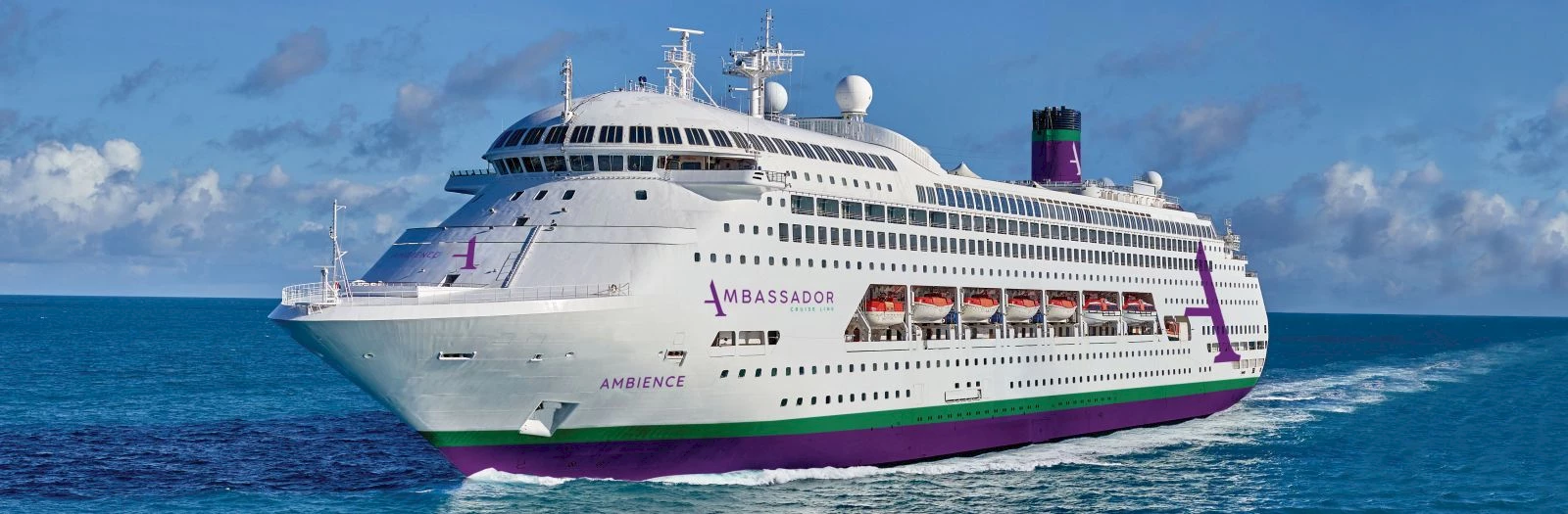
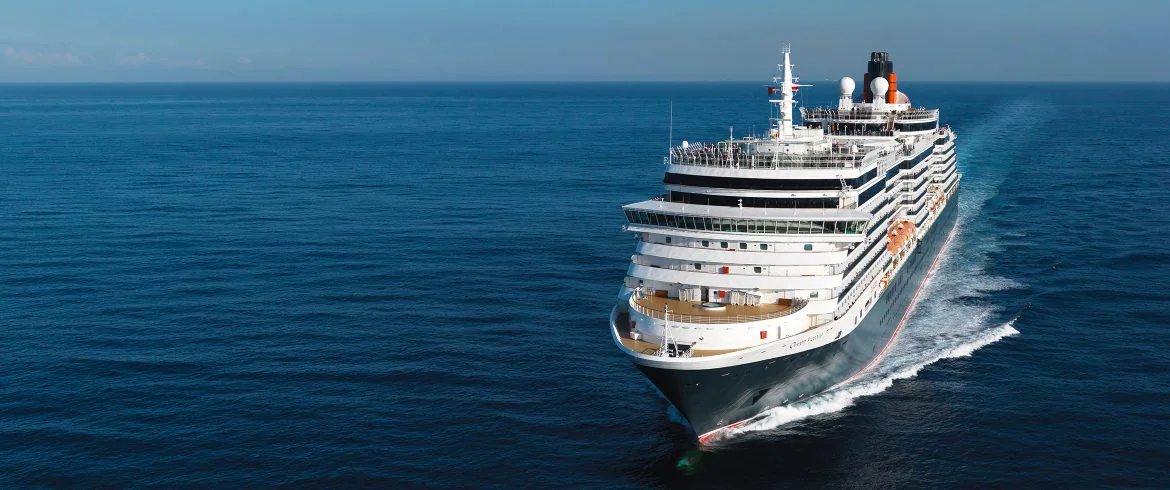
P&O Cruises is Britain’s largest cruise line, operating seven ships from Southampton with a proudly British identity dating back to 1837. Norwegian Fjords is one of P&O’s signature deployment regions, with multiple ships sailing 7-day itineraries each summer to major fjord ports including Bergen, Stavanger, Geiranger, Flam, and Olden. P&O’s newest ships — Iona and Arvia — are 185,000-tonne LNG-powered mega-vessels carrying 5,200 guests, with over 30 restaurants and bars, the SkyDome retractable glass-roof entertainment venue, Gary Barlow’s 710 Club, celebrity chef dining by Marco Pierre White and Atul Kochhar, a full casino, and West End-style theatre productions. They are floating resorts that happen to sail past Norwegian fjords.
The Norwegian experiences could not be more different. Hurtigruten docks at 34 ports over 12 days, many of them tiny communities where the ship is the primary connection to the outside world. P&O visits four or five major cruise ports over a week, spending most of the voyage at sea or in the fjords with the ship’s entertainment as the focus. Hurtigruten goes deep into Norway. P&O skims the highlights. Both approaches have genuine value — but they serve completely different travellers.
What is actually included
The inclusion models reflect the different natures of these products.
Hurtigruten Coastal Express includes: full-board meals (breakfast, lunch, and dinner) in the main restaurant, featuring Norwegian cuisine with locally sourced ingredients; access to lounges and observation areas; port calls at all 34 stops; and expedition team lectures on Norwegian culture, history, and nature. Drinks in the bar are purchased separately. Shore excursions are optional add-ons. Wi-Fi is available at extra cost. There are no gratuities to add. The inclusion model is simple because the product is simple — meals, a bed, and the Norwegian coast.
P&O includes in the base fare: all main meals (breakfast, lunch, dinner, afternoon tea, and snacks); buffet and main dining room service; theatre shows and live music; kids’ clubs on family ships; self-service laundrettes; and — crucially — gratuities. P&O incorporated service charges into the fare in 2019. Speciality dining, drinks, Wi-Fi, spa access, The Retreat day pass, shore excursions, and the Thermal Suite are additional. P&O’s all-inclusive packages from GBP 49 to 59 per person per day bundle drinks, Wi-Fi, and dining credits.
The key difference is not what is included but what there is to include. Hurtigruten has fewer facilities, so fewer add-ons exist. P&O’s mega-ships have dozens of venues, treatments, and experiences that generate additional revenue. A Hurtigruten passenger might spend very little beyond the fare — there is simply less to buy. A P&O passenger on a mega-ship has constant temptation to spend on speciality restaurants, drinks, spa treatments, and shore excursions.
Dining and culinary experience
The dining comparison reveals the fundamental difference between a working voyage and a holiday cruise.
Hurtigruten operates a single main restaurant on each ship, serving a set menu that changes daily based on the region the ship is passing through. Breakfast is a Scandinavian buffet — cured salmon, herring, cheeses, crisp bread, and cold meats. Lunch is a lighter offering, often soup and open sandwiches. Dinner is the centrepiece — a three-course meal featuring the region’s produce: fresh cod from the Lofoten fishing grounds, king crab from the Kirkenes region, reindeer from Finnmark, and cloudberries from above the Arctic Circle. The cuisine is authentic Norwegian coastal cooking — simple, seasonal, and deeply connected to the landscape outside. There is no speciality dining, no a la carte option, and no celebrity chef. The cooking is honest and regional, not gastronomic.
P&O’s dining programme operates at an entirely different scale and ambition. Iona and Arvia each offer over 30 restaurants and bars. The main dining rooms feature menus designed by Marco Pierre White. Sindhu by Atul Kochhar serves Indian-British fusion. The Glass House is curated by wine expert Olly Smith. Jose Pizarro brings Spanish cuisine. The Cookery Club on Britannia offers celebrity chef masterclasses. The Quays Food Hall serves street-food-style options. The 6th Street Diner on Arvia is a retro American grill. Speciality dining carries surcharges of approximately GBP 15 to 35 per person, though P&O’s all-inclusive packages now include dining credits.
The comparison is meaningless in qualitative terms — these are different categories of food service. Hurtigruten serves one meal at one time in one restaurant, and its value lies in the authenticity and freshness of Norwegian produce. P&O serves food all day across dozens of venues, and its value lies in variety, celebrity pedigree, and the sheer breadth of choice. If you want to eat king crab that was caught within sight of the ship, Hurtigruten delivers that. If you want to choose between Indian fusion, Spanish tapas, a steakhouse, and a food hall on the same evening, P&O delivers that.
Suites and accommodation
The accommodation comparison reflects the vast difference in ship size and purpose.
Hurtigruten’s cabins are functional and compact. Inside cabins offer basic accommodation with a bed, en-suite bathroom, and limited storage. Outside cabins provide a window or porthole onto the passing scenery — this is the critical upgrade on a voyage where the view is the product. Mini-suites and suites on refurbished ships like MS Trollfjord offer more space and some feature private balconies. The cabins are clean and comfortable but designed for practicality rather than luxury. You are expected to spend your time in the lounges and on deck, watching the coast.
P&O’s cabin range spans from inside cabins at around 101 to 213 square feet through balcony cabins to five suite categories. The Conservatory Mini Suites on Iona and Arvia feature bi-folding doors creating an indoor-outdoor space. Penthouse Suites reach up to 937 square feet. Suite guests receive butler service, priority embarkation, exclusive restaurant access, and complimentary room service from the main dining room menu. The cabins on P&O’s newer ships are modern, well-designed, and built for comfort.
The accommodation gap is significant. P&O’s newest ships offer modern cabins with contemporary finishes and genuine design thought. Hurtigruten’s cabins are practical spaces on working vessels. For the Coastal Express, this is not a criticism — the ship is a means of transport through extraordinary scenery, not a destination in itself. For P&O, the ship is very much part of the holiday, and the cabins reflect that.
Pricing and value
Pricing these two products requires acknowledging they deliver fundamentally different things.
Hurtigruten’s classic 12-day round trip from Bergen to Kirkenes and back starts from approximately GBP 1,300 to 1,800 per person in an inside cabin, working out to roughly GBP 108 to 150 per night. Outside cabins and suites cost more. Summer and Northern Lights seasons command premiums. All meals are included. You must also budget for flights to Bergen — from the UK, approximately GBP 80 to 200 return; from Australia, the routing goes through London or a Scandinavian hub.
P&O’s 7-night Norwegian Fjords from Southampton starts from approximately GBP 752 per person for an inside cabin — roughly GBP 107 per night. A balcony cabin runs from approximately GBP 130 to 180 per night. Gratuities are included. Speciality dining, drinks, and Wi-Fi are additional unless you purchase an all-inclusive package at GBP 49 to 59 per person per day. No flights are required — P&O sails from Southampton.
On a pure per-night basis, P&O and Hurtigruten are broadly comparable for inside cabins. But P&O delivers vastly more ship-based amenities — entertainment, multiple restaurants, a pool, spa, casino — for a similar nightly rate. Hurtigruten delivers vastly more Norwegian content — 34 ports versus four or five, the Arctic Circle, the Lofoten Islands, the North Cape. The value proposition depends entirely on what you value. If the ship experience matters, P&O delivers more for the money. If the Norwegian experience matters, Hurtigruten delivers more for the money.
Spa and wellness
The spa comparison is brief. P&O has comprehensive wellness facilities. Hurtigruten does not.
P&O operates The Oasis Spa across its fleet, with the largest facilities on Iona and Arvia spanning two decks. The Thermal Suite features heated loungers, sauna, steam room, hydrotherapy pool, and experiential showers. The Retreat is an adults-only outdoor wellness area with infinity whirlpools, cabanas, and day beds. The gym offers floor-to-ceiling ocean views. Treatment pricing runs from GBP 89 to 199. Thermal Suite access costs GBP 39 per day.
Hurtigruten Coastal Express has no spa, no gym, no swimming pool, and no wellness programme beyond the walking deck and the restorative effect of clean Arctic air. Some refurbished ships have a small fitness room with basic equipment. If you want to exercise, the 34 port calls offer opportunities to walk and explore ashore.
For spa-motivated travellers, this comparison has one answer: P&O. For travellers who consider a brisk walk along the deck in sub-zero Arctic air to be wellness enough, Hurtigruten’s lack of facilities is irrelevant.
Entertainment and enrichment
The entertainment comparison illustrates the product divide as starkly as any category.
P&O invests heavily in entertainment. The SkyDome on Iona and Arvia is a retractable glass-roof venue hosting acrobatic shows, aerial acts, open-air cinema, and late-night DJ sets — a genuinely unique venue with no equivalent on any other British cruise line. Gary Barlow serves as Music Director of The 710 Club, curating live performances and supporting emerging artists. Arvia stages “Greatest Days — The Official Take That Musical.” The Headliners Theatre hosts West End-style productions. A full casino operates nightly. Cinema screenings, escape rooms, cookery classes, wine tastings, sports courts, and an extensive daytime programme round out the offering.
Hurtigruten has no conventional entertainment. No theatre, no shows, no casino, no pool deck activities, no DJ sets. The expedition team delivers lectures on Norwegian topics — Viking history, Sami culture, Arctic wildlife, meteorology, and the Northern Lights. Port talks prepare guests for each stop. In winter, the crew activates an aurora alert when the Northern Lights appear, and passengers rush to the observation deck. In summer, the Midnight Sun provides its own spectacle. The lounges are designed for quiet observation. Some ships host occasional cultural performances by local musicians who board at regional ports.
The difference is absolute. P&O provides a full cruise entertainment programme comparable to the best in the mainstream market. Hurtigruten provides the Norwegian coast, an expert team to explain what you are seeing, and nothing else. For travellers who need entertainment after dinner, P&O is the only choice. For travellers who consider watching the Northern Lights dance across an Arctic sky to be sufficient entertainment, Hurtigruten needs no theatre.
Fleet and destination coverage
The fleet comparison spans from working coastal vessels to mega-cruise ships.
Hurtigruten Coastal Express operates seven ships on a single route — Bergen to Kirkenes, 2,500 nautical miles, 34 ports, 365 days a year. The ships include MS Trollfjord, MS Nordnorge, MS Kong Harald, MS Nordkapp, MS Polarlys, MS Richard With, and MS Vesteralen. They range from approximately 2,600 to 16,000 gross tonnes, carrying 200 to 700 passengers. The fleet was built between the 1990s and early 2000s, with several ships receiving significant refurbishments. One ship departs Bergen daily — the service operates like a bus route rather than a cruise itinerary.
P&O operates seven ships across global itineraries from Southampton. Iona and Arvia are 185,000-tonne LNG-powered mega-ships carrying 5,200 guests. Britannia, Ventura, Azura, Arcadia, and Aurora complete the fleet. P&O sails Norwegian Fjords, Mediterranean, Canary Islands, Caribbean (fly-cruise from Barbados), British Isles, Baltic, and annual world cruises. The fleet ranges from 76,000 tonnes (Aurora) to 185,000 tonnes (Arvia).
The fleet comparison is not meaningful in competitive terms — these are different categories of maritime operation. What matters is that Hurtigruten’s smaller ships access 34 ports that P&O’s mega-ships could never reach. P&O’s larger ships deliver amenities that Hurtigruten’s working vessels could never house. Each fleet is optimised for its purpose.
Where each line excels
Hurtigruten Coastal Express excels in:
- Authentic Norwegian immersion. Thirty-four ports over 12 days, including remote fishing villages, Arctic communities, and the Lofoten Islands. No conventional cruise can match this depth of Norwegian experience.
- Northern Lights. Extended time above the Arctic Circle in winter with dedicated aurora viewing, onboard alerts, and a guarantee of a free voyage if the lights fail to appear.
- Working-vessel character. Sailing alongside local commuters and cargo operations creates an authenticity that no holiday cruise can replicate.
- Small-ship port access. Tiny harbours, narrow channels, and remote communities that mega-ships cannot approach.
- Year-round operation. Each season reveals a different Norway — Northern Lights in winter, Midnight Sun in summer, dramatic light transitions in spring and autumn.
- Scenery depth. The Bergen-Kirkenes route covers 2,500 nautical miles of Norway’s most dramatic coastline, experienced slowly and at close quarters.
P&O Cruises excels in:
- Entertainment and dining breadth. Over 30 restaurants and bars on the newest ships, celebrity chef dining, the SkyDome, Gary Barlow’s 710 Club, a casino, and full theatre productions. A complete cruise holiday experience.
- Modern ship design. Iona and Arvia are state-of-the-art LNG-powered vessels with contemporary facilities that represent the pinnacle of British cruise ship engineering.
- No-fly convenience from Southampton. Norwegian Fjords is accessible without flights for UK-based travellers. Southampton is 75 minutes from London by train.
- Adults-only ships. Arcadia and Aurora offer dedicated adults-only cruising for travellers seeking a quieter atmosphere.
- Included gratuities. Service charges built into the fare since 2019 simplify budgeting.
- World cruise sectors. P&O’s annual circumnavigations visit Australian ports, offering bookable sectors for Australian travellers.
- Celebrity chef partnerships. Marco Pierre White, Atul Kochhar, Olly Smith, and Jose Pizarro bring culinary prestige that extends well beyond the dining table.
Standout itineraries for Australian travellers
Hurtigruten Coastal Express
12-Day Classic Round Voyage — Bergen to Kirkenes and Return. The definitive Norwegian coastal experience. The full round trip ensures you see every stretch of coastline in daylight — what you pass at night heading north, you see in daylight heading south, and vice versa. Thirty-four ports visited twice each. The Arctic Circle crossing, the Lofoten Islands, Tromso, Hammerfest, and the North Cape. From approximately GBP 1,300 per person. I recommend the full round trip over any shorter segment.
6-Day Northbound — Bergen to Kirkenes. The classic one-way voyage with the major scenery in daylight. Ideal for travellers short on time or combining with a wider Scandinavian itinerary. Connects to onward travel from Kirkenes via flights to Oslo or Helsinki.
Northern Lights Voyage — October to March. The winter sailing is one of the world’s premier Northern Lights experiences. Dark Arctic skies, minimal light pollution, and sustained time in the aurora zone. Hurtigruten’s guarantee of a free voyage if the lights do not appear adds confidence.
P&O Cruises
Iona 7-Night Norwegian Fjords (from Southampton, summer). P&O’s flagship Norwegian experience on the line’s most impressive ship. The SkyDome, Gary Barlow’s 710 Club, and 30-plus dining venues, with calls at Geiranger, Bergen, Stavanger, and Olden. From approximately GBP 849 per person. The quintessential British cruise to Norway.
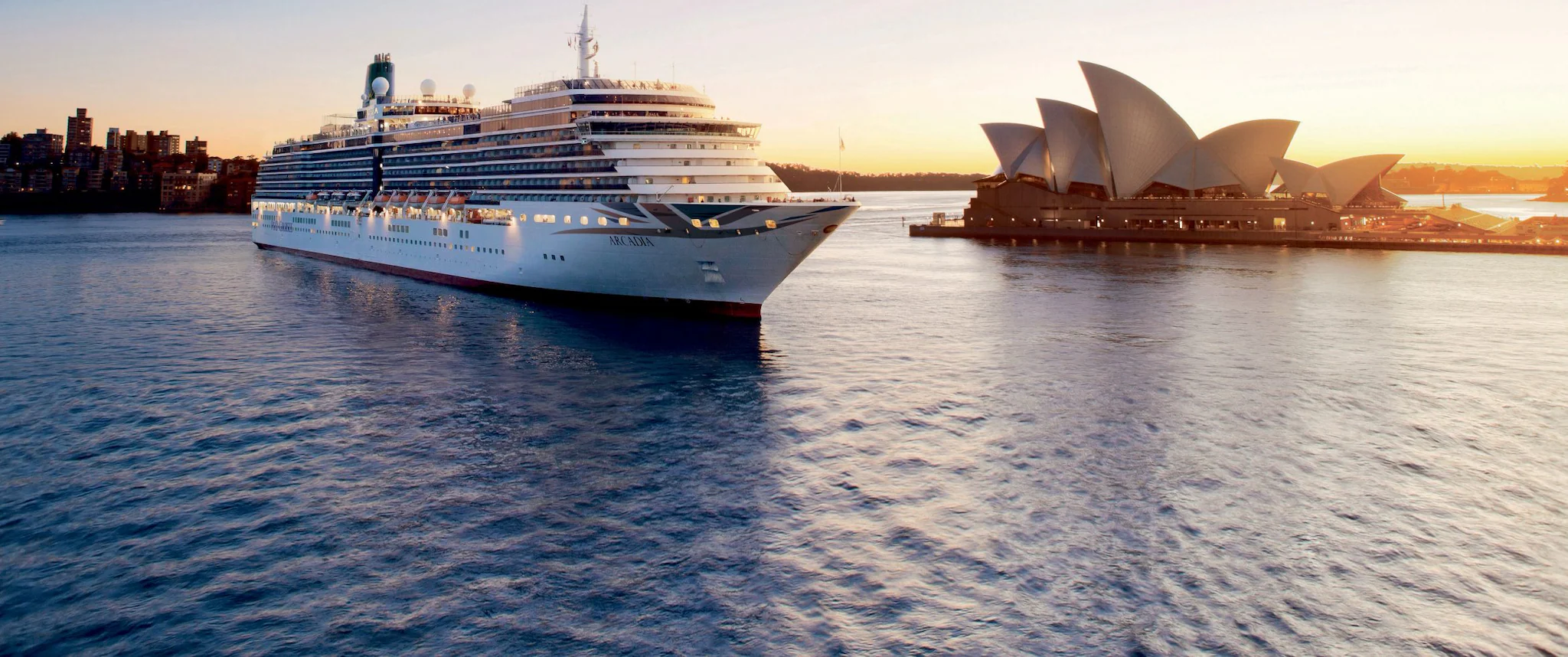
Arcadia 100-Night World Cruise Sector Through Sydney. P&O’s adults-only world cruise visits Australian ports annually. Australian travellers can book a sector joining or leaving in Sydney — the most relevant P&O option for Australians wanting to experience the line without flying to the UK.
Aurora 14-Night Northern Lights Cruise (from Southampton, winter). P&O’s adults-only ship sails northern European itineraries that include Northern Lights-focused routing through Norway in autumn and winter. A more comfortable ship experience than Hurtigruten, though with less sustained time in the aurora zone.
Ship-by-ship recommendations
Hurtigruten Coastal Express
MS Trollfjord — The most extensively refurbished ship with the best cabins, dining, and public spaces. The panoramic lounge is purpose-designed for scenery. If you can select your departure date to coincide with Trollfjord, do so.
MS Kong Harald — A well-maintained vessel with a good balance of character and comfort. Consistently well-reviewed by passengers.
MS Vesteralen — The smallest and most authentic ship. Fewer amenities but greater working-vessel character. For purists who want the Coastal Express as it was, rather than as it is becoming through modernisation.
P&O Cruises
Iona — The flagship Norwegian Fjords ship. The SkyDome, 710 Club, and full entertainment programme on a 185,000-tonne LNG-powered vessel. The definitive P&O Norwegian experience.
Arvia — Near-identical to Iona, with the addition of “Greatest Days — The Official Take That Musical.” Deployed variously to fjords and Caribbean.
Arcadia — Adults-only, smaller, and more traditional. The best P&O ship for travellers who want a quieter Norwegian cruise without mega-ship crowds. World cruise sectors offer the most relevant option for Australian travellers.
For Australian travellers specifically
Neither Hurtigruten Coastal Express nor P&O Cruises UK sails from Australian ports. Both require Australian travellers to travel to Europe. However, P&O has marginally more Australian relevance through its world cruise programme.
P&O’s world cruises regularly call at Australian ports. Arcadia’s 100-night circumnavigation in 2026 included an overnight in Sydney. Australian travellers can book sectors through agencies such as Cruise Guru and Clean Cruising, joining or leaving the ship in Sydney or other ports along the route. This is the most practical way for Australians to experience P&O without flying to Southampton. P&O’s Norwegian Fjords sailings from Southampton are also accessible for Australians visiting the UK — Southampton is 75 minutes from London Waterloo by train.
Hurtigruten Coastal Express requires a flight to Bergen. From Australia, the most efficient routing goes through London, Copenhagen, or Amsterdam with a connecting flight to Bergen Flesland Airport. Bergen is worth a day or two of exploration before boarding. The ship departs daily at 20:30, so an afternoon arrival is sufficient. For one-way northbound voyages, return flights from Kirkenes connect through Oslo or Helsinki.
Both lines price in GBP (or NOK for Hurtigruten bookings through Norwegian channels). Neither offers AUD pricing. Australian agencies will convert to AUD at the prevailing exchange rate.
The practical choice for Australian travellers depends on the broader trip. If you are visiting the UK and want to add a Norwegian cruise, P&O from Southampton is the easiest option with the most comprehensive onboard experience. If you are visiting Scandinavia and want an immersive Norwegian coastal journey, Hurtigruten from Bergen is one of the world’s great voyages. If you want to experience P&O from Australian waters, the world cruise sector programme is the pathway.
The onboard atmosphere
The atmospheres on these two products reflect their entirely different purposes — one is a holiday; the other is a journey.
P&O’s atmosphere on the Norwegian Fjords itinerary is holiday-focused and lively. The mega-ships buzz with activity — the pool deck is animated, the restaurants fill from early evening, the SkyDome creates spectacle, the casino draws a late-night crowd, and the bars feature live music until midnight. The passenger base is predominantly British, ranging from families on the big ships to older couples on the adults-only Arcadia and Aurora. Gala nights add formality. The scenery outside is magnificent, but the ship competes for your attention — there is always something happening onboard. P&O manages this balance well, with observation areas and quiet zones for scenery watching alongside the more energetic venues.
Hurtigruten’s atmosphere is contemplative, unhurried, and quietly communal. The passenger mix includes international tourists, Norwegian locals, and the occasional crewmember of the working coastal fleet. The dominant activity is watching — watching the coast, the weather, the light, and the ports. Conversations form naturally in the lounges, often centred on what just passed outside the window. Meals are communal and friendly. There is no dress code beyond practical clothing. In winter, a quiet electricity runs through the ship — passengers scanning the sky for the green shimmer of the Northern Lights, the sudden rush to the deck when the alert sounds, the shared wonder of an aurora dancing overhead. In summer, passengers linger on deck until well past midnight under a sun that refuses to set.
The atmospheres are not comparable — they are categorically different. P&O provides a holiday on a ship that visits Norway. Hurtigruten provides a Norwegian experience on a ship that serves as transport. Both are valuable. The question is whether you want to be entertained or immersed.
The bottom line
Hurtigruten Coastal Express and P&O Cruises deliver Norwegian experiences that share a coastline and nothing else. The choice between them is the most clear-cut in any comparison I write, because the products are not on the same spectrum.
Choose P&O if you want a full-service cruise holiday that happens to include spectacular Norwegian fjord scenery. Choose it for the celebrity chef dining, the SkyDome, the entertainment programme, the spa, the casino, and the breadth of a modern mega-ship experience. Choose it for the no-fly convenience from Southampton and the included gratuities. Choose it for the Norwegian greatest hits — Bergen, Geiranger, Stavanger, Flam — experienced from the comfort of a well-equipped floating resort. Accept that you will visit four or five ports in a week, that the ship will be the primary focus, and that the Norwegian experience will be curated rather than immersive.
Choose Hurtigruten if you want Norway itself to be the experience. Choose it for 34 ports in 12 days, for tiny fishing villages that no cruise ship can reach, for the Arctic Circle crossing, for the Lofoten Islands at dusk, for the North Cape in winter darkness, and for the Northern Lights dancing above a working vessel that has sailed this coast for over 130 years. Choose it if the absence of a theatre, spa, casino, and pool does not concern you, because the scenery will fill every moment. Accept that the ships are working vessels with basic facilities, that the food is honest rather than gourmet, and that the entertainment is whatever Norway chooses to show you that day.
For Australian travellers, P&O is more accessible through world cruise sectors that visit Sydney, while Hurtigruten requires a dedicated journey to Bergen. Both reward the effort of getting there. They simply reward it in completely different ways.