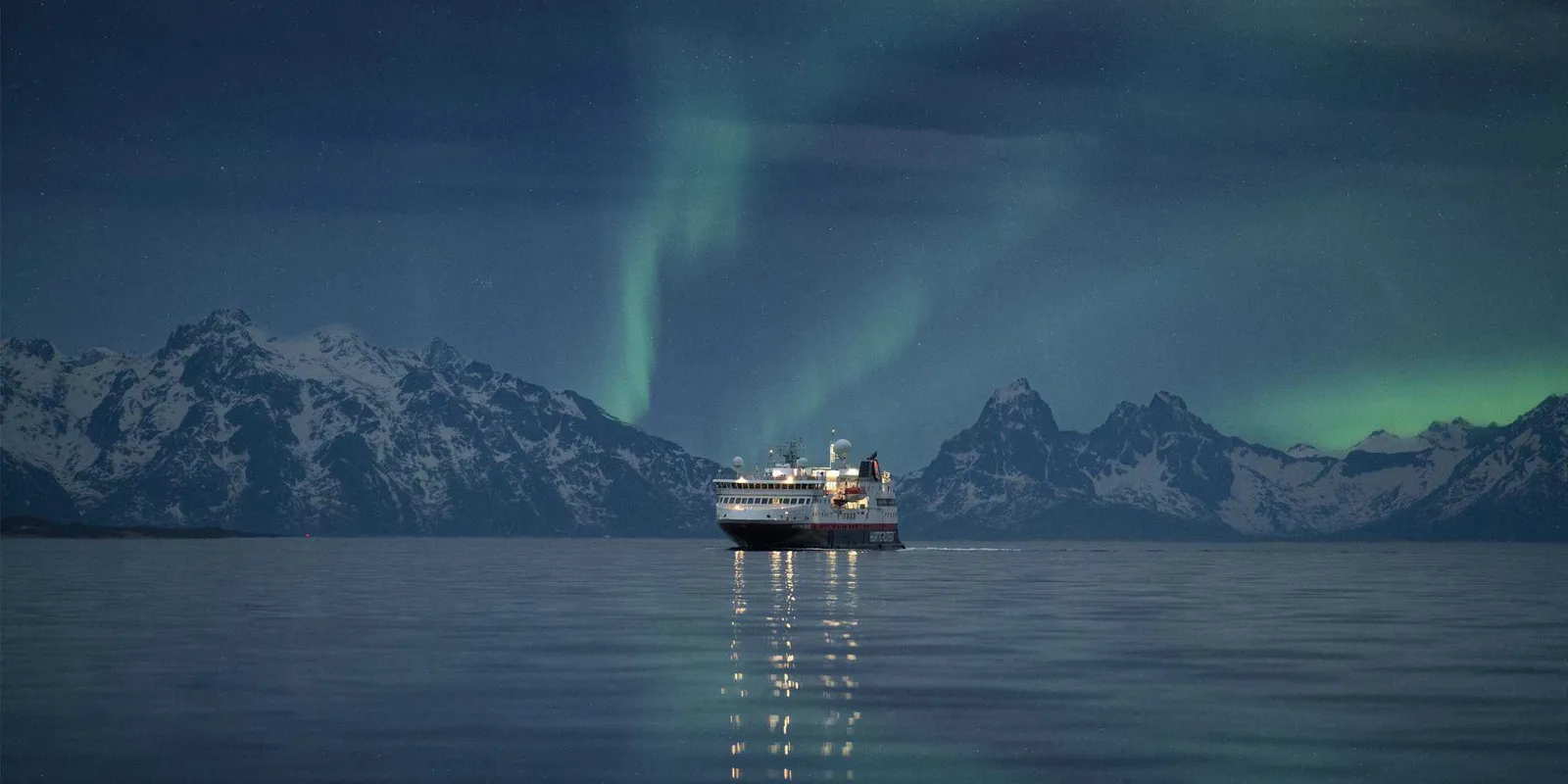
Hurtigruten Coastal Express and Saga Ocean Cruises both attract mature travellers seeking European voyages, but the similarities end there — one is a working Norwegian mail route, the other a boutique all-inclusive cruise line exclusively for the over-50s. Jake Hower explains what each delivers and where each falls short for Australian travellers.
| Hurtigruten Coastal Express | Saga Ocean Cruises | |
|---|---|---|
| Category | Premium | Premium |
| Rating | ★★★★☆ | ★★★★☆ |
| Fleet size | 7 ships | 2 ships |
| Ship size | Mid-size (1,000-2,500) | Small (under 1,000) |
| Destinations | Norwegian Coast | Mediterranean, Norwegian Fjords, Caribbean, Canary Islands |
| Dress code | Relaxed | Smart casual |
| Best for | Norwegian coastal voyage travellers | Over-50s British cruise travellers |
These are fundamentally different products that happen to share an appeal among older travellers. Hurtigruten Coastal Express is the right choice for travellers who want an authentic Norwegian coastal experience — a working mail route calling at 34 ports in 12 days, with basic included meals, no entertainment programme, and scenery as the sole attraction. It is not a cruise; it is scenic transport with comfortable accommodation. Saga Ocean Cruises is the right choice for British travellers over 50 who want a boutique all-inclusive cruise with chauffeur transfers, included speciality dining, dedicated solo cabins, and a refined social atmosphere on intimate 1,000-guest ships. Neither line has meaningful Australian relevance — both require long-haul flights from Australia with no AUD pricing, no Australian departures, and no fly-free programmes. For Australians drawn to Norwegian coastal scenery, Viking Ocean Cruises offers a more accessible alternative with Sydney departures and Companion Fly Free. For Australians seeking boutique all-inclusive cruising, several premium lines deploy ships to Australian waters.
The core difference
Hurtigruten Coastal Express and Saga Ocean Cruises both appeal to mature, experience-seeking travellers, but they are about as different as two maritime experiences can be. One is a working Norwegian mail route that has connected remote coastal communities since 1893. The other is a purpose-built boutique cruise line that wraps British over-50s in all-inclusive luxury from their front door. Comparing them is less like weighing two cruise products and more like comparing a scenic railway journey with a five-star resort holiday — both are travel experiences, both suit a similar age demographic, but they deliver entirely different things.
Hurtigruten Coastal Express operates seven working ships on a single route between Bergen and Kirkenes, covering 2,500 nautical miles and calling at 34 ports over 12 days. These ships carry cargo, mail, and local passengers alongside tourists. There is no casino, no spa, no swimming pool, no entertainment programme, and no enrichment lectures. The dining is a single restaurant serving included Norwegian meals — honest, fresh, and unpretentious. The cabins range from compact inside rooms to suites with private balconies, but even the best accommodation is functional rather than luxurious. The experience is the coastline itself — fjords, fishing villages, the Lofoten Islands, the Arctic Circle crossing, and in winter, the Northern Lights. Hurtigruten does not compete with cruise lines because it is not a cruise. It is scenic transport that happens to be exceptionally beautiful.
Saga Ocean Cruises operates two purpose-built boutique ships — Spirit of Discovery (2019) and Spirit of Adventure (2021) — exclusively for British travellers aged 50 and over. At approximately 58,250 gross tonnes carrying around 1,000 guests each, these are intimate vessels designed to feel like floating luxury hotels. Every cabin has a private balcony. Roughly 20 per cent of accommodation is dedicated to solo travellers — a proportion virtually unheard of in the cruise industry. The all-inclusive proposition covers all speciality restaurant dining without surcharges, house wines, beers and spirits, 24-hour room service, Wi-Fi, gratuities, and Saga’s signature chauffeur service that collects passengers from their front door and drives them to the departure port. For 2026, Saga has added inclusive shore excursions at every port, creating one of the most comprehensive all-inclusive packages in the premium segment.
The demographic overlap is real — both lines attract retired or semi-retired travellers who value experience over flash. But the experience they seek is fundamentally different. Hurtigruten travellers want to sit in a panoramic lounge watching Norway unfold. Saga travellers want to be looked after in comfort while exploring the Mediterranean, Norwegian Fjords, or Caribbean.
What is actually included
The inclusions gap between these two products illustrates the fundamental difference in what each is selling.
Hurtigruten Coastal Express includes in the fare: cabin accommodation; breakfast, lunch, and dinner in the main restaurant; access to panoramic lounges and observation decks; port calls at all 34 scheduled stops; and the Northern Lights Promise on winter sailings of 11 days or more (a complimentary voyage if the aurora does not appear). The food is Norwegian-focused — fresh fish, kjottkaker (meat cakes), reindeer stew, and king crab on Arctic sailings — served in a single dining venue with open seating.
Hurtigruten does not include: alcoholic beverages; speciality coffees; Wi-Fi (paid packages available); shore excursions (optional excursions bookable at additional cost); spa treatments (there is no spa); entertainment (there is no entertainment programme); gratuities (discretionary); and flights or transfers.
Saga Ocean Cruises includes in the fare: cabin accommodation with private balcony (every cabin); all speciality restaurant dining without surcharges across multiple venues; house wines, selected beers, spirits, and cocktails throughout the day; 24-hour room service; Wi-Fi; all gratuities; chauffeur service from the guest’s UK home to the departure port (within 250 miles); optional travel insurance; shore excursions at every port (from 2026 sailings); enrichment lectures and guest speakers; and entertainment including live music, theatre productions, and speciality acts.
Saga does not include: premium wines and champagnes above the house selection; spa treatments; personal shopping; and flights (UK port departures eliminate the need for most guests).
The practical difference is enormous. A Hurtigruten guest boards a working vessel, eats included meals in a single restaurant, and spends most of their time watching the scenery. A Saga guest is collected from their front door by chauffeur, boards a boutique ship, dines across multiple included restaurants, enjoys entertainment every evening, and has excursions included at every port. These are entirely different product categories at entirely different price points.
Dining and culinary experience
The dining comparison reveals the widest gap between these two products, and it reflects the fundamental difference in what each line considers its core offering.
Hurtigruten’s dining is functional and Norwegian. A single main restaurant serves three included meals daily. Breakfast is a Scandinavian buffet with cured meats, cheeses, fresh bread, and smoked salmon. Lunch offers soups, salads, and hot dishes — simple but well-prepared. Dinner is a set menu featuring regional Norwegian cuisine that changes daily to reflect the coastal areas being sailed. The highlight is the Arctic Menu on northern sailings — fresh king crab, stockfish, reindeer, and other Arctic specialities. There is a small cafe serving light snacks and paid beverages. The dining experience is honest, locally sourced, and unpretentious. There are no surcharges because there is only one restaurant. There are no celebrity chefs because the food is about regional authenticity rather than culinary theatre.
Saga’s dining is boutique cruise dining at its most inclusive. Spirit of Adventure features five dining venues: the Grand Dining Room with its daily-changing menu; Amalfi for Italian fine dining; Khukuri House, the world’s first Nepalese restaurant at sea; Coast to Coast for seafood and grill; and the East to West supper club with live entertainment. Spirit of Discovery offers a comparable range including The Grill, The Club (with menus by celebrity chef Phil Vickery at La Vie en Rose), and speciality venues. Every restaurant is included without surcharges. House wines, beers, spirits, and cocktails flow throughout the day at no additional cost. Afternoon tea is served daily. Room service is complimentary around the clock.
For food-motivated travellers, there is no comparison. Saga delivers a genuine dining programme with variety, quality, and inclusion. Hurtigruten delivers honest Norwegian meals in a single venue. Neither approach is wrong — Hurtigruten’s food serves the journey; Saga’s food is part of the journey. But anyone booking Hurtigruten expecting multiple restaurants and included drinks will be disappointed, and anyone booking Saga expecting authentic Arctic king crab pulled from the fjord that morning will need to look elsewhere.
Suites and accommodation
The accommodation philosophies reflect the broader product positioning — Hurtigruten offers working-vessel cabins in a range of sizes; Saga delivers boutique hotel rooms at sea.
Hurtigruten’s cabins range from compact inside rooms of approximately 60 to 80 square feet (the smallest in the fleet, essentially a bed and a bathroom) to expedition suites of approximately 350 to 450 square feet with private balconies and separate sitting areas. The majority of cabins are inside or outside rooms without balconies. The cabins are clean, functional, and well-maintained but lack the design polish of purpose-built cruise ships. The seven ships span different eras and configurations — the recently refurbished MS Vesteralen is the smallest and most classic; larger vessels like MS Trollfjord and MS Kong Harald offer more spacious accommodations. Cabin hardware reflects the working-vessel origins — expect practical furnishings rather than boutique design.
Saga’s cabins are uniformly superior. Every cabin on both ships has a private balcony — there are no inside staterooms. Standard balcony cabins start from approximately 215 to 230 square feet including the balcony. Dedicated single-occupancy cabins (roughly 150 to 170 square feet with balcony) are available without supplement — approximately 109 on Spirit of Discovery and 109 on Spirit of Adventure. Superior and deluxe balcony cabins range from 250 to 400 square feet. Suites reach approximately 500 to 800 square feet with separate living areas, premium amenities, and enhanced butler-style service. The design is contemporary British — clean lines, quality fabrics, good lighting, and bathrooms that feel genuinely residential. The ships were purpose-built for Saga’s demographic, and it shows in details like excellent reading lights, generous storage, and accessible design throughout.
For travellers who prioritise their cabin, Saga wins comprehensively. For travellers who see the cabin as somewhere to sleep between scenic viewings, Hurtigruten’s functional rooms serve the purpose adequately.
Pricing and value
The pricing comparison requires context because these are fundamentally different products serving different needs.
Hurtigruten’s directional pricing for the full 12-day Bergen-Kirkenes round trip: an inside cabin starts from approximately GBP 1,200 per person (roughly GBP 100 per night); an outside cabin from approximately GBP 1,500 per person; a balcony or mini-suite from approximately GBP 2,500 per person. These fares include accommodation and all meals. Half-voyage options (northbound or southbound only, 6 to 7 days) start from approximately GBP 700 per person. Port-to-port segments are also bookable for shorter experiences.
Saga’s directional pricing for a comparable 12 to 14-night Mediterranean or Norwegian Fjords cruise: fares start from approximately GBP 2,400 to GBP 3,500 per person for a standard balcony cabin (roughly GBP 200 to GBP 290 per night). This includes all dining, house drinks, Wi-Fi, gratuities, chauffeur transfer, and from 2026, shore excursions at every port.
Saga costs roughly twice Hurtigruten on a per-night basis, but the inclusions gap means Saga delivers substantially more product for the premium. A Hurtigruten guest adding drinks, Wi-Fi, and optional excursions will narrow the gap somewhat, but Saga’s all-inclusive model — plus the chauffeur service worth GBP 200 to GBP 400 depending on distance — represents genuine value for what it includes.
For Australian travellers, neither line offers particular value because both require long-haul flights to Europe at the traveller’s expense. There are no AUD pricing options, no Australian sales offices with dedicated support, and no fly-free programmes from Australian gateways. The total holiday cost — including return flights from Australia to Bergen or the UK — makes both options expensive propositions compared to premium lines that deploy ships to Sydney.
Spa and wellness
The wellness comparison is brief because only one of these lines has a spa.
Hurtigruten has no spa. There is no thermal suite, no treatment rooms, no sauna, no fitness centre in the conventional sense, and no wellness programme. Some ships have a small gym with basic equipment, but wellness is not part of the product. The wellness experience on Hurtigruten is standing on the observation deck in sub-zero temperatures watching the Northern Lights — which, to be fair, is therapeutic in its own way.
Saga’s spa facilities are well-appointed for the ship size. Both Spirit of Discovery and Spirit of Adventure feature a spa with treatment rooms, a thermal suite with sauna and steam room, a beauty salon, and a fitness centre with ocean views. Spa treatments include massages, facials, body wraps, and beauty services at additional cost. The pool area features a main swimming pool and whirlpools. Group fitness classes are available. The facilities are not as extensive as those on larger premium ships, but they are proportionate to the 1,000-guest capacity and well-maintained.
For travellers who value spa and wellness, Saga is the only option from this pairing. For travellers who consider fresh Arctic air and dramatic scenery their wellness programme, Hurtigruten delivers abundantly.
Entertainment and enrichment
The entertainment comparison illustrates the philosophical gulf between these two products as clearly as any other section.
Hurtigruten has no entertainment programme. There is no theatre, no production shows, no live music venue, no casino, no comedian, and no enrichment lecturer. On some sailings, a guide provides commentary during key scenic passages — the Arctic Circle crossing, the Trollfjord transit, and the approach to major ports. On winter sailings, a Northern Lights guide alerts guests to aurora activity. But the overwhelming majority of time aboard is unstructured. Guests read, watch the scenery, photograph the coastline, and talk to fellow passengers. The entertainment is Norway itself — and for the right traveller, the Lofoten Islands at sunset or the approach to Tromso under the Northern Lights is more compelling than any theatre production.
Saga delivers a full boutique cruise entertainment programme. Both ships feature a main theatre with nightly shows — production revues, guest vocalists, comedians, magicians, and speciality acts. Live music plays in multiple lounges throughout the evening. Guest speakers cover topics from history and natural science to travel writing and current affairs. Saga’s enrichment programme includes themed cruises with celebrity guests, craft workshops, dance classes, and wine tasting events. The Supper Club on Spirit of Adventure combines fine dining with live entertainment in an intimate cabaret setting. The atmosphere is sociable and participatory — many guests cite the onboard community as the primary reason for rebooking.
The divide is absolute. Hurtigruten offers silence and scenery. Saga offers shows and socialising. These are not different points on a spectrum — they are entirely different approaches to spending time at sea. Choosing between them depends entirely on what you want your evenings to look like.
Fleet and destination coverage
The fleet and destination comparison is perhaps the simplest in this entire analysis.
Hurtigruten Coastal Express operates seven ships on a single route. The Bergen-Kirkenes coastal voyage is the only itinerary. Ships range from the compact MS Vesteralen to larger vessels like MS Trollfjord, MS Nordnorge, MS Nordkapp, MS Richard With, MS Kong Harald, and MS Polarlys. The fleet serves the route year-round, with one ship departing Bergen northbound and one departing Kirkenes southbound every day of the year. The route never changes — it has operated continuously since 1893 with only minor port adjustments. This is the narrowest destination coverage of any operator on this site, but it is also the deepest — no one knows the Norwegian coast like Hurtigruten.
Saga Ocean Cruises operates two ships sailing from UK ports to a moderate range of destinations. The Mediterranean (western and eastern) is the primary programme, supplemented by Norwegian Fjords, Canary Islands and Iberia, Caribbean (fly-cruise), British Isles, and Baltic capitals. World cruise segments and extended voyages round out the calendar. All sailings depart from the UK — primarily Dover and Southampton. The range is broader than Hurtigruten’s single route but narrower than most premium cruise lines, reflecting the focused boutique model and small fleet.
For travellers whose primary interest is Norway’s coast, Hurtigruten is unmatched — nobody else calls at 34 Norwegian ports in 12 days. For travellers who want a boutique cruise experience across multiple European destinations, Saga offers variety within its intimate scale.
Where each line excels
Hurtigruten Coastal Express excels in:
- The Norwegian coastal experience. No other operator covers the Bergen-to-Kirkenes route with 34 port calls in 12 days. The Coastal Express is the definitive way to experience Norway’s coastline.
- Northern Lights viewing. Winter sailings above the Arctic Circle provide prime aurora conditions, backed by the Northern Lights Promise — a free return voyage if the lights do not appear.
- Authentic Norwegian character. The working-vessel atmosphere, local passengers boarding for short hops, and cargo operations create an experience that no purpose-built cruise ship can replicate.
- Scenic immersion. Fjords, fishing villages, the Lofoten Islands, and the Arctic Circle crossing unfold continuously outside panoramic windows. The scenery is the entertainment.
- Affordability. Starting from approximately GBP 100 per person per night with included meals, Hurtigruten is among the most affordable ways to experience Norway’s coast.
Saga Ocean Cruises excels in:
- All-inclusive comprehensiveness. With dining, drinks, Wi-Fi, gratuities, shore excursions (from 2026), and chauffeur transfers all included, Saga delivers one of the most complete all-inclusive packages in the premium segment.
- Solo traveller infrastructure. Roughly 20 per cent of cabins are dedicated single-occupancy rooms at no supplement — the strongest solo offering of any ocean cruise line.
- Boutique ship intimacy. At approximately 1,000 guests, the ships feel personal and unhurried, with crew who know returning guests by name.
- British social atmosphere. The onboard community is warm, welcoming, and sociable — many guests travel solo specifically for the social connections.
- Repeat passenger loyalty. Saga reportedly holds the highest repeat passenger rate in the cruise industry, reflecting genuine guest satisfaction.
- Chauffeur service. Being collected from your front door and driven to the port is a uniquely Saga touch that eliminates the stress of airport transfers.
Standout itineraries for Australian travellers
Hurtigruten Coastal Express
12-Day Classic Round Voyage (Bergen to Kirkenes to Bergen). The full experience — northbound through fjords, across the Arctic Circle, past the Lofoten Islands to Kirkenes, then southbound to see everything missed on the northward night passages. This is the voyage to do if you are making the trip from Australia. The half-voyage covers only one direction and misses scenery that is only visible from the opposite direction.
6 or 7-Day Northern Lights Voyage (Bergen to Kirkenes or reverse, October to March). If the full round trip does not fit your schedule, the northbound winter sailing offers the best Northern Lights opportunity with the scenery of the Lofoten Islands and Tromso in dramatic Arctic winter light.
Port-to-Port Segments. For Australians incorporating Hurtigruten into a broader Scandinavian holiday, shorter segments — Bergen to Alesund, Tromso to Hammerfest — are bookable and can complement a land-based Norwegian itinerary.
Saga Ocean Cruises
14-Night Norwegian Fjords (ex-Dover, Spirit of Discovery or Spirit of Adventure). The most natural comparison point with Hurtigruten — Saga’s Norwegian Fjords itineraries visit major ports including Bergen, Geiranger, Alesund, and Tromso from a boutique all-inclusive ship. Included excursions from 2026 add genuine value.
21-Night Mediterranean Discovery (ex-Dover). A longer voyage through the western Mediterranean with calls in Spain, France, Italy, and Malta. The included dining, drinks, and now excursions make this a strong-value proposition for Australians visiting the UK who want to add a cruise.
Extended World Cruise Segments. Saga offers world cruise voyages bookable in segments. For Australians seeking a grand voyage experience on a boutique ship, these provide an alternative to the mega-ship world cruises.
Ship-by-ship recommendations
Hurtigruten Coastal Express
MS Trollfjord — The largest and most modern ship in the fleet, with the most spacious public areas and the broadest range of cabin categories. The best choice for travellers who want the most comfortable Hurtigruten experience.
MS Kong Harald — A well-maintained mid-fleet vessel with good cabin sizes and panoramic lounges. A solid choice for the classic coastal experience.
MS Vesteralen — The smallest and most characterful ship in the fleet, recently refurbished. For travellers who want the most authentic working-vessel atmosphere, Vesteralen delivers the grittiest experience.
Any ship will do. Because the route is the same regardless of the vessel, the scenery outside the windows is identical on every ship. The differences between ships are primarily cabin size and onboard comfort — not the quality of the voyage itself.
Saga Ocean Cruises
Spirit of Adventure (2021) — The newer of the two ships and the one with the broader dining programme, including Khukuri House (Nepalese), Coast to Coast, and the Supper Club. If you are choosing between the two, Spirit of Adventure offers slightly more variety.
Spirit of Discovery (2019) — The original Saga newbuild, with the recently added La Vie en Rose dining experience at The Club. Marginally smaller but essentially the same product. Both ships are excellent, and the choice should be made on itinerary rather than ship.
For Australian travellers specifically
Neither Hurtigruten Coastal Express nor Saga Ocean Cruises has meaningful relevance to the Australian cruise market, and this is perhaps the most important point in the entire comparison.
Hurtigruten Coastal Express has no Australian presence. The entire operation runs on a single Norwegian coastal route. There are no Australian departures, no AUD pricing, no Australian sales office, and no fly-free promotions. Booking from Australia requires arranging return flights to Bergen (typically via a European hub), which adds AU$2,500 to AU$4,000 per person to the holiday cost. Hurtigruten’s parent company does operate an expedition cruise division (separate from the Coastal Express) that occasionally visits Australian waters, but the Coastal Express service is exclusively Norwegian.
Saga Ocean Cruises has no Australian presence. The line sails exclusively from UK ports and restricts bookings to UK residents or those with UK bank accounts, though Australian travel agents can sometimes arrange bookings through UK partner agencies. There are no Australian departures, no AUD pricing, and the chauffeur service — Saga’s signature inclusion — only operates within the UK. The over-50 age restriction and UK-centric departure model make Saga a niche option for Australians already planning an extended UK holiday.
For Australians who want the Norwegian coastal experience, a stronger alternative exists. Viking Ocean Cruises deploys Viking Orion to Sydney annually and sails Norwegian fjords and Northern Europe itineraries with the Companion Fly Free programme from Australian gateways — a far more accessible and better-supported pathway to Norway. For Australians who want boutique all-inclusive cruising, lines like Oceania, Scenic, and Viking all deploy ships to Australian waters with AUD pricing and dedicated Australian sales infrastructure.
The bottom line for Australian travellers: both Hurtigruten and Saga are excellent at what they do, but what they do is serve European markets from European ports. Unless you are already planning a trip to Norway or the UK, neither line should be your starting point for cruise planning from Australia.
The onboard atmosphere
The atmospheric difference between these two experiences is absolute, and understanding it is essential to choosing correctly.
Hurtigruten’s atmosphere is quiet, contemplative, and Norwegian. The ship feels like a working vessel because it is one. The panoramic lounges fill with guests gazing at the coastline in companionable silence. Conversations tend to be hushed and scenery-focused. There is no background music in public areas during scenic passages. The daily rhythm revolves around mealtimes, port arrivals, and deck viewing. Evenings are early — most guests retire after dinner. The passenger mix is international but skews Northern European, with a significant contingent of Norwegians travelling domestically. The age range is broad but weighted toward retirees. The crew are practical and friendly rather than polished and service-oriented. The mood is meditative — a ship full of people watching the world’s most beautiful coastline unfold at 15 knots.
Saga’s atmosphere is warm, sociable, and distinctly British. The ships feel like a well-run country house hotel at sea. Guests mingle at cocktail parties, join table quizzes, and form friendships over included drinks in the lounges. The theatre fills for nightly shows. Dedicated solo traveller events create an inclusive social fabric that distinguishes Saga from most competitors. The passenger base is exclusively British and aged 50-plus, creating a culturally homogeneous atmosphere that returning guests describe as “like sailing with friends.” Celebration nights (smart dress encouraged but not required) add moments of occasion. The crew are trained in the attentive, understated British hospitality style. The mood is convivial — a ship full of people who are genuinely enjoying each other’s company.
For introverts who want to sit alone watching fjords, Hurtigruten. For extroverts who want to make new friends over dinner and drinks, Saga. The choice is deeply personal and neither approach is superior.
The bottom line
Hurtigruten Coastal Express and Saga Ocean Cruises are not competitors. They serve different needs, different demographics, and different definitions of what a great holiday at sea looks like. Choosing between them is not a matter of comparing features on a checklist — it is a matter of knowing what kind of experience you want.
Choose Hurtigruten if your primary motivation is the Norwegian coastline. Choose it for the 34-port, 12-day working route that no cruise line can replicate. Choose it for the Northern Lights Promise in winter and the Midnight Sun in summer. Choose it for the authenticity of a voyage that has run continuously since 1893, carrying mail, cargo, and locals alongside tourists. Accept that the ships are functional rather than luxurious, that the dining is a single restaurant, that there is no entertainment, and that the experience depends entirely on what happens outside the windows.
Choose Saga if you are a British traveller over 50 seeking a boutique all-inclusive cruise with everything covered from your front door to your return. Choose it for the chauffeur service, the included speciality dining, the 20 per cent solo cabin allocation, and the warm social community aboard. Choose it for the comprehensiveness of the package — from 2026, shore excursions at every port join the already extensive list of inclusions. Accept that the ships sail from UK ports only, that the age restriction limits travel companions, and that the fleet of two ships means limited itinerary flexibility compared to larger lines.
For Australian travellers considering either line, the honest counsel is to consider why you are drawn to these products and then look for more accessible alternatives that deliver similar experiences from your home waters. The Norwegian coast and British boutique cruising are both wonderful — but reaching them from Australia requires significant effort and expense that more regionally focused premium lines can avoid.