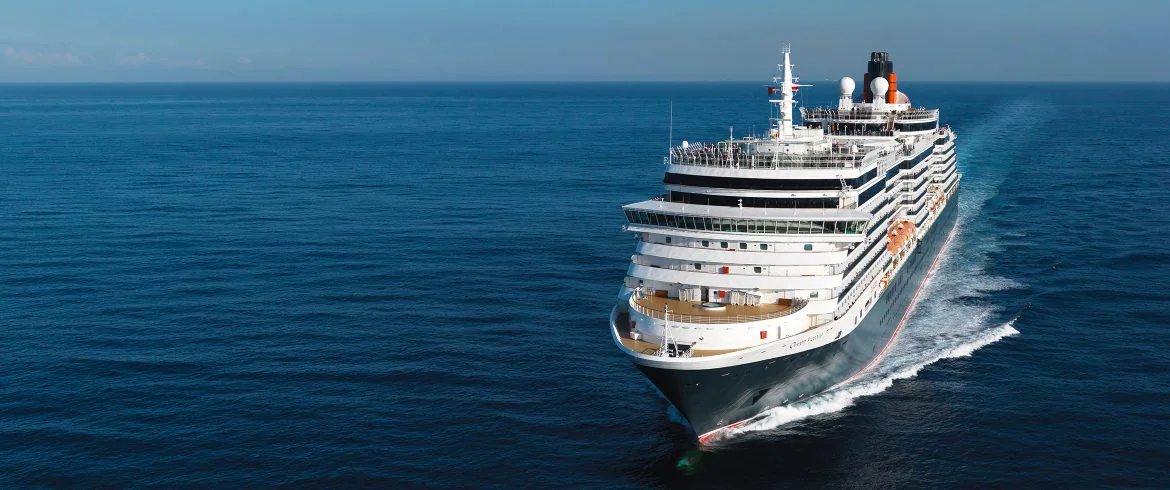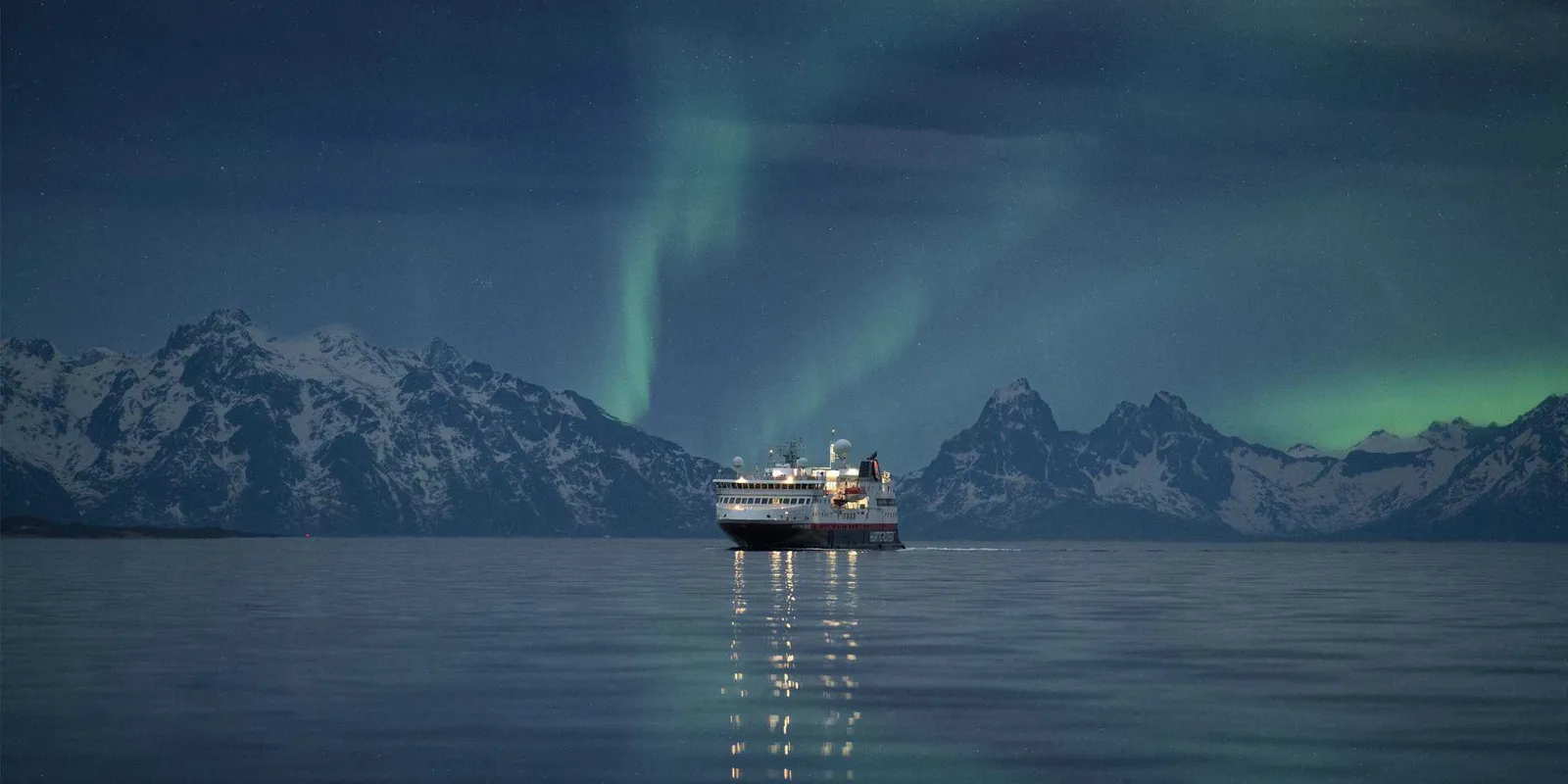
Hurtigruten Coastal Express and Viking Ocean Cruises share Scandinavian DNA but deliver entirely different products — a working Norwegian mail route versus a premium global ocean cruise line. Jake Hower unpacks the Norwegian heritage, inclusions, and value proposition to help Australian travellers understand what each offers.
| Hurtigruten Coastal Express | Viking Ocean Cruises | |
|---|---|---|
| Category | Premium | Premium |
| Rating | ★★★★☆ | ★★★★★ |
| Fleet size | 7 ships | 12 ships |
| Ship size | Mid-size (1,000-2,500) | Small (under 1,000) |
| Destinations | Norwegian Coast | Mediterranean, Scandinavia, Asia, Caribbean |
| Dress code | Relaxed | Smart casual |
| Best for | Norwegian coastal voyage travellers | Destination-focused culturally curious adults |
Hurtigruten Coastal Express and Viking Ocean Cruises both celebrate Norwegian heritage but are fundamentally different products. Hurtigruten is the right choice for travellers whose sole purpose is the Norwegian coastal experience — 34 ports in 12 days on a working mail route that has run since 1893, with the Northern Lights Promise in winter, authentic scenery immersion, and no pretence of being a cruise ship. Viking is the right choice for virtually everything else. Viking delivers a premium all-inclusive ocean cruise with included speciality dining, shore excursions, Wi-Fi, and thermal spa access on purpose-built 930-guest ships sailing the world's major waterways. For Australian travellers specifically, Viking is overwhelmingly more accessible — it deploys annually from Sydney, prices in AUD, and offers Companion Fly Free from Australian gateways. Viking's own Norwegian Fjords and Northern Europe itineraries provide a comfortable, enriching way to experience Scandinavian waters without the working-vessel simplicity of Hurtigruten.
The core difference
Hurtigruten Coastal Express and Viking Ocean Cruises both carry Norwegian heritage at their core, but they deliver it in fundamentally different ways. One is a working mail route that has threaded through Norwegian fjords since 1893. The other is a premium ocean cruise line founded by a Norwegian entrepreneur in 1997 that has become the most awarded cruise brand in the world. Comparing them is less like weighing two cruise products and more like comparing a vintage coastal railway with a modern high-speed train — both travel through beautiful countryside, both have their devotees, but the experience is categorically different.
Hurtigruten Coastal Express operates seven working ships on the Bergen-to-Kirkenes route, covering 2,500 nautical miles and calling at 34 ports over 12 days. One ship departs Bergen northbound and one departs Kirkenes southbound every single day of the year. These vessels carry cargo, mail, and local passengers alongside tourists — a fisherman boarding at Hammerfest for a two-port hop sits in the same lounge as a retired couple from Sydney on a bucket-list voyage. There is no casino, no spa, no swimming pool, no entertainment programme, and no enrichment lectures beyond occasional scenic commentary. The dining is a single restaurant serving included Norwegian meals. The experience is the coastline — fjords, fishing villages, the Lofoten Islands, the Arctic Circle, and in winter, the Northern Lights. Hurtigruten does not compete with cruise lines because it does not consider itself one.
Viking Ocean Cruises operates 12 virtually identical ocean ships at 47,800 to 54,300 gross tonnes, each carrying 930 to 998 guests. Founded by Torstein Hagen, the ships are designed as comfortable base camps for destination exploration, with Scandinavian design — blonde wood, muted tones, clean lines — creating calm environments that feel more boutique hotel than floating resort. The base fare includes a shore excursion in every port, all speciality dining, Wi-Fi, beer and wine at lunch and dinner, and complimentary access to the LivNordic Spa thermal suite. The Resident Historian programme provides academic-quality lectures tailored to each itinerary. There is no casino, no children’s programme, and no formal nights. Viking sails globally — Mediterranean, Northern Europe, Asia, Australia, Alaska, the Caribbean, and extended world voyages — with over 450 industry awards.
Both products are rooted in Norwegian identity. Both attract culturally curious mature travellers. Both eschew the casino-and-waterslide model of mainstream cruising. But the similarity ends there. Hurtigruten is scenic transport. Viking is a premium cruise.
What is actually included
The inclusions comparison highlights the product gap between a working coastal service and a premium ocean cruise.
Hurtigruten Coastal Express includes in the fare: cabin accommodation; breakfast, lunch, and dinner in the main restaurant; access to panoramic lounges and observation decks; port calls at all 34 scheduled stops; and the Northern Lights Promise on winter sailings of 11 days or more. The food is Norwegian-focused — fresh fish, reindeer stew, king crab on Arctic sailings — served in a single dining venue.
Hurtigruten does not include: alcoholic beverages; Wi-Fi (paid packages available); shore excursions (optional, bookable at additional cost); spa treatments (no spa exists); entertainment (no entertainment programme); and gratuities (discretionary).
Viking includes in every fare: a private veranda (every cabin has one — no inside staterooms exist); all dining venues including Manfredi’s Italian, The Chef’s Table five-course tasting menu, Mamsen’s Norwegian deli, and the World Cafe; beer, wine, and soft drinks at lunch and dinner; speciality coffees, teas, and filtered water around the clock; one shore excursion per port; basic Wi-Fi on multiple devices; access to the LivNordic Spa thermal suite (sauna, steam room, snow grotto, hydrotherapy pool, cold plunge, and heated tile loungers); self-service laundry with complimentary detergent; 24-hour room service; and enrichment lectures including the Resident Historian programme.
Viking does not include: gratuities (approximately US$17 per person per day); cocktails and premium spirits; The Kitchen Table cooking experience (US$180–$260 per person); spa treatments; and flights or transfers (though Companion Fly Free promotions apply from Australian gateways).
The inclusions gap is enormous. Viking’s base fare covers what would amount to hundreds of dollars in extras on any other line. Hurtigruten’s fare covers accommodation and meals — everything else is additional or simply does not exist. For travellers choosing between a Norwegian coastal experience and a premium cruise, the difference in daily value is substantial.
Dining and culinary experience
The dining comparison illustrates the product gap clearly.
Hurtigruten’s dining is a single restaurant serving three included meals daily. Breakfast is a Scandinavian buffet. Lunch offers soups, salads, and hot dishes. Dinner is a set menu changing daily to reflect coastal regions being sailed. The standout is the Arctic Menu on northern sailings — fresh king crab, stockfish, and reindeer. A small cafe serves light snacks and paid beverages. The food is honest, locally sourced, and unpretentious. There are no surcharges because there is only one restaurant.
Viking’s dining spans six included venues. The Restaurant offers open seating with a daily-changing menu reflecting the itinerary. Manfredi’s serves authentic Italian with housemade pasta and osso buco in an intimate open-kitchen setting — included without surcharges. The Chef’s Table delivers a five-course tasting menu with wine pairing, rotating through Asian, French bistro, Norwegian, and thematic menus — also included. Mamsen’s, named after Hagen’s mother, serves Norwegian waffles, open-faced sandwiches, and Scandinavian pastries throughout the day. The World Cafe offers a market-style buffet with made-to-order stations and themed dinner nights. Wintergarden hosts a traditional afternoon tea. The only surcharge venue is The Kitchen Table cooking experience (US$180–$260, limited to 12 guests). Beer, wine, and soft drinks are included at lunch and dinner.
The Norwegian heritage connection is worth noting. Mamsen’s on Viking serves the kind of Scandinavian comfort food — heart-shaped waffles with brunost, smoked salmon on dark bread — that echoes the simpler fare Hurtigruten serves in its main restaurant. Both honour Norwegian food traditions, but Viking wraps them in a broader culinary programme. Hurtigruten’s king crab dinner on an Arctic sailing, pulled fresh from Norwegian waters, is something Viking cannot replicate — it is a moment tied to place and time that a globally deployed cruise line simply cannot offer.
Suites and accommodation
The accommodation philosophies reflect the fundamental product difference.
Hurtigruten’s cabins range from compact inside rooms of approximately 60 to 80 square feet to expedition suites of approximately 350 to 450 square feet with private balconies. The majority of cabins are inside or outside rooms without balconies. Seven ships span different eras and configurations — some cabins are functional working-vessel spaces; others, particularly on refurbished ships, offer reasonable comfort. Expect practical furnishings, adequate storage, and clean but unpolished design.
Viking’s cabin categories start with the Veranda Stateroom at 270 square feet including a private veranda — there is no cabin without one. The Deluxe Veranda (270 square feet, better location, adds minibar) is the most popular category. Penthouse Veranda (338 square feet) adds upgraded amenities. Penthouse Junior Suite (405 square feet) adds a separate living area. Explorer Suite (757 square feet) is the only category with a bathtub. The Owner’s Suite — one per ship, 1,319 square feet — features a personal sauna, wet bar, and kitchenette. The Scandinavian design is consistent across the entire fleet.
The smallest Viking cabin is larger than most Hurtigruten cabins, and every Viking cabin includes a private veranda. The quality gap in accommodation hardware, design, and finish is significant and reflects the broader product positioning.
Pricing and value
The pricing gap is substantial and reflects fundamentally different product categories.
Hurtigruten’s directional pricing for the full 12-day round trip: an inside cabin starts from approximately GBP 1,200 per person (roughly GBP 100 per night); an outside cabin from approximately GBP 1,500; a suite from approximately GBP 2,500. Half-voyage options (6 to 7 days) start from approximately GBP 700 per person. These fares include meals only.
Viking’s directional pricing for a 15-day Norwegian Fjords or Northern Europe itinerary: a Veranda Stateroom starts from approximately US$450 to $650 per person per night depending on season. This includes the veranda cabin, all dining, beer and wine at meals, Wi-Fi, one shore excursion per port, thermal spa access, and self-service laundry.
Viking costs roughly three to five times more per night than Hurtigruten. But the products are not comparable. A Hurtigruten inside cabin with basic meals on a working vessel is a fundamentally different experience from a Viking veranda stateroom with all-inclusive dining, excursions, thermal spa, Wi-Fi, and cultural enrichment on a purpose-built ship.
For Australian travellers, the value equation has an additional dimension. Viking prices in AUD, deploys annually from Sydney, and offers Companion Fly Free from 14 Australian gateways — economy flights worth up to AU$2,500 per person. Hurtigruten requires independent flights to Bergen, no AUD pricing, and no Australian support infrastructure. The total holiday cost gap may actually narrow when Australian return flights are factored in — a Viking sailing departing Sydney eliminates AU$3,000 to AU$5,000 per couple in airfares that a Hurtigruten booking requires.
Spa and wellness
The wellness comparison is defined by Viking’s investment and Hurtigruten’s absence.
Hurtigruten has no spa facilities. Some ships have a small gym with basic equipment. The wellness experience is the Arctic air, the scenery, and the meditative quality of watching Norway’s coastline unfold.
Viking’s LivNordic Spa is rooted in Scandinavian wellness tradition and was designed by Stockholm-based consultancy Raison d’Etre. The thermal suite is complimentary for every guest and includes a hydrotherapy pool, Finnish sauna, eucalyptus-scented steam room, heated tile loungers, cold plunge pool, relaxation room, and Viking’s signature snow grotto — a sub-zero room with gently falling snowflakes that delivers the cold phase of the Nordic bathing cycle. Viking was the first cruise line to feature a snow grotto at sea. The fitness centre, outdoor gym, and most group classes are also complimentary.
The irony is that Viking’s LivNordic Spa concept celebrates exactly the kind of Scandinavian wellness tradition that Hurtigruten’s route passes through daily. The snow grotto on a Viking ship replicates an experience that Hurtigruten guests can have simply by stepping onto an observation deck above the Arctic Circle in January. Both deliver Nordic wellness — one by design, the other by geography.
Entertainment and enrichment
This comparison reveals the sharpest philosophical divergence between the two brands.
Hurtigruten has no entertainment or enrichment programme. Occasional scenic commentary during key passages — the Arctic Circle crossing, the Trollfjord transit — is the extent of structured programming. Guests occupy their time watching the scenery, reading, photographing, and conversing with fellow passengers. The ship provides no cultural context, no lectures, no performances, and no evening activities.
Viking’s enrichment programme is the deepest in the premium cruise segment. The Resident Historian programme delivers university-style lectures, roundtable discussions, and daily office hours, all tailored to the specific itinerary. On Norwegian itineraries, historians cover Viking Age history, Sami culture, Arctic exploration, and the evolution of Norway’s coastal communities — precisely the cultural context that enriches the scenery Hurtigruten guests observe without interpretation. Destination Performances bring local musicians aboard — folk music in Scandinavia, opera in Italy, flamenco in Spain. The Metropolitan Opera “Live in HD” screenings and TED Talks programmes add intellectual depth. Viking Orion and Viking Jupiter feature onboard planetariums.
This is where Viking’s Norwegian heritage translates most powerfully. A guest sailing Viking’s “Into the Midnight Sun” itinerary learns about the Lofoten Islands from a Resident Historian, watches a destination performance by Norwegian folk musicians, and visits the LivNordic Spa between lectures. A guest sailing Hurtigruten through the same waters sees the same scenery but without the interpretive layer. For culturally curious travellers, Viking contextualises the experience. Hurtigruten trusts the scenery to speak for itself.
Fleet and destination coverage
The fleet and coverage comparison illustrates fundamentally different ambitions.
Hurtigruten Coastal Express operates seven ships on one route. Bergen to Kirkenes, 34 ports, 12 days, every day of the year, since 1893. The fleet ranges from the compact MS Vesteralen to larger vessels like MS Trollfjord. No other operator knows the Norwegian coast as intimately. But the entire programme is a single 2,500-nautical-mile route in one country.
Viking operates 12 ocean ships (growing to 15 or more by end of 2028) sailing globally. The Mediterranean, Northern Europe, Alaska, Asia, Australia, the Caribbean, and extended world voyages covering six continents. Every ship is virtually identical in layout and amenities. Viking also operates two expedition ships (378 guests each) and approximately 80 river vessels.
The destination coverage gap is vast. Hurtigruten offers the deepest possible experience of one coastline. Viking offers a premium experience across every major sailing region. For travellers whose primary interest is Norway’s coast, Hurtigruten’s 34-port route is unmatched. For travellers who want Norway as part of a broader cruising programme, Viking’s Northern Europe itineraries integrate Norwegian fjords into Baltic, British Isles, and Arctic Circle sailings on ships that also sail the rest of the world.
Where each line excels
Hurtigruten Coastal Express excels in:
- The Norwegian coastal route. Thirty-four ports in 12 days along 2,500 nautical miles of coastline — no other operator comes close to this depth of Norwegian coverage.
- Northern Lights viewing. Winter sailings above the Arctic Circle provide prime aurora conditions, backed by the Northern Lights Promise guarantee.
- Authentic working-vessel character. Cargo, mail, and local passengers create an atmosphere no purpose-built cruise ship can replicate.
- Affordability. Starting from approximately GBP 100 per person per night with included meals, Hurtigruten offers the Norwegian coast at a fraction of a premium cruise fare.
- Year-round operation. Daily departures in both directions, every day of the year, provide maximum scheduling flexibility.
Viking Ocean Cruises excels in:
- All-inclusive premium value. Speciality dining, shore excursions, Wi-Fi, thermal spa access, and beer and wine at meals are all included without surcharges.
- Cultural enrichment. The Resident Historian programme, TED Talks, Metropolitan Opera screenings, and destination performances provide intellectual depth that contextualises every destination sailed.
- Scandinavian design and wellness. The LivNordic Spa with complimentary thermal suite, snow grotto, and Nordic bathing cycle is unique at sea.
- Global destination coverage. Twelve ships sailing every major waterway, from the Mediterranean and Northern Europe to Australia, Alaska, and world voyages.
- Australian accessibility. Annual Sydney deployments, AUD pricing, and Companion Fly Free from 14 Australian gateways make Viking the accessible Scandinavian cruise option for Australians.
- Consistent fleet product. Identical ship design across the fleet eliminates the need to research individual vessels.
Standout itineraries for Australian travellers
Hurtigruten Coastal Express
12-Day Classic Round Voyage (Bergen to Kirkenes to Bergen). The definitive experience — both directions cover different scenery at different times of day. The northbound leg sees the Geirangerfjord (summer) or Hjorundfjord in daylight; the southbound reveals Lofoten and Tromso perspectives missed heading north. If you are flying from Australia, do the full round trip.
6 or 7-Day Northern Lights Voyage (northbound, October to March). The best aurora-viewing segment with the Arctic Circle crossing, Tromso, and the North Cape in winter darkness. The Northern Lights Promise guarantees a free return voyage if the lights do not appear.
Viking
15-Day Into the Midnight Sun (London to Bergen). Above the Arctic Circle in summer with Norwegian fjords, Lofoten Islands, Tromso, and the North Cape. Twenty-four-hour daylight and the Resident Historian programme contextualising every stop. London is an easy connection from Australian gateways, and the Companion Fly Free programme covers the flights.
15-Day Viking Homelands (Stockholm to Bergen). Viking’s signature Baltic capitals itinerary — the cruise that best showcases the Resident Historian programme and Nordic cultural authenticity. Eight countries, multiple overnights, and deep Scandinavian immersion.
32-Day Grand Australia Circumnavigation (roundtrip Sydney, Viking Orion). No flights required — a full loop of the Australian coast with included excursions at every stop. The most accessible Viking experience for Australians.
15-Day Australia and New Zealand (Sydney to Auckland, Viking Orion). The core Australian season itinerary on a 930-guest ship better suited to New Zealand’s intimate harbours.
Ship-by-ship recommendations
Hurtigruten Coastal Express
MS Trollfjord — The largest and most modern vessel, with the most spacious public areas and broadest cabin range. Best for first-time Hurtigruten travellers who want reasonable comfort.
MS Vesteralen — The smallest and most characterful. Recently refurbished. Best for travellers seeking the most authentic working-vessel atmosphere.
Any ship — The route is identical regardless of vessel. Choose on cabin availability and departure date rather than ship preference.
Viking
Viking Orion — The ship for Australian travellers. Deploys annually to Sydney and Auckland, features an onboard planetarium. No international flights required for Australian and New Zealand itineraries.
Viking Vela or Viking Vesta — The newest ships (2024–2025), first of the Vela class with hybrid engines and solar panels. Book for the newest hardware on European itineraries.
Any Star-class ship — Because Viking builds identical ships, the experience on Viking Star (2015) matches Viking Saturn (2023). Book on itinerary and dates, not ship name.
For Australian travellers specifically
The Australian relevance of these two products is dramatically different, and for most Australian travellers, this section determines the practical choice.
Viking has a substantial Australian presence. Viking Orion deploys annually to Sydney from December to March with 14 to 32-day itineraries. The dedicated Australian website (vikingcruises.com.au) prices in AUD. The Companion Fly Free programme from 14 Australian gateways — Adelaide, Brisbane, Cairns, Canberra, Darwin, Gold Coast, Hobart, Launceston, Melbourne, Perth, Sydney, and others — provides economy flights worth up to AU$2,500 per person on select international sailings. Viking runs Australian Explorer Society events in Sydney and Melbourne. Brand awareness is strong, supported by television advertising and the established Viking river cruise reputation.
Hurtigruten Coastal Express has no Australian presence. The service operates exclusively on the Norwegian coast. There are no Australian departures, no AUD pricing, no Australian sales office, and no fly-free promotions. Booking from Australia requires arranging return flights to Bergen — typically AU$2,500 to AU$4,000 per person via a European hub — plus any pre- and post-cruise accommodation. The total holiday cost from Australia, including flights and the voyage itself, can approach AU$8,000 to AU$12,000 per person for the full round trip.
For Australians who specifically want the Norwegian coastal experience — all 34 ports, the working-vessel atmosphere, the Northern Lights Promise — Hurtigruten is the only way to get it. No cruise line replicates this route. But for Australians who want Norwegian scenery as part of a premium cruise experience, Viking’s Northern Europe itineraries deliver fjords, the Arctic Circle, Tromso, and the Lofoten Islands on a purpose-built ship with all-inclusive comfort, accessible via Companion Fly Free flights from home.
The onboard atmosphere
The atmospheric comparison reflects the fundamental product difference.
Hurtigruten’s atmosphere is quiet, functional, and scenery-focused. The panoramic lounges fill with guests gazing at the coastline in companionable silence. The rhythm is dictated by port arrivals — some as brief as 15 minutes for cargo and passenger exchange, others long enough for a shoreside walk. Evenings are early and quiet. The passenger mix is international but weighted toward Northern Europeans, with Norwegians travelling domestically for short segments. The age range spans from young backpackers to retirees, though the majority are over 55. Crew are practical and efficient. The mood is meditative.
Viking’s atmosphere is calm, intellectual, and quietly refined. The Scandinavian design creates a space that feels residential rather than resort. The Explorers’ Lounge at the bow sets the cultural tone with panoramic glass, a library, and a telescope. Conversations at dinner focus on the day’s port and tomorrow’s itinerary. The passenger base is predominantly couples in their 60s to 80s — approximately 60 to 65 per cent American, 15 to 20 per cent British, and 5 to 8 per cent Australian. The absence of casino noise, children’s activities, and production shows creates a focused calm. Staff are consistently described as attentive and kind.
Both atmospheres are quiet. Both suit contemplative travellers. But Viking’s quiet comes with cultural enrichment, fine dining, and a LivNordic Spa. Hurtigruten’s quiet comes with raw Norwegian scenery and the gentle hum of a working ship doing what it has done for over 130 years. The distinction is between curated calm and organic calm — and both have genuine appeal.
The bottom line
Hurtigruten Coastal Express and Viking Ocean Cruises share Norwegian roots but serve fundamentally different purposes. The choice between them is not about which is better — it is about what you want from your time at sea.
Choose Hurtigruten if the Norwegian coastal route is the destination. Choose it for the 34-port, 12-day working voyage that no other operator replicates. Choose it for the Northern Lights Promise in winter and the Midnight Sun in summer. Choose it for the authenticity of a service that has run continuously since 1893. Choose it if you value raw scenery over onboard amenities. Accept that the ships are working vessels, the dining is a single restaurant, there is no spa or entertainment, and reaching Bergen from Australia requires significant planning and expense.
Choose Viking if you want a premium ocean cruise with Scandinavian heritage. Choose it for the all-inclusive model — speciality dining, shore excursions, Wi-Fi, and thermal spa access included in every fare. Choose it for the Resident Historian programme that contextualises every destination. Choose it for purpose-built ships carrying 930 guests in Scandinavian design. Choose it for global destination coverage that includes Norway among dozens of regions. And for Australian travellers, choose it for the practical advantages — Sydney departures, AUD pricing, Companion Fly Free from Australian gateways, and a dedicated Australian sales infrastructure that makes booking straightforward.
For most Australian travellers, Viking is the obvious choice. It delivers the Norwegian cultural experience within a premium cruise framework, accessible from home waters. Hurtigruten is for the traveller who has already decided that the Norwegian coast is the destination — and wants to experience it on a working ship that knows every fjord, fishing village, and Arctic port by name.