HX Expeditions and Silversea Cruises both operate in Antarctic and Arctic waters, but they occupy entirely different segments of the expedition market. One is the largest-volume Antarctic operator with hybrid-powered ships carrying 500 passengers; the other is the only ultra-luxury line with butler service in every suite across a dedicated four-ship expedition fleet. Jake Hower explains what each line delivers and where the real differences lie.
| HX Expeditions | Silversea Cruises | |
|---|---|---|
| Category | Expedition | Expedition / Ultra-Luxury |
| Rating | ★★★★☆ | ★★★★★ |
| Fleet size | 10 ships | 12 ships |
| Ship size | Small (under 1,000) | Small (under 1,000) |
| Destinations | Norwegian Coast, Arctic, Antarctica, Greenland | Mediterranean, Antarctica, Asia-Pacific, Arctic |
| Dress code | Relaxed | Casual elegance |
| Best for | Coastal and expedition nature lovers | Ultra-luxury all-inclusive travellers |
HX Expeditions is the accessible expedition line — the world's first hybrid battery-powered cruise ships, an all-inclusive fare covering drinks, Wi-Fi, and gratuities since November 2024, approximately 50 Antarctic departures per season, a genuine citizen science programme with a University of Tasmania partnership, and entry-level Antarctic pricing from around AUD 1,100 per day. Silversea Cruises is the ultra-luxury expedition line — all-suite ships with butler service in every cabin, a 1:1 crew-to-guest ratio on Silver Endeavour, PC6 ice class, a fly-the-Drake option that skips the crossing entirely, and a dedicated Galapagos ship. Choose HX when you want the most Antarctic departures for the least outlay, hybrid propulsion, and strong science credentials. Choose Silversea when butler service, sub-200-passenger intimacy, fly-cruise flexibility, and uncompromising luxury matter more than price.
The core difference
HX Expeditions and Silversea Cruises both sail to Antarctica. Both carry Zodiacs, expedition teams, and passengers in waterproof parkas. That is where the similarities end.
The difference between these two lines is not subtle, and it is not a matter of degree. It is a fundamental divergence in philosophy, product, and price. HX is an accessible expedition line that puts the largest possible number of people onto Antarctic ice at the lowest possible per-day cost. Silversea is an ultra-luxury expedition line that wraps polar exploration in butler service, champagne, and marble bathrooms. Comparing them is less like comparing two expedition operators and more like comparing two entirely different ways of experiencing the same continent.
HX Expeditions traces its lineage to 1893, when Hurtigruten’s coastal steamships began sailing Norway’s coast. The company launched its first purpose-built expedition ship, MS Fram, in 2007 and introduced the world’s first hybrid battery-powered cruise ships with MS Roald Amundsen in 2019 and MS Fridtjof Nansen in 2020. The brand separated from Hurtigruten’s coastal operations in 2023 and was acquired by a consortium led by Arini Capital Management and Cyrus Capital Partners for EUR 140 million in February 2025. HX is now headquartered in London with approximately 1,000 employees. The company operates the largest Antarctic programme of any expedition line — roughly 50 departures per season — and transitioned to an all-inclusive fare model in November 2024 covering drinks, Wi-Fi, gratuities, and expedition activities. HX occupies the budget-to-mid expedition segment: genuine polar exploration at the most competitive price point in the market.
Silversea Cruises was founded in 1994 by the Lefebvre family of Rome, with deep maritime heritage from the Sitmar Cruises era. Silversea Expeditions launched in 2008 as the world’s first ultra-luxury expedition line. Royal Caribbean Group acquired the company in stages — 66.7 per cent in 2018 for approximately US$1 billion, the remaining third in 2020 — and now owns it outright. Silversea operates four dedicated expedition ships alongside an eight-ship ocean fleet, with a Sydney office and a growing Australian programme including Kimberley departures from 2026. The expedition division is led by Conrad Combrink, who has nearly 30 years of expedition experience and over 80 personal visits to Antarctica. Silversea is the only cruise line in the world where every cabin on every ship — including expedition vessels — is classified as a suite with butler service. That single fact tells you everything about the positioning gap.
For Australian travellers, the choice is not about which line does Antarctica better. Both do Antarctica well. The choice is about whether you want to spend AUD 1,100 per day on a 500-passenger hybrid ship with a strong science programme, or AUD 2,500 to 3,500 per day on a 200-passenger luxury ship with a butler unpacking your luggage while you review the day’s penguin photographs over complimentary Veuve Clicquot. These are not competing products. They are parallel universes.
Expedition team and guides
The expedition team is where the luxury gap begins to manifest in ways that genuinely affect the quality of the polar experience.
HX’s expedition team is multi-disciplinary — marine biologists, wildlife biologists, ornithologists, glaciologists, oceanographers, historians, photographers, and cultural interpreters. The hybrid ships (490-plus passengers) carry approximately 15 to 20 expedition team members, while the smaller MS Fram (200 passengers in polar waters) likely carries 10 to 15. The guide-to-guest ratio is not officially published but is estimated at approximately 1:25 to 1:30 on the hybrid ships — a figure that is notably lower than most serious expedition competitors. HX compensates with institutional depth: Tudor Morgan, one of the company’s senior expedition leaders, has nearly 30 years of polar experience and served as IAATO Chair in 2022. The in-house polar guide training academy won the Princess Royal Training Award in 2024. Cultural interpreters like Niels Sanimuinaq Rasmussen, specialising in Greenlandic Inuit culture, add a dimension that is unique to HX. Conference interpreters provide simultaneous German-language support on many voyages, reflecting HX’s significant European market.
Silversea’s expedition team operates at a different scale entirely. Silver Endeavour carries up to 28 specialists for 200 guests — a ratio of approximately 1:7. Silver Wind also fields up to 28 specialists for 274 guests, roughly 1:10. Even Silver Cloud, the oldest ship, carries 20 to 22 specialists for 240 to 254 guests, approximately 1:12. Every one of these ratios is dramatically better than HX’s hybrid ship numbers. Silversea recruits from the same talent pool — marine biologists, physical geographers, historians, ornithologists, anthropologists — but the smaller passenger counts mean each specialist has far fewer guests to serve. Lectures are described as conversational rather than academic, with daily briefings tailored to the specific conditions and sightings of each voyage. The Royal Geographical Society partnership provides bespoke, itinerary-focused scientific and historical content curated specifically for each voyage route — a content partnership that adds intellectual depth without replacing the expedition team itself.
The practical difference on a shore landing is significant. With HX’s hybrid ships, a guide might be responsible for 25 to 30 guests during a landing. With Silversea’s Silver Endeavour, that same guide has 7 guests. The quality of interpretation, the ability to respond to individual questions, the intimacy of the wildlife encounter — all improve when the ratio tightens. This is one of the strongest arguments for Silversea’s premium, and it is not something that can be addressed by HX without fundamentally changing its business model.
Where HX holds its own is in the citizen science programme. At least one citizen science project runs on every HX voyage: eBird, iNaturalist, HappyWhale, FjordPhyto, the Secchi Disk Programme, and partnerships with NASA, NOAA, and the University of Tasmania’s Institute for Marine and Antarctic Studies. HX’s 2025-2026 Antarctic season committed over 1,100 cabins to science, supporting 20-plus research projects and planning 16,000-plus data submissions. Dedicated Science Centres on all ships — new or upgraded in 2025 on MS Fram and MS Spitsbergen — host microscopes, touch screens, Blueye underwater drones, and workshops. Silversea has no equivalent formal citizen science programme. The Royal Geographical Society partnership is enriching but passive — it provides content rather than participatory science. If contributing to real research matters to you, HX leads clearly.
Ships and expedition hardware
The fleet comparison reveals two entirely different approaches to expedition ship design — one prioritising capacity and environmental innovation, the other prioritising intimacy and luxury.
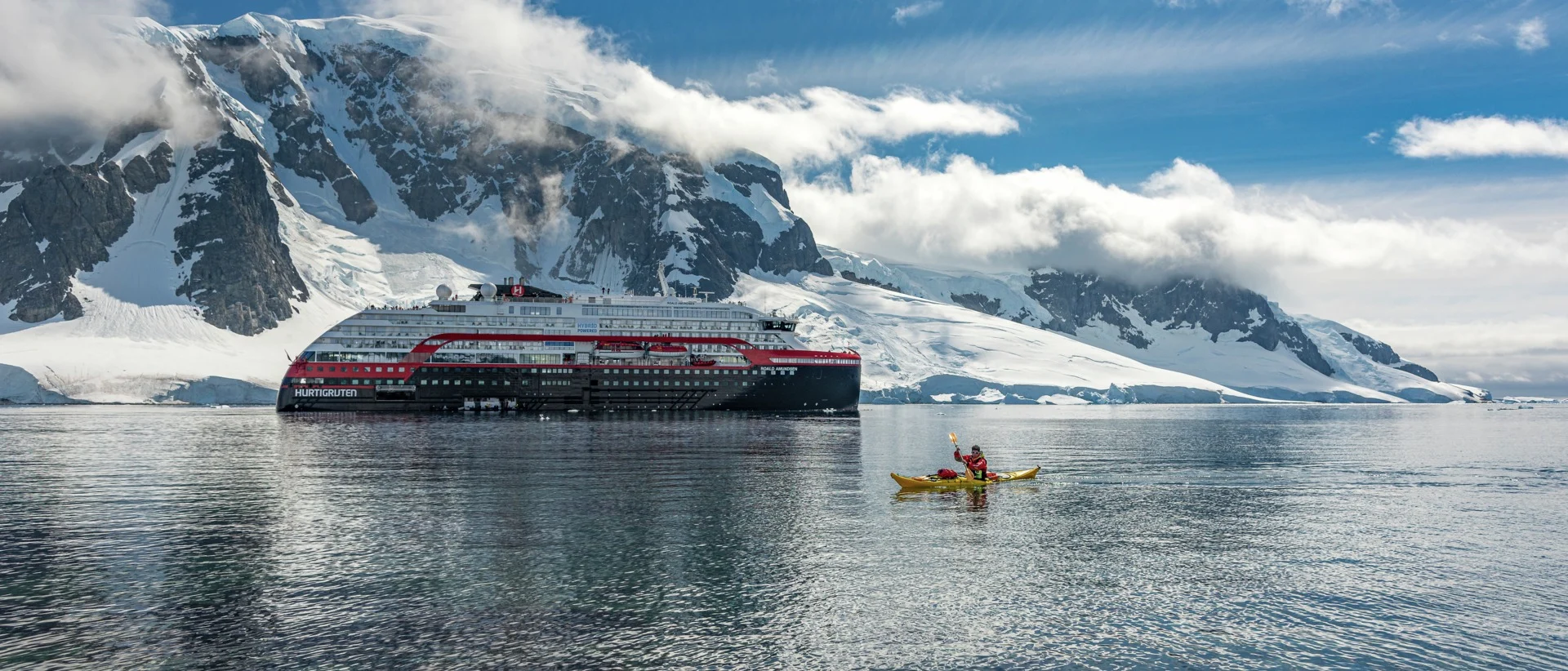
HX’s expedition fleet comprises five vessels. The flagships are MS Roald Amundsen and MS Fridtjof Nansen — identical sister ships built by Kleven Verft in Norway, each carrying 530 passengers (capped at approximately 500 in polar waters), 20,889 gross tonnes, 140 metres long, with PC6 ice class. These were the world’s first hybrid battery-powered cruise ships, using Rolls-Royce SAVe Cube technology with four diesel engines and two Corvus Energy lithium-ion battery packs totalling approximately 1.25 megawatt-hours. They can operate on battery power alone for 30 to 60 minutes, reducing CO2 emissions by approximately 20 per cent compared to conventional diesel. Each carries 17 inflatable Explorer Boats deployed from a tender pit on Deck 3 — no crane needed, enabling faster launches. MS Fram (2007, refurbished 2025) carries 200 passengers in polar waters with a 1B ice class rating, making it HX’s most capable ice ship. MS Spitsbergen (2009, rebuilt 2016, refurbished 2025) carries 150 in expedition mode. MV Santa Cruz II (90 passengers) operates year-round in the Galapagos.
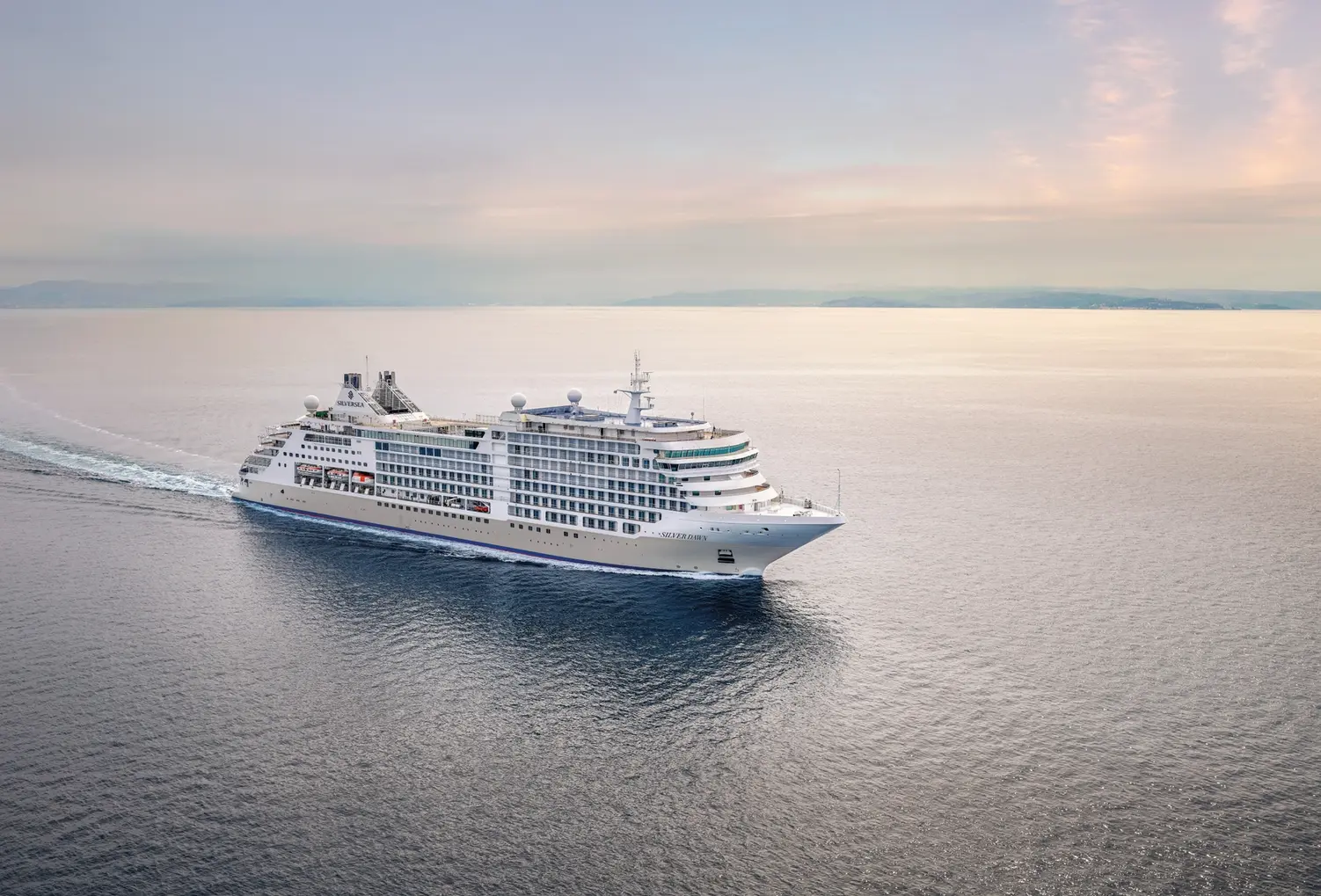
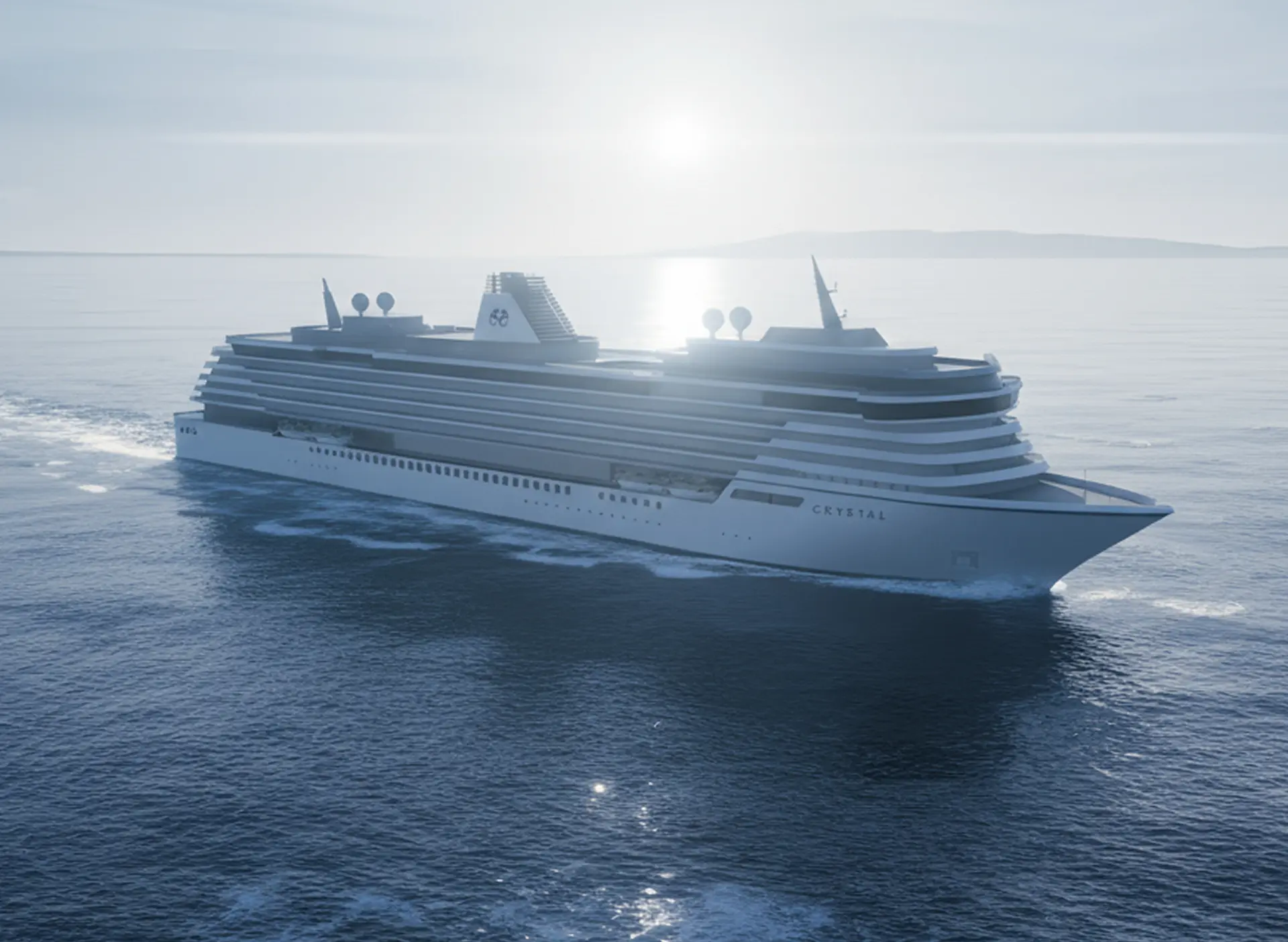
Silversea’s expedition fleet comprises four vessels. The flagship Silver Endeavour (built 2021 as Crystal Endeavor, acquired from bankruptcy in 2022, refitted 2023) carries 200 guests in 110 suites at 20,449 gross tonnes with PC6 ice class — the same polar rating as HX’s hybrid ships but with less than half the passengers. Silver Endeavour carries 18 Zodiacs, giving it the highest Zodiac-to-guest ratio in expedition cruising at approximately 1:11. Silver Cloud (1994, expedition conversion 2017) carries 240 to 254 guests with 1C ice class. Silver Wind (1995, US$40 million ice-class conversion 2021) carries 274 guests with 1C ice class and 24 Zodiacs. Silver Origin (2020, purpose-built) carries 100 guests exclusively in the Galapagos with dynamic positioning to protect the seabed.
The capacity question is decisive. HX’s hybrid ships at 500 passengers fall into IAATO Category C2 — they can make landings, but only 100 guests may be ashore at any one time. This means five rotation groups, extended landing logistics, and significantly less cumulative shore time per passenger compared to smaller ships. Silversea’s Silver Endeavour at 200 passengers sits right at the upper boundary of the most desirable IAATO Category C1 threshold, and all passengers are permitted to land. Silver Cloud and Silver Wind, while larger, also remain well within landing-permitted limits. The practical consequence is that an HX passenger on a hybrid ship might wait several hours between their Zodiac call and their actual time on Antarctic soil. A Silversea passenger on Silver Endeavour faces minimal rotation delay.
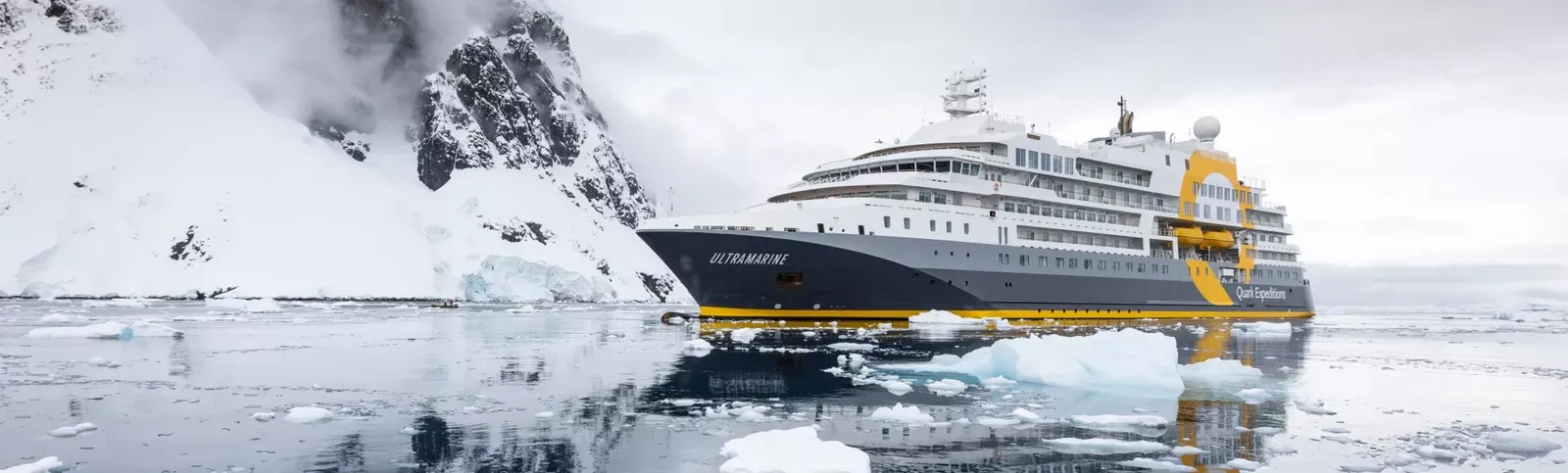
Neither line carries helicopters or submarines. This is worth noting because competitors offer both — Scenic Eclipse carries two helicopters and a submarine, Quark Expeditions carries twin Airbus H145 helicopters on Ultramarine. HX carries Blueye underwater drones for live video feeds to the Science Centre, and kayaks for paid excursions. Silversea carries kayaks (included in the fare) and offers stand-up paddleboarding on select itineraries. Silver Endeavour’s original Crystal Endeavor configuration included helicopters and a submarine, but Silversea removed both after acquisition — the helicopter hangar was converted into six new suites. This remains a point of contention among prospective bookers who are aware of the ship’s origins.
The age question: HX’s hybrid ships are newer (2019-2020) and purpose-built for expedition, with cutting-edge environmental technology. Silversea’s Silver Endeavour is the newest polar expedition ship in the luxury segment (2021), but Silver Cloud dates from 1994 — making it 32 years old, with multiple Cruise Critic reviewers reporting leaking pipes, sewage odour, and dated fixtures. Silver Wind’s 2021 refit brought it into better condition, but both older ships are showing their years. HX’s fleet is younger on average, and the 2025 refurbishments of MS Fram and MS Spitsbergen (over EUR 7 million combined) demonstrate ongoing investment. Silversea has no announced comprehensive refit for Silver Cloud and no new expedition ship orders.
Landing experience and shore programme
Both lines deliver the core expedition promise — Zodiac landings with expert guides on Antarctic soil — but the experience differs profoundly based on ship size.
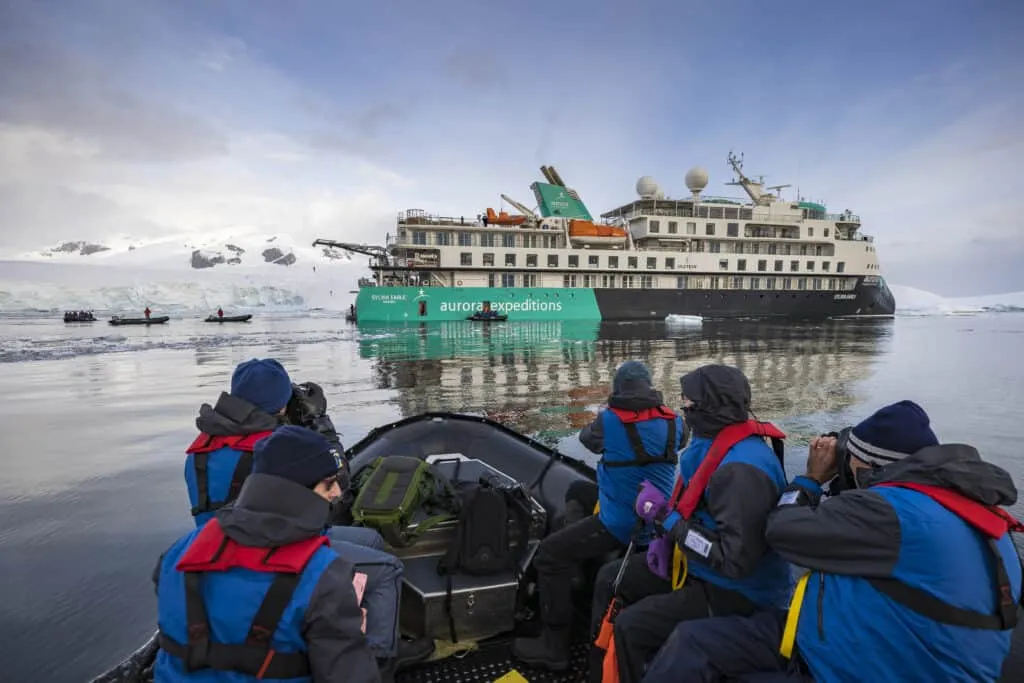
HX’s landing programme on the hybrid ships requires managing 500 passengers through a 100-person-at-a-time IAATO limit. That means five rotation groups of approximately 100 passengers each, with Zodiac groups of 12 to 16. The Expedition Launch area on Deck 3 accommodates 36 passengers at a time for briefing and embarkation. HX typically conducts two excursions per day when in expedition areas — one water-based activity (Zodiac cruising, kayaking) and one land-based activity (hiking, snowshoeing, wildlife observation). The rotation logistics are the most frequently cited complaint in HX reviews: “we didn’t go ashore until after noon” is a recurring theme from YouTube vloggers filming on the hybrid ships. MS Fram, at 200 passengers, manages rotations far more efficiently with only two groups — experienced polar travellers widely consider Fram the preferred HX vessel for Antarctica.
Silversea’s landing programme benefits from sub-300-passenger ships across the board. Silver Endeavour’s 200 guests can be cycled through landings with minimal delay. Typical landing time is 1 to 1.5 hours per site, with two planned landings per day. Zodiac groups of approximately 12 guests each have one expedition team member guiding — meaning genuine, attentive wildlife interpretation rather than crowd management. Boot disinfection protocols operate before and after every landing, with all clothing inspected for contamination. The smaller scale allows the expedition leader more flexibility to extend a landing if conditions are exceptional or to add an unscheduled Zodiac cruise when wildlife appears unexpectedly.
Included activities differ meaningfully. HX includes nature landings, Zodiac cruising, wildlife spotting, the Polar Plunge, all lectures and Science Centre activities, and citizen science participation. Paid add-ons include sea kayaking (EUR 129 to 199 per person), camping (EUR 350 to 429 per person), and snowshoeing. Silversea includes all landings, Zodiac cruises, guided hikes, and kayaking — yes, kayaking is included in the Silversea fare at no additional charge, with all equipment provided (dry suit, kayak skirt, booties, life vest). Stand-up paddleboarding is available on select itineraries. Neither line offers SCUBA diving, helicopter excursions, or submarine dives.
The kayaking inclusion is a notable Silversea advantage. On HX, a couple booking sea kayaking at EUR 199 per person adds EUR 398 to the voyage cost. On Silversea, the same experience is included. For travellers who consider kayaking an essential part of the Antarctic expedition, this partially offsets the price differential — though only partially.
What is actually included
Both lines now operate all-inclusive fare models, but the depth and quality of what “all-inclusive” means differs considerably.
HX’s all-inclusive fare (from November 2024) covers: full-board dining at Aune Restaurant and Fredheim, house wine, beer, spirits and cocktails throughout the day, complimentary Starlink Wi-Fi, gratuities, all daily expedition landings and Zodiac cruising, an expedition jacket (wind and water-resistant, yours to keep), a reusable water bottle, rubber boot loan (sizes 35 to 50 EU), trekking pole loan, a professional digital photo album, all lectures, Science Centre access, and citizen science participation. Not included: international flights, travel insurance, optional paid activities (kayaking, camping, snowshoeing), premium drinks, spa treatments, Restaurant Lindstrom surcharge for non-suite guests, and laundry. Suite guests receive complimentary Lindstrom dining and priority embarkation. Antarctic voyages include a pre-cruise night at a five-star Buenos Aires hotel and charter flights to Ushuaia.
Silversea’s all-inclusive fare covers: all meals across multiple restaurants (except La Dame at US$60 per person supplement), champagne, premium wines, spirits, beer, cocktails, and soft drinks, daily-restocked in-suite mini-bar, butler service in every suite category, complimentary Wi-Fi, gratuities, all expedition landings, Zodiac cruises, guided hikes, kayaking with full equipment, expedition lectures, a complimentary parka on polar voyages, dry bags for electronics, and door-to-door private chauffeured transfers up to 50 miles from home to airport via Blacklane. Not included: La Dame fine dining supplement (US$60 per person), boot rental (US$98 per cruise plus US$100 refundable deposit), waterproof pants rental, spa treatments, medical consultations, laundry (complimentary after 100 Venetian Society days), and travel insurance.
The boot rental controversy. Silversea charges US$98 per cruise for rubber boot rental — plus a US$100 refundable deposit — on a product that costs upwards of US$16,000 per person. HX loans boots free of charge. This is the most criticised single inclusion gap on Silversea’s expedition product, and it is a genuinely odd omission on an ultra-luxury line. The dollar amount is trivial relative to the fare; the principle is not. When you are paying for an all-inclusive ultra-luxury experience, being asked to rent rubber boots feels incongruous. Multiple Cruise Critic reviewers and YouTube content creators have flagged this as a weak point.
The La Dame supplement. Silversea’s fine French restaurant, available on Silver Endeavour, Silver Cloud, and Silver Wind, carries a US$60 per person surcharge. On a line that positions itself as all-inclusive ultra-luxury, a supplementary dining charge — however modest — creates friction. HX’s Restaurant Lindstrom is similarly a surcharge venue for non-suite guests, but HX does not position itself as ultra-luxury, so the expectation gap is smaller.
Butler service — Silversea’s unique inclusion. No other expedition line includes butler service in every cabin category. Even entry-level Classic Veranda Suite guests on Silver Endeavour receive a dedicated butler who manages in-suite food and beverage service, restocks the mini-bar daily, delivers 24-hour room service with white tablecloth presentation, assists with unpacking and packing, and handles special requests. This is not available on HX at any price point. For travellers accustomed to luxury hotel service, the butler transforms the expedition experience from adventure accommodation into adventure luxury.
The parka comparison. Both lines provide a complimentary expedition parka that passengers keep. HX’s is a wind and water-resistant jacket — functional but not insulated for warmth (guests need their own warm base layers). Silversea’s is a Silversea-branded expedition parka described as a gift rather than a loan. Both are adequate for their purpose.
The net picture: HX includes more of the basics — free boot rental, free photo album, free Science Centre access — with fewer nickel-and-dime moments. Silversea includes more luxury — butler service, champagne, premium spirits, door-to-door transfers, included kayaking — but trips over its own positioning with the boot rental charge and La Dame supplement. Neither is truly all-inclusive in the absolute sense. Both require additional spending for spa treatments, optional activities, and premium experiences.
Destination coverage and itinerary depth
Both lines operate across polar and non-polar expedition regions, but their scale and geographic reach differ.
HX’s destination coverage is the broadest of any expedition line. Antarctica is the flagship — approximately 50 departures per season, the largest programme in the industry, with itineraries ranging from 12-day Peninsula highlights to 24-day South Georgia and Falklands expeditions. Three of HX’s five ships deploy to Antarctica. Beyond the southern hemisphere: Svalbard (including a new spring itinerary), the largest-ever Greenland season with four vessels, four new Arctic Canada sailings, the Northwest Passage (including a new west-to-east route from Alaska), Alaska (fifth season on MS Roald Amundsen), Galapagos Islands year-round on MV Santa Cruz II, West Africa (Cape Verde and the Bissagos Islands — HX is the sole cruise line offering these), South America, Iceland, British Isles, and Atlantic repositioning voyages. HX covers both hemispheres across all seasons with genuine expedition credibility.
Silversea’s expedition coverage spans four ships across a tighter but strategically chosen set of destinations. Antarctica sees three ships deployed with approximately 38 to 40 voyages per season — substantial, though roughly 20 per cent fewer than HX. Crucially, Silversea offers fly-cruise Antarctic voyages (6 nights) that bypass the Drake Passage entirely via charter flights between Puerto Williams, Chile and King George Island — an option HX does not offer. The Arctic programme covers Svalbard, Greenland, Arctic Canada, and the Northwest Passage, with Silver Endeavour completing its inaugural full passage transit in 2025 and 21 Arctic voyages announced for 2026. The Galapagos runs year-round on Silver Origin — a purpose-built 100-guest ship that is the only ultra-luxury vessel dedicated exclusively to the archipelago, with every available landing permit for each site. And critically for Australian travellers: the Kimberley coast from 2026, with Silver Cloud sailing seven departures between May and August on routes between Darwin, Broome, and Fremantle.
The fly-cruise advantage is significant. Silversea’s Drake Passage fly-over option changes the equation for Australian travellers with limited leave time or serious concerns about seasickness. A six-night Antarctic fly-cruise means you can be standing among penguins within hours of departing Chile, rather than spending two days crossing one of the roughest stretches of ocean on Earth. HX offers no equivalent. Every HX Antarctic voyage includes the full Drake Passage crossing — a two-day commitment each way that some travellers find exhilarating and others find genuinely miserable.
HX does not operate in Australian waters. This is worth stating plainly. There are no HX departures from any Australian port. No Kimberley programme, no Great Barrier Reef, no Tasmania circumnavigation. Every HX voyage requires international travel to reach the embarkation point. Silversea, by contrast, is deploying Silver Cloud to the Kimberley in 2026 with Australian embarkation ports — Darwin, Broome, and Fremantle. For Australian travellers, this is a meaningful difference in accessibility and convenience.
Cabins and accommodation
The accommodation comparison is where the luxury gap becomes most tangible. These are fundamentally different products.
HX’s cabin range on the hybrid ships spans from Polar Outside cabins (17 to 23 square metres, windows, sitting area) to Extra-Large Suites (46 to 48 square metres, forward-facing, balcony). All 265 cabins on each hybrid ship are outside-facing — there are no inside cabins on MS Roald Amundsen or MS Fridtjof Nansen. Fifty per cent have private balconies. The design aesthetic is Scandinavian — natural materials including granite, oak, birch, and wool — with clean, modern lines. Suite guests (six sub-categories from 19 to 48 square metres) receive complimentary fine dining at Restaurant Lindstrom, priority embarkation, and enhanced amenities. MS Fram and MS Spitsbergen offer inside cabins at lower price points for the most budget-conscious travellers. Practical expedition features across the fleet: bathroom with shower, toiletries, TV, safe, minibar, European two-pin plug sockets, tea and coffee facilities. No dedicated solo cabin category exists on any HX ship.
Silversea’s accommodation is an entirely different proposition. Every cabin on every expedition ship is classified as a suite. Every suite includes butler service. The entry-level Classic Veranda Suite on Silver Endeavour measures 304 square feet (approximately 28 square metres) with a 50-square-foot private balcony, marble bathroom, walk-in wardrobe, pillow menu, and a complimentary mini-bar restocked daily. At the top end, the Owner’s Suite on Silver Endeavour spans 1,868 square feet (173 square metres) with a 737-square-foot balcony and two bedrooms. Silver Endeavour’s 2023 refit added Master Suites (1,163 square feet with 270-degree views and panoramic vaulted glazing) and Signature Suites (721 to 850 square feet with floor-to-ceiling glass). Even the most modest Silversea expedition suite is larger, better appointed, and more luxuriously finished than HX’s best suite category.
The comparison at entry level: HX’s Polar Outside cabin at 17 to 23 square metres with windows (no balcony) versus Silversea’s Classic Veranda Suite at approximately 28 square metres with private balcony, marble bathroom, butler service, and daily-restocked mini-bar. The Silversea entry-level product exceeds HX’s top-tier Arctic Superior cabins on most measures. This is not a criticism of HX — the cabins are well-designed, comfortable expedition accommodation perfectly suited to the price point. It is simply the reality of a two-to-three-times price differential.
The suite comparison: HX’s best Expedition Suite at 46 to 48 square metres with balcony is a comfortable space by any expedition standard. Silversea’s Grand Suite at 1,668 square feet (155 square metres) with a 684-square-foot balcony is a luxury apartment that happens to be sailing through Antarctic ice. These are different products for different markets.
In-cabin practical details that matter: Both lines provide safe, TV, and bathroom with shower in all cabins. HX uses European two-pin plug sockets. Silversea’s marble bathrooms, pillow menus, and butler-managed room service elevate the daily living experience. HX’s Scandinavian design is clean, attractive, and praised by reviewers for its storage and comfort. Silversea’s interiors aim for and achieve genuine luxury. Neither is wrong for its market — but a traveller moving from one to the other will notice the difference immediately.
Pricing and value
The pricing gap between HX and Silversea is the largest in this comparison series. These lines are not in the same market segment, and the numbers reflect that clearly.
HX’s directional pricing for a 12-day Highlights of Antarctica voyage on the hybrid ships starts from approximately AUD 13,000 to 14,000 per person for a Polar Outside cabin. That works out to roughly AUD 1,100 to 1,500 per person per day. Flight-inclusive packages from Buenos Aires with charter to Ushuaia start from approximately AUD 14,000 for 15 days. Longer itineraries including the Antarctic Circle run from approximately AUD 17,000, while South Georgia and Falklands combinations reach AUD 25,000 and above. International flights from Australia add approximately AUD 2,000 to 4,000 return to Buenos Aires. HX runs Wave Sale promotions with savings up to USD 4,000 per person and Black Friday sales of up to 40 per cent off select sailings. Shoulder season departures in November and March offer the best value.
Silversea’s directional pricing for a Silver Endeavour Antarctic Peninsula fly-cruise (6 nights) starts from approximately US$16,100 per person for a Classic Veranda Suite. Traditional sailings of 10 to 20 days cost significantly more. Converting to Australian dollars at current rates, a standard Silversea Antarctic expedition runs approximately AUD 2,500 to 3,500 per person per day — two to three times the HX rate. Silversea Galapagos voyages on Silver Origin start from approximately US$11,600 per person for 7 days. Kimberley pricing on Silver Cloud has not been publicly listed at the time of writing.
What you get for the premium: The Silversea price buys butler service, a 1:1 crew-to-guest ratio, sub-200-passenger intimacy, marble bathrooms, champagne service, door-to-door chauffeured transfers, dramatically better guide ratios, faster landing rotations, and the fly-cruise option. The HX price buys a genuine Antarctic expedition with hybrid propulsion, a strong science programme, all-inclusive drinks and Wi-Fi, and the flexibility of approximately 50 departures per season to choose from. Both represent reasonable value within their respective segments. Neither is overpriced for what it delivers.
Solo traveller economics: Both lines offer solo supplements starting from 25 per cent on select voyages. HX releases limited cabins with no single supplement on near-term departures and reports that nearly 20 per cent of guests travel solo. Silversea offers promotional solo supplements as low as 10 per cent, with occasional zero-supplement sailings. Every Silversea voyage includes a solo travellers’ welcome champagne reception. At HX’s lower base fare, the absolute cost of the solo supplement is substantially less — 25 per cent of AUD 13,000 versus 25 per cent of US$16,100 is a meaningful difference in real dollars.
The booking calculus for Australian travellers: An HX Antarctic Peninsula voyage with return flights from Sydney runs approximately AUD 16,000 to 20,000 total per person at entry level. A Silversea fly-cruise on Silver Endeavour with return flights runs approximately AUD 30,000 to 40,000 total per person at entry level. The Silversea traveller gets fewer sea days (6 versus 12), more Antarctic days (by skipping the Drake), a dramatically more luxurious onboard experience, and faster landing rotations. The HX traveller gets more total days, the full Drake Passage experience, hybrid propulsion, and money left over for a second Antarctic voyage in a few years.
Onboard enrichment and science
Both lines invest in enrichment programmes, but the emphasis and infrastructure differ — HX leans into participatory science, Silversea into curated intellectual content.
HX’s enrichment programme centres on citizen science — a genuine point of differentiation in expedition cruising. At least one citizen science project operates on every voyage: eBird and iNaturalist for wildlife logging, HappyWhale for whale tracking through fluke photography, FjordPhyto for phytoplankton sampling, the Secchi Disk Programme for water clarity measurement, and partnerships with NASA, NOAA, and the University of Tasmania’s Institute for Marine and Antarctic Studies. The 2025-2026 Antarctic season committed over 1,100 cabins to science, supported 20-plus research projects, and planned 16,000-plus data submissions. Dedicated Science Centres on all ships (new or upgraded in 2025) feature microscopes, touch screens, Blueye underwater drones for live underwater footage, and workshops in photography, biology, and arts. The lecture programme covers wildlife, culture, history, geology, and glaciology, with topics tailored to each voyage. Multilingual interpretation is available, with German language support standard on many departures. A professional photographer sails on every expedition, producing a complimentary digital photo album for all guests.
Silversea’s enrichment programme takes a different approach — less participatory science, more curated expertise. The Royal Geographical Society partnership provides bespoke content for each expedition route, drawing on RGS archival material and expertise. Expedition team lectures are described as conversational and accessible, with daily briefings that prepare guests for specific conditions and wildlife encounters. Silver Origin in the Galapagos features the highest guide-to-guest ratio in the archipelago at 1:10, with all naturalist guides being certified Ecuadorian nationals — a regulatory requirement that Silversea turns into a genuine strength. There is no formal citizen science programme on any Silversea expedition ship. The S.A.L.T. (Sea And Land Taste) culinary enrichment programme, which operates on the ocean fleet, is not available on expedition ships. The enrichment is high-quality but consumption-based rather than contribution-based — guests learn from experts rather than contributing data to research programmes.
Silversea has no dedicated Science Centre. This is a notable gap. HX’s Science Centres are physical hubs for the expedition programme — spaces where passengers gather around microscopes, review underwater drone footage, and participate in data collection workshops. Silversea’s expedition enrichment operates through the lecture theatre and informal guide interactions rather than a dedicated facility.
The net assessment: If you value contributing to real scientific research during your voyage — logging wildlife sightings that feed into global databases, collecting phytoplankton samples, measuring water clarity for climate researchers — HX offers a richer and more structured programme. If you value intellectually stimulating lectures from a smaller team of experts, curated Royal Geographical Society content, and a conversational atmosphere where you are absorbing knowledge rather than producing data, Silversea delivers beautifully. Both approaches have genuine merit. The choice reflects whether you see yourself as a participant in polar research or a witness to polar beauty.
Dining on expedition
Dining is a secondary consideration on expedition ships — the food needs to sustain you through demanding days of Zodiac landings and wildlife encounters. Both lines clear that bar, but the execution and ambition differ.
HX’s dining programme on the hybrid ships offers three venues. Restaurant Aune is the main restaurant — buffet breakfast and lunch, plated dinner service with Scandinavian-influenced cuisine featuring fresh seafood, Nordic classics, and regionally inspired dishes that change daily. Restaurant Lindstrom is the fine dining venue — included for suite guests, surcharge for others, intimate and refined with sustainably sourced ingredients and premium wine pairings. Fredheim serves casual snacks and quick bites throughout the day. MS Spitsbergen gained a fourth venue, Brygge Bistro, during its 2025 refurbishment. The cuisine is consistently described as “very good” for an expedition line, with particular praise for the Scandinavian-influenced menus. The buffet format at breakfast and lunch is the most common critique from passengers accustomed to luxury competitors. The dress code is relaxed at all times, including Lindstrom — no formal nights. HX does not have a celebrity chef partnership (unlike Ponant’s Alain Ducasse or Silversea’s S.A.L.T. programme on its ocean fleet).
Silversea’s dining programme on expedition ships is more extensive and more polished. Silver Endeavour offers six dining options: The Restaurant (main dining, open seating, a la carte), La Dame (fine French, 20-seat capacity, US$60 supplement), Il Terrazzino (Italian, handmade pastas), The Grill (poolside, grilled seafood and steaks), Arts Cafe (casual, light meals), and 24-hour in-suite dining via butler with white tablecloth service. Silver Cloud and Silver Wind each offer five venues including La Terrazza (Italian). Silver Origin in the Galapagos offers three. All dining except La Dame is included. Food quality reviews are mixed — Gary Bembridge, the most-subscribed cruise vlogger on YouTube, praised Silver Endeavour’s expedition team and all-inclusive simplicity but noted that food quality “has some way to go to reach that of the rest of the fleet.” Other reviewers describe the cuisine as high-quality, with some inconsistency. The S.A.L.T. culinary programme, widely praised on the ocean fleet, is not available on any expedition ship.
The dining atmosphere comparison: HX’s open-seating, buffet-heavy approach creates a casual, communal environment where expedition team members mingle with guests and the conversation flows from the day’s penguin sightings to tomorrow’s landing plans. Silversea’s multi-venue approach creates choice and refinement — you might start the voyage with Italian at Il Terrazzino, splurge on La Dame’s tasting menu mid-trip, and settle into The Restaurant for the remaining evenings. The 24-hour in-suite dining via butler is a luxury that HX cannot match — after a long day of landings, having a full meal delivered to your suite with white tablecloth presentation is a genuine comfort. HX’s Fredheim offers casual snacks; Silversea offers butler-delivered lobster at midnight.
The beverage comparison is a wash at base level — both include house-level alcoholic drinks in the fare. Silversea’s included beverages are higher-end (champagne as standard versus HX’s house wine), but both cover the essentials. Premium drinks are extra on both lines.
Standout itineraries for Australian travellers
HX Expeditions
Highlights of Antarctica (12 days, Roald Amundsen or Fridtjof Nansen, Buenos Aires embarkation with charter to Ushuaia) — HX’s bread-and-butter Antarctic voyage and the most accessible entry point to the white continent. Two landings per day, citizen science participation, all-inclusive drinks and Wi-Fi. From approximately AUD 13,000 per person. Fly Sydney or Melbourne to Buenos Aires via Santiago (Qantas/LATAM, approximately 18 to 22 hours), then HX charter to Ushuaia. Pre-cruise night at five-star Hilton Buenos Aires included. The most departures of any operator — roughly 50 per season — meaning maximum flexibility for Australian school holiday timing and leave planning.
Antarctic Circle (17 days, various ships) — The longer, more ambitious voyage crossing latitude 66 degrees 33 minutes south. Passes through the Lemaire Channel and visits more remote landing sites with fewer other ships. From approximately AUD 17,000. Weather and ice dependent — crossing the Circle cannot be guaranteed, but HX’s ice-capable ships make it more likely. Approximately 25 to 40 per cent more expensive than Peninsula-only itineraries, with commensurately deeper Antarctic immersion.
Galapagos on MV Santa Cruz II (4 to 8 nights, year-round from Guayaquil or Quito) — HX’s 90-guest Galapagos ship offers an expedition-style experience at a price point well below Silversea’s Silver Origin. Three itinerary types: Northern, Western, and back-to-back. Fly Sydney to Guayaquil via Santiago or Lima. A solid alternative for Australian travellers who want to combine Galapagos with an Antarctic voyage on the same loyalty programme.
Svalbard in Spring — Return of the Sun — A distinctive new itinerary exploring western Svalbard as it emerges from polar winter. Unique wildlife timing for polar bears in spring conditions. From Longyearbyen, routing via Oslo or London from Australia. For the Australian traveller who has done Antarctica and wants the Arctic without the North American routing complexity.
Silversea Cruises
Silver Endeavour Antarctic Peninsula Fly-Cruise (6 nights, from Puerto Williams) — The most time-efficient way to experience Antarctica at the ultra-luxury level. Charter flight skips the Drake Passage entirely — two hours in the air versus two days at sea. Maximum Antarctic time in minimum calendar days. From approximately US$16,100 per person. Butler service, 200 guests, 28 expedition specialists, PC6 ice class. For Australian travellers with limited leave time, this is the most attractive Antarctic option from any ultra-luxury operator.
Kimberley Coast on Silver Cloud (10 to 17 days, Darwin to Broome, Broome to Darwin, or Darwin to Fremantle, May to August 2026) — Silversea’s first Kimberley deployment puts ultra-luxury expedition cruising into Australian waters with Australian embarkation ports. No international flights required. Twenty Zodiacs, 10 kayaks, a full expedition team including marine biologists and historians. For Australian travellers who want expedition cruising without the long-haul travel, this is the standout option.
Falklands, South Georgia and Antarctic Peninsula (18 to 20 days, Silver Endeavour or Silver Wind) — The comprehensive southern ocean expedition visiting Stanley’s British colonial character, South Georgia’s cathedral king penguin colonies and Shackleton’s grave, and the Antarctic Peninsula. Butler service throughout. The ultimate polar voyage for the traveller who wants everything.
Galapagos on Silver Origin (7 days, year-round from San Cristobal or Baltra) — The only purpose-built ultra-luxury ship dedicated exclusively to the Galapagos. One hundred guests, the highest guide-to-guest ratio in the archipelago, dynamic positioning to protect the seabed, dedicated snorkelling deck, and Horizon Balconies that convert between open-air and enclosed at the touch of a button. A different proposition entirely from HX’s Santa Cruz II — smaller, newer, and dramatically more luxurious.
For Australian travellers specifically
Getting to the ship: For HX’s Antarctic voyages, Australian travellers fly to Buenos Aires — typically via Santiago on Qantas or LATAM (approximately 18 to 22 hours total), or via Auckland on LATAM direct to Santiago then onward. HX includes charter flights from Buenos Aires to Ushuaia and a pre-cruise night at a Buenos Aires five-star hotel. For Silversea’s traditional Antarctic sailings, the routing is identical — fly to Buenos Aires or Ushuaia. For Silversea’s fly-cruise option, routing goes through Santiago to Puerto Williams (from 2026). For Silversea’s Kimberley programme, no international flights are required — embark in Darwin, Broome, or Fremantle, all serviced by domestic carriers. For either line’s Arctic voyages, routing goes through European hubs (London, Copenhagen, Oslo) to Longyearbyen, Reykjavik, or Tromso — 22 to 24-plus hours from Australia. Qantas Frequent Flyer points are earnable on LATAM flights through the oneworld alliance.
Australian office presence: Silversea operates from Level 6, 8 Spring Street, Sydney — a full office with local phone numbers, Australian staff, and the capacity to handle complex expedition bookings in Australian business hours. Approximately 70 per cent of Silversea’s Australian business flows through travel advisors, but direct booking is fully supported. HX established a dedicated sales and marketing team for Australia and New Zealand in March 2025, with a Guest Excellence team based in Melbourne operating Monday to Friday, 8am to 6pm AEST. The Australian website (travelhx.com/en-au/) displays prices in AUD. Both lines have committed to the Australian market, though Silversea’s Sydney office has a longer track record. Approximately 70 per cent of HX’s Asia-Pacific bookings also come through travel advisors.
Currency considerations: HX’s Australian website prices in AUD, but onboard accounts settle in EUR — credit card foreign transaction fees may apply. Silversea prices in USD globally, with the Sydney office able to discuss AUD equivalents. Both lines’ fares are effectively denominated in foreign currencies for Australian travellers, so exchange rate movements can meaningfully affect the total cost. Travel insurance, flights, and pre/post extensions should be budgeted separately in AUD.
Travel insurance: Standard travel insurance policies often exclude Antarctic and expedition cruise activities. Both lines require mandatory travel insurance. Specialist expedition insurance with minimum AUD 500,000 medical coverage and AUD 250,000 evacuation coverage is strongly recommended — adequate medical facilities can be 72-plus hours away from any Antarctic position. The insurance needs to cover helicopter evacuation from polar regions, not merely a hospital transfer in a capital city.
Loyalty programmes: HX Explorers is a free, four-tier programme (Bronze, Silver, Gold, Platinum) earning points through cruise nights and onboard spending. The headline benefit is a 5 per cent discount on expedition cruises at Bronze, rising through the tiers with added perks including a complimentary spa treatment at Gold and complimentary room upgrades at Platinum. Points are valid for 7 years. Silversea’s Venetian Society is simpler — single-tier, lifetime membership beginning after your first sailing. Benefits improve at milestones: 5 per cent savings from day one, complimentary basic laundry at 100 days, 10 per cent savings at 250 days, and complimentary voyages at 350 and 500 days. A major Silversea advantage: Royal Caribbean Group’s cross-brand loyalty status matching means Venetian Society status is matched one-for-one with Royal Caribbean Crown and Anchor Society and Celebrity Cruises Captain’s Club. For Australian travellers who also sail mainstream cruise lines, this cross-brand recognition adds genuine value.
The onboard atmosphere
The atmosphere on these two lines reflects the fundamental positioning difference — and both succeed on their own terms.
HX’s atmosphere is informal, international, and science-curious. With 500 passengers on the hybrid ships, the vessel never achieves the intimate village feel of a sub-200-passenger expedition ship, but HX compensates with a genuine expedition culture built around the Science Centre, daily lectures, and citizen science participation. The passenger demographic skews older (40-plus), with a significant German-speaking contingent alongside English-speaking Australian, North American, and European travellers. The dress code is relaxed at all times — no formal nights, not even in Lindstrom. Evening activities are limited: drinks at the bar, lectures, and expedition briefings. Multiple reviewers note that there is “nothing to do in evenings except drink” and “no music” — a sentiment that reflects the expectations gap between mainstream cruising and expedition operations. On sea days, particularly during the two-day Drake Passage crossing, the limited onboard activity programme can feel sparse for passengers unaccustomed to expedition pace. The atmosphere improves dramatically in expedition areas, when landings, Zodiac cruises, and wildlife encounters fill every daylight hour.
Silversea’s atmosphere is intimate, polished, and convivial. With 200 guests on Silver Endeavour, everyone recognises each other within two days. The expedition team mingles with guests at meals and drinks. Butler service creates a seamless daily rhythm — your suite is immaculate on return from a landing, a hot drink appears without being requested, the mini-bar replenishes itself. The demographic skews 55-plus, well-travelled and affluent, with a high proportion of repeat Silversea guests (Venetian Society members). The dress code is “Elegant Casual” — smart trousers and a nice top for evenings, no tuxedos or ball gowns required. Significantly more relaxed than the Silversea ocean fleet but notably more polished than HX’s all-day expedition wear. The evening atmosphere centres on the bar and Panorama Lounge — champagne and shared expedition stories in an intimate setting where the bartender learns your preferences within two evenings. There is no casino on expedition ships. A Show Lounge provides nightly entertainment on a smaller scale than the ocean fleet. The expedition leader’s evening recap — reviewing the day’s discoveries and briefing tomorrow’s plans — is the marquee evening event, creating shared anticipation that bonds the group.
The social dynamic differs. HX’s 500-passenger hybrid ships allow anonymity — you can move through the ship without knowing most passengers, and the social scene is more diffuse. Some travellers prefer this; it offers personal space and the ability to choose your level of engagement. Silversea’s 200-passenger ship makes anonymity impossible by day three — which creates the camaraderie and shared intensity that expedition veterans prize. The trade-off is that Silversea’s intimate atmosphere offers less escape from passengers whose company you may not enjoy. Both environments create the defining expedition moments — the 5am wildlife announcement, the collective gasp at a breaching whale, the quiet awe of standing on Antarctic ice — that transcend ship size or luxury level.
The bottom line
HX Expeditions and Silversea Cruises are not competitors in any conventional sense. They serve different markets at different price points with different priorities. Choosing between them is less a comparison and more a self-assessment: what kind of expedition traveller are you, and what does your budget permit?
Choose HX when the priority is getting to Antarctica at the most accessible price point with a reputable operator. HX delivers genuine polar expeditions on the world’s first hybrid battery-powered ships, with the largest Antarctic programme of any line (approximately 50 departures per season), an all-inclusive fare covering drinks, Wi-Fi, and gratuities, and the strongest citizen science programme in expedition cruising. The trade-off is real: 500 passengers on the hybrid ships means longer landing rotations, a weaker guide-to-guest ratio, and an atmosphere that leans more towards accessible tourism than intimate exploration. MS Fram at 200 passengers offers a notably better expedition experience within the HX fleet — book it if you can. Accept the buffet breakfast, the absence of butler service, and the lack of a fly-the-Drake option. What you receive is a legitimate polar expedition at roughly AUD 1,100 per day — a price that makes Antarctica accessible to a far wider range of Australian travellers.
Choose Silversea when the priority is the finest possible expedition experience and the budget supports it. Silver Endeavour is among the most capable and luxurious expedition ships afloat — 200 guests, PC6 ice class, a 1:1 crew-to-guest ratio, butler service in every suite, 28 expedition specialists, and the option to fly over the Drake Passage entirely. The Kimberley programme from 2026 puts ultra-luxury expedition cruising into Australian waters with domestic embarkation ports. The Royal Geographical Society partnership, included kayaking, door-to-door transfers, and champagne service create an expedition experience where no comfort is sacrificed for adventure. Accept the boot rental fee (an odd blemish on an otherwise polished product), the La Dame supplement, the ageing Silver Cloud, and the premium pricing. What you receive is exploration without compromise — Antarctic ice and butler service, Zodiac landings and marble bathrooms, scientific enrichment and Veuve Clicquot.
For the Australian traveller who has the budget and the time, the most rewarding approach may be to experience both worlds — an HX voyage for the citizen science immersion, hybrid propulsion, and sheer Antarctic volume at a price that leaves room for a return trip, followed by a Silversea fly-cruise for the intimacy, luxury, and time efficiency that make the white continent feel like your private wilderness. These are complementary experiences rather than substitutes. Antarctica is vast enough, and transformative enough, to justify both.