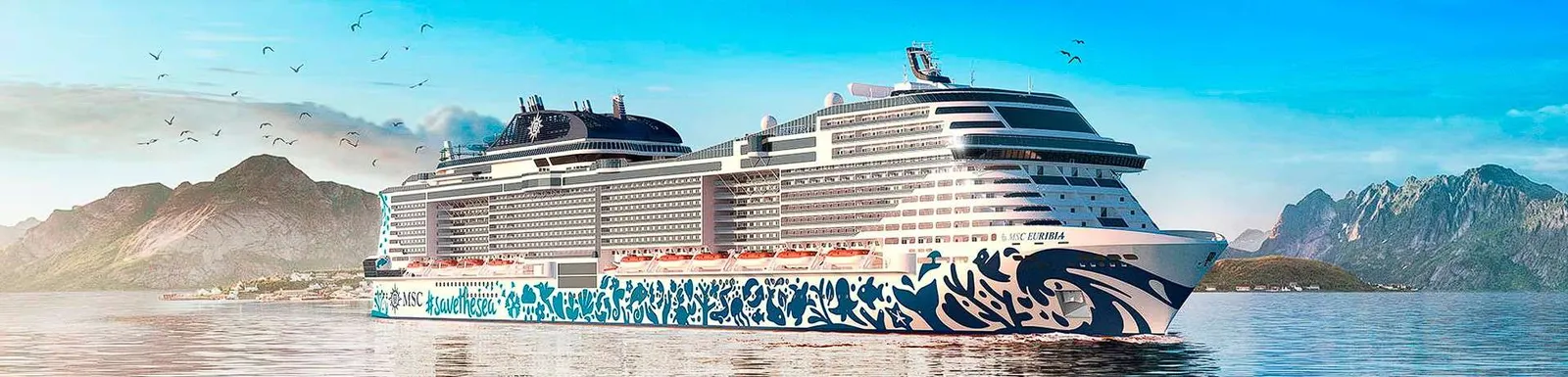
MSC Cruises and Nicko Cruises occupy entirely different corners of the cruise market — one is a global mega-ship operator with 23 ocean-going vessels, the other a German river cruise specialist with 20 river ships and a single ocean vessel. Comparing them is less about choosing between competitors and more about choosing between fundamentally different holiday types. Jake Hower explains when each line makes sense for Australian travellers.
| MSC Cruises | Nicko Cruises | |
|---|---|---|
| Category | Mainstream | Mainstream / River |
| Rating | ★★★★☆ | ★★★★☆ |
| Fleet size | 23 ships | 20 ships |
| Ship size | Mega (4,000+) | River (under 200) |
| Destinations | Mediterranean, Caribbean, Northern Europe, Middle East | European rivers — Danube, Rhine, Elbe, Moselle |
| Dress code | Smart casual | Smart casual |
| Best for | European-style family cruisers | Value European river cruise enthusiasts |
MSC is a mainstream ocean cruise line building some of the largest ships afloat, with strong Mediterranean expertise, family-friendly entertainment, and the luxury Yacht Club ship-within-a-ship concept. Nicko is a German river cruise operator offering good-value European river voyages on the Danube, Rhine, Moselle, and Elbe. These are not competing products. Choose MSC for a big-ship ocean cruise with pools, entertainment, and open-sea sailing. Choose Nicko for a slow-paced river journey docking in the heart of European towns. For Australian travellers, MSC has a seasonal local presence and global itineraries; Nicko requires a flight to Europe and appeals primarily to river cruise enthusiasts seeking value below Viking and AmaWaterways pricing.
The core difference
MSC Cruises is the world’s largest privately-owned cruise company, operating 23 ocean-going mega-ships that carry up to 7,000 passengers across the Mediterranean, Caribbean, Northern Europe, and beyond. Founded in Naples in 1987, the ships feature Swarovski crystal staircases, marble lobbies, Italian-designed interiors, multiple pools, aquaparks, dozens of restaurants, production entertainment, and the luxury Yacht Club enclave available on 15 vessels.
MSC is a mainstream ocean cruise line in every sense — big ships, big entertainment, big experiences on the open sea. The fleet spans five generations of design from the older Lirica-class to the cutting-edge World Class ships exceeding 200,000 gross tonnes, and the company is still growing rapidly with multiple new builds on order.
Nicko Cruises is a German river cruise operator with three decades of experience on Europe’s waterways, having been sailing since 1994. The fleet of approximately 20 river ships plus the ocean-going Vasco da Gama navigates the Danube, Rhine, Main, Moselle, Elbe, Douro, and Rhone. The largest Nicko river ship, NickoVision, carries 220 passengers — fewer than the number of Yacht Club suites on some MSC vessels.
Ships are designed to dock in the heart of riverside towns, allowing guests to walk directly off the gangway into medieval old towns, bustling markets, and vineyard villages without needing tender boats or coach transfers. The guiding philosophy is “time to discover” — slow cruising with extended port stays, independent exploration, and regional cuisine that changes with the landscape.
These are fundamentally different holiday types, and this comparison serves a specific purpose: helping Australian travellers decide between an ocean cruise and a river cruise for their next European holiday. MSC delivers ocean cruising with sea days, swimming pools, nightlife, multiple dining venues, and the spectacle of open water. Nicko delivers river cruising with daily town visits, scenic passages through gorges and wine valleys, and the quiet intimacy of a ship carrying fewer guests than most restaurants. The experiences are not comparable in quality terms — they are comparable only in the sense that both involve sleeping on water and waking up somewhere new.
What is actually included
MSC’s base fare covers main dining room meals, the buffet, basic room service, pool access, kids’ clubs, and select entertainment. Drinks, speciality dining, Wi-Fi, and shore excursions are priced separately. Drink packages start from approximately USD $55 to $75 per person per day. Yacht Club suites include butler service, a private restaurant with an exclusive menu, premium drinks in the Yacht Club lounge, and priority boarding — all bundled into the suite fare. MSC’s kids-sail-free promotion on select departures eliminates children’s fares, making it the most affordable family option in mega-ship cruising.
Nicko’s fare typically includes full board — breakfast, lunch, and dinner in the main restaurant — along with tea and coffee throughout the day. Alcoholic beverages, guided excursions, Wi-Fi, and gratuities are not included in the standard fare. Nicko suggests 10 to 13 euros per passenger per night for gratuities. Some promotional packages bundle excursions or drink packages at discounted rates. The all-inclusive pricing sits noticeably below premium river lines — Viking, Uniworld, and AmaWaterways typically charge 20 to 40 per cent more for comparable itineraries.
The inclusion models reflect different industry norms. Ocean cruise lines operate on an a la carte model where the base fare covers accommodation and meals with everything else as optional extras. River cruise lines increasingly trend toward more inclusive packaging, though Nicko maintains a more traditional European pricing model with a lower base fare and optional add-ons — which is precisely how it achieves its value positioning. For Australian travellers, the total cost of a week-long Nicko river cruise and a week-long MSC ocean cruise can be surprisingly similar once flights to Europe, drink packages, excursions, and gratuities are all factored into the calculation.
Dining and culinary experience
MSC offers 10 to 20 dining venues per ship depending on the vessel class, with a Mediterranean culinary heritage that runs through every menu. Main dining rooms serve multi-course Italian-influenced menus with handmade pasta prepared fresh daily, regional specialities, and a European service pace designed for leisurely multi-course meals.
Speciality restaurants include Butcher’s Cut steakhouse, Kaito Sushi and Teppanyaki, and Hola! Tacos and Cantina. The buffet features strong antipasti, charcuterie, and fresh seafood stations. Yacht Club guests dine in a private restaurant with an exclusive menu at a quality level above the standard dining rooms. The range of cuisines, the number of venues, and the variety of dining experiences available on a single MSC ship is extraordinary.
Nicko operates a single main restaurant on each river ship, serving breakfast, lunch, and dinner to all guests simultaneously or in two sittings. The cuisine is regional European, reflecting the river being sailed — Austrian specialities on the Danube, Alsatian dishes on the Rhine, Portuguese flavours on the Douro, French cuisine on the Rhone. The kitchen sources local ingredients where possible, and menus change daily to reflect the landscape and culture passing outside the panoramic windows. The single-sitting dining format creates a social, communal atmosphere where guests share tables and conversation — by the third evening, everyone knows everyone. There are no speciality restaurants, no buffet alternatives, and no room service. What Nicko lacks in variety it delivers in regional authenticity and intimate social connection.
The dining comparison illustrates the ocean-versus-river divide perfectly. MSC’s multiple venues offer choice and global variety — Italian one night, Japanese the next, steak the third, all without leaving the ship. Nicko’s single restaurant offers none of that flexibility but delivers something MSC cannot replicate: a regionally authentic menu that changes with the countryside passing outside the windows, served in an intimate room where every guest knows every other guest by name. Both deliver satisfaction — but of entirely different kinds and for entirely different reasons.
Suites and accommodation
MSC’s accommodation spans everything from compact inside staterooms at approximately 130 square feet to the Yacht Club’s most lavish suites. Standard balcony cabins average 170 to 190 square feet plus balcony with Italian-designed interiors and modern amenities.
The Yacht Club offers spacious suites with butler service, ranging from Deluxe Suites to the Royal Suite with separate living areas and premium furnishings. The sheer variety of cabin types — inside, ocean-view, balcony, mini-suite, Yacht Club, and family categories — gives guests options across every budget point. On World Class ships, accommodation spans 22 decks across distinct themed neighbourhoods.
Nicko’s river ship cabins are all outside-facing with river views through windows or French balconies — there are no inside cabins on any river ship, which is a genuine advantage over ocean cruise lines where the most affordable cabins are windowless. Standard cabins range from approximately 140 to 180 square feet. The flagship NickoVision features a clever split-level design with extensive glass that creates a genuine sense of space and connection to the river. Upper-deck suites offer more room, better views, and additional furnishings, but nothing comparable to the scale or luxury of MSC’s Yacht Club. The standard throughout is comfortable European four-star — well-maintained, functional, and unpretentious.
The accommodation comparison reflects the different scales and purposes of these operations. MSC’s largest ships carry more passengers in the Yacht Club alone than Nicko’s largest river ship carries in total. The quality standards are different rather than ranked — Nicko delivers a comfortable European hotel experience on the water, while MSC offers everything from budget inside cabins with no natural light to butler-serviced luxury suites with private terraces. The guarantee of an outside cabin with a river view at Nicko’s base fare level is worth noting — no river cruise passenger ever sleeps in a windowless room, which is not the case for the most affordable ocean cruise options.
Pricing and value
MSC prices aggressively in the mega-ship market. Inside staterooms from approximately AUD $100 to $180 per person per night. Balcony cabins from roughly AUD $150 to $280. Yacht Club suites from approximately AUD $400 to $900 per person per night including butler service and the private restaurant.
Kids-sail-free promotions save AUD $1,500 to $3,000 per child on a week-long sailing — a game-changing advantage for families. MSC is consistently the most affordable major ocean cruise line, and its Mediterranean itineraries represent exceptional value when the line’s home-turf expertise is factored into the equation.
Nicko positions itself deliberately below the premium river cruise brands. A seven-night European river cruise typically starts from approximately EUR $800 to $1,500 per person (roughly AUD $1,300 to $2,500), including full board. This undercuts Viking, Uniworld, and AmaWaterways by 20 to 40 per cent for comparable itineraries on the same rivers. The Danube cruise from Passau to Budapest, which is Nicko’s signature product, offers four-star comfort and genuine cultural immersion at pricing that makes river cruising accessible to travellers who might otherwise consider it out of reach.
For Australian travellers, the total cost comparison must include flights — and this is where the calculation changes significantly. MSC’s seasonal Australian departures eliminate airfares entirely for local sailings, making a seven-night South Pacific cruise from Sydney at approximately AUD $1,200 to $2,000 per person an exceptionally affordable holiday. Every Nicko embarkation requires flights to Europe — typically AUD $2,000 to $4,000 per person return from Australian gateways via Singapore, Dubai, or London. A seven-night Nicko Danube cruise at EUR $1,200 per person plus AUD $3,000 return flights brings the total to roughly AUD $5,000 per person — still good value for a European river cruise, but substantially more than MSC from Sydney.
Spa and wellness
MSC’s Aurea Spa features treatment rooms, thermal areas with steam rooms and saunas, and a comprehensive range of massages and facials. The newer ships offer elaborate aquaparks with waterslides, multiple pools, and expansive sun decks that occupy more square footage than an entire Nicko river ship.
The Aurea experience tier combines spa access with priority boarding and a dedicated dining area — a clever mid-tier wellness package between standard and Yacht Club. The pool deck atmosphere is distinctly European — social, animated, with music and a bar culture reflecting Mediterranean traditions.
Nicko’s wellness offering is modest by design — a small fitness area and occasionally a sauna on the larger vessels. The wellness philosophy on a river cruise is fundamentally different from an ocean cruise: the exercise comes from walking through cobblestoned town centres, climbing castle stairs, cycling along riverbanks on bikes available at many ports, and exploring vineyards and markets on foot. The daily port visits provide more genuine physical activity than most ocean cruise sea days. The river ship’s sun deck provides open-air relaxation as the landscape passes — watching the Wachau Valley vineyards or the Rhine gorge from a sun lounger with a glass of local wine is a form of wellness that no gym can replicate.
The comparison is not meaningful in competitive terms — these are entirely different approaches to physical wellbeing. MSC delivers a full resort-style spa and aquatic recreation programme. Nicko delivers a walking-and-sightseeing wellness model built around daily shore exploration in European towns. Both contribute to physical and mental wellbeing. Neither pretends to offer what the other provides.
Entertainment and enrichment
MSC delivers big-ship entertainment with genuine production value: Cirque du Soleil at Sea on select ships (two exclusive shows per vessel with no equivalent on any other cruise line), Broadway-style production shows, live music across multiple lounges creating a vibrant nightlife atmosphere, a lively casino, and aquaparks and pool activities that keep families entertained throughout sea days.
The European passenger mix creates a cosmopolitan evening atmosphere with multilingual energy and late-night socialising that reflects Mediterranean traditions. The entertainment programme fills every hour of every day with options — the challenge is choosing between them.
Nicko’s entertainment is destination-focused and intentionally low-key. Local musicians may board briefly in port to perform regional music. Cultural talks about the regions being visited provide historical and cultural context for the towns and landscapes ahead. Evening entertainment typically features a pianist or small ensemble in the lounge, conversation over regional wines, and perhaps a themed evening reflecting the local cuisine — a Heuriger wine evening on the Danube, a Moselle wine tasting on the Rhine. There are no production shows, no casinos, no aquaparks, and no programmed activities competing for attention. The entertainment is the destination itself — the Wachau Valley vineyards, the Loreley rock on the Rhine, the lock systems of the Main-Danube Canal, the medieval town squares.
These are incomparable entertainment philosophies serving incomparable purposes. MSC creates its own world of entertainment aboard the ship — you could never leave the vessel and still have a fulfilling holiday. Nicko frames the outside world — the rivers, towns, castles, and landscapes of Europe — as the entertainment, and the ship is simply the means of moving between them. Neither approach is superior. They serve fundamentally different holiday desires, and understanding which one appeals to you is the key to choosing correctly.
Fleet and destination coverage
MSC’s fleet of 23 ocean-going ships covers the Mediterranean, Caribbean, Northern Europe, the Middle East, South America, and seasonally Australian waters. The newest World Class ships exceed 200,000 gross tonnes. MSC’s Mediterranean network is the densest of any cruise line globally, with more ships, departure dates, and embarkation ports than any competitor.
The fleet is young and growing rapidly with ambitious new-build orders that will push it toward 30 ships within the decade. MSC Ocean Cay Marine Reserve is the line’s private island in the Bahamas, featuring beach areas, a marine reserve, and family-friendly lagoon facilities that continue to expand each season.
Nicko’s fleet of approximately 20 river ships operates exclusively on European rivers — the Danube, Rhine, Main, Moselle, Elbe, Douro, Rhone, and select international waterways. Ship sizes vary to suit different rivers — narrow vessels for lock-restricted waterways like the Main-Danube Canal, larger ships for the broad Danube below Budapest. The ocean-going Vasco da Gama adds a single ocean vessel to the fleet. The destination range is deep within Europe but narrow globally — no Caribbean, no Mediterranean at sea, no Pacific, no Australian deployments, and no plans for expansion beyond European waterways.
For Australian travellers, MSC offers global reach including seasonal local departures from Sydney. Nicko offers deep European river expertise but requires international travel for every single embarkation. The fleets serve entirely different purposes and genuinely do not compete for the same market — the decision is between holiday types, not between competing products.
Where each line excels
MSC excels in Mediterranean ocean cruising with unmatched regional expertise born from genuine Italian heritage. The Yacht Club ship-within-a-ship concept delivers luxury at mainstream pricing — butler service, a private restaurant, and an exclusive pool at a fraction of dedicated luxury line costs. Kids-sail-free promotions make MSC the most affordable family cruise option in the mega-ship segment. The fleet’s global scale and reach give Australian travellers options from Sydney to Barcelona to Miami to the Arabian Gulf.
Nicko excels in value European river cruising with 30 years of waterway expertise. The slow-cruising philosophy — extended port stays, town-centre docking, independent exploration on foot — suits travellers who want cultural immersion and scenic intimacy rather than onboard entertainment and spectacle. Pricing undercuts premium river lines by 20 to 40 per cent, making river cruising accessible to budget-conscious travellers. The authentic German operator atmosphere appeals to travellers who find Viking too polished and packaged, and AmaWaterways too American in personality.
Standout itineraries for Australian travellers
MSC’s seven-night Western Mediterranean from Barcelona or Genoa is the signature ocean cruise — Italian Riviera, Naples, Palermo, and the French coast aboard ships designed for these waters with cuisine that matches the destination. MSC World America from Miami showcases the newest World Class ship with themed districts and the expanded Yacht Club. Seasonal Australian departures from Sydney offer South Pacific itineraries without international flights — check current deployment schedules with your agent.
Nicko’s eight-day Danube cruise from Passau to Budapest is the classic European river itinerary and Nicko’s strongest product — docking in the heart of Vienna, visiting Bratislava, cruising through the scenic Wachau Valley wine region, and arriving in Budapest for an overnight stay. The entire journey unfolds aboard a comfortable four-star river ship at pricing 20 to 40 per cent below Viking’s equivalent. The Rhine cruise from Amsterdam to Basel passes through the Loreley gorge, calls at Cologne, Koblenz, and Rudesheim, and navigates the Moselle wine region. Australian travellers should fly to Europe via Singapore, Dubai, or London and plan additional time in the embarkation city — Passau, Amsterdam, or Basel — to recover from jet lag before boarding.
Ship-by-ship recommendations
MSC World America (World Class, approximately 6,700 guests) is the newest MSC ship from Miami, with themed districts, Italian-designed interiors, and the expanded Yacht Club at its most refined. Best for Caribbean sailings. MSC Bellissima (Meraviglia Plus Class, approximately 5,600 guests) carries Cirque du Soleil at Sea and is a strong Mediterranean choice. For Australian departures, the specific vessel varies by season.
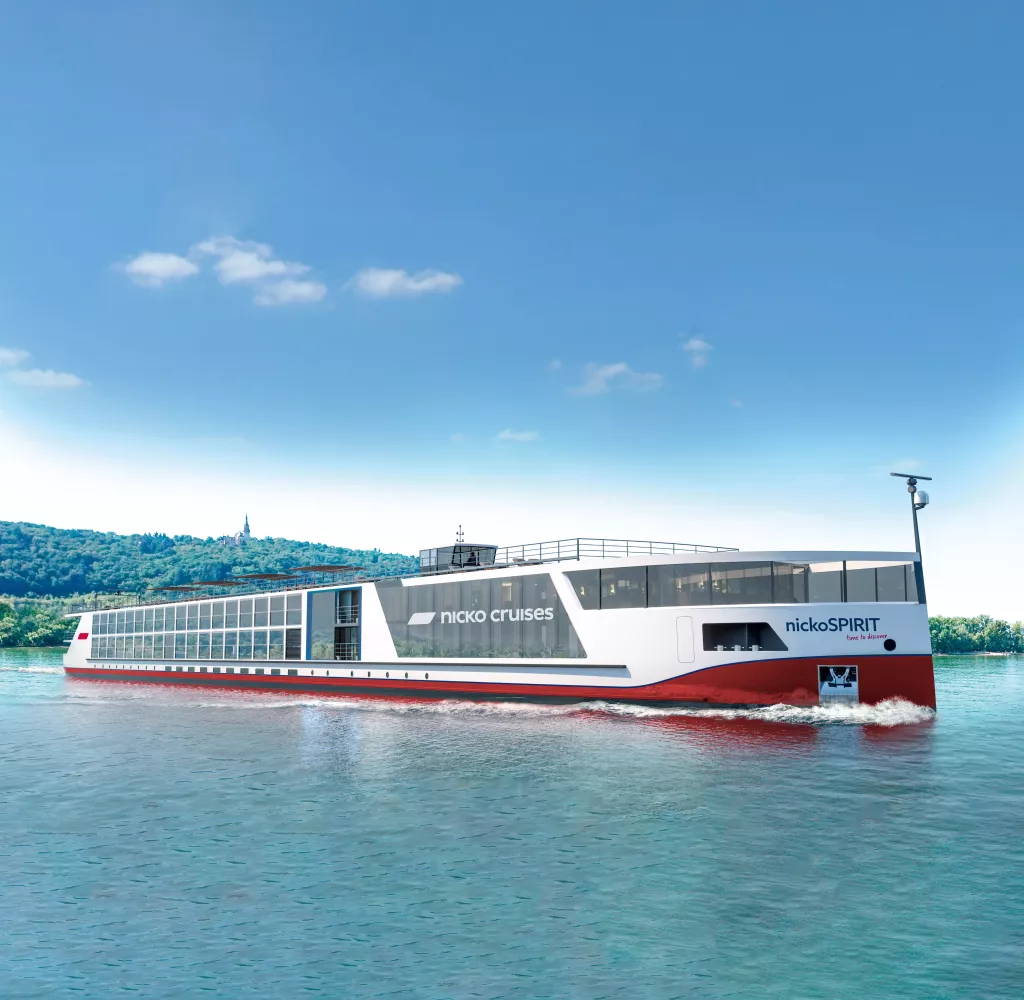
NickoVision (220 passengers) is the flagship river ship with a cleverly designed split-level layout and extensive glass for panoramic Danube views — the best ship in the fleet for the line’s signature itinerary. NickoSPIRIT (170 passengers) offers a more intimate, boutique-feel experience on the Rhine and Moselle. Choose by itinerary and river rather than ship — the waterway determines the vessel, and Nicko’s fleet is purpose-built for the specific dimensions and character of each river it serves.
For Australian travellers specifically
MSC has a seasonal Australian presence with ships departing from Sydney for South Pacific itineraries. Nicko has no Australian operations whatsoever — no office, no local representative, and no ships that ever visit Australian waters. Every Nicko voyage requires flights to Europe, booking through specialist agents or European channels, and planning around European seasonal schedules. This alone makes MSC the more accessible option for Australian travellers by a very considerable margin.
Nicko appeals to a specific subset of Australian travellers: those who have done ocean cruising, have visited Europe, and now want to experience European river cruising at a competitive price point without paying the premium charged by Viking or AmaWaterways.
The German-language heritage and English-language sailings available through specialist agents create a more authentic European atmosphere than the major English-language river brands — you will be cruising with Europeans rather than predominantly with Americans and Australians. For Australians wanting a mainstream ocean cruise with local departure convenience, MSC is one of the strongest global options and the most affordable for families.
For travellers considering both on a single trip, an MSC Mediterranean cruise followed by a Nicko river cruise — or the reverse — creates a compelling European holiday that combines big-ship ocean spectacle with intimate river immersion. The contrast between the two experiences makes each more memorable, and the combination delivers a breadth of European travel that neither achieves alone.
The onboard atmosphere
MSC’s atmosphere is European, cosmopolitan, and energised. The passenger mix on Mediterranean sailings is international — Italian, French, German, Spanish, British, and increasingly Australian. Announcements are multilingual. The dining pace is European and unhurried.
The nightlife runs late with live music, dancing, and a lively casino. The design is ornate by Australian standards — Swarovski crystals, marble lobbies, gilded accents — but entirely consistent with Italian and Mediterranean luxury hotel traditions. Ships carry thousands of guests across dozens of decks with endless activity and dining options competing for attention.
Nicko’s atmosphere is quiet, Continental, and deeply intimate. The passenger mix is predominantly German, with English-speaking guests as a growing minority on dedicated English-language departures. The pace is deliberately slow — mornings spent exploring port towns on foot, afternoons spent on the sun deck or in the lounge watching the scenery pass, evenings at dinner followed by quiet conversation and regional wines.
The social dynamic on a ship carrying under 220 guests is genuinely personal and familiar — you will know every passenger and most crew members by mid-voyage. The design is comfortable European four-star hotel — functional, well-maintained, and deliberately unpretentious. Dress is smart casual throughout with absolutely no formal expectations.
The atmosphere comparison mirrors the ocean-versus-river divide. MSC is a floating city with the energy, variety, and cosmopolitan buzz of a major European destination. Nicko is a floating boutique hotel with the intimacy, quiet, and regional character of a well-chosen European village hotel. The experiences are complementary rather than competitive, and many well-travelled cruise enthusiasts enjoy both — ocean cruising for spectacle, entertainment, and resort-style relaxation; river cruising for cultural immersion, scenic intimacy, and the simple pleasure of watching Europe’s heartland glide past from a sun lounger.
The bottom line
MSC and Nicko are not competitors — they are different species of cruise travel serving different purposes, different temperaments, and different holiday desires.
Choose MSC for a mainstream ocean cruise — pools, entertainment, Cirque du Soleil, sea days, multiple dining venues, and the option of sailing from Australian ports without international flights. Choose it for families seeking kids-sail-free savings. Choose it for the Yacht Club luxury experience at mainstream pricing. Choose it for Mediterranean itineraries where MSC’s home-turf expertise and Italian heritage are unmatched.
Choose Nicko for a European river cruise at a competitive price — the Danube, Rhine, Moselle, or Elbe at pricing 20 to 40 per cent below Viking and AmaWaterways. Choose it for the authentic German operator experience and predominantly European passenger mix. Choose it for extended port stays, town-centre docking, and the “time to discover” philosophy. Choose it for the intimacy of a ship where the entire passenger complement could comfortably fit in a single MSC restaurant.
For Australian travellers who have never tried river cruising, a Nicko voyage is an excellent and affordable introduction to a fundamentally different way of experiencing Europe by water. For those who love ocean cruising, MSC delivers one of the best value propositions in the mainstream segment with genuine Mediterranean soul.
The two experiences complement each other perfectly, and the traveller who has experienced both will understand that the best holidays on water are not defined by ship size or fare price but by how well the product matches what you actually want from your time away.