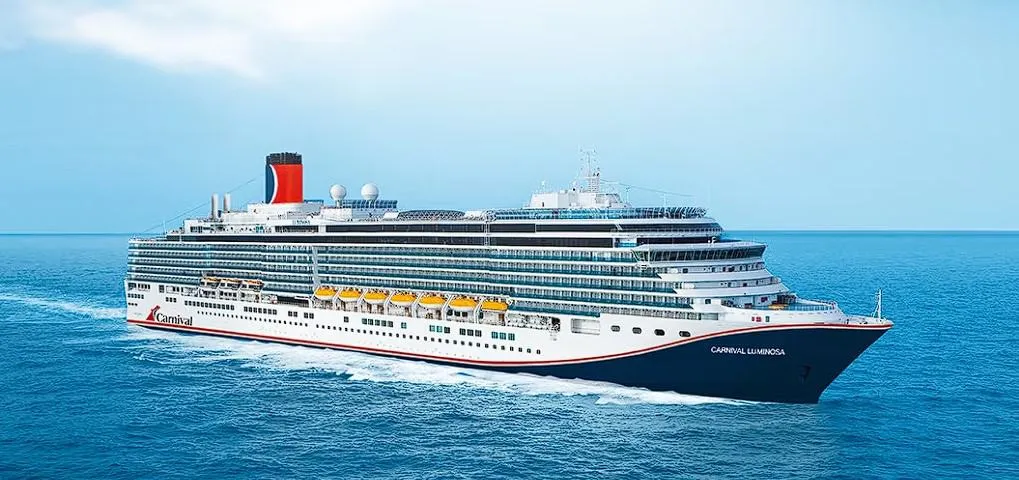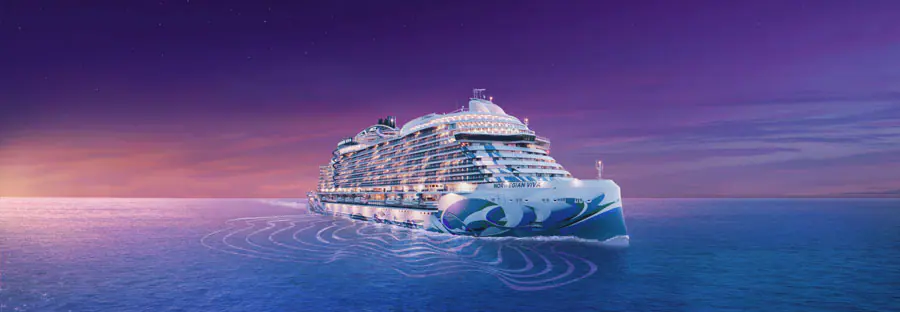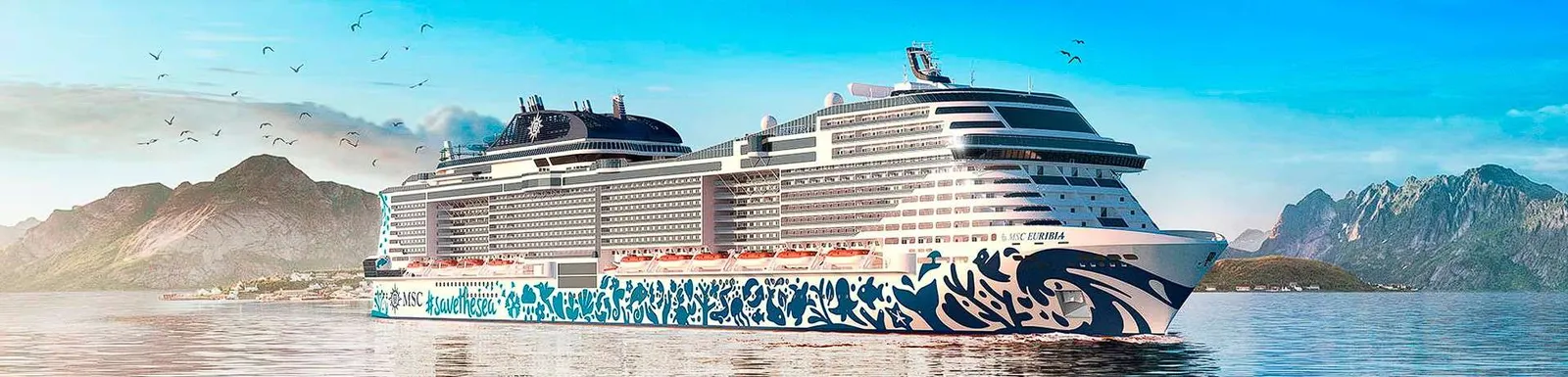
MSC Cruises and Norwegian Cruise Line are both growing rapidly in the Australian market, offering mega-ship experiences with fundamentally different personalities. One is European-born with Mediterranean soul and Swarovski-accented design; the other pioneered Freestyle Cruising and built the most flexible dining model at sea. Jake Hower compares these two expanding giants from an Australian traveller's perspective.
| MSC Cruises | Norwegian Cruise Line | |
|---|---|---|
| Category | Mainstream | Mainstream |
| Rating | ★★★★☆ | ★★★★☆ |
| Fleet size | 23 ships | 20 ships |
| Ship size | Mega (4,000+) | Large (2,500-4,000) |
| Destinations | Mediterranean, Caribbean, Northern Europe, Middle East | Caribbean, Mediterranean, Alaska, Northern Europe |
| Dress code | Smart casual | Resort casual |
| Best for | European-style family cruisers | Freestyle dining and entertainment seekers |
MSC is the choice for travellers who want European elegance, Mediterranean expertise, and the best family pricing in the mega-ship segment through kids-sail-free promotions. The Yacht Club ship-within-a-ship delivers genuine luxury at mainstream pricing. Norwegian is the choice for independent-minded travellers who value Freestyle flexibility — no fixed dining times, no dress codes, and participatory onboard thrills from go-karts to waterslide coasters. The Haven is the most refined mainstream ship-within-a-ship product afloat. For Australian families on a budget, MSC's kids-sail-free promotions are hard to beat. For couples wanting casual freedom, Norwegian's Freestyle philosophy is unmatched.
The core difference
MSC Cruises is a European mega-ship line with Mediterranean DNA visible in every detail of the onboard experience. Founded in Naples in 1987 and still privately held by the Aponte family under the Mediterranean Shipping Company empire, MSC builds ships adorned with Swarovski crystal staircases, marble lobbies, and Italian-designed interiors that reflect Continental luxury traditions. The dining programme is rooted in Mediterranean cuisine with genuine handmade pasta prepared daily.
The onboard atmosphere is cosmopolitan and multilingual, with a guest mix drawn from Italy, France, Germany, Spain, and the UK, alongside a growing Australian and American contingent. The fleet of 23 ships includes the World Class vessels — MSC World Europa and MSC World America — exceeding 200,000 gross tonnes with themed districts and the luxury Yacht Club ship-within-a-ship enclave available on 15 ships. MSC’s home waters are the Mediterranean, and nowhere is its expertise more evident than on itineraries embarking from Barcelona, Genoa, or Naples, where the line’s Italian heritage and the destination blend seamlessly.
Norwegian Cruise Line is the line that reinvented mainstream cruising with Freestyle — the bold philosophy that guests should eat when they want, where they want, with whoever they want, wearing whatever they feel comfortable in. No fixed dining times, no assigned tables, no formal nights, no dress code enforcement. Founded in Norway in 1966 but now headquartered in Miami, Norwegian has built its brand around flexibility and active onboard entertainment that gives guests agency rather than itineraries.
The fleet of 20 ships includes the newest Prima Plus Class vessel Norwegian Aqua (launched April 2025), featuring the Aqua Slidecoaster — a hybrid waterslide and rollercoaster — go-kart tracks where guests race electric karts on a multi-level track above the ocean, laser tag arenas, and The Haven — the private luxury enclave that defined the ship-within-a-ship concept for mainstream cruising. Norwegian’s personality is American in execution but carries a distinctly independent streak that appeals to travellers who find traditional cruise conventions restrictive and unnecessary.
For Australian travellers, both lines represent exciting alternatives to the dominant Royal Caribbean presence. Both are expanding their Australian market share. Both build ships of similar scale and ambition. And both offer a luxury ship-within-a-ship option — MSC’s Yacht Club and Norwegian’s The Haven — that delivers genuine premium experiences within a mainstream vessel at pricing far below dedicated luxury lines.
The choice comes down to personality: MSC’s European elegance, Mediterranean heritage, and Italian dining traditions versus Norwegian’s American flexibility, participatory entertainment, and freedom-first philosophy. These are fundamentally different cruising approaches, and choosing the right one for your temperament matters more than any cabin upgrade.
What is actually included
MSC’s base fare covers main dining room meals, the buffet, basic room service, pool access, kids’ clubs, and select entertainment. Drink packages start from approximately USD $55 to $75 per person per day — generally lower than Norwegian’s equivalent. Speciality restaurants carry surcharges of USD $25 to $60 per person.
MSC’s kids-sail-free promotions on select departures mean children under 12, and sometimes under 18, travel without fare charges, covering only port fees and taxes — a genuine game-changer for families that can save AUD $1,500 to $3,000 per child on a week-long cruise. Yacht Club suites include butler service, the private restaurant with an exclusive menu, premium drinks in the Yacht Club lounge, and priority boarding — all bundled into the suite fare without additional surcharges.
Norwegian’s Free at Sea programme bundles extras based on stateroom category and current promotion: guests can receive the Premium Beverage Package, Specialty Dining Package (including meals at Cagney’s, La Cucina, and Le Bistro), Wi-Fi Package, and Shore Excursion Credit — with higher stateroom categories receiving more inclusions. Haven suite guests receive all Free at Sea inclusions automatically plus butler service, a private restaurant with a dedicated menu, and concierge access. The base fare without Free at Sea covers main dining rooms, the Garden Cafe buffet, room service, fitness facilities, and entertainment. Gratuities are charged separately at approximately USD $20 per person per day for standard staterooms and USD $25 for Haven and suite guests.
The inclusion philosophies reflect different market strategies. MSC keeps its base fare low and adds extras a la carte, while offering dramatic family savings through kids-sail-free promotions that no other major line matches consistently. Norwegian bundles extras into the fare through Free at Sea, making the headline price higher but potentially delivering better total value for adults who drink moderately and enjoy speciality dining. For Australian families, MSC’s approach is more economical — often dramatically so. For couples travelling without children, Norwegian’s Free at Sea bundles frequently deliver superior total value when the bundled inclusions align with what you would purchase anyway.
Dining and culinary experience
MSC’s dining is Mediterranean at its core, with an authenticity that comes from being a genuinely Italian-founded company rather than an American line offering Italian options. Main dining rooms serve multi-course menus with handmade pasta prepared fresh daily — tagliatelle, ravioli, gnocchi — alongside regional Italian specialities that rotate to reflect the ports on the itinerary. The European service pace is notable: meals are designed to be lingered over with antipasto, primo, secondo, and dolce, accompanied by wine and conversation. Waiters are knowledgeable and warm in the Italian tradition rather than scripted. Speciality venues include Butcher’s Cut steakhouse, Kaito Sushi and Teppanyaki, and Hola! Tacos and Cantina. The buffet features strong antipasti stations, charcuterie, and fresh seafood. Dining times in the main restaurants follow a traditional European model with early and late sittings — a structure that some travellers find reassuringly social and others find restrictive.
Norwegian’s dining runs on Freestyle principles with 15 to 20 restaurants per ship, all operating without fixed seating or assigned times. Cagney’s Steakhouse serves prime American cuts in a classic chophouse setting. La Cucina delivers Italian cuisine. Teppanyaki offers communal tableside Japanese cooking. Food Republic presents global street food ordered via tablet. Le Bistro serves refined French cuisine. The Indulge Food Hall on Prima and Prima Plus Class ships offers multiple chef-curated stations in a contemporary market-hall format. The main dining rooms and Garden Cafe buffet are included in the fare. Norwegian Aqua introduces reimagined dining concepts that expand the line’s culinary ambition. The flexibility is genuine and seamless — dinner at 6pm one night and 9.30pm the next, at a different restaurant each time, without advance booking for most venues.
The dining comparison reveals the core philosophical split between these lines. MSC treats meals as structured social events with set times, European pacing, and Mediterranean flavours rooted in genuine Italian culinary tradition. Norwegian treats meals as flexible decisions made in the moment, with global variety, casual atmosphere, and no constraints on timing or dress. Both approaches deliver satisfaction, but they suit fundamentally different temperaments. Australians who enjoy the ritual of a set dinner service with attentive European waiters, a wine list curated for the region, and genuine Italian pasta will prefer MSC. Those who bristle at being told when and where to eat, who want to try Japanese tonight and French tomorrow without pre-planning, will prefer Norwegian immediately and unreservedly.
Suites and accommodation
MSC Yacht Club operates on 15 ships across the fleet as a self-contained luxury enclave with its own dedicated pool deck, restaurant serving an exclusive menu, lounge (the Top Sail Lounge with panoramic views and all-day refreshments), and concierge desk. Suites range from the entry-level Deluxe Suites to the expansive Royal Suite.
Butler service runs 24 hours — butlers unpack your luggage, arrange in-suite dining, and coordinate shore excursion details. The private restaurant serves an exclusive menu unavailable to main-ship passengers, with Mediterranean-influenced cuisine at a quality level noticeably above the standard dining rooms. On World Class ships, the Yacht Club is expanded with additional suite categories and enhanced private areas. The concept delivers a luxury experience that sits closer to Silversea in service quality than to a standard MSC balcony cabin — at pricing typically 40 to 60 per cent below dedicated luxury lines.
Norwegian’s The Haven occupies the top decks of each ship behind keycard-access doors, with a private pool, sun deck, restaurant serving a dedicated menu that changes nightly, bar, lounge, and concierge. Butler service is 24-hour — Haven butlers coordinate dining reservations across the entire ship, arrange spa appointments, and manage all logistics. The three-bedroom Garden Villa — featuring a private terrace, separate living and dining areas, and room for up to eight guests — is the most awarded suite in mainstream cruising. Haven Penthouses offer 290 to 400 square feet with balconies. The Haven’s restaurant is often cited as the strongest dining venue on the entire ship, with an intimate atmosphere and personalised service that rival standalone luxury lines.
Standard cabins are comparable across both fleets. MSC balcony staterooms average 170 to 190 square feet plus balcony with Italian-designed interiors. Norwegian balcony staterooms average 180 to 210 square feet plus balcony, with the Prima Class ships introducing a more refined design language. Both lines offer inside, ocean-view, balcony, and mini-suite categories. The ship-within-a-ship comparison is genuinely close and often debated: The Haven is generally considered the more refined product with a stronger restaurant, more elegant public spaces, and the Garden Villa as a unique top-tier offering, while Yacht Club offers a comparable experience at a consistently lower price point and is available on more ships across the fleet. Both are dramatically cheaper than booking Silversea or Regent for a similar standard of luxury service.
Pricing and value
MSC’s pricing is among the most competitive in mega-ship cruising, reflecting the company’s growth strategy. Inside staterooms from approximately AUD $100 to $180 per person per night. Balcony cabins from roughly AUD $150 to $280. Yacht Club suites from approximately AUD $400 to $900 per person per night including butler service, the private restaurant, and premium drinks in the lounge — extraordinary value against dedicated luxury lines.
Kids-sail-free promotions save AUD $1,500 to $3,000 per child on a week-long sailing, making MSC the most affordable mega-ship option for families by a substantial margin. MSC’s base pricing consistently undercuts Norwegian by AUD $30 to $70 per person per night at comparable cabin categories.
Norwegian’s pricing starts from approximately AUD $150 to $250 per person per night for inside staterooms, with balcony cabins from roughly AUD $200 to $350. The Haven suites range from approximately AUD $500 to $1,200 per person per night, reflecting the all-inclusive nature of the Haven experience. Free at Sea bundles can add AUD $100 to $200 per person per day in value when drinks, speciality dining, and Wi-Fi are included — effectively reducing the gap between Norwegian’s higher base fare and the cost of purchasing those extras on MSC individually. Norwegian’s pricing is higher at the entry level, but the bundled inclusions can represent genuine value for travellers who would purchase those extras regardless.
For Australian families, MSC is the clear value winner through kids-sail-free promotions. A family of four in a balcony cabin can save AUD $3,000 to $6,000 compared to the equivalent Norwegian booking where all four family members pay full fare. For couples, the comparison is closer — Norwegian’s Free at Sea bundles deliver better value for moderate drinkers who want speciality dining included, while MSC’s lower base fare suits travellers who prefer to control their spending and add only what they want. The Yacht Club versus Haven comparison favours MSC on price by a meaningful margin and Norwegian on product refinement by a narrow margin — a trade-off that makes both options excellent depending on budget priority.
Spa and wellness
MSC’s Aurea Spa features treatment rooms, thermal areas with steam and sauna facilities, and a range of massages and facials. The Aurea experience tier is a clever innovation combining spa access with priority boarding, a dedicated dining area in the main restaurant, and a balcony cabin — creating a mid-tier wellness package between standard and Yacht Club. Pool complexes on newer ships include elaborate aquaparks with waterslides and multiple pools with a distinctly European social atmosphere. The spa experience reflects European wellness traditions — thermal bathing, sauna culture, and relaxation-focused treatments rather than aggressive product-driven upselling.
Norwegian’s Mandara Spa offers comprehensive treatments including massages, facials, body wraps, acupuncture, and thermal suite access. The thermal suite — featuring heated loungers, a salt room, a snow room, and hydrotherapy pools — is available via day or voyage pass at approximately USD $40 to $50 per day. Norwegian Aqua expands the wellness offering with an enhanced thermal spa and additional treatment capacity. The fitness centres are well-equipped with ocean-view cardio areas, free weights, and group classes including yoga, spinning, and Pilates. Beyond the spa, Norwegian’s go-karts, laser tag, ropes courses, and waterslides offer active entertainment that doubles as genuinely physical recreation — racing go-karts and playing laser tag are real exercise.
Both lines deliver comparable mainstream spa experiences in terms of treatment quality and pricing. Norwegian’s advantage is the broader active recreation programme — go-karts, laser tag, and the Slidecoaster are genuinely physical activities that get the heart rate up while providing entertainment value. MSC’s advantage is the European spa philosophy that prioritises thermal bathing, sauna traditions, and relaxation over product-driven treatments and aggressive upselling. For active travellers who want their recreation to double as entertainment, Norwegian offers more. For relaxation seekers who want a more traditional European wellness approach, MSC’s style may feel more natural.
Entertainment and enrichment
MSC brings Cirque du Soleil at Sea to select ships — two exclusive shows per vessel that represent genuine world-class acrobatic and artistic performance, created specifically for the MSC shipboard environment in purpose-built performance spaces. No other cruise line has anything equivalent to this partnership.
Live music is a genuine strength across the fleet, with bands and performers in multiple lounges creating a vibrant nightlife atmosphere that runs later and with more social energy than most competitors — reflecting the Mediterranean tradition of late dining followed by late-evening entertainment and dancing. The European and international passenger mix contributes to a cosmopolitan social scene with multilingual conversation and an international music programme. The casino is typically lively, reflecting European attitudes to gaming as social entertainment.
Norwegian delivers participatory entertainment as its signature differentiator. The Speedway go-kart tracks operate on multiple ships — Bliss, Encore, Joy, Prima, Viva, and Aqua — letting guests race electric karts on a multi-level track above the ocean, an experience absolutely unique to Norwegian. The Galaxy Pavilion offers immersive virtual reality gaming and simulation rides. Open-air laser tag on the top deck provides competitive team entertainment under the stars. The Aqua Slidecoaster on Norwegian Aqua combines waterslide mechanics with rollercoaster dynamics.
Musical productions are strong — Norwegian Aqua features the first official Prince tribute show at sea, and the fleet includes licensed Broadway and West End productions including SIX. The nightlife is energised but less dance-floor-oriented than MSC’s Mediterranean social scene.
The entertainment distinction is clear and represents a genuine philosophical divergence. MSC delivers spectacle and social nightlife in the European tradition — Cirque du Soleil, live music, dancing, late-night socialising. Norwegian delivers participatory thrills and Broadway-quality shows in the American tradition — go-karts, laser tag, virtual reality, and musical theatre. For Australian travellers who enjoy dancing, late-night socialising, and watching world-class Cirque performances, MSC’s combination of entertainment and Mediterranean nightlife energy is genuinely compelling. For those who want to drive go-karts at sea, battle in laser tag arenas on the top deck, and catch a Prince tribute show, Norwegian is the only choice — and an excellent one.
Fleet and destination coverage
MSC’s fleet of 23 ships is the third-largest in the world and growing faster than any competitor, with multiple new builds on order that will push the fleet toward 30 ships within the decade. The World Class ships exceed 200,000 gross tonnes with themed districts.
MSC’s strongest itineraries remain in the Mediterranean — no line offers more departures, more embarkation points (Barcelona, Genoa, Marseille, Naples, Venice), or deeper regional expertise built on genuine Italian heritage. The fleet also covers the Caribbean from Miami, Northern Europe, the Middle East, South America, and seasonally Australian waters. MSC Ocean Cay Marine Reserve is the line’s private island in the Bahamas, growing in ambition with each season.
Norwegian’s fleet of 20 ships spans several generations, from mid-size vessels like Norwegian Jewel (approximately 2,400 guests) to the Prima Plus Class Norwegian Aqua (approximately 3,500 guests). Norwegian Aqua represents the current peak of the line’s innovation. The fleet covers the Caribbean — where Norwegian has won Best Caribbean Cruise Line at the World Travel Awards repeatedly — Mediterranean, Alaska, Northern Europe, Bermuda, and seasonally Australia and the South Pacific. Great Stirrup Cay in the Bahamas and Harvest Caye in Belize are Norwegian’s private island destinations. Four more Prima Plus ships and an entirely new class of 5,000-passenger vessels are on order through 2030, representing the most aggressive expansion in the line’s history.
For Australian travellers, both lines require international flights for their strongest itineraries — MSC’s Mediterranean sailings from Barcelona or Genoa, Norwegian’s Caribbean sailings from Miami — with seasonal local deployments offering the exception. MSC’s Mediterranean dominance makes it the natural choice for European holiday cruising when you want the line’s personality to match the destination perfectly. Norwegian’s Caribbean strength and Alaska coverage give it the advantage for North American itineraries. Both lines deploy seasonally from Australian ports, though neither yet matches the consistency of Royal Caribbean’s well-established local presence.
Where each line excels
MSC excels in Mediterranean cruising with unmatched home-turf expertise built on genuine Italian heritage. The Yacht Club delivers luxury at mainstream pricing — butler service, a private restaurant, and an exclusive pool deck at a fraction of what dedicated luxury lines charge. Kids-sail-free promotions make MSC the most affordable mega-ship choice for families with children. The European cosmopolitan atmosphere, authentic Italian-influenced dining with handmade pasta, and Swarovski-accented design create an experience that feels genuinely Continental. Cirque du Soleil at Sea is a unique partnership delivering world-class performance with no equivalent on any other cruise line.
Norwegian excels in Freestyle Cruising flexibility — genuinely no fixed times, no assigned seating, no dress codes, and a resort-casual atmosphere that appeals to independent-minded travellers who value agency over tradition. The Haven is the benchmark ship-within-a-ship luxury product, with a dedicated restaurant, pool, and butler service creating a genuine retreat atop a mainstream mega-ship. Participatory entertainment — go-karts at sea, laser tag, the Aqua Slidecoaster — offers thrills no competitor replicates. Free at Sea bundling delivers strong value for adults who drink and dine in speciality restaurants. The line’s decade of Caribbean awards speaks to its strength in that region.
Standout itineraries for Australian travellers
MSC’s seven-night Western Mediterranean from Barcelona or Genoa is the line’s signature sailing and the ideal way to experience MSC’s Mediterranean DNA — visiting the Italian Riviera, Naples, Palermo, and the French coast aboard ships designed for these waters, with cuisine and atmosphere that match the destination seamlessly. For a Caribbean option, MSC World America from Miami showcases the newest World Class ship with its themed districts and expanded Yacht Club. MSC’s seasonal Australian deployment offers South Pacific itineraries from Sydney, though the ship and availability vary by year — confirm current schedules with your agent.
Norwegian’s seven-night Caribbean from Miami on Norwegian Aqua is the best way to experience the newest ship in the fleet — the Aqua Slidecoaster, redesigned Haven suites, and the Prince tribute show in a single sailing, with a call at Great Stirrup Cay. A 12-night Mediterranean on Norwegian Epic or Norwegian Escape delivers Freestyle dining across 20-plus restaurants alongside iconic European port calls including Naples, Santorini, and Dubrovnik. Norwegian’s seasonal Australian deployment offers South Pacific itineraries from Sydney, typically on mid-fleet vessels that deliver the full Freestyle experience at a more intimate scale.
Ship-by-ship recommendations
MSC World America (World Class, approximately 6,700 guests) is MSC’s newest Miami-based ship with themed districts, Italian design, and the expanded Yacht Club at its most refined. Best for Caribbean sailings. MSC Bellissima (Meraviglia Plus Class, approximately 5,600 guests) carries Cirque du Soleil at Sea and is a strong Mediterranean choice with the indoor promenade and full Yacht Club product. For Australian departures, check which ship MSC is deploying seasonally — the vessel changes from year to year, and your agent can advise on the latest deployment.
Norwegian Aqua (Prima Plus Class, approximately 3,500 guests) is the newest and most feature-rich Norwegian ship, best for Caribbean sailings from Miami where the Slidecoaster, Haven, and Prince tribute show are all showcased. Norwegian Prima or Norwegian Viva (Prima Class, approximately 3,200 guests) suit Mediterranean and Northern European itineraries with the elegant Ocean Boulevard promenade and Indulge Food Hall. Norwegian Jewel (approximately 2,400 guests) or similar mid-size vessels typically serve the Australian seasonal deployment, offering a more intimate Freestyle experience that suits the South Pacific itinerary style.
For Australian travellers specifically
Neither MSC nor Norwegian yet matches Royal Caribbean’s scale of Australian operations, but both are actively investing in the market and growing their local presence year on year. MSC offers Australian-market pricing and periodic local deployments from Sydney. Norwegian prices in AUD and deploys seasonally with dedicated Australian-market promotions. Both lines require international flights for their strongest and most distinctive itineraries — MSC’s Mediterranean sailings from Barcelona or Genoa, Norwegian’s Caribbean sailings from Miami featuring the newest ships.
For Australians considering an international cruise holiday, the decision often comes down to destination and personality. If you are flying to Europe for a Mediterranean cruise, MSC should be your first consideration — no line knows those waters better, and the European onboard atmosphere matches the destination perfectly. If you are flying to the United States for a Caribbean cruise, Norwegian’s Freestyle flexibility and The Haven experience offer a distinctly different proposition from what you will find on MSC or Royal Caribbean.
For local Australian departures, check current deployment schedules for both lines with your agent, as the vessels and timing change annually and booking early secures the best availability. Both lines price in AUD for the Australian market, which removes exchange rate risk on the fare itself, though onboard spending is charged in USD.
The Yacht Club versus Haven question deserves particular consideration for Australian travellers thinking about stepping up from standard cabins. Both products deliver a genuine luxury experience at pricing far below Silversea, Regent, or Seabourn. The Haven is generally considered the more refined product with a stronger restaurant and the award-winning Garden Villa. The Yacht Club offers comparable quality at a consistently lower price point and is available on more ships across the fleet. Either represents an excellent entry point into luxury cruising for travellers who are not ready to commit to the per-diems of a dedicated luxury line.
The onboard atmosphere
MSC’s atmosphere is European and cosmopolitan in a way that genuinely differentiates it from American-heritage lines. The passenger mix on Mediterranean sailings is predominantly Italian, French, German, and Spanish, with British and Australian travellers as a growing but still minority presence. Announcements run in multiple languages — typically Italian, English, French, German, and Spanish.
The dining pace is unhurried and social, following European traditions. Nightlife runs late with live music, dancing, and a lively casino, peaking between 10pm and midnight rather than the earlier evening peak of American lines. The design aesthetic is ornate — Swarovski crystals, marble, gilded accents — reflecting Mediterranean luxury hotel traditions. The dress code is smart casual with occasional elegant evenings, though enforcement is relaxed and the European passenger mix tends to dress stylishly without formal requirements.
Norwegian’s atmosphere is relaxed, independent, and casually American. Freestyle Cruising creates a resort-casual environment where nothing is scheduled, nothing is compulsory, and no one monitors what you are wearing — shorts and a polo shirt at dinner are perfectly acceptable. The passenger mix is diverse — couples, families, groups, solo travellers — with a predominantly North American base and growing Australian and European representation.
The vibe is energised but not formal, social but not structured. The Haven provides a quieter, more refined contrast within the ship — a boutique hotel atmosphere sitting atop a buzzing entertainment complex. The average age skews slightly younger than MSC on Caribbean sailings, reflecting the appeal of go-karts, laser tag, and the Slidecoaster to active couples and families with teens.
The atmosphere comparison is fundamentally cultural. MSC is a European resort with multilingual energy, late-night socialising, and Mediterranean social traditions — meals as events, dancing as entertainment, design as art. Norwegian is an American resort with individual freedom, participatory entertainment, and a no-rules philosophy — eat when you want, wear what you want, do what you want. Australian travellers will find both welcoming and enjoyable, but the cultural preference matters when you are living aboard for seven nights. If European dining traditions, cosmopolitan nightlife, and Italian design aesthetics appeal to you, MSC delivers something no American-heritage line replicates. If casual independence, no-rules flexibility, and the freedom to set your own schedule appeal, Norwegian delivers it better than anyone.
The bottom line
MSC and Norwegian represent the European and American approaches to mega-ship cruising — both excellent, both growing in Australia, and both offering a luxury ship-within-a-ship concept that makes premium cruising accessible at mainstream pricing.
Choose MSC for Mediterranean expertise, European elegance, kids-sail-free family savings that can save thousands, Italian-influenced dining with genuine handmade pasta, Cirque du Soleil at Sea, and the Yacht Club that delivers butler service and a private restaurant at a mainstream price. Choose it when you want a cruise that feels Continental, cosmopolitan, and authentically European in personality and design.
Choose Norwegian for Freestyle flexibility, no-rules dining at any hour in any restaurant, The Haven’s refined luxury enclave with its dedicated pool and restaurant, participatory thrills from go-karts racing above the ocean to the Aqua Slidecoaster, and Free at Sea bundling that delivers strong adult value. Choose it when you want a cruise that feels like a floating resort where every single decision — when to eat, where to eat, what to wear, what to do — is entirely and genuinely yours.
For Australian travellers, both lines are worth experiencing. MSC for a Mediterranean holiday where its European personality and culinary heritage create a perfect match with the destination. Norwegian for a Caribbean adventure where its Freestyle philosophy and newest ships deliver at their most impressive.
The lines do not compete so much as complement each other, and the traveller who sails both will understand why the European and American cruise traditions, at their very best, are equally compelling and equally worth having.