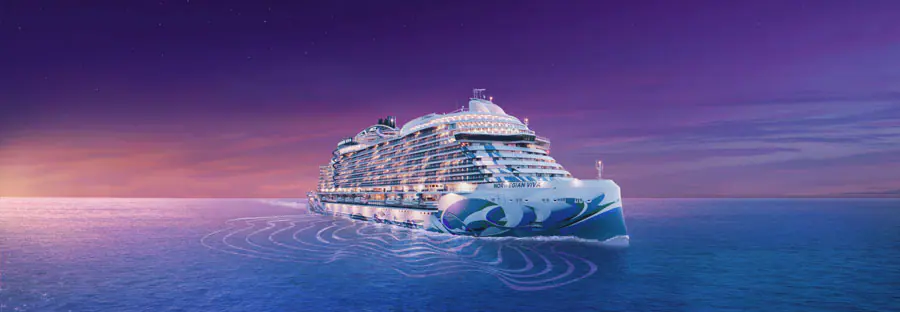
Norwegian Cruise Line and Royal Caribbean International are the two mainstream giants most often compared by Australian travellers planning a big-ship holiday. Both offer mega-ship innovation, private island experiences, and seasonal Australian deployments — but their philosophies diverge sharply on dining flexibility, onboard thrills, and the luxury ship-within-a-ship concept. Jake Hower breaks down twenty-one years of booking both lines.
| Norwegian Cruise Line | Royal Caribbean International | |
|---|---|---|
| Category | Mainstream | Mainstream |
| Rating | ★★★★☆ | ★★★★☆ |
| Fleet size | 20 ships | 29 ships |
| Ship size | Large (2,500-4,000) | Mega (4,000+) |
| Destinations | Caribbean, Mediterranean, Alaska, Northern Europe | Caribbean, Mediterranean, Alaska, South Pacific |
| Dress code | Resort casual | Resort casual |
| Best for | Freestyle dining and entertainment seekers | Families and adventure seekers |
Norwegian is the line for travellers who value flexibility above all else — Freestyle Cruising means no fixed dining, no dress codes, and a genuinely relaxed atmosphere that suits independent-minded Australians. Royal Caribbean is the line for families and thrill-seekers who want the biggest ships afloat, the most innovative onboard attractions, and the best kids' programming in the industry. For couples wanting a luxury retreat within a mainstream ship, Norwegian's The Haven and Royal Caribbean's suite classes both deliver, but The Haven's private restaurant and pool area remain the more refined product. For families travelling from Australia, Royal Caribbean's larger seasonal Australian fleet and Perfect Day at CocoCay give it a practical edge. Both lines reward loyalty generously.
The core difference
Norwegian Cruise Line invented Freestyle Cruising in the early 2000s and built an entire brand around the principle that guests should eat when they want, where they want, with whoever they want, wearing whatever they feel comfortable in. No fixed dining times, no assigned tables, no formal nights enforced with jacket-and-tie dress codes. This philosophy extends beyond dining into every aspect of the onboard experience — entertainment runs on a flexible schedule, the atmosphere is resort-casual, and the ship operates more like a floating holiday village than a traditional ocean liner.
Norwegian’s newest vessel, Norwegian Aqua (launched April 2025), represents the current peak of this philosophy, with the Aqua Slidecoaster — a hybrid waterslide and rollercoaster — The Drop free-fall dry slide, and the Glow Court LED sports floor joining the line’s signature go-kart tracks and open-air laser tag arenas. Founded in Norway in 1966 and now headquartered in Miami, the line operates 20 ships covering the Caribbean, Mediterranean, Alaska, Northern Europe, and seasonally Australian waters — with four more Prima Plus Class ships and an entirely new class of 5,000-passenger vessels on order through 2030.
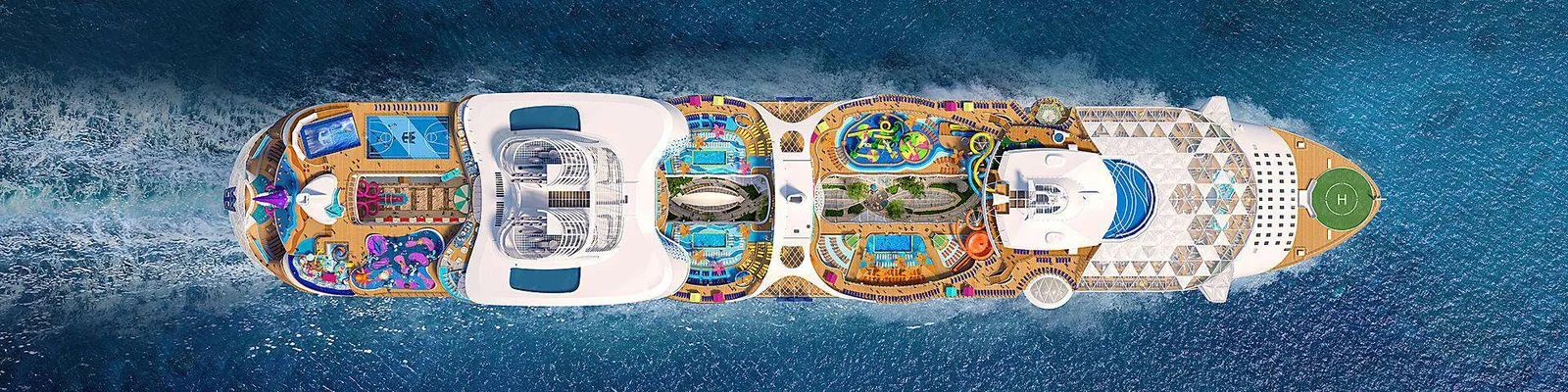
Royal Caribbean International is the world’s largest cruise line, operating 29 ships with a thirtieth arriving in 2026. Where Norwegian prioritises flexibility, Royal Caribbean prioritises innovation at scale. The Icon-class ships — Icon of the Seas and Star of the Seas — are the largest passenger vessels ever built at over 250,000 gross tonnes, carrying more than 5,000 guests across eight distinct neighbourhoods. The scale delivers experiences no other line can match: the largest waterpark at sea, FlowRider surf simulators, rock climbing walls, zip lines, ice-skating rinks, and a Central Park-style open-air garden — all on a single ship.
Royal Caribbean’s approach is structured variety: enough options that every guest finds their ideal experience within a carefully designed framework. The line’s fleet spans six ship classes, from the mid-size Radiance class to the record-breaking Icon class, and sails every major cruise region globally. For Australian travellers, this is the defining mainstream comparison. Both lines deploy ships seasonally from Australian ports. Both offer South Pacific and New Zealand itineraries. Both have private island experiences in the Caribbean. And both deliver a fundamentally different answer to the same question: what should a cruise holiday feel like? Norwegian says freedom. Royal Caribbean says adventure. Neither answer is wrong — but the distinction matters enormously when you are choosing between them.
What is actually included
Norwegian’s Free at Sea programme is the line’s approach to bundling extras into the cruise fare. Depending on the promotion and stateroom category, guests can select from packages including the Premium Beverage Package (cocktails, wines, and spirits), the Specialty Dining Package (meals at restaurants like Cagney’s and La Cucina), the Wi-Fi Package, the Shore Excursion Credit, and — for higher categories — all of the above. Haven suite guests receive all Free at Sea inclusions automatically, plus butler service, a private restaurant, and concierge access.
The base fare without Free at Sea covers main dining room meals, room service, basic fitness facilities, pool access, and entertainment shows. Gratuities are charged separately at approximately USD $20 per person per day for standard staterooms and USD $25 for Haven and suite guests. The bundling approach means Norwegian’s headline fare is often higher than Royal Caribbean’s, but the inclusions can reduce total spend significantly for travellers who would purchase those extras anyway.
Royal Caribbean’s base fare covers main dining room meals, the Windjammer buffet, room service (with a small delivery fee for non-suite guests), pool access, fitness centre, entertainment shows, and the Adventure Ocean kids’ programme. Speciality restaurants carry surcharges ranging from USD $30 to $80 per person. The Deluxe Beverage Package runs approximately USD $70 to $90 per person per day. Wi-Fi packages start from roughly USD $15 per day. Royal Caribbean’s approach is more a la carte — guests choose exactly what they want rather than selecting from bundled tiers.
Suite guests in the Royal Suite Class receive additional inclusions depending on the tier: Star Class guests get a Royal Genie personal concierge, complimentary speciality dining, and premium beverage packages. For Australian travellers calculating total cost, the comparison depends on personal habits. Norwegian’s Free at Sea bundling can deliver excellent value for couples who drink moderately and want one or two speciality meals — the inclusions effectively reduce the per-diem by AUD $80 to $150 per person. Royal Caribbean’s a la carte approach suits travellers who prefer to pay only for what they use. On balance, a seven-night sailing with similar drink and dining habits will cost roughly the same on both lines once add-ons are factored in.
Dining and culinary experience
Norwegian typically offers 15 to 20 dining venues per ship, and the Freestyle philosophy means every one of them operates without fixed seating or assigned times. Cagney’s Steakhouse serves prime cuts in a classic American chophouse setting. La Cucina delivers Italian cuisine with handmade pasta. Teppanyaki offers tableside Japanese cooking with communal seating. Food Republic presents a global street-food concept with dishes ordered via tablet — Korean, Mexican, Indian, and Japanese fare in a casual market-hall environment.
Le Bistro serves French cuisine in a more refined setting. The Garden Cafe buffet and main dining rooms — typically two or three per ship — are included in the fare, while speciality restaurants carry surcharges of approximately USD $30 to $60 per person. Norwegian Aqua introduces new dining concepts including the reimagined Indulge Food Hall with multiple chef-curated stations. The key advantage is genuine flexibility — you can eat at a different restaurant every night without booking weeks in advance, and walk-up availability is usually good for parties of two.
Royal Caribbean matches Norwegian on variety, with 15 to 25 dining options on the larger ships. The main dining room offers both traditional fixed-time seating (early or late) and My Time Dining for flexible scheduling — a hybrid approach that gives structure-seekers and flexibility-seekers a choice Norwegian does not need to make. Speciality options include Wonderland (an immersive, multi-sensory dining experience where the menu is organised by element rather than course), Chops Grille, Izumi Japanese, Jamie’s Italian on select vessels, and Giovanni’s Table. The Windjammer buffet is consistently rated among the best at sea for a mainstream line.
Icon-class ships organise dining across eight neighbourhoods, each with its own personality and culinary identity. Surcharges for speciality restaurants range from USD $35 to $80 per person. The culinary quality on both lines has improved markedly in recent years. Norwegian’s strength is the seamless flexibility — walking into any restaurant at any time without pre-planning suits the spontaneous traveller. Royal Caribbean’s strength is the breadth of experience — Wonderland’s theatrical dining has no equivalent on Norwegian, and the neighbourhood concept on Icon-class ships creates a sense of culinary exploration. For Australians who find fixed dining times too rigid, Norwegian is the clear choice. For those who enjoy the option of a regular table and waiter, Royal Caribbean’s My Time Dining offers the best of both.
Suites and accommodation
Norwegian’s The Haven is the line’s signature luxury product — a private, keycard-access enclave occupying the top decks of each ship. Haven guests receive their own pool, sun deck, restaurant (with a dedicated menu that changes nightly), bar and lounge, 24-hour butler service, a dedicated concierge, and priority access to embarkation, tenders, entertainment, and the spa. The three-bedroom Garden Villa — a sprawling suite with private terrace, separate living and dining areas, and room for up to eight guests — has won multiple awards for best cruise ship suite.
Haven Penthouses offer approximately 290 to 400 square feet with balconies. Owner’s Suites and Duplex Suites on Prima Class ships offer even more space. The Haven experience is genuinely transformative: you have all the entertainment, dining, and activity options of a 4,000-guest mainstream ship, with a private luxury retreat to return to whenever the energy becomes too much. It is the cleverest proposition in mainstream cruising — luxury when you want it, big-ship fun when you do not.
Royal Caribbean’s suite programme operates through the Royal Suite Class on newer ships, with three tiers: Sea Class, Sky Class, and Star Class. Star Class guests — booked in the top suite categories including the Ultimate Family Suite and Royal Loft Suite — receive a Royal Genie, a personal concierge who arranges everything from dining reservations to backstage tours and priority ride-on times. The Suite Neighbourhood on Oasis and Icon-class ships includes a dedicated lounge, pool area, and restaurant access. The Ultimate Family Suite features an in-suite slide, gaming consoles, and a private cinema screen — unique in cruising.
While comprehensive, the Royal Suite Class is less architecturally self-contained than The Haven — the dedicated spaces are typically smaller, and the separation from the main ship is less pronounced. Standard accommodation across both lines is competitive. Norwegian’s balcony staterooms average 180 to 210 square feet plus balcony. Royal Caribbean’s balcony staterooms are similar at 180 to 200 square feet, though Icon-class ships offer innovative categories including the Surfside Family rooms and AquaDome-view Interiors with floor-to-ceiling virtual ocean views. For Australian travellers wanting the ship-within-a-ship luxury experience, Norwegian’s The Haven remains the benchmark — its dedicated pool, restaurant, and lounge create a genuine enclave that Royal Caribbean’s suite programme has not yet fully matched.
Pricing and value
Norwegian’s pricing for Australian travellers starts from approximately AUD $150 to $250 per person per night for inside staterooms on seven-night itineraries, with balcony cabins from approximately AUD $200 to $350. The Haven suites command a significant premium — roughly AUD $500 to $1,200 per person per night depending on ship and suite category — but the all-inclusive nature of Haven (drinks, speciality dining, butler service, private restaurant) means the premium represents genuine value compared to purchasing those extras individually.
The Free at Sea programme adds considerable value when available: a sailing with the Premium Beverage Package, Speciality Dining Package, and Wi-Fi included can represent AUD $100 to $200 per person per day in bundled savings over purchasing each item separately. Norwegian’s seasonal Australian deployments are priced competitively against Royal Caribbean, though the smaller number of local departures means fewer last-minute promotional deals.
Royal Caribbean’s pricing is structured similarly, with inside staterooms from approximately AUD $130 to $230 per person per night and balcony cabins from AUD $180 to $330 on seven-night sailings. The larger Australian deployment — multiple ships seasonally from Sydney and Brisbane — creates more inventory and frequently more competitive pricing, particularly for shoulder-season departures in October and March. Suite pricing varies enormously: a Junior Suite might add 30 to 50 per cent over a balcony cabin, while Star Class suites on Icon-class ships can exceed AUD $1,500 per person per night.
Royal Caribbean’s a la carte pricing for add-ons means the base fare is often lower, but total spend can escalate quickly — a couple purchasing the Deluxe Beverage Package, speciality dining, and Wi-Fi can add AUD $3,000 to $4,000 to a seven-night cruise. For Australian travellers comparing total cost, the lines are remarkably close on standard categories. A seven-night South Pacific sailing in a balcony cabin with moderate drinking and one or two speciality dinners will cost roughly AUD $2,500 to $4,000 per person on either line. The difference often comes down to which promotions are running at the time of booking.
Spa and wellness
Norwegian’s Mandara Spa operates across the fleet, offering a comprehensive menu of massages, facials, body treatments, acupuncture, and thermal suite access. The thermal suite — featuring heated loungers, a salt room, a snow room, and hydrotherapy pools — is available via day pass or voyage pass, typically at USD $40 to $50 per day or USD $200 to $300 for the voyage. This is one of Norwegian’s hidden gems — an afternoon in the thermal suite between port days is among the most relaxing experiences on any mainstream ship.
Norwegian Aqua elevates the wellness offering with an expanded thermal spa. The fitness centres are well-equipped with ocean-view cardio areas, free weights, and group fitness classes including yoga, spinning, and Pilates. Beyond the spa, Norwegian’s go-karts, laser tag, ropes courses, and waterslides provide active recreation that doubles as genuine physical exercise.
Royal Caribbean’s Vitality Spa provides a similar range of treatments across the fleet, with the newer ships — particularly Icon-class and Oasis-class — offering larger spa facilities with thermal suites, steam rooms, saunas, and relaxation lounges. The Vitality at Sea programme includes group fitness classes, personal training sessions, and nutrition consultations. Where Royal Caribbean truly differentiates is in active recreation: the FlowRider surf simulator, rock climbing walls, zip lines, basketball courts, ice-skating rinks, and the Thrill Waterpark on Icon-class ships create an active-adventure offering that goes far beyond the spa.
Both lines deliver mainstream spa experiences at comparable quality, with treatments typically ranging from USD $100 to $250 per session. The distinction is in active wellness beyond the spa walls: Norwegian leans into participatory onboard thrills — go-karts, laser tag, ropes courses — while Royal Caribbean offers more water-based and height-based adventure — surf simulators, waterparks, zip lines, rock climbing. For Australians who want both relaxation and physical activity on a cruise, both lines deliver comprehensively — but Royal Caribbean’s sheer variety of active options gives it a slight edge.
Entertainment and enrichment
Norwegian delivers vibrant, high-energy entertainment with a distinctive participatory edge. The line has invested heavily in musical productions — Norwegian Aqua features the first official Prince tribute show at sea, joining the fleet’s existing lineup of Broadway and West End-calibre performances including SIX and other licensed productions. Beyond the theatre, Norwegian’s entertainment philosophy is genuinely participatory: the Speedway go-kart tracks (available on Bliss, Encore, Joy, Prima, Viva, and Aqua) let guests race electric karts on a multi-level track above the ocean — an experience unique to Norwegian.
The Galaxy Pavilion virtual reality complexes offer immersive gaming. Open-air laser tag on the top deck, ropes courses, and the Aqua Slidecoaster give guests things to do rather than watch. The nightlife is energised, with multiple bars and lounges staying open late and a social atmosphere that peaks around the pool deck and observation lounges after dark.
Royal Caribbean is the undisputed leader in production entertainment at sea and has been for two decades. The line stages full-scale Broadway shows — Grease, Mamma Mia!, and Hairspray run on Oasis-class ships with professional casts, full orchestras, and sets that rival their land-based equivalents. AquaTheater shows on Oasis-class ships combine high-diving, synchronised swimming, and aerial acrobatics in a stunning open-air amphitheatre. Ice-skating shows in Studio B deliver genuine spectacle.
Icon-class ships add entirely new entertainment concepts including the AquaDome, a multi-storey glass structure that hosts aerial and aquatic shows by day and transforms into a nightclub by evening. For families, the entertainment breadth is unmatched — Adventure Ocean provides age-appropriate activities from toddlers to teens. The entertainment gap between these lines has narrowed considerably, but Royal Caribbean retains the advantage in production value and variety. Norwegian’s participatory entertainment appeals to a different sensibility: guests who want to be part of the action. If you want to watch a Broadway show after dinner, choose Royal Caribbean. If you want to race go-karts under the stars, choose Norwegian.
Fleet and destination coverage
Norwegian’s fleet of 20 ships spans several generations, from the mid-size Norwegian Jewel (approximately 2,400 guests) to the newest Prima Plus Class vessels led by Norwegian Aqua (approximately 3,500 guests). The Prima Class ships (Norwegian Prima, Norwegian Viva) introduced a more refined design language with the Ocean Boulevard wraparound promenade deck, Indulge Food Hall, and redesigned Haven suites. Four more Prima Plus ships and an entirely new class of 5,000-passenger vessels are on order through 2030, representing the most aggressive expansion phase in the line’s history.
Norwegian deploys across the Caribbean (where they have won Best Caribbean Cruise Line at the World Travel Awards repeatedly), Mediterranean, Alaska, Northern Europe, Bermuda, and seasonally to Australia and the South Pacific. The line’s private island destinations — Great Stirrup Cay in the Bahamas and Harvest Caye in Belize — add exclusive beach-day stops on Caribbean itineraries.
Royal Caribbean’s fleet of 29 ships is the largest in the industry, spanning six ship classes. The Icon-class ships (Icon of the Seas, Star of the Seas) are the world’s largest at over 250,000 gross tonnes. The Oasis class (Oasis, Allure, Harmony, Symphony, Wonder of the Seas) remains the backbone of the fleet at 225,000 to 237,000 gross tonnes with the Central Park, Boardwalk, and Royal Promenade neighbourhood concept. Quantum-class ships (including Ovation of the Seas, which deploys seasonally from Australia) offer a slightly smaller but still innovative experience.
The line sails the Caribbean, Mediterranean, Alaska, Northern Europe, the South Pacific, Asia, and Australia. Perfect Day at CocoCay — Royal Caribbean’s private island — features Thrill Waterpark, a helium balloon, overwater cabanas, and a freshwater pool, and is widely considered the best private island in cruising. For Australian travellers, Royal Caribbean has the larger and more established local presence, with Ovation of the Seas and other Quantum-class vessels deploying seasonally from Sydney and Brisbane. Norwegian’s Australian deployment is growing but smaller. For international itineraries, both lines cover similar regions.
Where each line excels
Norwegian excels in Freestyle Cruising flexibility — genuinely no fixed dining times, no assigned seating, no enforced dress codes, and a resort-casual atmosphere that appeals to independent-minded travellers. The Haven ship-within-a-ship concept remains the most refined and self-contained private luxury enclave on any mainstream cruise ship, with its own pool, restaurant, bar, and butler service. The go-kart tracks, laser tag arenas, and Aqua Slidecoaster offer participatory thrills that no other mainstream line replicates.
The Free at Sea bundling programme delivers excellent value when promotions align with travel dates. Norwegian’s Caribbean expertise is genuine — the line has won Best Caribbean Cruise Line at the World Travel Awards for a decade running, and the private island stops at Great Stirrup Cay are a highlight of Caribbean itineraries. The Prima Class design language represents a genuine step-change in Norwegian’s aesthetic — Ocean Boulevard and the Indulge Food Hall signal a more refined future for the brand.
Royal Caribbean excels in innovation at the largest possible scale — the Icon-class ships are engineering marvels that push the boundaries of what a cruise ship can be, and each new class introduces features the industry spends years imitating. The Adventure Ocean kids’ programme is the industry benchmark for family cruising, with dedicated spaces for every age from six months to seventeen years. Broadway-calibre production shows, AquaTheater performances, and ice-skating spectacles deliver entertainment that no competitor matches.
Perfect Day at CocoCay is the best private island experience in the Caribbean and continues to receive investment annually. The larger Australian fleet deployment offers more local departure options and more promotional pricing flexibility. The Crown and Anchor Society loyalty programme rewards frequent cruisers generously at upper tiers with complimentary drinks, internet, dedicated lounges, and meaningful onboard credits.
Standout itineraries for Australian travellers
Norwegian’s seasonal Australian deployment offers South Pacific itineraries from Sydney, typically 10 to 14 nights visiting New Caledonia, Vanuatu, and Fiji — ideal for experiencing Freestyle Cruising without an international flight. For international sailings, a seven-night Western Caribbean from Miami on Norwegian Aqua showcases the newest ship in the fleet — the Aqua Slidecoaster, reimagined Haven suites, and the Prince tribute show are all best experienced on this vessel.
A 12-night Mediterranean from Rome or Barcelona on Norwegian Epic or Norwegian Escape delivers Freestyle dining across 20-plus restaurants with iconic European ports including Naples, Santorini, and Dubrovnik. Fly from Australian east coast cities via Los Angeles, Singapore, or the Middle East.
Alaska on Norwegian Bliss or Encore is another standout for Australian travellers willing to fly to the Pacific Northwest — the observation lounge with floor-to-ceiling views of glaciers and the go-kart track where you race against a backdrop of snow-capped mountains are experiences that define Norwegian at its most distinctive and memorable.
Royal Caribbean’s Australian deployment is the more comprehensive and more established. Ovation of the Seas operates seasonally from Sydney with itineraries to New Zealand (typically 12 to 14 nights visiting Fiordland, Dunedin, Wellington, and the Bay of Islands) and the South Pacific (10 to 12 nights). These are genuine highlight sailings — Ovation is a Quantum-class ship with the North Star observation capsule that rises 90 metres above sea level, the RipCord by iFLY skydiving simulator, and the Two70 entertainment venue.
For international travel, a seven-night Eastern Caribbean on Icon of the Seas from Miami is the most innovative cruise sailing available anywhere in the world — the eight-neighbourhood concept, Thrill Waterpark, and AquaDome must be experienced to be understood. Book well in advance as demand is extraordinary and Icon sells out months ahead.
Australian families should also consider the three- and four-night short breaks from Florida on Oasis or Freedom-class ships, which combine exceptionally well with a theme park holiday in Orlando and serve as an ideal taster cruise for families considering a longer sailing in future.
Ship-by-ship recommendations
Norwegian
Norwegian Aqua (April 2025, Prima Plus Class, approximately 3,500 guests) is the ship to book for the newest Norwegian experience. The Aqua Slidecoaster, The Drop, Glow Court, redesigned Haven with expanded suite categories, and the Prince tribute show make this the most feature-rich ship in the fleet. Best for Caribbean sailings from Miami. Australian travellers should pair it with a Florida stay.
Norwegian Prima or Norwegian Viva (Prima Class, approximately 3,200 guests) introduced the Ocean Boulevard wraparound outdoor promenade, Indulge Food Hall, and a more refined, almost premium aesthetic that distinguishes these ships from earlier Norwegian vessels. The Haven suites on Prima Class are the most elegant in the fleet. Best for Mediterranean and Northern European itineraries where the design sensibility matches the destination.
Norwegian Jewel (approximately 2,400 guests) or similar mid-size vessels are the ships Norwegian typically deploys to Australian waters. While not the newest, they offer a more intimate Freestyle experience and suit the Australian coastal and South Pacific itinerary style well. The smaller size means easier tender port access and more personal service ratios.
Royal Caribbean
Icon of the Seas (Icon Class, approximately 5,600 guests) defines Royal Caribbean’s ambition and the current pinnacle of cruise ship design. Eight neighbourhoods, the largest waterpark at sea, the AquaDome, and Perfect Day at CocoCay calls make this the ultimate big-ship experience. Best for Caribbean sailings from Miami. Book the Surfside neighbourhood for the best family experience afloat, or the Suite Neighbourhood for Star Class luxury with the Royal Genie concierge service.
Ovation of the Seas (Quantum Class, approximately 4,900 guests) is the ship Australian travellers are most likely to sail on, given its regular Sydney and Brisbane deployments. The North Star observation capsule — a jewel-shaped glass pod that rises 90 metres above the ocean — RipCord by iFLY, Two70, and SeaPlex make this a strong local-departure choice. Purpose-built for the Australian and Asian markets, with an onboard atmosphere that feels distinctly Australian during the local season.
Oasis-class ships (Oasis, Allure, Harmony, Symphony, Wonder of the Seas, approximately 5,400 to 6,800 guests) remain excellent choices for Caribbean and Mediterranean sailings at a slightly lower price point than Icon-class. The Central Park and Boardwalk neighbourhoods, AquaTheater, and Broadway shows deliver the classic Royal Caribbean mega-ship experience. Wonder of the Seas in the Mediterranean is a particularly strong option for Australians flying to Barcelona or Rome.
For Australian travellers specifically
Royal Caribbean has the stronger Australian infrastructure by a considerable margin. The line maintains a dedicated Australian office, prices in AUD, runs Australian-market promotions throughout the year, and deploys multiple ships seasonally from Sydney and Brisbane. Ovation of the Seas has become a fixture of the Australian cruise season, deployed year after year with reliable consistency. The onboard atmosphere on Australian departures is distinctly local — predominantly Australian passengers, Australian-focused entertainment, and menus adjusted for local tastes.
Norwegian’s Australian presence is growing — the line offers Australian-market pricing and seasonal deployments — but the scale of local operations does not yet match Royal Caribbean’s consistency or fleet size. The difference matters practically for planning: Royal Caribbean’s Australian deployment can be booked with confidence 12 to 18 months in advance with a high degree of certainty about which ship will be operating, while Norwegian’s local scheduling has been more variable from year to year.
The currency factor matters for budgeting. Both lines offer AUD pricing for Australian-market bookings, which removes exchange rate risk. Onboard spending is typically charged in USD, meaning the AUD/USD rate affects daily spend on drinks, excursions, and speciality dining — something Australian travellers should factor into their total budget regardless of which line they choose.
The flight factor matters for international itineraries. Both lines concentrate their newest ships in the Caribbean — Icon of the Seas and Norwegian Aqua sail from Miami year-round. Australian travellers wanting these flagship vessels must fly to the United States, adding 15 to 20 hours each way and AUD $2,000 to $4,000 per person. Mediterranean itineraries on both lines embark from Barcelona, Rome, or Athens — accessible via Singapore, Dubai, or London. The practical advantage of both lines having Australian deployments cannot be overstated: for a first experience with either brand, boarding from Sydney eliminates the long-haul flight entirely.
Loyalty considerations are relevant for repeat cruisers. Royal Caribbean’s Crown and Anchor Society and Norwegian’s Latitudes Rewards are entirely separate programmes with no cross-recognition. Australian travellers who cruise regularly should pick a line early and build status consistently. The upper-tier benefits on both programmes — complimentary drinks, internet access, priority boarding, dedicated lounges, onboard credits — represent genuine savings that compound over repeated sailings, particularly for retirees and frequent cruisers sailing two or three times annually.
The onboard atmosphere
Norwegian’s atmosphere is the more relaxed of the two — by design and by philosophy. Freestyle Cruising creates a resort-casual environment where no one checks what you are wearing, no one assigns you a dinner time, and no one expects you to follow a schedule. The passenger mix is diverse — couples, families, groups, solo travellers — with a slight lean toward North American guests, though Australian and European travellers are increasingly present.
The average age skews slightly younger than Royal Caribbean on the newer ships, particularly on Caribbean sailings where the go-karts and laser tag attract an active, adventure-minded clientele. The Haven creates a distinct atmosphere within the ship — quieter, more refined, with the feel of a boutique hotel sitting atop a floating entertainment complex. The contrast between Haven tranquillity and main-ship energy is part of the appeal.
Royal Caribbean’s atmosphere is energised and family-oriented. The ships buzz with activity from morning to midnight — poolside DJs, FlowRider competitions, rock climbing challenges, Broadway shows, and parade-style entertainment on the Royal Promenade create constant motion. The passenger mix is broad — families dominate school holiday sailings, while couples and groups fill the ships during term time. The Australian deployments attract a strongly local passenger base, and Ovation of the Seas from Sydney feels distinctly Australian in a way that Norwegian’s international deployments do not always replicate.
The size of the ships means quiet spaces do exist — the Solarium adults-only pool area is a genuine retreat, the library is peaceful, Central Park on Oasis-class ships offers genuine calm with real trees and ambient birdsong — but the default energy level across the ship is unmistakably high.
The atmosphere distinction is the clearest differentiator between these lines and ultimately the single most important factor in choosing between them. Norwegian feels like a resort where you set your own pace — wake when you want, eat when you want, do what you want. Royal Caribbean feels like a brilliantly organised adventure park where the pace is set by the sheer volume of things to do and see. Neither is better. But one will suit your temperament more than the other, and getting this choice right is more important than any cabin category, itinerary selection, or pricing comparison you will make.
The bottom line
Norwegian and Royal Caribbean are both exceptional mainstream cruise lines, and Australian travellers choosing between them are not choosing between good and bad — they are choosing between two excellent but genuinely different holiday philosophies.
Choose Norwegian for Freestyle Cruising flexibility — eat where you want, when you want, without dress codes or assigned seating. Choose it for The Haven, the most refined ship-within-a-ship luxury experience on a mainstream line, where butler service and a private pool coexist with go-karts and laser tag a few decks below. Choose it for participatory onboard thrills — racing go-karts above the ocean, the Aqua Slidecoaster, open-air laser tag under the stars. Choose it for the Free at Sea programme that bundles drinks, dining, and Wi-Fi into a single value proposition that simplifies budgeting. Choose Norwegian when you want a big ship that feels relaxed, independent, and unconstrained by tradition.
Choose Royal Caribbean for innovation at the largest scale in cruising — Icon-class ships that redefine what a vessel can be, with eight neighbourhoods functioning as distinct destinations. Choose it for the best family programming afloat through Adventure Ocean and the sheer breadth of kid-friendly attractions from waterparks to ice-skating. Choose it for Broadway-calibre entertainment, AquaTheater spectacle, the FlowRider surf simulator, and the zip line. Choose it for Perfect Day at CocoCay, the best private island in the Caribbean. Choose it for the larger Australian deployment that puts more local-departure options within easy reach year after year. Choose Royal Caribbean when you want a big ship that delivers maximum variety, maximum energy, and maximum family-friendly adventure.
For many Australian travellers, the ideal approach is to try both. A Royal Caribbean sailing from Sydney — no flights, no jet lag, straight onto Ovation of the Seas — is the perfect introduction to mega-ship cruising. A Norwegian Caribbean sailing on Norwegian Aqua from Miami, combined with a Florida holiday, delivers the Freestyle experience at its newest and best. The lines complement rather than compete, and the traveller who experiences both will understand that flexibility and innovation are not opposing values — they are simply different ways of making a cruise holiday feel like exactly what you needed.