Oceania Cruises and Swan Hellenic both appeal to intellectually curious Australian travellers, but they deliver fundamentally different holidays — one is a mid-size culinary cruise line with the widest restaurant choice at sea, the other a boutique cultural expedition specialist with ice-class ships, Zodiac landings, and a heritage dating to the 1950s. Jake Hower compares their inclusions, dining, fleet, and value for Australians.
| Oceania Cruises | Swan Hellenic | |
|---|---|---|
| Category | Luxury | Expedition |
| Rating | ★★★★☆ | ★★★★☆ |
| Fleet size | 8 ships | 3 ships |
| Ship size | Mid-size (1,000-2,500) | Small (under 200) |
| Destinations | Mediterranean, Asia, South Pacific, Caribbean | Polar, Mediterranean, South America, Asia |
| Dress code | Country club casual | Relaxed |
| Best for | Food-focused culturally curious cruisers | Cultural expedition and enrichment travellers |
Oceania is the finest culinary cruise line in the upper-premium segment — Jacques Pépin's programme across up to ten dining venues, included speciality restaurants, and a relaxed Country Club Casual atmosphere on mid-size ships carrying 684 to 1,250 guests. Swan Hellenic counters with genuine expedition capability on three ice-class ships carrying just 152 to 192 guests, a fully all-inclusive fare covering open bar, excursions, gratuities, and Wi-Fi, and access to destinations Oceania cannot reach — Antarctica, the Arctic, Papua New Guinea, Raja Ampat, and the Solomon Islands. For food-focused Australians wanting classic itineraries at a competitive per-diem, choose Oceania. For culturally curious Australians drawn to small-ship expedition cruising with intellectual enrichment and remote destinations, choose Swan Hellenic.
The core difference
Oceania Cruises and Swan Hellenic occupy fundamentally different positions in the cruise market — and the choice between them reveals not just preference but purpose. One is a mid-size culinary cruise line delivering the widest restaurant choice at sea. The other is a boutique cultural expedition specialist with ice-class ships, Zodiac fleets, and a heritage that stretches back to the 1950s. They rarely compete directly on itinerary, but for Australian travellers weighing their next voyage, the comparison is increasingly relevant — both lines are expanding into Australian waters for 2025–2026.
Oceania’s identity is culinary. The line’s trademarked claim to “The Finest Cuisine at Sea” is backed by a programme developed under Jacques Pépin — former personal chef to three French heads of state including Charles de Gaulle, author of thirty cookbooks, and Oceania’s Executive Culinary Director since 2003. On the O-class ships (Marina, Riviera, and the incoming Allura), guests choose from up to ten dining venues — Jacques (French bistro), Polo Grill (American steakhouse), Red Ginger (pan-Asian), Toscana (Italian), Aquamar Kitchen (wellness), and more — all included without surcharges. The mid-size format (684 to 1,250 guests) creates a relaxed, Country Club Casual atmosphere where jackets and ties are never required. Under Norwegian Cruise Line Holdings alongside Regent Seven Seas and Norwegian, Oceania operates four ships focused on the Mediterranean, Caribbean, Alaska, Asia, and increasingly Australian waters.
Swan Hellenic’s identity is cultural expedition. The brand traces its origins to the 1950s, when Swan’s Tours began carrying British guests to historic Mediterranean sites — pioneering the concept of intellectually enriched cruising long before the term “expedition” entered the luxury lexicon. After multiple ownership changes — P&O, Carnival Corporation, All Leisure Holidays, and G Adventures — the brand was relaunched in 2021 under CEO Andrea Zito with three purpose-built ice-class expedition ships: SH Minerva (2021, 152 guests), SH Vega (2022, 152 guests), and SH Diana (2023, 192 guests). All three are PC5 or PC6 ice-class with diesel-electric hybrid propulsion, carry full Zodiac fleets, and deploy expedition teams of twelve to fifteen specialists including historians, naturalists, ornithologists, and cultural experts. The tagline — “Pioneering Cultural Discovery Since 1954” — captures the distinction from pure adventure expedition lines: Swan Hellenic’s expeditions are as much about understanding civilisations as they are about reaching remote coastlines.
For Australian travellers, the practical question often clarifies quickly. If you want classic ocean cruising with the widest restaurant choice at a competitive per-diem, Oceania delivers exceptional value. If you want to board a Zodiac, land on beaches with no pier, explore Papua New Guinea or Antarctica, and attend daily lectures from historians and marine biologists — Swan Hellenic is the choice from this pairing.
What is actually included
Both lines market inclusivity, but the specifics differ meaningfully — and the details matter when calculating total cost.
Oceania’s “Your World Included” programme covers all speciality restaurant dining without surcharges, shipboard gratuities, unlimited Wi-Fi, speciality coffees and non-alcoholic beverages, still and sparkling water, gourmet ice cream, laundry services, in-stateroom dining, and group fitness classes. Guests choose one amenity: either complimentary wine and beer by the glass during lunch and dinner hours, or a shore excursion credit scaled by voyage length (USD $400 for nine days up to USD $1,200 for twenty-six or more days). If neither is selected, a non-use credit applies. Premium spirits, cocktails, wines by the bottle, spa treatments, and shore excursions beyond any credit remain additional costs. La Reserve by Wine Spectator and the Privée Dom Pérignon experience carry surcharges.
Swan Hellenic’s inclusion model is broader at the base fare level and deliberately simple. The fare covers all meals including 24-hour room service, an open bar with selected wines, spirits, beer, coffee, and soft drinks, a well-stocked minibar replenished daily, unlimited Wi-Fi, gratuities, shore excursions and expedition activities (Zodiac landings, guided walks, cultural visits), the full onboard lecture programme, and — uniquely — a one-night pre-cruise hotel stay with breakfast, plus airport-to-ship transfers. On Cruise Plus packaged sailings, charter flights from Australian gateways and additional hotel nights are included in the advertised fare. What Swan Hellenic does not include: spa treatments, premium wines or spirits beyond the standard open bar selection, and optional scuba diving excursions on specialist itineraries.
The net effect for Australian travellers is notable. Swan Hellenic’s all-inclusive model means almost nothing goes on the onboard account — drinks from morning to night, every excursion, every lecture, and every Zodiac landing are covered. Oceania’s included dining across up to ten restaurants and included gratuities are substantial, but drinks require either selecting the beverage amenity (forgoing the excursion credit) or purchasing a beverage package at USD $40 to $60 per person per day. On a fourteen-night Mediterranean sailing for a couple, that drink cost alone can reach AUD $2,500 or more. Swan Hellenic’s pre-cruise hotel and transfer inclusions add further value that Oceania does not match.
Dining and culinary experience
Both lines boast genuine culinary credibility — and both can point to partnerships with respected chefs. The experience, however, is fundamentally different in scale, variety, and philosophy.
Oceania is a restaurant ship. On O-class vessels, guests choose nightly from Jacques (French bistro, named for Pépin), Polo Grill (premium American steakhouse), Red Ginger (pan-Asian, praised for its lobster tempura and Thai curries), Toscana (Italian heritage), Aquamar Kitchen (wellness-inspired with calorie-conscious and plant-forward menus), The Grand Dining Room (main restaurant with over 270 rotating recipes), Terrace Café (buffet that converts to themed evenings — Tuscan, Asian, or Middle Eastern), and Waves Grill (casual poolside, transforming to a pizzeria at night). On R-class ships (Regatta, Insignia), the count drops to six venues but the quality holds. The Culinary Center on O-class ships offers hands-on cooking classes at eighteen individual workstations — a genuine professional teaching kitchen with no equivalent on Swan Hellenic. Oceania employs one chef for every ten guests, and half the crew is dedicated to the preparation or service of food. Every restaurant except La Reserve and Privée is included. The choice and variety are unmatched in the luxury segment.
Swan Hellenic is a focused, chef-driven kitchen. The Maris culinary programme, developed in partnership with JRE-Jeunes Restaurateurs — a prestigious association of rising European chefs — brings rotating guest chefs aboard select sailings to curate menus, host themed dinners, and lead gastronomic excursions ashore. The permanent culinary programme was created by Michelin-starred Italian chef Andrea Ribaldone and Korean chef Sang Keun Oh. The Swan Dining Room serves as the primary venue for sit-down dinners with white tablecloths and linen napkins, offering international and regional cuisine adapted to each itinerary. The Club Lounge transforms throughout the day from early riser service through afternoon tea to casual evening dining with Piemonte-style pizza and family-style plates. The Pool Grill & Bar serves al fresco classics. On Maris culinary voyages, the guest chef builds to a climactic Gala Dinner showcasing their creativity, and leads cooking demonstrations revealing select techniques. A private Chef’s Table experience is available in the main restaurant, where the executive chef and sommelier curate a bespoke menu with wine pairings.
The verdict is clear: Oceania delivers the widest variety of complimentary dining in the luxury segment — ten venues spanning more cuisines than any other line. Swan Hellenic delivers focused, intimate culinary quality where every plate is crafted with the creativity of JRE-calibre chefs, and where menus respond directly to the cultural context of the itinerary. For food-motivated travellers who want options every night, Oceania. For those who value a concentrated, destination-integrated dining experience with wines and spirits included, Swan Hellenic.
Suites and accommodation
This comparison is shaped significantly by the ships being compared — Oceania’s mid-size vessels offer substantially more cabin space than Swan Hellenic’s purposefully compact expedition ships.
Oceania’s O-class ships (Marina, Riviera, Allura) offer Veranda staterooms from 282 to 291 square feet including a private veranda — generous for the segment. Penthouse Suites reach 440 square feet. The Owner’s Suites span approximately 2,000 square feet. On the smaller R-class ships (684 guests), staterooms are tighter at 165 to 216 square feet in standard categories, though still functional. All suites feature Prestige Tranquility Beds, Bulgari bath amenities, and twice-daily housekeeping. Butler service is available from Penthouse level upward.
Swan Hellenic’s three ships offer a well-defined cabin hierarchy across eight categories. On SH Diana, Oceanview staterooms measure 215 square feet — roughly 75 per cent of Oceania’s O-class Veranda equivalent, and without a balcony. Balcony staterooms step up to 301 square feet of interior plus a 65-square-foot private terrace — comparable to Oceania’s Veranda category. Junior Suites on SH Diana offer 376 square feet with a 75-square-foot balcony, a super king bed, separate living area, flame-effect fireplace, and private kitchenette. Suites reach 473 square feet with a 129-square-foot terrace, and Premium Suites top out at 505 square feet with a 130-square-foot wraparound veranda, separate living room, bathtub, walk-in wardrobe, and butler service. On SH Minerva and SH Vega (slightly smaller ships), Oceanview cabins measure 205 square feet, with Balcony cabins at 300 square feet and Premium Suites at 525 square feet.
Every Swan Hellenic cabin — regardless of category — features Scandi-inspired design with softwood fittings and earthy tones, an Illy espresso machine, a flame-effect electric fireplace, a smart HDTV with premium sound system, a well-stocked minibar, Lajatica toiletries, fluffy bathrobes and slippers, a personal safe, and a pair of Nikon Prostaff 3S 10x42 binoculars for wildlife observation. A bottle of champagne greets every guest on arrival.
The tradeoff is intentional. Swan Hellenic’s cabins are designed as calming retreats between expeditions — guests spend their days on Zodiacs, at shore landings, and attending lectures in the Observation Lounge rather than in their stateroom. Oceania’s larger staterooms suit its classical cruising model where sea days, in-suite dining, and evening relaxation are central to the experience. Neither approach is wrong; they serve different purposes.
Pricing and value
The pricing comparison between these lines is nuanced because their inclusions differ so substantially — headline fares tell only part of the story.
Oceania’s per-diem on classic itineraries runs approximately AUD $600 to $800 per person per night for entry-level Veranda staterooms on O-class ships. A fourteen-night Mediterranean voyage costs roughly AUD $12,000 to $16,000 per person including gratuities, all dining, and Wi-Fi. Add the beverage amenity (included wine and beer at meals) or shore excursion credit, and the value proposition strengthens further. Oceania is consistently described as offering “luxury dining at premium prices” — a positioning that resonates strongly with value-conscious Australian travellers. A beverage package for those wanting spirits, cocktails, and wine beyond meals adds approximately USD $40 to $60 per person per day.
Swan Hellenic’s per-diem varies by ship, destination, and cabin category. Entry-level Oceanview staterooms start from approximately USD $500 to $900 per person per night on standard expedition itineraries. A thirteen-night Antarctica voyage on SH Vega departing Ushuaia in March 2026 starts from approximately USD $18,989 per person for an Oceanview D4 cabin — roughly USD $1,460 per night. However, that fare includes everything: the open bar, all excursions and Zodiac landings, gratuities, Wi-Fi, a pre-cruise hotel night, and airport transfers. On Asia-Pacific sailings from Brisbane, Cruise Plus packages include charter flights, hotel accommodation, and transfers — pricing that would cost thousands extra if booked separately. Promotional fares through the “Elevated Expeditions” sale have brought some longer voyages below USD $420 per person per night, representing remarkable value for all-inclusive expedition cruising.
For a direct comparison on accessible itineraries: a ten to fourteen-night Oceania voyage in a Veranda stateroom costs roughly AUD $8,000 to $14,000 per person. A comparable-length Swan Hellenic Mediterranean or cultural expedition starts from approximately USD $5,000 to $10,000 per person in an Oceanview cabin. Swan Hellenic’s open bar inclusion, excursion coverage, and pre-cruise hotel partially or fully close the gap depending on the specific sailing. The remaining differential buys a radically different experience — a ship of 152 guests versus 1,250, expedition access versus established ports, and daily enrichment from a team of specialists versus self-directed shore exploration.
For expedition itineraries — Antarctica, the Arctic, Papua New Guinea, West Africa — no Oceania comparison exists. Swan Hellenic operates in a category of one from this pairing.
Spa and wellness
Both lines offer spa and wellness facilities, but at scales reflecting their fundamentally different ship sizes and philosophies.
Oceania’s Canyon Ranch SpaClub operates across the fleet in partnership with the renowned Tucson-based wellness brand. On O-class ships, the spa spans approximately 5,000 square feet with treatment rooms, a thalassotherapy pool, an aromatic steam room, a Finnish sauna, and a relaxation lounge. The fitness centre features Technogym equipment with panoramic ocean views. Signature treatments include the Canyon Ranch Intensive Massage and Elemis facial therapies. The partnership brings onshore Canyon Ranch expertise to sea — health consultations, nutrition counselling, and fitness assessments are available alongside standard spa services. A dedicated Aquamar Kitchen restaurant extends the wellness philosophy into dining with calorie-conscious, nutrient-dense menus.
Swan Hellenic’s wellness offering is boutique and expedition-oriented. Each ship features a Balinese-inspired spa with treatments including hot stone massages, bamboo massages, and pampering body care, plus a hairdressing salon and barber. A panoramic sauna on Deck 8 offers views while guests relax after expeditions. The heated infinity pool and open-deck jacuzzi are complimentary — as is the sauna. The state-of-the-art gym includes cardio machines, stretch bands, and free weights, with instructor-led classes in yoga, Pilates, meditation, and resistance training available at no extra charge. Personal trainers are also on hand. The scale is intimate rather than expansive — four treatment areas versus Oceania’s dedicated spa floor — but the wellness experience integrates naturally with the expedition rhythm: a massage after a morning of Zodiac landings in Antarctica, yoga on deck before a cultural walk in Papua New Guinea.
The difference is clear. Oceania offers the more comprehensive traditional spa through an established wellness brand, with a dedicated wellness restaurant and extensive facilities. Swan Hellenic offers expedition wellness — recovery and rejuvenation woven into the rhythm of active exploration. For spa-focused travellers, Oceania is the stronger choice. For travellers who want wellness to complement adventure rather than replace it, Swan Hellenic integrates beautifully.
Entertainment and enrichment
Neither line is a floating theatre, but they approach enrichment and evening programming from diametrically different starting points.
Oceania’s enrichment programme centres on culinary education. The Culinary Center on O-class ships offers hands-on cooking classes at eighteen individual workstations — a professional teaching kitchen where guests learn regional cuisines relevant to the itinerary. Guest lecturers cover history, science, and culture on a rotating basis. The Martini Bar hosts live piano and cocktail gatherings. The evening atmosphere is quiet, social, and unhurried — a jazz trio, a cocktail, conversation. There are no production shows, no theatre, no cabaret cast. The dress code is Country Club Casual at all times — no formal nights, no jackets required, no gala evenings. Some travellers find the evenings understated; others appreciate the absence of forced entertainment. There is a casino — unusual for a luxury line.
Swan Hellenic’s enrichment programme is the heart of the product. Twelve to fifteen carefully selected expedition guides and guest lecturers sail on every voyage, drawn from fields including history, archaeology, ecology, marine biology, ornithology, and natural sciences. Lectures connect directly to upcoming destinations, giving passengers context before stepping ashore. The SETI Institute partnership — placing NASA-affiliated scientists on ten voyages in 2026 — offers insights into astronomy, astrophysics, and astrobiology during sailings to Chile, Peru, Iceland, Greenland, and Canada. Expedition guides dine with guests, join them for morning coffee, and are available throughout the day for informal conversation. Entertainment beyond enrichment is deliberately low-key: sing-alongs, movie nights, quizzes, and quiet evenings in the Observation Lounge with panoramic views and cocktails. The dress code is casual — expedition gear during the day, casually elegant in the evening. No formal nights, no forced programming.
The distinction is philosophical. Oceania makes the kitchen the stage. Swan Hellenic makes the destination the curriculum. Neither produces Broadway-calibre shows — if evening spectacle matters, neither line is the right choice. But if intellectual enrichment, expert access, and destination-focused learning matter, Swan Hellenic delivers a programme that is central to the experience rather than supplementary.
Fleet and destination coverage
The fleet comparison reveals two fundamentally different strategies — Oceania’s focus on a compact, culinarily excellent mid-size fleet versus Swan Hellenic’s small, purpose-built expedition armada.
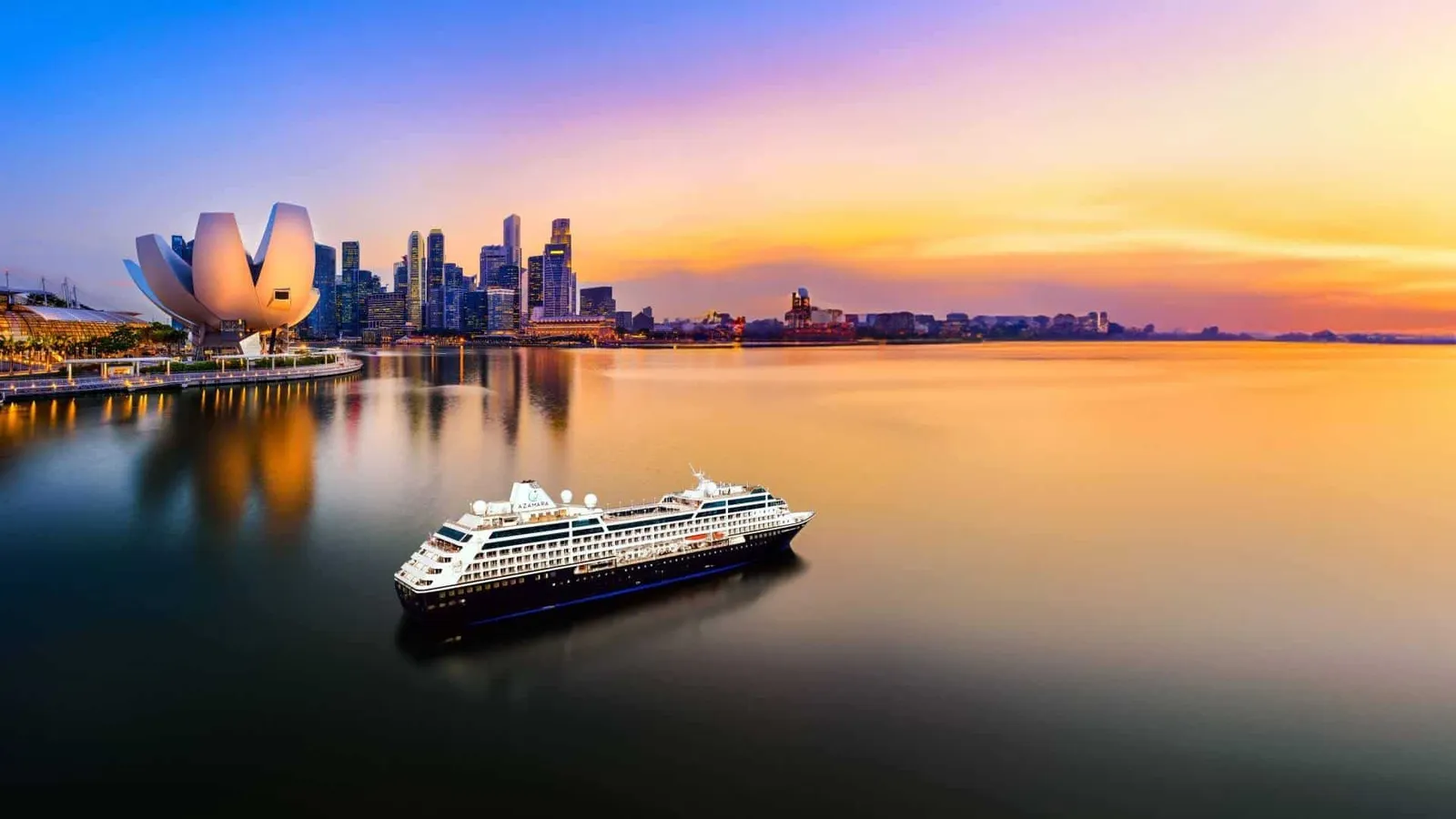
Oceania operates four ships (five with Allura arriving in 2025): Marina (2011, 1,250 guests), Riviera (2012, 1,250 guests), Regatta (1998, 684 guests), and Insignia (1998, 684 guests). The O-class ships are the flagships with the full ten-venue dining programme. The R-class ships are more intimate with fewer restaurants but charm and character from decades of refined service. All four ships focus on classic ocean itineraries — no expedition capability, no Zodiacs, no ice-class ratings. Oceania maintains one of the most prolific Mediterranean programmes of any luxury line, with over 230 cruises per season in the region alone.
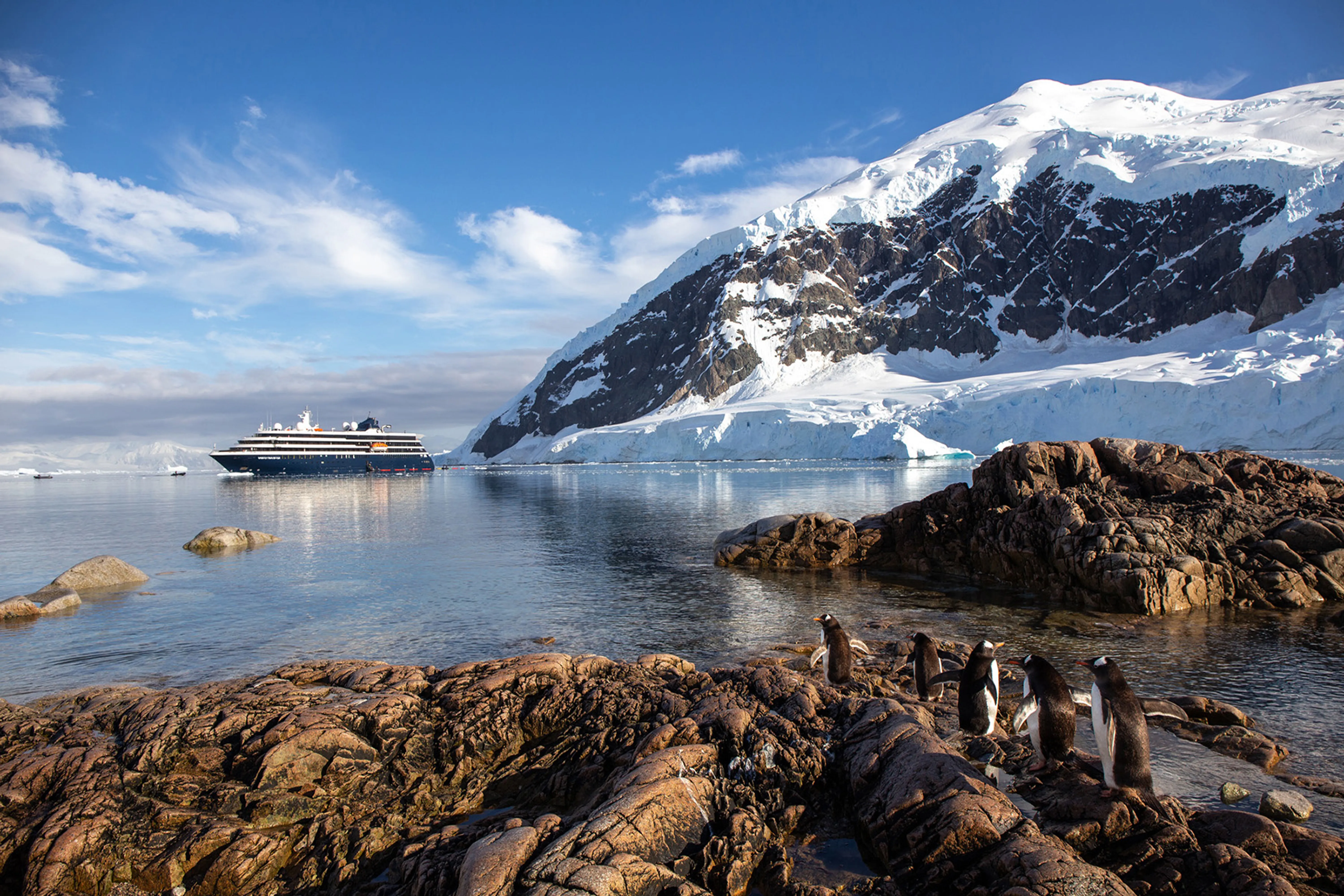
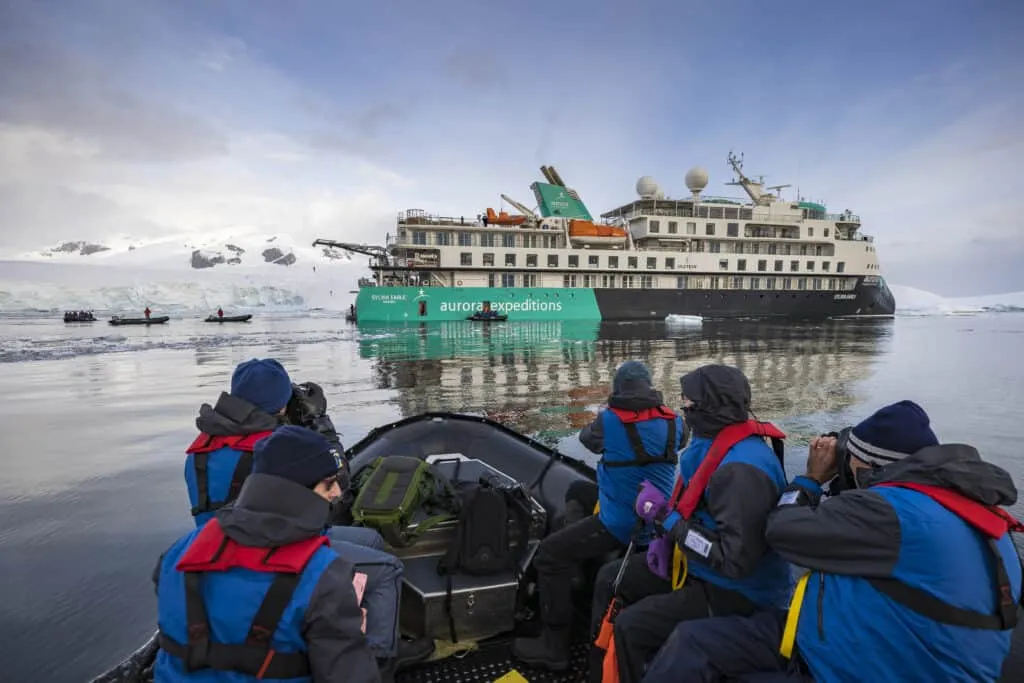
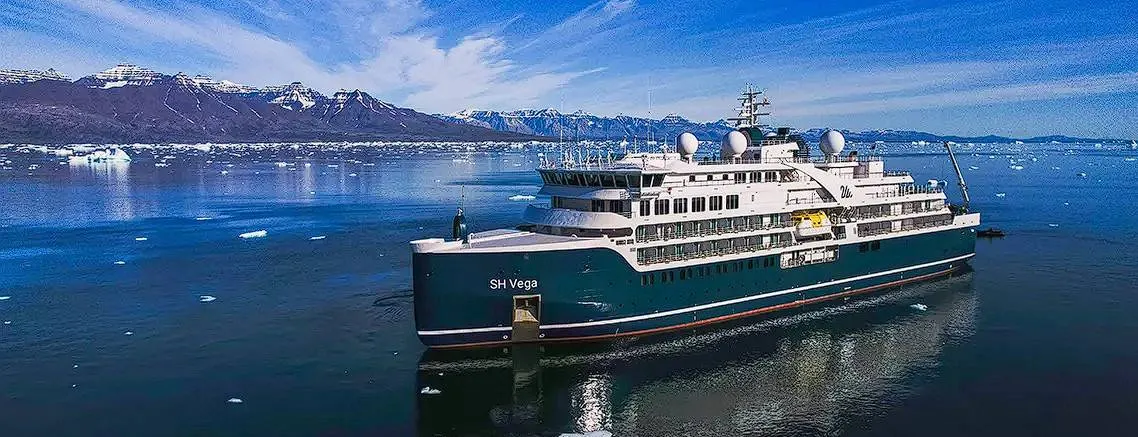
Swan Hellenic operates three purpose-built expedition ships. SH Minerva (2021) and SH Vega (2022) are sister ships — 115 metres, 10,500 gross tonnes, PC5 ice class, 76 staterooms, 152 guests maximum. SH Diana (2023) is the slightly larger flagship — 125 metres, 12,100 gross tonnes, PC6 ice class, 96 staterooms, 192 guests maximum. All three were built at Helsinki Shipyard, which specialises in icebreakers and ice-class vessels, and feature diesel-electric hybrid propulsion for reduced emissions. Each carries a full Zodiac fleet for expedition landings, dedicated tender boats on SH Diana for shore transfers, an onboard science laboratory, a library curated for each itinerary, and the Basecamp expedition hub. The crew-to-passenger ratio of 0.8 is among the highest in the cruise industry — 120 to 140 crew for 152 to 192 guests.
Swan Hellenic’s fleet deploys simultaneously across the Mediterranean, Antarctica, the Arctic, Asia-Pacific, West Africa, South America, and the British Isles. The 2025–2026 Antarctic season runs twelve cultural expedition cruises. The inaugural 2026 Asia-Pacific season covers the Solomon Islands, Papua New Guinea, Indonesia, the Philippines, and Japan. West Africa grand voyages span thirty-five to fifty-one nights. The fleet breadth relative to its size is remarkable — three ships covering more distinct regions simultaneously than many lines with ten.
For Australian travellers, Swan Hellenic’s fleet offers itinerary uniqueness — destinations that no Oceania ship can reach, from the volcanic caldera of Garove Island to the coral gardens of Raja Ampat. Oceania counters with reliability, consistency, and the depth of a focused fleet where every ship delivers a known culinary product across the world’s most popular cruise regions.
Where each line excels
Oceania excels in:
- Mediterranean depth. Over 230 cruises per season across the region, with itineraries from seven to fifty-six nights and frequent overnight port stays in Barcelona, Istanbul, and Monte Carlo. The mid-size O-class ships access most major and secondary ports.
- Culinary breadth. Ten complimentary dining venues spanning more cuisines than any other luxury line. The Culinary Center’s professional teaching kitchen has no equivalent on Swan Hellenic.
- Classic ocean cruising. If your ideal holiday involves sea days, multiple restaurant choices, in-stateroom dining, and relaxed evenings without expedition briefings, Oceania delivers the definitive upper-premium experience.
- Value positioning. The lowest per-diem of any luxury line with this calibre of dining — consistently cited as the best value in the segment for food-motivated travellers.
- Loyalty pathway. Club membership integrates with Norwegian Cruise Line Holdings. Status earned on Norwegian or Regent is recognised on Oceania, creating a clear path from premium to ultra-luxury.
Swan Hellenic excels in:
- Cultural expedition access. Three ice-class ships reaching Antarctica, the Arctic, Papua New Guinea, Raja Ampat, the Solomon Islands, West Africa, and the British Isles. No Oceania ship can visit any of these destinations.
- Intellectual enrichment. Twelve to fifteen expedition specialists per voyage, SETI Institute scientists on ten 2026 sailings, and a lecture programme directly integrated with each itinerary. The enrichment is not supplementary — it is the product.
- All-inclusive simplicity. One fare covers everything: open bar, all excursions, Zodiac landings, gratuities, Wi-Fi, pre-cruise hotel, and transfers. Almost nothing goes on the onboard account.
- Asia-Pacific debut. The 2026 season brings SH Minerva to Papua New Guinea, Indonesia, the Philippines, and Japan — with charter flights from Brisbane and Cruise Plus packages designed specifically for Australian travellers.
- Intimate scale. With 152 to 192 guests, Swan Hellenic ships create a level of intimacy that Oceania’s 684 to 1,250-guest vessels cannot replicate. The captain and expedition leaders are visible daily, often dining with guests.
Standout itineraries for Australian travellers
Oceania
Riviera: Outback to Verdant Bali (14 nights, Sydney to Bali, February 2026) — Oceania’s Australian season sailing. Departs Sydney via Brisbane, Whitsunday Island, Cairns, Cooktown, and Darwin to Bali. No international flights needed for the departure. Ten dining venues, Country Club Casual atmosphere, and the Jacques Pépin culinary programme throughout.
Riviera: South Pacific Archipelagos (19 nights, Sydney to Papeete, December 2025) — A rare luxury line deployment from Sydney through the South Pacific, visiting Noumea, Mystery Island, Lautoka, Suva, Nuku’alofa, Vava’u, Apia, Pago Pago, Rarotonga, Bora Bora, Huahine, and Moorea. The O-class dining programme across nineteen nights allows proper exploration of all ten restaurants.
Riviera: Mediterranean Grand Voyage (28–42 nights, multiple segments combinable) — The best Oceania experience for food-motivated Australians. Sea days between Mediterranean ports allow lingering dinners across every restaurant. Included Wi-Fi, gratuities, and laundry make extended voyages financially practical. Fly from Australian gateways via Emirates, Singapore Airlines, or Qantas.
Swan Hellenic
SH Minerva: Wild Eden of Papua New Guinea (13 nights, Honiara to Jayapura, April 2026) — Swan Hellenic’s inaugural Asia-Pacific sailing. Charter flight from Brisbane to Honiara included in the Cruise Plus package, along with a Brisbane hotel night and all transfers. Explore WWII history in the Solomon Islands, volcanic landscapes of Rabaul, coral gardens of Kimbe Bay, and Sepik River cultural communities. Twelve expedition specialists onboard.
SH Minerva: Philippines to Japan Cultural Discovery (11 nights, Manila to Hiroshima, May 2026) — From the Hundred Islands National Park and historic Vigan through the windswept Batanes Islands to the Kerama Archipelago, Amami Oshima, and Kagoshima. Offered as Cruise Only with easy connections via scheduled flights from Australian capitals.
SH Minerva: 55-Day Asia-Pacific Grand Voyage (Honiara to Otaru, April–May 2026) — All five Asia-Pacific itineraries linked seamlessly into a single grand voyage. No port visited twice. Solomon Islands, Papua New Guinea, Raja Ampat, the Philippines, and the length of Japan from south to north. For the most ambitious Australian cultural expedition traveller, this is the defining voyage of the season.
SH Vega or SH Diana: Antarctica (9–13 nights, roundtrip Ushuaia, November 2026–March 2027) — Twenty-four Antarctic voyages for the 2026–2027 season, including the 18-night “In Shackleton’s Footsteps” expedition combining Antarctica, South Georgia, and the Falkland Islands. Expert-led snowshoeing expeditions are a new feature for the season. Fly from Sydney or Melbourne to Buenos Aires, then onward to Ushuaia.
Ship-by-ship recommendations
Oceania
Riviera or Marina (1,250 guests, 2012/2011) — The flagship experience with all ten dining venues, the Culinary Center, Canyon Ranch SpaClub, and the La Reserve wine experience. Start here for the definitive Oceania voyage. Riviera is deployed to Australian waters for 2025–2026 — the easiest entry point for Australians seeking the full O-class experience without a long-haul flight to Europe.
Regatta or Insignia (684 guests, 1998) — The most intimate Oceania ships. Fewer dining venues than O-class but a devoted following. Best suited to travellers who want a smaller ship with Oceania’s culinary standards. The South Pacific and Asia deployments suit the more compact format well.
Allura (approximately 1,200 guests, arriving 2025) — The newest ship, bringing the O-class experience with potential design updates. Worth watching for introductory pricing and early-season deployment announcements.
Swan Hellenic
SH Minerva (152 guests, 2021) — The flagship for the inaugural Asia-Pacific season and the ship most relevant to Australian travellers in 2026. PC5 ice class, Zodiac fleet, science laboratory, and the full Maris culinary programme. Launching from the Solomon Islands in April 2026 with Brisbane charter flight connections. After a three-year absence due to Russian sanctions-related complications with her original leasing arrangement, SH Minerva was reacquired in July 2025 using shareholders’ funds, fully refurbished, and returned to service for the 2025–2026 Antarctic season before pivoting to Asia-Pacific.
SH Diana (192 guests, 2023) — The newest and largest of the three ships, with forty additional guests over the sister ships, dedicated tender boats alongside the Zodiac fleet, a slightly larger spa, and Junior Suites not available on Minerva or Vega. PC6 ice class makes her equally capable in all but the most extreme polar conditions. Deployed primarily to Antarctica and the Mediterranean.
SH Vega (152 guests, 2022) — Sister ship to Minerva with identical specifications and cabin layout. Deployed across Antarctica, the Arctic, and South America. The ship for SETI Institute “Explore Space at Sea” voyages in 2026, with NASA-affiliated scientists onboard for sailings to Chile, Peru, Iceland, and Greenland.
For Australian travellers specifically
Both lines maintain Australian offices and actively court the Australian market, but the nature and depth of their presence differs.
Oceania’s Australian presence operates through the Norwegian Cruise Line Holdings Sydney office (Level 12, 44 Market Street, Sydney NSW 2000; 1300 355 200). Riviera’s Australian debut for 2025–2026 signals growing commitment to the market, with Sydney as the primary embarkation port and itineraries to New Zealand, Bali, the South Pacific, and Papua New Guinea. Oceania’s strength for Australian long-haul travellers remains its Mediterranean programme — over 230 cruises per season, accessible via Qantas, Emirates, or Singapore Airlines from Australian gateways. The line’s adults-only policy (eighteen and above for new bookings) resonates with the demographic most likely to choose Oceania from Australia.
Swan Hellenic’s Australian operation is based at Suite 14b, Level 1, 123 Clarence Street, Sydney NSW 2000. CEO Andrea Zito — who received the Seatrade Cruise Personality of the Year award at Seatrade Europe 2025 — has spoken at CLIA Australasia events and publicly stated that the Australian market is a key growth priority. The inaugural 2026 Asia-Pacific season is designed with Australian travellers in mind: Cruise Plus packages depart from Brisbane with charter flights to Honiara and post-cruise connections to Bali; Easter school holiday dates are offered for family sailings; and the twelve itineraries cover destinations within the Australian time zone and travel radius — Papua New Guinea, the Solomon Islands, Raja Ampat, Indonesia, the Philippines, Japan, and Korea. Swan Hellenic has described Australia as one of its fastest-growing markets, with Australians appreciating the relaxed onboard environment and cultural mix of guests.
The loyalty pathway matters differently. Oceania’s Club integrates with Norwegian Cruise Line Holdings — status earned on Norwegian or Regent carries to Oceania and vice versa. For Australians building toward ultra-luxury, Oceania is the stepping stone to Regent Seven Seas (same parent company). Swan Hellenic offers a five per cent repeat guest discount and group travel benefits (starting from eight guests), but does not currently operate a formal tiered loyalty programme. For Australians who value loyalty structures, Oceania has the clear advantage. For those who prioritise the experience over points, Swan Hellenic’s product speaks for itself.
A note on reliability. Swan Hellenic’s ambitious relaunch has not been without complications. The SH Minerva was laid up for three years due to Russian sanctions-related legal entanglements — a situation resolved in mid-2025. Some travellers on forums and review sites have reported voyage cancellations and itinerary changes, particularly on newer or first-time routes. Trustpilot reviews are predominantly positive, but a small number cite cancellations at short notice and inconsistent customer service responses. Oceania, backed by the financial stability and operational scale of Norwegian Cruise Line Holdings, offers greater scheduling certainty. This is worth weighing for Australian travellers booking twelve or more months in advance, particularly on Swan Hellenic’s newer itineraries.
The onboard atmosphere
These two lines feel as different as their itineraries suggest — and choosing correctly on atmosphere matters as much as choosing correctly on destination.
Oceania’s atmosphere is the Country Club. The passenger base averages mid-sixties, predominantly American and Canadian with growing Australian representation on southern hemisphere sailings. The dress code is permanently Country Club Casual — slacks, polo shirts, sundresses. No formal nights, no jackets required, no gala evenings. The evening energy is conversational and quiet: a jazz trio in the Martini Bar, aperitifs in the library, a lingering dinner in Jacques. Service is warm and efficient rather than ceremonial. The mid-size format (684 to 1,250 guests) means you see familiar faces without feeling crowded. There is a casino. The cultural vibe is comfortable, American, and food-obsessed.
Swan Hellenic’s atmosphere is the Expedition Club. With never more than 192 guests — and typically 152 — the intimacy is profound. The captain is visible daily; expedition leaders dine with guests; the naturalist who briefed on whale migration that morning is sitting across from you at dinner. The passenger mix is international — British, European, Australian, and North American — with a shared characteristic of intellectual curiosity. Guests choose Swan Hellenic because they want to learn, not just to travel. The average age is sixty and above, though the Asia-Pacific sailings with Easter school holiday dates are expected to attract a broader range. The dress code is casual throughout — expedition gear during the day, casually elegant in the evening. No formal nights, no enforced glamour. The pace is contemplative, the ship is quiet, and the focus is decidedly intellectual. Evenings feature conversation over drinks in the Observation Lounge, a quiz or movie night, or stargazing from the open deck in polar latitudes. The Cruise Critic rating of 4.7 reflects a guest base that overwhelmingly finds what they came for.
For English-speaking Australians, Swan Hellenic presents no language barrier — unlike some European expedition competitors, the onboard language is English throughout, with an internationally diverse crew that also speaks Spanish, Portuguese, German, Italian, and French. The cultural dynamic is cosmopolitan rather than nationally defined.
The bottom line
Oceania and Swan Hellenic serve different traveller motivations, operate in different market segments, and rarely compete head-to-head on itinerary — but for Australians deciding between them, the choice clarifies around a single question: what kind of holiday do you want?
Choose Oceania for the finest culinary cruise experience at a competitive per-diem. Choose it for ten dining venues, a professional cooking school, classic Mediterranean and world itineraries, and a relaxed English-speaking atmosphere where the food is the event. Choose it for larger staterooms, the Canyon Ranch spa partnership, and the straightforward value of included dining and gratuities. Choose it for the loyalty pathway to Regent Seven Seas and the financial stability of Norwegian Cruise Line Holdings. Accept that the fleet has no expedition capability, that alcoholic drinks require the beverage amenity selection or a purchased package, and that the evening entertainment is deliberately understated.
Choose Swan Hellenic for genuine cultural expedition access — Antarctica from Ushuaia, Papua New Guinea from Brisbane, the Arctic from northern Europe, and West Africa from Cape Town. Choose it for intimate ships carrying 152 to 192 guests, a fully all-inclusive fare that covers the open bar, all excursions, gratuities, and a pre-cruise hotel, and an intellectual enrichment programme featuring historians, naturalists, SETI scientists, and cultural experts. Choose it for the heritage of a brand that pioneered expedition cruising in the 1950s, now reborn with purpose-built ice-class ships and a CEO recognised as the cruise industry’s personality of the year. Accept that the fleet is small and young, that some scheduling uncertainty has affected newer itineraries, that cabins are more compact than Oceania’s, and that evening programming is quiet by design.
For many Australian travellers, these lines complement rather than compete. An Oceania Mediterranean culinary voyage followed by a Swan Hellenic Papua New Guinea expedition is not an unusual combination — and it delivers the best of both worlds. Oceania feeds the palate. Swan Hellenic feeds the mind. Together, they represent two of the most compelling propositions for Australian travellers in 2026.