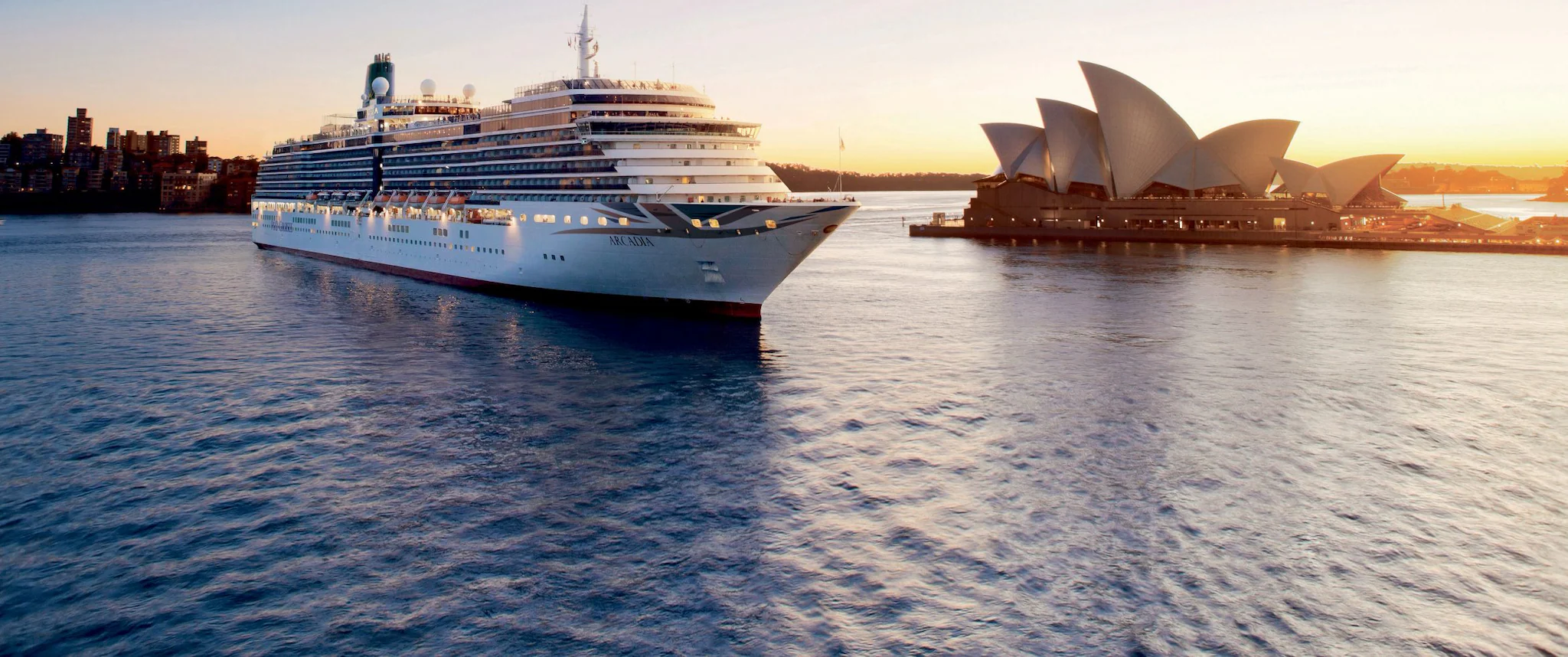
P&O Cruises and Princess Cruises are sister companies under Carnival Corporation with a shared maritime heritage stretching back decades — yet one sails exclusively from Britain while the other deploys ships to five Australian ports. Jake Hower unpacks the dining, inclusions, fleet, and the critical question of accessibility for Australian travellers.
| P&O Cruises | Princess Cruises | |
|---|---|---|
| Category | Premium | Premium |
| Rating | ★★★★☆ | ★★★★☆ |
| Fleet size | 7 ships | 17 ships |
| Ship size | Large (2,500-4,000) | Large (2,500-4,000) |
| Destinations | Caribbean, Mediterranean, Norwegian Fjords, Canary Islands | Caribbean, Alaska, Mediterranean, South Pacific |
| Dress code | Smart casual | Smart casual |
| Best for | British holiday-makers and families | Multi-generational and couples cruisers |
Princess Cruises is the overwhelmingly practical choice for Australian travellers. It sails from Sydney, Melbourne, Brisbane, Fremantle, and Adelaide, prices in AUD, deploys three ships for the 2026/27 season, and has maintained a continuous Australian presence since 1975. The MedallionClass technology is industry-leading, Curtis Stone brings genuine Australian culinary credibility, and the Princess Plus and Premier packages bundle strong value. P&O Cruises UK appeals to a niche but rewarding audience: Australians planning a UK holiday who want a relaxed, entertainment-forward cruise from Southampton at accessible pricing, those drawn to the unique adults-only experience of Arcadia or Aurora, or long-voyage enthusiasts who can join a world cruise segment through Australian waters. Both lines deliver solid mainstream-premium cruising from the same corporate family, but geography settles the contest for most Australians — and Princess wins that contest decisively.
The core difference
P&O Cruises and Princess Cruises are corporate siblings — both owned by Carnival Corporation, the world’s largest cruise company. Their histories are even more deeply intertwined than that shared parent suggests. P&O Princess Cruises merged with Carnival Corporation on 17 April 2003 in a US$5.4 billion deal, and the two brands have sailed under the same corporate umbrella ever since. Yet step aboard Iona in Southampton and then Sun Princess in Sydney, and you will find two fundamentally different cruise experiences serving two fundamentally different markets.
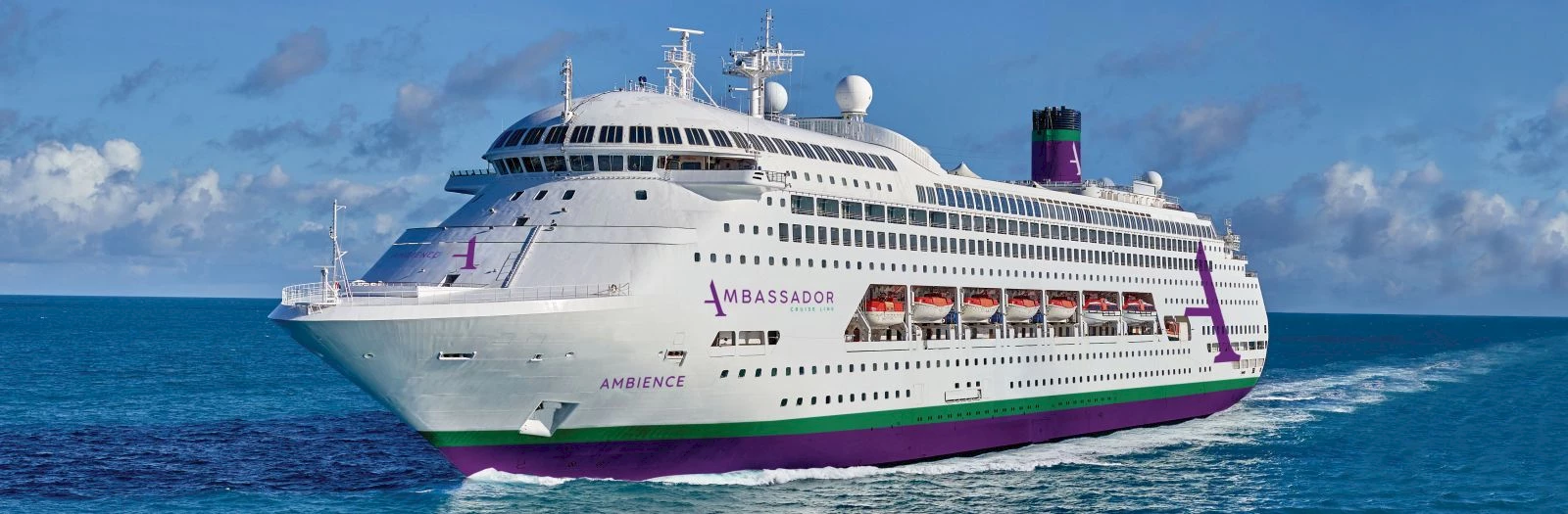
P&O Cruises is Britain’s favourite cruise line — unapologetically, explicitly, and proudly British. Headquartered at Carnival House in Southampton, it traces its heritage to 1837 when Brodie McGhie Willcox, Arthur Anderson, and Captain Richard Bourne won a contract to carry mail from England to the Iberian Peninsula. It claims to be the oldest cruise line in the world. The fleet of seven ships sails exclusively from Southampton, the entertainment features British comedians and West End-style shows, the dining programme is led by Marco Pierre White and Michelin-starred Atul Kochhar, afternoon tea is a daily ritual, pub quizzes run nightly, and the passenger base is estimated at 90 to 99 per cent British. P&O does not advertise outside the United Kingdom. It does not need to.
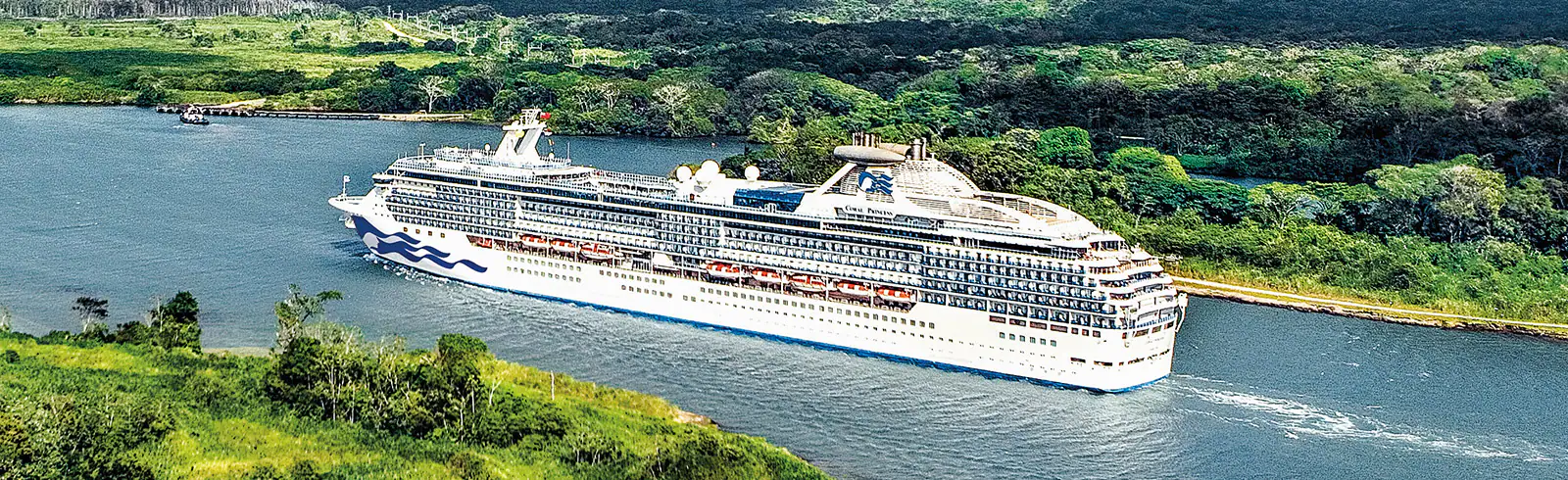
Princess Cruises is a genuinely global brand. Founded in 1965 by Stanley McDonald with a single chartered ship on the Mexican Riviera, Princess rose to household-name status through The Love Boat television series (ABC, 1977-1986) and has since built a fleet of 17 ships sailing every ocean on earth. Princess positions itself as “the world’s number one premium international cruise line” and markets aggressively across North America, Australia, Asia, and Europe. The fleet ranges from the intimate 2,000-guest Coral Princess to the 4,310-guest Sun Princess and Star Princess — the brand’s newest Sphere-class flagships, both powered by liquefied natural gas.
A critical clarification for Australian readers: P&O Cruises Australia — the brand many Australians sailed with for decades — was a completely separate entity to P&O Cruises UK, despite sharing the P&O name and Carnival Corporation ownership. P&O Cruises Australia ceased operations in March 2025. Its ships — Pacific Adventure, Pacific Encounter, and Pacific Explorer — were either absorbed into Carnival Cruise Line or sold. P&O Cruises UK had no involvement in the Australian brand’s operations and is not its replacement. Throughout this article, “P&O” refers exclusively to the UK-based line headquartered in Southampton.
What is actually included
The inclusion models differ in ways that affect your daily budget, and this is where the comparison gets interesting.
P&O includes gratuities in the ticket price. This has been the case since 2019 and is a genuine differentiator. When you see a P&O fare, the service charge is already factored in — there will be no unexpected line item on your onboard account. Breakfast room service is complimentary. All main meals — breakfast, lunch, dinner, and afternoon tea — are included across the main dining rooms and buffet. Entertainment, kids’ clubs (The Reef on family ships), and self-service laundrettes with free washing machines and dryers are all part of the fare.
P&O launched its first-ever all-inclusive packages in December 2025 for sailings from March 2026 onwards. The Classic Package starts from GBP 49 per person per day and bundles a drinks package (beers, wines, spirits, cocktails, Costa coffee), essential Wi-Fi for one device, and up to GBP 55 in speciality dining credit. The Deluxe Package at GBP 59 per person per day upgrades to premium drinks, unrestricted Wi-Fi including video streaming, and up to GBP 80 in speciality dining credit. These packages represent approximately 32 to 34 per cent savings versus purchasing each element separately — a meaningful new option for P&O guests who previously had to budget for drinks and connectivity as extras.
Princess does not include gratuities in the base fare. Crew appreciation is charged at US$17 per person per day for standard staterooms, rising to US$19 for suites. The base fare covers accommodation, main dining room meals, buffet, quick-service venues (including Alfredo’s Pizzeria and poolside grills), entertainment, and fitness centre access.
Princess’s value proposition centres on two optional packages. Princess Plus at US$65 per person per day (US$70 on Sphere-class ships) includes a beverage package covering drinks up to US$15 each, single-device Wi-Fi, four casual dining meals per voyage, waived room service delivery fees, and — crucially — gratuities. Princess Premier at US$100 per person per day (US$105 on Sphere-class) is the more comprehensive bundle: unlimited premium beverages, unlimited speciality and casual dining, four-device Wi-Fi, unlimited digital professional photos, reserved show seating, gratuities, and shore excursion credits ranging from US$100 to US$300 depending on voyage length.
The practical effect is that P&O’s base fare is more complete out of the box — you board knowing that gratuities are settled and meals are covered. Princess’s base fare is leaner but the Plus and Premier packages, when they suit your spending habits, bundle genuine value. For a guest who would otherwise spend on drinks, Wi-Fi, speciality dining, and gratuities separately, Princess Premier in particular can deliver meaningful savings. The key is understanding what you actually use.
Dining and culinary experience
Both lines invest heavily in their food programmes, but the culinary identities could hardly be more different — one is distinctly British, the other deliberately international, with an Australian headliner who resonates strongly with local travellers.
P&O’s dining is built around celebrity chef partnerships that are uniquely British. Marco Pierre White — the enfant terrible of British gastronomy, the youngest chef to win three Michelin stars — designs menus for the main dining rooms fleet-wide. His influence extends to dedicated restaurants: the White Steakhouse concept, The Cookery Club on Britannia and Iona (a state-of-the-art teaching kitchen where passengers participate in hands-on workshops), and Ocean Grill on Arcadia. On Food Hero sailings, White appears in person for masterclasses, Q&A sessions, book signings, and Chef’s Table dining experiences. Michelin-starred Atul Kochhar created Sindhu — a restaurant blending Indian spice with European technique that appears across the fleet — and East, a pan-Asian fusion concept on Iona and Arvia drawing on Chinese, Thai, and Indonesian influences. Wine expert Olly Smith curates The Glass House wine bar programme, hosting tastings on select sailings. Spanish chef Jose Pizarro and Nordic chef Kjartan Skjelde make guest appearances.
The included dining on P&O covers four main dining rooms on Iona (Coral, Opal, Aqua, Pearl), The Quays Food Hall with street-food counters (fish and chips, Asian fusion, roast carvery), the Market Cafe buffet, and afternoon tea. Speciality venues carry surcharges: Epicurean fine dining at GBP 29 to 35, Sindhu at GBP 20 to 25, East at approximately GBP 20, The Keel and Cow steakhouse at GBP 25 to 30, and The Olive Grove Mediterranean at GBP 15 to 20.
Princess’s dining programme features Curtis Stone — an Australian celebrity chef whose presence carries genuine resonance for local travellers. Born in Melbourne, Stone has built a global culinary reputation, and his SHARE restaurant serves contemporary small-plates dining designed for communal enjoyment. Critically, Stone also redesigned the main dining room menus fleet-wide, bringing his signature fresh, seasonal approach to every voyage. This means every Princess guest — not just those paying speciality surcharges — benefits from his influence.
The signature Crown Grill is Princess’s premium steakhouse: USDA-certified Black Angus beef, fresh seafood, rich mahogany decor, and craft cocktails. Sabatini’s Italian Trattoria has been a Princess institution for years, serving handmade pasta and family-style Italian. On the Sphere-class ships, dining expands dramatically — Sun Princess and Star Princess offer up to 29 dining and bar venues, including Umai Teppanyaki and Hot Pot (the first Japanese steakhouse on Princess), Makoto Ocean modern sushi, Love by Britto (pop art-themed fine dining), and The Butcher’s Block by Dario, named after legendary Tuscan butcher Dario Cecchini. The Chef’s Table Lumiere experience at US$95 to $115 per person delivers a multi-course tasting menu with wine pairing.
Princess’s “Dine My Way” programme also deserves mention — it replaces rigid first and second seating with flexible options including fixed seating, reservable dining, or walk-in dining each evening. Platinum and Elite Captain’s Circle members receive early access to reservations.
The distinction is clear: P&O’s culinary identity is proudly British, anchored by celebrity chefs who are household names in the UK. Princess’s dining is more internationally oriented, with an Australian chef at its centre and a broader range of global cuisines across more venues on its newer ships. For Australian travellers, Curtis Stone’s involvement with Princess creates a culinary connection that P&O’s British roster, however talented, cannot replicate.
Suites and accommodation
Both lines offer a range of cabin categories from inside staterooms to penthouse suites, but the newer ships on each fleet have introduced distinctive accommodation concepts.
P&O’s accommodation across seven ships ranges from inside cabins at 101 to 213 square feet up to Penthouse Suites on Aurora, Azura, and Ventura at up to 937 square feet including balcony. A common complaint on P&O’s newest ships — Iona and Arvia — is that balcony cabins run smaller than on the older fleet. Standard balcony staterooms on the Excel-class ships measure approximately 142 to 279 square feet including the balcony, which is tight for 5,200-guest vessels.
P&O’s most interesting cabin innovation is the Conservatory Mini Suite on Iona and Arvia — approximately 274 square feet with bi-folding doors (not sliding) that fully open to the balcony, creating an indoor-outdoor living concept. Family Sea View Suites at approximately 530 square feet sleep up to four guests. All P&O suite categories receive butler service, priority embarkation, complimentary room service from the main dining room menu at all times, champagne on arrival, whirlpool bath in most suites, and exclusive Epicurean Restaurant breakfast access.
Princess offers a wider accommodation range across its 17-ship fleet. Interior staterooms run 150 to 190 square feet. Standard balcony cabins on Royal and Sphere-class ships measure approximately 222 square feet total (181 square feet interior plus 41 square feet balcony). Mini-suites at 299 to 329 square feet add a separate sitting area and walk-in closet.
Princess’s standout accommodation innovations sit at the top end. The Sky Suites on Royal-class ships (Sky Princess, Enchanted Princess, Discovery Princess) offer 1,792 square feet total with a 1,000-square-foot wraparound balcony providing 270-degree views — among the most dramatic suite balconies in the cruise industry. On Sphere-class ships, the Signature Sky Suites measure 1,262 square feet. The Sanctuary Collection on Sun Princess and Star Princess creates a genuine ship-within-a-ship: dedicated Sanctuary Restaurant, exclusive adults-only Sanctuary Club pool deck, and curated amenities and services reserved for guests in this tier. Cabana Mini-Suites, exclusive to the Sphere-class ships, introduce a private indoor-outdoor cabana area between the cabin and balcony — a category that does not exist on any other line.
Princess’s Reserve Collection Mini-Suites (formerly Club Class) occupy the best midship locations and include an exclusive dining room section with dedicated wait staff, an expanded menu, priority boarding, and complimentary wine on embarkation day. This creates a meaningful upgrade path between standard accommodation and full suites.
For travellers who care about suite innovation and top-tier accommodation, Princess has the edge — particularly on its newer ships. P&O’s suites are comfortable and well-appointed, but the Sky Suites and Sanctuary Collection represent a level of premium accommodation that P&O does not attempt.
Pricing and value
Comparing fares between these two lines requires careful context, because the currencies, departure ports, and inclusion models make direct headline comparisons misleading.
P&O is generally the cheaper option on paper. A seven-night Norwegian Fjords cruise from Southampton on Britannia starts from approximately GBP 752 per person for an inside cabin (GBP 107 per night) and GBP 915 per person for a balcony (GBP 131 per night) at Early Saver rates. A 14-night Spain, Portugal, and Canary Islands roundtrip from Southampton on Ventura starts from approximately GBP 1,099 per person for an inside (GBP 79 per night). Longer voyages drive per-diems lower — Arcadia’s 100-night world cruise started from approximately GBP 10,780 per person (GBP 108 per night).
Princess’s directional pricing for comparable itineraries runs higher. A seven-night Mediterranean cruise runs approximately US$120 to 170 per person per night for an inside cabin and US$180 to 280 for a balcony. On Sphere-class ships, add a further 10 to 20 per cent premium. Adding Princess Plus at US$65 per day or Premier at US$100 per day increases the effective daily cost substantially — a seven-night Mediterranean balcony with Premier would run approximately US$280 to 380 per person per night all-in.
However, for Australian travellers, the pricing comparison inverts. P&O’s fares are quoted in GBP only, and every P&O sailing departs from the United Kingdom. An Australian booking a P&O cruise must factor in return flights to London or Southampton (typically AU$2,000 to $3,500 per person), accommodation before and after the cruise, and currency conversion from Australian dollars to sterling. These additional costs can add AU$5,000 to $8,000 per person before you even board the ship.
Princess, by contrast, sails from five Australian ports. Fares are quoted in AUD on the dedicated Australian website. There are no international flights required. No hotel nights before embarkation. No currency conversion anxiety. When the total trip cost is calculated — including flights to reach the ship — a Princess cruise departing from Sydney is almost always more affordable for an Australian than a P&O cruise departing from Southampton, even though P&O’s headline fare is lower. This is the single most important pricing consideration for readers of this article.
Spa and wellness
Both lines operate spa facilities across their fleets, following the standard cruise industry model of complimentary gym access with paid treatments and premium wellness spaces.
P&O’s Oasis Spa is largest on the Excel-class ships Iona and Arvia, spanning two decks. The Thermal Suite features heated loungers, a sauna, a sensory steam room with salt brine solution, experiential showers, and a hydrotherapy pool with massaging jets and air recliners. Day passes run GBP 39, with weekly passes at GBP 129. The Retreat is a separate adults-only outdoor wellness area on Deck 18 of Iona and Arvia — two infinity whirlpools with uninterrupted sea views, private cabanas, day beds, hammocks, and complimentary smoothies and fruit platters. The Retreat charges GBP 40 per day or GBP 145 for a seven-night pass. Treatment pricing is competitive for the cruise industry — a Swedish massage runs GBP 89 to 189 depending on duration, an ELEMIS Superfood Pro-Radiance Facial costs GBP 99 for 50 minutes. The gym is complimentary with floor-to-ceiling ocean windows, free meditation and HIIT classes, and paid yoga, Pilates, and spin classes at GBP 14 to 15 per session.
Princess’s Lotus Spa is operated by OneSpaWorld across all 17 ships. On Sphere-class ships, the spa is triple the size of any previous Lotus Spa, with approximately 25 treatment rooms. The Enclave thermal suite features a hydrotherapy pool, cascading rain shower, heated stone and water beds, aroma infusions, steam rooms, and saunas — on Royal Princess, this extends to include a Hammam, Caldarium, and Laconium. Pool facilities on Sphere-class ships are notably extensive: the main pool, adults-only pool, Retreat Pool exclusive to Sanctuary Collection guests, and the Wake Pool — an aft infinity-style pool.
The Sanctuary on Princess deserves specific mention as a wellness-adjacent offering. This adults-only retreat on every ship’s open deck provides plush lounge furniture, cabanas, dedicated Serenity Stewards for food and drink service, soothing music, and aromatherapy at US$20 for a half day or US$40 for a full day. On Sphere-class ships, The Sanctuary Collection elevates this into a full accommodation category with exclusive restaurant and pool deck.
Princess also offers medi-spa services not available on P&O — Botox, dermal fillers, teeth whitening, acupuncture, and detox programmes — appealing to guests seeking cosmetic treatments alongside traditional relaxation.
Both lines charge for their premium thermal suite spaces and most spa treatments. Neither includes complimentary spa access in the base fare — a point worth noting for travellers comparing to lines like Viking, which includes thermal suite access for every guest.
Entertainment and enrichment
The entertainment philosophies reflect the broader cultural positioning of each line — one is British through to its bones, the other is designed for a global audience.
P&O’s entertainment is distinctive because it is so unapologetically British. The headline venue is SkyDome on Iona and Arvia — a retractable glass-roofed entertainment space on Decks 16 and 17 that functions as a relaxed poolside area by day and transforms into a spectacular performance venue at night with aerial acrobatics, immersive shows, DJ-led deck parties, and open-air cinema via the SeaScreen. SkyDome is unique to P&O and has no equivalent on Princess or any other cruise line — it is genuinely one of the most innovative entertainment spaces at sea.
The 710 Club on Iona and Arvia is an intimate live-music venue curated by Gary Barlow of Take That — low-lit, vintage-style, with craft cocktails and atmospheric performances. Arvia hosts “Greatest Days — The Official Take That Musical,” an exclusive stage adaptation of the West End show featuring Take That songs and written by Olivier Award-winning writer Tim Firth. The Headliners Theatre across the fleet delivers West End-style production shows, musical tributes, and comedy nights featuring well-known UK comedians. The Cookery Club on Britannia and Iona offers hands-on cooking workshops guided by professional chefs under Marco Pierre White’s patronage. Escape room Mission Control, silent discos, variety acts, and cinema screenings round out the programme.
The character of P&O entertainment is important context: this is entertainment designed for a British audience. UK comedians, British musical tributes, pub quizzes, and cricket references will feel familiar and charming to Anglophile Australians but may feel culturally specific to those expecting a more international programme.
Princess invests in technologically advanced entertainment designed for global appeal. The Princess Arena on Sun Princess and Star Princess is a next-generation theatre with three configurations — in-the-round, 270-degree keyhole, and traditional proscenium — capable of seating up to 980 guests for Broadway-calibre productions. Princess produces over 35 different award-winning production shows performed in English, Spanish, Latin, and American Sign Language. The Dome on Sphere-class ships is a glass-enclosed space above the bridge that transforms from a daytime relaxation lounge into a tiered nighttime entertainment arena hosting Cirque Eloize aerialist and acrobat performances — conceptually similar to P&O’s SkyDome but with a different execution.
Movies Under the Stars is Princess’s signature entertainment feature — a 300-square-foot, 69,000-watt poolside LED screen showing blockbuster films, concerts, and live sporting events with complimentary popcorn and blankets. This feature is available fleet-wide and has no P&O equivalent. The Discovery at Sea partnership with Discovery Communications brings stargazing programmes, Shark Week events, nature programming, and destination-focused documentaries. Princess Live! hosts comedy, game shows, and live music. Good Spirits at Sea offers cocktail-making experiences.
For Australian travellers, Princess’s entertainment will feel more immediately accessible — it is designed for an international audience and does not require familiarity with British popular culture. P&O’s entertainment has a warmth and specificity that many Australians who enjoy British culture will appreciate, but it is entertainment made for Britons first.
Fleet and destination coverage
The fleet comparison reveals the fundamental strategic difference between these two lines: P&O concentrates seven ships on the British market from a single homeport. Princess spreads 17 ships across every major cruise region on earth.
P&O’s seven ships all sail from Southampton. This is the brand’s greatest strength for British travellers — no flights needed, drive-to-port convenience — and its greatest limitation for everyone else. The deployment covers Norwegian Fjords (April to September, one of P&O’s most popular programmes), the Mediterranean (both roundtrip from Southampton and fly-cruise options from Malta or Palma), Canary Islands and Iberia (14-night roundtrips from Southampton, a popular autumn and winter escape), the Caribbean (fly-cruise from Barbados, with Britannia and Arvia based there for the 2026-27 winter season), British Isles circumnavigations, and annual world cruises.
P&O’s Excel-class flagships Iona and Arvia are among the largest ships sailing from the UK at 184,000 gross tonnes, powered by LNG with zero sulphur dioxide emissions. The two adults-only ships, Arcadia and Aurora, offer something Princess cannot — guaranteed child-free voyages on smaller, more intimate vessels.
Princess deploys 17 ships to virtually every destination. Alaska is Princess’s spiritual home — named “Best Cruise Line in Alaska” by Travel Weekly for 21 consecutive years, with eight ships and 180 departures planned for the 2026 season. Princess holds coveted Glacier Bay National Park permits, operates its own Wilderness Lodges at Denali and the Kenai Peninsula, and runs glass-domed railcar services — advantages no other line can match in Alaska. The Caribbean programme runs year-round from Florida ports. The Mediterranean and Northern Europe programme is Princess’s largest ever for 2026. Japan receives specialist itineraries including Spring Flowers cruises timed to cherry blossom season. Asia sailings depart roundtrip from Singapore.
Most critically for this comparison, Princess maintains a significant Australian and New Zealand deployment. For the 2025-26 season, Discovery Princess and Crown Princess sailed from Sydney, Brisbane, and Hobart. For the 2026-27 season, Princess is expanding to three ships — Royal Princess, Crown Princess, and Grand Princess — sailing from five Australian homeports: Sydney, Melbourne, Brisbane, Fremantle, and Adelaide. This represents 42 itineraries and 62 departures covering New Zealand, the South Pacific, Papua New Guinea, Hawaii, Tahiti, Fiji, and Asia.
P&O has no Australian deployment. Period. Its world cruises transit through Australian waters — Arcadia’s 2026 world cruise included an overnight in Sydney — but these are port calls on longer voyages, not homeport departures.
Where each line excels
P&O excels in:
- Adults-only cruising. Arcadia and Aurora are dedicated adults-only ships — a genuinely rare offering in the mainstream-premium segment. For Australian travellers seeking a guaranteed child-free environment, P&O provides something Princess simply cannot. From December 2026, a limited number of family-friendly sailings will be offered on both ships, but the vast majority of departures remain adults-only.
- Gratuity-inclusive pricing. Having service charges built into the fare since 2019 eliminates budgeting uncertainty and appeals to Australians who find the tipping culture on American-oriented lines uncomfortable.
- SkyDome. The retractable glass-roof venue on Iona and Arvia is genuinely innovative — a space that transforms between poolside relaxation and nighttime spectacle with no equivalent on Princess or most other lines.
- British charm and character. For Australians who enjoy British culture, the atmosphere aboard P&O is immersive — afternoon tea, pub quizzes, British comedy, Marco Pierre White, Gary Barlow, and a passenger base that makes you feel like you are on a floating British holiday village.
- Southampton convenience for UK holidays. Australians planning a trip to England can add a P&O cruise from Southampton without domestic flights or complicated logistics within the UK.
Princess excels in:
- Australian accessibility. Five homeports, AUD pricing, a dedicated Australian website, three ships for 2026-27, and 50-plus years of continuous Australian presence. This is the decisive advantage for most Australian travellers.
- MedallionClass technology. The OceanMedallion wearable enables touchless boarding, keyless stateroom entry, real-time ship navigation, family locator, and OceanNow food and drink delivery to your GPS-tracked location anywhere on the ship. It is widely regarded as the most advanced cruise technology in the industry. P&O’s MyCruise app is functional but conventional by comparison.
- Fleet diversity and destination range. Seventeen ships across four classes provide access to Alaska (Princess’s unmatched signature region), the Caribbean, Mediterranean, Northern Europe, Japan, Asia, and the South Pacific — plus world cruises.
- Curtis Stone’s Australian connection. Having an Australian celebrity chef redesign the main dining room menus fleet-wide creates genuine local culinary credibility in a way P&O’s British roster cannot.
- Sphere-class innovation. Sun Princess and Star Princess deliver up to 29 dining and bar venues, The Dome, Princess Arena, The Sanctuary Collection ship-within-a-ship concept, and Sky Suites with 1,000-square-foot balconies — the most ambitious new-build programme in the mainstream-premium segment.
Standout itineraries for Australian travellers
Princess Cruises
114-Day World Cruise from Australia (Crown Princess, 2026). The longest world cruise ever offered from an Australian homeport — 48 destinations across the globe. For Australian travellers who want a world voyage without flying to Fort Lauderdale or Southampton, this is a landmark itinerary.
15-Day New Zealand and South Pacific (Royal Princess or Crown Princess, roundtrip Sydney, 2026-27 season). New Zealand’s dramatic fjords and harbour towns served by a Royal-class ship with MedallionClass technology, Crown Grill, Sabatini’s, and Dine My Way flexibility. No flights required — walk aboard in Sydney.
Alaska Voyage of the Glaciers plus Cruisetour (Star Princess, 2026). Seven-night cruise through Glacier Bay, Juneau, Skagway, and Ketchikan combined with a three to seven-night land tour of Denali National Park, staying at Princess Wilderness Lodges and travelling by glass-domed railcar. Requires flights from Australia, but Princess’s Alaska programme is the best in the industry — 21 consecutive Travel Weekly awards confirm it.
Japan Spring Flowers Cruise (Diamond Princess, March-April 2026). Ten to eleven nights following the predicted cherry blossom season south to north across all four main Japanese islands. Diamond Princess is a Japan specialist with dedicated cultural enrichment programming. Accessible from Australian gateways with connections through Tokyo.
42 Itineraries from Five Australian Ports (2026-27 season). The breadth of the Australian programme itself is a standout — Sydney, Melbourne, Brisbane, Fremantle, and Adelaide serving New Zealand, Fiji, Vanuatu, New Caledonia, Papua New Guinea, Hawaii, Tahiti, and Asia. No other mainstream-premium line offers this range of Australian departures.
P&O Cruises
Arcadia 100-Night World Cruise Segment through Australia (January-April 2026). The full “Epic World Explorer” circumnavigation is a 100-night adults-only voyage. Australian travellers can book segments — joining or leaving the ship in Sydney during its overnight call. World cruise segments offer the P&O experience without committing to the full voyage or flying both ways to Southampton.
Iona Seven-Night Norwegian Fjords (Summer 2026, from Southampton). SkyDome under the midnight sun, Geirangerfjord, Olden, Bergen, and Stavanger aboard the 5,200-guest flagship from approximately GBP 849 per person. A natural add-on for Australians visiting the UK in summer.
Arvia 14-Night Caribbean Fly-Cruise (Winter 2026-27, from Barbados). St Lucia, Grenada, Martinique, St Kitts, St Maarten, and Tortola aboard P&O’s newest ship. Air-inclusive packages from the UK are available through TUI Airways and Virgin Atlantic. For Australian travellers, this requires separate flights to Barbados, but the Caribbean product is among P&O’s strongest.
Britannia 14-Night Canary Islands and Iberia (Autumn 2026, from Southampton). Madeira, Tenerife, Gran Canaria, Lanzarote, and Lisbon with The Cookery Club experience and Marco Pierre White menus. A British autumn-escape staple that works well as an extension to a UK holiday.
Ship-by-ship recommendations
Princess Cruises
Sun Princess or Star Princess — The fleet’s newest and most ambitious ships. Sphere-class at 177,882 gross tonnes with up to 29 dining and bar venues, The Dome, Princess Arena, The Sanctuary Collection, and Cabana Mini-Suites. Star Princess debuted in October 2025 and deploys to Alaska for its first season in Spring 2026. Sun Princess was named number one mega cruise ship by Conde Nast Traveler’s Readers’ Choice Awards in both 2024 and 2025. If you want to see what Princess looks like at its most innovative, these are the ships. Note: neither is currently deployed to Australian waters, so you will need to fly to the Mediterranean, Caribbean, or Alaska to sail them.
Royal Princess — Deploying to Australia for the 2026-27 season. A Royal-class ship at 142,229 gross tonnes carrying 3,560 guests. This is a well-proven design with Crown Grill, Sabatini’s, The Sanctuary, Sky Suites, and the full MedallionClass technology suite. A strong choice for Australian travellers who want a premium Princess experience from a local port.
Crown Princess — A long-standing presence in Australian waters. Grand-class at 113,561 gross tonnes carrying 3,090 guests. Smaller and more traditional than the Royal-class, Crown Princess offers the 114-day world cruise from Australia in 2026 and has proven reliability for the local market.
Diamond Princess — The Japan specialist. If Japan’s cherry blossom cruises or Sea of Japan itineraries are on your list, Diamond Princess is the ship to book. Based year-round in the Asia-Pacific region with deep expertise in Japanese ports and cultural programming.
Coral Princess or Island Princess — The smallest ships in the fleet at approximately 91,000 to 93,000 gross tonnes and 2,000 to 2,210 guests. Better suited for Panama Canal transits and smaller ports that larger ships cannot access. Island Princess operates the 2026 world cruise from Fort Lauderdale and Los Angeles.
P&O Cruises
Iona — The ship that best represents modern P&O. Excel-class at 184,089 gross tonnes with SkyDome, the 710 Club, four main dining rooms, East by Atul Kochhar, and extensive entertainment facilities. Refurbished in October 2025. The quintessential P&O experience for first-time guests, particularly on Norwegian Fjords sailings in summer.
Arvia — Iona’s sister ship, delivered in 2022 and featuring the same SkyDome and 710 Club plus exclusive Green and Co restaurant with its Mizuhana sushi bar. Hosts “Greatest Days — The Official Take That Musical.” Deploys to the Caribbean from Barbados in winter. If you prefer a warmer P&O itinerary with the newest ship, Arvia is the choice.
Britannia — Refreshed with a multi-million-pound refit for her 10th anniversary in 2024. Home to The Cookery Club teaching kitchen and The Limelight Club supper club. At 143,000 gross tonnes and 3,647 guests, Britannia occupies a comfortable middle ground — large enough to offer variety, small enough to feel manageable. A versatile ship for Mediterranean, Canary Islands, and Caribbean deployments.
Arcadia — The adults-only world cruise specialist. At 83,781 gross tonnes and 2,094 guests, Arcadia delivers a more intimate, quieter atmosphere. Features Ocean Grill by Marco Pierre White, Sindhu by Atul Kochhar, and a boutique cinema. The ship for Australian travellers seeking an adults-only long voyage, particularly world cruise segments that transit through Australian waters.
Aurora — The fleet’s most classic vessel, celebrating her 25th anniversary in 2025. Adults-only at 76,152 gross tonnes and 1,874 guests, Aurora appeals to travellers who prefer smaller ships and a traditional P&O atmosphere. Features The Crow’s Nest panoramic bar and a retractable-roof pool. Operates grand voyages rather than world circumnavigations — the 75-night Grand Voyage in January 2026 is her signature sailing.
For Australian travellers specifically
This is the section that matters most, because geography ultimately decides this comparison for the overwhelming majority of Australian cruisers.
Princess Cruises has sailed Australian waters continuously since 1975. That year, the Pacific Princess — later immortalised on The Love Boat — first called into Sydney in December. In those early years, P&O (the parent company at the time) actually sold Princess cruises in Australia, even replacing the Princess funnel logo with P&O branding for the local market. The relationship between Princess and Australia predates most contemporary cruise lines’ entire existence.
Today, Princess maintains a dedicated Australian office (PO Box 1429, Chatswood NSW 2057), a local phone line (1300 551 853), a dedicated Australian website pricing in AUD, a local sales and marketing team, and a strong travel agency distribution network across the country. The EZair flight programme offers negotiated airfares from Australian gateways with flight delay and cancellation protection — if your flight is delayed, Princess will hold the ship or arrange alternative transport. Australian-specific promotions run regularly, including “Come Aboard Sale” wave season offers, agent-exclusive deals, fly-cruise packages with air credits, and earlybird pricing released approximately 18 months in advance.
The 2026-27 Australian season deploys three ships from five ports with 42 itineraries and 62 departures. This is a significant commitment to the Australian market and represents an increase from the two-ship 2025-26 season (which had itself generated industry concern when Grand Princess was redeployed from Australia to San Juan Caribbean in May 2024). The return to three ships signals renewed investment.
P&O Cruises UK has no Australian presence. No Australian departures, no Australian marketing, no Australian website, no AUD pricing, and no local customer service. All seven ships sail from Southampton year-round with occasional fly-cruise embarkations from Malta, Barbados, or other UK-accessible ports. For Australians, P&O exists as a fly-cruise proposition requiring a journey to the United Kingdom.
This does not make P&O irrelevant to Australians — it makes it a specialist choice. Australians who travel to England regularly can add a seven or 14-night P&O cruise from Southampton to a UK holiday with relative ease. Arcadia’s and Aurora’s world cruises transit through Australian waters, and segments can be booked from Sydney. Some Australian agencies, including cruise specialists, actively sell P&O UK world cruise segments. And for the nostalgic Australian who remembers sailing with P&O Australia and is curious about the British parent brand, a P&O UK cruise offers a window into the heritage that inspired the Australian operation — though the experience is distinctly British rather than anything resembling the former Pacific Adventure or Pacific Encounter.
But the reality is stark: for an Australian who simply wants to book a premium cruise with minimum friction, Princess requires a drive to the nearest port. P&O requires an international flight, a currency conversion, and a significant additional outlay before you even board. Princess wins the accessibility contest by an enormous margin, and for most Australian travellers, accessibility is the deciding factor.
The onboard atmosphere
The atmosphere aboard these two lines reflects their target markets so faithfully that stepping aboard either ship immediately signals where you are.
P&O’s atmosphere is quintessentially British. The passenger base is estimated at 90 to 99 per cent British, making it the most nationally homogeneous major cruise line afloat. Afternoon tea is not a menu option — it is a daily social ritual. Pub quizzes run nightly. Fish and chips, Sunday roast, and full English breakfasts are staples. British comedy acts perform in the theatre. Conversation over dinner gravitates toward weather back home, the quality of the scones, and whether the queue for the carvery was reasonable. Gala Evenings bring out black tie, tuxedos, and evening gowns — P&O maintains a traditional dress code on these nights, with formal attire expected in the main dining rooms.
The atmosphere varies meaningfully by ship. On the adults-only Arcadia and Aurora, the mood is calm, refined, and skews significantly toward couples aged 55 and over. On the family ships — Iona, Arvia, Britannia, Ventura, and Azura — the dynamic shifts depending on school holidays. Outside school holiday periods, the atmosphere is predominantly older couples and retirees. During school holidays, families bring a livelier energy. The SkyDome on Iona and Arvia injects a modern, social element — particularly during late-night DJ sets and themed deck parties — that broadens the appeal beyond the traditional P&O demographic.
For Australians, the British atmosphere is either a delightful novelty or a cultural disconnect. Australians who enjoy British culture, watch British television, and appreciate the ritual of afternoon tea will find P&O charming and immersive. Australians who expect a more international or laid-back vibe may find the relentless Britishness — sterling pricing, British-centric entertainment, predominantly British passengers — somewhat alienating. You will be in a distinct minority as a non-British guest.
Princess’s atmosphere is relaxed premium with an international sensibility. The passenger base on global itineraries is approximately 80 per cent North American, but on Australian-departing sailings, the mix shifts substantially — a much higher proportion of Australians and New Zealanders creates an atmosphere that feels familiar and comfortable for local travellers. The age range trends 50 and over but is broader than P&O’s, with a growing family segment on newer ships.
Princess maintains formal nights — two on a seven-night cruise, typically called Captain’s Gala evenings — but the dress code is less rigid than P&O’s. Smart casual is the baseline for most evenings, with cocktail attire expected on formal nights. Casual alternatives are always available at the buffet. The entertainment is designed for an international audience rather than a specific national one, and the onboard currency, cultural references, and service style feel more universally accessible.
MedallionClass technology also shapes the Princess atmosphere in practical ways — the touchless embarkation eliminates first-day queues, keyless stateroom entry removes the frustration of lost cabin cards, and OceanNow delivery means you can order a drink from the pool deck and have it delivered to your exact location without leaving your lounger. These conveniences, while not atmospheric in the traditional sense, create a sense of ease and modernity that defines the Princess onboard experience.
The bottom line
P&O Cruises and Princess Cruises are both competent, well-run mainstream-premium lines from the same corporate family — and for a certain type of Australian traveller, each one delivers genuine value. But they serve fundamentally different purposes, and the right choice depends almost entirely on where you want your cruise to begin.
Choose Princess if you are an Australian traveller who wants to board a ship in your own country. Choose it for the five-port Australian programme, AUD pricing, MedallionClass technology, Curtis Stone’s culinary influence, and a fleet diverse enough to offer Alaska, Japan, the Caribbean, and the Mediterranean alongside New Zealand and the South Pacific. Choose it for the Princess Plus or Premier packages that bundle drinks, Wi-Fi, dining, and gratuities into a single daily rate. Choose it for the Sphere-class innovation of Sun Princess and Star Princess, or the proven reliability of Royal Princess and Crown Princess in Australian waters. Accept that gratuities are not included in the base fare, that speciality dining surcharges run US$45 to 60, that the package pricing has been creeping upward, and that the entertainment, while professional, is designed for a broad international audience rather than a specific cultural identity.
Choose P&O if you are an Australian planning time in the United Kingdom and want to add a cruise from Southampton — a seven-night Norwegian Fjords sailing on Iona in summer, a 14-night Canary Islands escape on Britannia in autumn, or a Caribbean fly-cruise on Arvia in winter. Choose it for the adults-only promise of Arcadia and Aurora, which Princess cannot match. Choose it for the gratuity-inclusive pricing, the British celebrity chef dining programme, the SkyDome spectacle, and the charm of a thoroughly British holiday at sea. Choose it for world cruise segments that transit through Sydney if you want the long-voyage experience without flying both ways. Accept that you will need flights to the UK, that pricing is in sterling, that you will be among a 90-plus per cent British crowd, and that P&O has no Australian infrastructure, marketing, or customer service presence.
For the vast majority of Australian cruise travellers — those who value convenience, local departures, AUD pricing, and a familiar onboard atmosphere — Princess Cruises is the practical, sensible, and ultimately better choice. P&O Cruises UK is a rewarding alternative for the right trip at the right time, but it is a fly-cruise adventure, not a local option. Geography decides this comparison, and Princess stands on Australian soil.