P&O Cruises and Virgin Voyages represent two poles of British-influenced cruising — traditional mainstream British holidays at sea versus a modern adults-only disruptor that set out to reinvent the category. Jake Hower unpacks the dining, entertainment, atmosphere, and value proposition for Australian travellers weighing these two very different brands.
| P&O Cruises | Virgin Voyages | |
|---|---|---|
| Category | Premium | Premium |
| Rating | ★★★★☆ | ★★★★☆ |
| Fleet size | 7 ships | 4 ships |
| Ship size | Large (2,500-4,000) | Mid-size (1,000-2,500) |
| Destinations | Caribbean, Mediterranean, Norwegian Fjords, Canary Islands | Caribbean, Mediterranean, Northern Europe, South Pacific |
| Dress code | Smart casual | Relaxed |
| Best for | British holiday-makers and families | Adults-only modern cruise explorers |
P&O Cruises and Virgin Voyages serve fundamentally different markets despite some demographic overlap among younger adult travellers. Virgin Voyages is the stronger choice for Australian travellers in their 30s to 50s who want a design-forward, adults-only cruise with 20-plus included restaurants, immersive entertainment, and a modern nightlife scene — particularly when Resilient Lady deploys to Australian waters. P&O Cruises UK is the stronger choice for British travellers of all ages who want an accessible, entertainment-forward holiday from Southampton with celebrity chef dining, West End-style shows, a full casino, and family-friendly infrastructure. For Australians specifically, Virgin has direct relevance through periodic Australian deployments, while P&O UK sails from Southampton with no Australian presence. P&O's adult-only ships Arcadia and Aurora offer a quieter alternative that overlaps somewhat with Virgin's adults-only proposition, but the onboard atmosphere — traditional British versus modern Miami — could not be more different. If you are an Australian choosing between these two, Virgin is the more accessible and more relevant option.
The core difference
P&O Cruises and Virgin Voyages occupy the same ocean but inhabit entirely different worlds. One is the oldest cruise brand on earth, steeped in 200 years of British maritime tradition. The other launched in 2021 with the explicit intention of breaking every convention the cruise industry had established. The comparison is not about better or worse — it is about two fundamentally different philosophies of what a holiday at sea should feel like.
P&O Cruises traces its passenger heritage to 1837 and is headquartered at Carnival House in Southampton under the Carnival Corporation umbrella. Seven ships — from the 1,874-guest Aurora to the 5,200-guest Excel-class mega-ships Iona and Arvia — sail primarily from Southampton. The onboard experience is unabashedly British: afternoon tea is a ritual, celebrity chefs design the menus, the SkyDome on Iona and Arvia hosts West End-style acrobatics, the casino runs nightly, and children’s clubs welcome families during school holidays. Two ships — Arcadia and Aurora — have traditionally been adults-only, though select family sailings begin from December 2026. P&O commands approximately 26 per cent of the UK cruise market and positions itself as accessible, mainstream British holiday cruising.
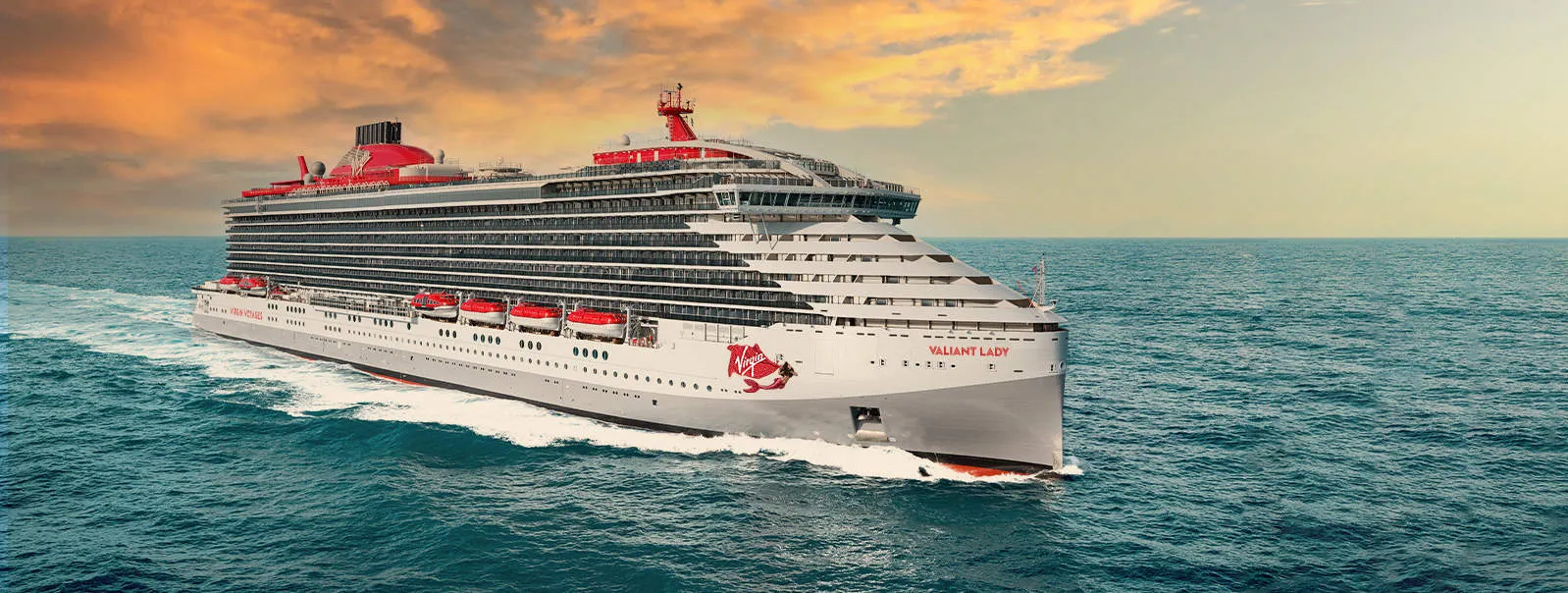
Virgin Voyages was created by Richard Branson’s Virgin Group with a single premise: build a cruise line for people who do not like cruises. Four ships — Scarlet Lady, Valiant Lady, Resilient Lady, and Brilliant Lady — each carry approximately 2,700 adults in an atmosphere that feels more like a floating boutique hotel with a nightclub than anything resembling traditional cruising. More than 20 dining venues, each with a dedicated galley and executive chef, are all included without surcharges. There is no main dining room, no buffet, no formal night, and no children. The design is bold — iPad-controlled cabins, balcony hammocks, and a tattoo parlour. Scarlet Night transforms the entire ship into a red-lit carnival. Named Travel + Leisure’s World’s Best Mega Ship three years running.
The brands could not be more different in tone. P&O is your grandmother’s cruise line, lovingly evolved. Virgin is the cruise line your grandmother would not recognise.
What is actually included
The inclusions comparison reveals different approaches to value — P&O offers an accessible base with optional upgrades; Virgin includes more in the fare but draws the line at drinks.
P&O includes in the base fare: accommodation; full-board dining in the main restaurants and buffet; afternoon tea; basic room service; entertainment including theatre shows and live music; children’s clubs on family ships; self-service laundry; and — notably — gratuities, which are included in the ticket price.
P&O does not include: alcoholic and soft drinks (optional all-inclusive packages from GBP 49 per day); speciality dining (surcharges of GBP 15–35); Wi-Fi (paid packages required); spa thermal suite access (GBP 39 per day); shore excursions; and premium room service items. P&O’s Classic and Deluxe all-inclusive packages, launched in December 2025, bundle drinks, Wi-Fi, and dining credits but remain optional extras.
Virgin Voyages includes: all dining across 20-plus restaurants without surcharges; Wi-Fi; gratuities; group fitness classes including yoga, cycling, and HIIT; basic beverages (filtered water, drip coffee, tea, select juices); and entertainment including immersive shows, live music, and themed events.
Virgin does not include: alcoholic beverages of any kind (purchased individually — no drink packages available); shore excursions; spa treatments; the Redemption Spa thermal suite; and speciality fitness sessions.
The critical distinction is in dining and drinks. Virgin includes every restaurant on the ship — from the Korean BBQ to the steakhouse to the experimental tasting menu — without any surcharge. This is genuinely generous and unmatched by P&O, where the best dining venues carry supplements. However, Virgin does not include any alcoholic drinks and, uniquely, does not offer beverage packages. Every cocktail, glass of wine, and beer is purchased individually. P&O at least offers the option to prepay for drinks through its all-inclusive packages.
For a non-drinking or moderate-drinking traveller, Virgin’s inclusions model is superb — 20-plus restaurants and no additional costs. For a traveller who enjoys wine at dinner and cocktails in the evening, Virgin’s drinks bill can accumulate quickly — US$100 to $200 per couple per day is common — and the inability to cap this cost through a package frustrates some guests.
Dining and culinary experience
The dining comparison is where Virgin’s proposition is strongest and where the two lines diverge most decisively.
P&O’s dining identity revolves around its “Food Heroes” programme. Marco Pierre White’s 20-plus-year partnership designs main dining room menus fleet-wide and dedicated restaurants including the Ocean Grill. Atul Kochhar’s Sindhu restaurants serve Indian-British fusion. Olly Smith curates The Glass House wine bars. On Iona and Arvia, The Quays Food Hall serves street-food counters, and the Market Cafe buffet and casual venues like The Beach House are included in the fare. The speciality restaurants carry surcharges: Epicurean at GBP 29–35, Sindhu at GBP 20–25, East at approximately GBP 20, and The Keel and Cow steakhouse at GBP 25–30. The celebrity chef partnerships give P&O genuine food credibility.
Virgin Voyages operates more than 20 distinct dining venues, all included. The range is extraordinary. Razzle Dazzle is a vegetarian-forward restaurant serving bold, colourful dishes. The Test Kitchen is an experimental dining experience with multi-sensory presentations. Gunbae is a Korean BBQ with tabletop grilling and soju. Pink Agave delivers modern Mexican. Extra Virgin serves Italian with housemade pasta. The Wake is a steakhouse with stern-facing ocean views. Casual options include The Galley (a global food hall replacing the traditional buffet), The Pizza Place, Dock for harbour-side small plates, and Sun Club for pool deck fare. There is no main dining room, no buffet line, and no assigned seating anywhere on the ship.
The culinary philosophy differs fundamentally. P&O leverages celebrity chef branding and British food culture — the emphasis is on named partnerships and familiar comfort. Virgin leverages variety and inclusion — the emphasis is on giving every guest access to every cuisine without reaching for a wallet. In my experience, Virgin’s dining peaks are not necessarily higher than P&O’s best — Sindhu and Epicurean on P&O are genuinely excellent — but the breadth and accessibility of Virgin’s programme is remarkable. Having 20-plus included restaurants means you can eat at a different venue for every meal of a 7-night cruise and never repeat.
Suites and accommodation
The accommodation comparison spans traditional cruise ship design and modern boutique hotel aesthetic.
P&O’s stateroom range spans seven ships and multiple generations. Inside cabins start from 101 square feet on some ships. Balcony cabins from 142 square feet on Iona and Arvia are on the smaller side — a common guest complaint. The Conservatory Mini Suites with bi-folding doors to the balcony are an innovative touch on the Excel-class ships. Standard Suites run 382 to 698 square feet, and Penthouse Suites on older ships reach up to 937 square feet. All suites include butler service, priority embarkation, and enhanced dining access. Family Sea View Suites on Iona and Arvia sleep up to four.
Virgin Voyages’ cabins are design-forward and tech-driven. The Sea Terrace (balcony) cabin starts at approximately 225 square feet with a signature hammock on the balcony, iPad-controlled mood lighting, and a compact but well-designed bathroom. Inside cabins at approximately 150 square feet are cleverly designed with transformable features. The RockStar Suites range from Seriously Suites (approximately 354 square feet) to the Mega RockStar Suite (approximately 2,147 square feet with a two-deck slide, in-room bar, guitar collection, and outdoor hot tub). All RockStar guests access Richard’s Rooftop — a private outdoor deck with bar, hot tub, and sun loungers.
The design aesthetic is where Virgin distinguishes itself. Every cabin, regardless of category, feels intentional and modern — the balcony hammock is a signature detail that guests universally love. P&O’s cabins, particularly on the Excel-class ships, are competent but conventional cruise ship design. The older ships in the P&O fleet (Aurora, Ventura, Azura) show their age in cabin hardware despite refurbishment. Virgin’s fleet advantage of having all four ships built between 2021 and 2025 means consistently modern cabins across the brand.
Pricing and value
The pricing comparison favours P&O on entry-level cost but requires careful analysis of total spend.
P&O’s directional pricing for a 7-night Norwegian Fjords cruise (ex-Southampton): inside cabin from approximately GBP 107 per night; balcony from approximately GBP 131 per night. A 14-night Mediterranean on Ventura starts from approximately GBP 79 per night for an inside. The Classic all-inclusive package adds GBP 49 per day; Deluxe adds GBP 59. P&O’s entry-level pricing is genuinely accessible.
Virgin Voyages’ directional pricing for a 7-night Mediterranean cruise: inside from approximately US$115 to $170 per night; Sea Terrace (balcony) from approximately US$160 to $250 per night. All dining, Wi-Fi, and gratuities are included.
P&O’s headline fares are lower, but the total cost comparison is more nuanced. A P&O balcony cabin at GBP 131 per night plus the Deluxe package at GBP 59 per day reaches approximately GBP 190 per night — broadly comparable to Virgin’s Sea Terrace at approximately GBP 130 to $200 per night (converted). However, P&O’s package includes drinks while Virgin’s fare does not. A moderate-drinking couple on Virgin will add US$80 to $150 per day in beverages, pushing the total beyond P&O’s all-inclusive figure.
For non-drinkers or light drinkers, Virgin can be better value because the fare includes 20-plus restaurants, Wi-Fi, and gratuities without needing an add-on package. For regular drinkers, P&O’s optional all-inclusive package provides cost certainty that Virgin’s no-package model cannot match.
For Australian travellers, P&O UK prices in GBP and requires flights to Southampton. Virgin prices in USD and, when deployed to Australian waters, eliminates airfare costs entirely. The practical value proposition for Australians tips toward Virgin when ships are in the region.
Spa and wellness
Both lines offer spa facilities, but the approach and target demographic shape different offerings.
P&O’s Oasis Spa operates across the fleet. The Thermal Suite on Iona and Arvia includes heated loungers, sauna, steam room, and hydrotherapy pool — at GBP 39 per day or GBP 129 per week. The Retreat outdoor wellness area features infinity whirlpools and cabanas at GBP 40 per day. The gym is complimentary. Spa treatments range from GBP 89 to GBP 199. Free classes include meditation and HIIT; paid classes include yoga and Pilates at GBP 14 to $15 each.
Virgin Voyages’ Redemption Spa is designed with the 30-to-50 demographic in mind. The hydrotherapy circuit includes a mud room, salt room, cold plunge pools, quartz beds, and rainforest showers. The Athletic Club features a full-size boxing ring, outdoor training area, and a comprehensive group fitness programme — yoga, cycling, HIIT, barre, and strength classes — all included in the fare. The pool deck is a focal point with multiple zones, including the Aquatic Club for daytime pool parties.
Virgin’s fitness inclusion is notably more generous — all group classes are complimentary, whereas P&O charges for speciality sessions. The Redemption Spa’s design is more contemporary and more aligned with boutique wellness trends. P&O’s spa is competent but conventional. For fitness-focused travellers in the 30-to-50 age range, Virgin’s Athletic Club with its boxing ring and comprehensive class schedule is a genuine differentiator.
Entertainment and enrichment
The entertainment comparison is where the two brands’ personalities diverge most dramatically.
P&O delivers traditional cruise entertainment at scale. The SkyDome on Iona and Arvia — a retractable glass-roofed space hosting acrobatic shows, aerial acts, and DJ sets — is a genuine innovation. The Headliners Theatre presents West End-style productions, including “Greatest Days,” the official Take That musical on Arvia. The 710 Club offers adults-only late-night live music. A full casino operates on every ship. Children’s clubs are included. Pub quizzes, bingo, ballroom dancing, escape rooms, mini golf, and a gin distillery on Iona round out the programme. The entertainment is broad, social, and familiar.
Virgin Voyages delivers the most disruptive entertainment in cruising. Scarlet Night — the signature event — transforms the ship into a red-lit carnival with themed costumes, immersive performances, fire shows, and DJs. The Manor is a multi-room nightclub that operates until the early hours. The Red Room theatre hosts immersive, boundary-pushing shows that range from acrobatic spectacle to experimental performance art. Duel Reality combines magic and theatrics to critical acclaim. Ships R Us is a drag brunch. Private karaoke suites, a tattoo parlour, and themed deck events fill the programme. The entertainment is deliberately edgy, design-conscious, and adult-only.
The distinction is cultural as much as programmatic. P&O’s entertainment reflects British holiday traditions — familiar, sociable, and multigenerational. Virgin’s entertainment reflects modern urban nightlife — immersive, energetic, and curated for adults who go out. P&O’s casino and bingo coexist with West End musicals. Virgin’s tattoo parlour and nightclub coexist with drag brunch. For British holidaymakers of all ages, P&O delivers everything expected. For adults seeking something that does not feel like a cruise, Virgin deliberately defies expectations.
Fleet and destination coverage
The fleet comparison reveals different scales and deployment strategies.
P&O operates seven ships ranging from Aurora (1,874 guests, built 2000) to Iona and Arvia (5,200 guests, LNG-powered, 2020–2022). All seven sail primarily from Southampton, with fly-cruise options in the Mediterranean and Caribbean deployments from Barbados in winter. The fleet spans 22 years of shipbuilding, creating a varied experience — the Excel-class ships feel contemporary, while Aurora shows its age. P&O commands the UK cruise market with Norwegian Fjords, Mediterranean, Canary Islands, British Isles, Caribbean, and world cruise itineraries.
Virgin Voyages operates four ships built between 2021 and 2025, each carrying approximately 2,700 guests. The fleet is uniformly modern. Scarlet Lady sails Caribbean from Miami. Valiant Lady covers the Mediterranean. Resilient Lady repositions seasonally, including Australian deployments. Brilliant Lady joined in 2025. Destinations include the Caribbean, Mediterranean, Greek Isles, Northern Europe, South Pacific, and Australia.
P&O’s fleet is larger but older. Virgin’s fleet is smaller but uniformly new. P&O’s Southampton homeport dominates the programme. Virgin deploys globally from multiple homeports. For Australian travellers, Virgin’s flexible deployment means ships periodically appear in home waters. P&O’s Southampton-centric model means Australian relevance is limited to world cruise segments and fly-cruise packages.
Where each line excels
P&O Cruises excels in:
- Accessibility and entry-level pricing. Inside cabins from GBP 79 per night provide a genuinely affordable starting point for budget-conscious travellers. No-fly Southampton departure eliminates airfare for UK-based guests.
- Family cruising. Five of seven ships welcome children with dedicated clubs and family suites. Multi-generational travel is well-supported.
- Celebrity chef dining. Marco Pierre White, Atul Kochhar, and Olly Smith have shaped P&O’s food identity over decades.
- Casino and traditional entertainment. A full casino on every ship, West End-style shows, the SkyDome, and pub quizzes create a lively holiday atmosphere.
- British cultural identity. Afternoon tea, Celebration Nights, fish and chips on deck, and a predominantly British passenger base create a familiar atmosphere.
- Gratuities included. Service charges built into the ticket price simplify budgeting.
- All-inclusive package option. The Classic and Deluxe packages offer cost certainty for drinks, Wi-Fi, and dining.
Virgin Voyages excels in:
- Culinary diversity and inclusion. More than 20 included restaurants without surcharges — the broadest complimentary dining programme in mainstream cruising.
- Design and aesthetic. Bold, modern cabins with balcony hammocks, mood lighting, and a design-magazine sensibility that appeals to travellers who find traditional cruise ships unappealing.
- Adults-only nightlife. Scarlet Night, The Manor nightclub, immersive shows, and a tattoo parlour create an evening scene unmatched in the industry.
- Fitness inclusion. All group fitness classes including yoga, cycling, boxing, HIIT, and barre are complimentary.
- Modern technology. App-controlled everything from dining reservations to cabin settings appeals to tech-savvy travellers.
- Australian deployments. Resilient Lady has sailed from Sydney and Melbourne, providing domestic departure options.
Standout itineraries for Australian travellers
P&O Cruises
Arcadia 100-Night World Cruise (Southampton to Southampton, January to April). An adults-only circumnavigation touching 28 ports across six continents, occasionally including an overnight in Sydney. Australians can book segments joining or leaving in Sydney.
Iona 7-Night Norwegian Fjords (ex-Southampton, summer). The quintessential P&O experience on the fleet’s flagship ship. Ideal for Australians visiting the UK who want to add an accessible cruise to their holiday. From approximately GBP 849 per person.
Arvia 14-Night Caribbean Fly-Cruise (ex-Barbados, winter). Accessible for Australians willing to connect through London. P&O’s tropical deployment with full resort facilities.
Virgin Voyages
Australian Season Sailings (Resilient Lady, from Sydney or Melbourne). When deployed to Australian waters, these domestic departures eliminate international flights. South Pacific itineraries provide tropical options from home ports.
7-Night Greek Island Hop (Valiant Lady or Resilient Lady, ex-Piraeus). Mykonos, Santorini, and Rhodes with 20-plus restaurants and Mediterranean sunshine. Accessible from Australia via Athens.
5-Night Mediterranean Weekender (various ships, ex-Barcelona). Shorter sailings that pair with a European holiday — a strong introduction to Virgin for testing the brand.
7-Night Caribbean (Scarlet Lady, ex-Miami). The core Virgin product in its natural habitat — Caribbean sunshine, Scarlet Night, and The Beach Club at Bimini.
Ship-by-ship recommendations
P&O Cruises
Iona or Arvia — The Excel-class flagships. Best introduction to P&O with the SkyDome, broadest dining variety, and LNG power. Iona is ideal for Norwegian Fjords; Arvia for Caribbean.
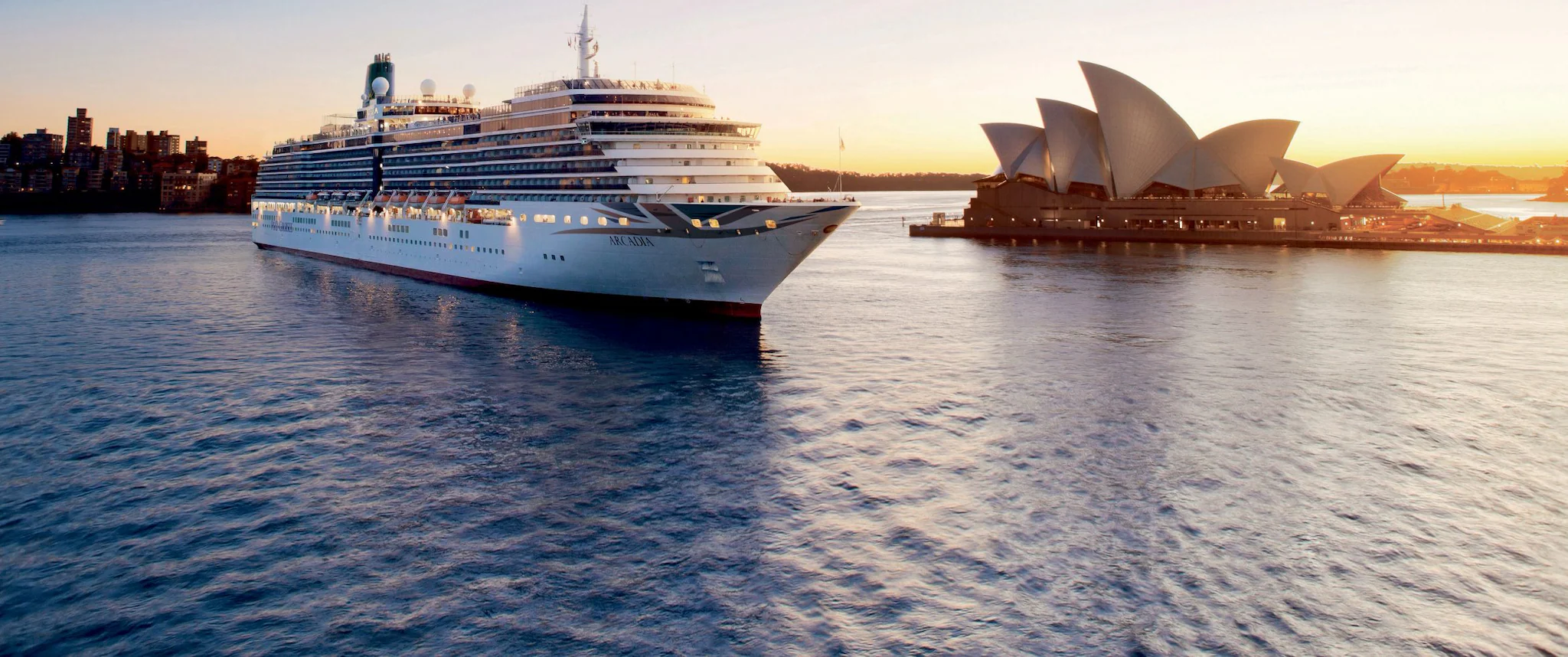
Arcadia — The adults-only ship carrying the world cruise programme. The strongest P&O option for comparison to Virgin’s adults-only proposition. Ocean Grill by Marco Pierre White is a fleet standout.
Aurora — The smallest, most traditional ship. Currently adults-only but opening to families on select sailings from December 2026.
Avoid Ventura or Azura as a first P&O experience — mid-fleet workhorses that lack the innovations of the Excel-class and the intimacy of the smaller ships.
Virgin Voyages
Resilient Lady — The ship most likely to deploy to Australian waters. Book for domestic departures when available.
Scarlet Lady — The flagship, sailing Caribbean from Miami. The core Virgin product in its spiritual home.
Brilliant Lady — The newest ship (2025) with refinements from lessons learned across the fleet.
All four ships are essentially identical in facilities and design. Choose on itinerary and departure port rather than ship preference.
For Australian travellers specifically
The Australian relevance of these two lines differs substantially.
Virgin Voyages has direct Australian relevance. Resilient Lady has deployed to Australian waters, offering sailings from Sydney and Melbourne to the South Pacific and regional destinations. When in Australian waters, Virgin eliminates international flight costs and provides a domestic cruise option with a product unlike any other in the region. The adults-only, nightlife-forward, 20-restaurant proposition appeals to a younger demographic than most lines operating from Australian ports. Fares are typically quoted in USD.
P&O Cruises UK has minimal Australian presence. The fleet sails from Southampton with no regular Australian departures. World cruise segments through Sydney are the primary touchpoint — once per year at most. P&O UK prices in GBP with no AUD option, no Australian sales office infrastructure, and no fly-free programme. Australian travel agencies can book P&O UK sailings, but the experience is not tailored to the Australian market.
A critical clarification: P&O Cruises Australia was a separate brand under Carnival Corporation that ceased operations in March 2025. Its ships were absorbed into Carnival Cruise Line or sold. The P&O discussed here is the UK brand — fundamentally different ships, pricing, itineraries, and onboard product. Australians who remember P&O Australia should not expect the same experience from P&O UK.
For younger Australian adults seeking a cruise that does not feel like a cruise, Virgin Voyages is the natural choice — particularly when Resilient Lady is in Australian waters. For Australians planning a UK holiday who want to add an accessible cruise, P&O’s Southampton sailings are convenient and affordable. The two lines rarely compete for the same guest.
The onboard atmosphere
The atmospheric contrast between P&O and Virgin captures the generational and cultural shift in modern cruising.
P&O’s atmosphere is a British holiday resort at sea. The SkyDome buzzes with poolside energy. The casino hums after dinner. Celebration Nights bring out the sequins and dinner jackets. Children splash in the pool during school holidays. Pub quizzes pack a loyal crowd. The Glass House draws wine enthusiasts. The passenger base is 95 per cent or more British, creating a culturally specific atmosphere — afternoon tea, fish and chips, Sunday roasts, and cricket commentary. It is cheerful, familiar, and sociable. For those who want to feel at home, P&O delivers precisely that.
Virgin’s atmosphere is a modern urban playground at sea. The pool deck pulses with DJ sets. Restaurants buzz with culinary experimentation. Scarlet Night transforms the ship into a red-lit carnival where the entire vessel becomes the entertainment. The Manor nightclub operates until the early hours. The design is Instagram-ready at every turn. The passenger base is international, predominantly couples and friend groups in their 30s to 50s who chose Virgin because it explicitly rejects traditional cruise conventions. The energy is high, the music is loud, and the atmosphere rewards participation. For those who want to feel surprised, Virgin delivers precisely that.
The atmospheric divide maps closely to generation and cultural preference. P&O’s atmosphere is familiar and comforting. Virgin’s is stimulating and disruptive. P&O guests rebook because they know exactly what they will get. Virgin guests rebook because they experienced something they could not get anywhere else.
The bottom line
P&O Cruises and Virgin Voyages represent two very different visions of what a cruise should be, and the right choice depends entirely on the kind of holiday you want.
Choose P&O if you want an accessible, entertainment-forward British holiday at sea with options for all ages. Choose it for the SkyDome, the celebrity chef restaurants, the casino, and the West End-style shows. Choose it for family travel across five ships with dedicated children’s clubs. Choose it for the lower entry-level pricing and the convenience of Southampton departure if you are visiting the UK. Choose it for the all-inclusive package option that caps drinks and dining costs. Accept that speciality dining carries surcharges, that Wi-Fi and spa access cost extra, that the largest ships can feel crowded, and that P&O UK has no regular Australian deployments.
Choose Virgin if you want a modern, adults-only cruise that deliberately breaks every traditional cruise convention. Choose it for 20-plus included restaurants without surcharges, immersive nightlife, design-forward cabins, and an atmosphere that does not feel like a cruise. Choose it for Scarlet Night, The Manor nightclub, the tattoo parlour, and the complimentary fitness programme. Choose it for Australian departures when Resilient Lady is in the region. Accept that drinks are not included and there are no beverage packages, that the nightlife-forward atmosphere will not suit every traveller, that the fleet of four ships limits itinerary breadth, and that the app-driven experience frustrates some guests.
For Australian travellers specifically, Virgin Voyages is the more relevant and more accessible option — ships have sailed from Australian ports, the product is unique in the domestic market, and the adults-only proposition appeals to a growing segment of the Australian cruise market. P&O UK is a perfectly good line for what it does, but what it does is serve British holidaymakers from Southampton — and that is a long way from home.