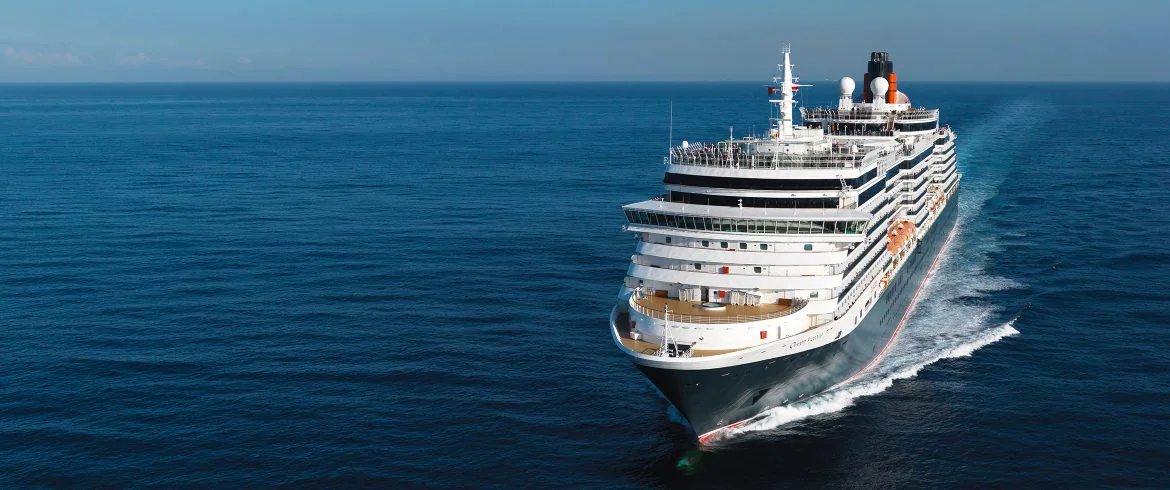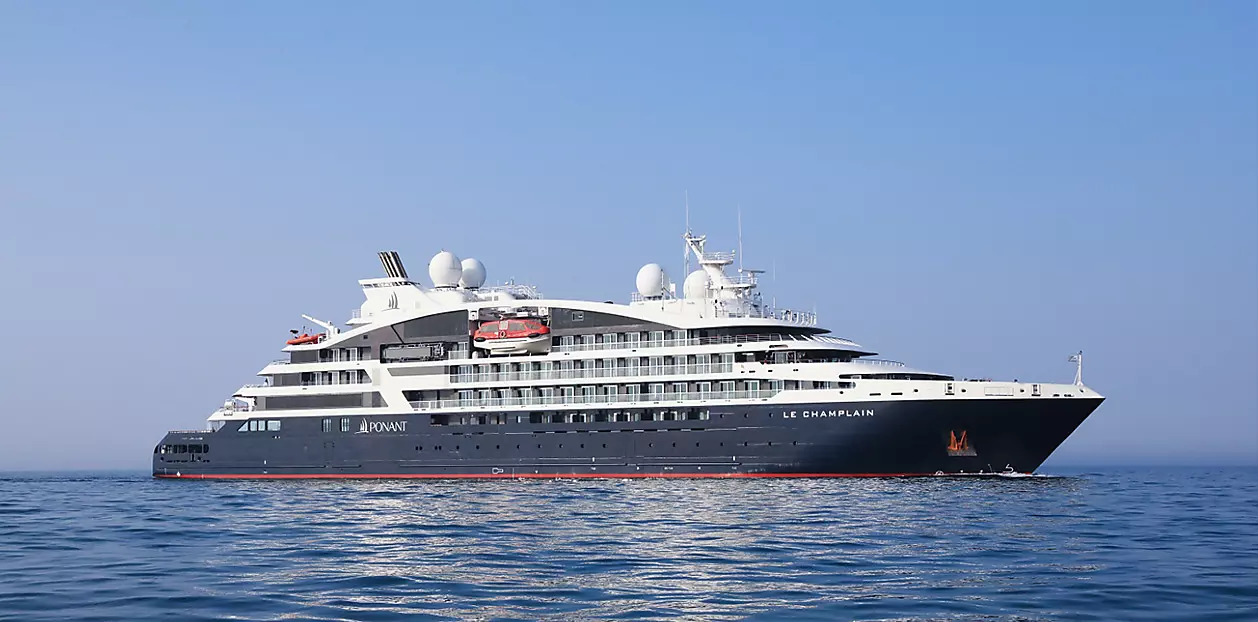
Ponant and Windstar both promise intimate small-ship cruising under 350 guests — but one is a French luxury expedition fleet with an icebreaker, the other a barefoot sailing yacht operator with computer-controlled sails and watersport marinas. Jake Hower compares their dining, inclusions, fleet, and value for Australians navigating this surprisingly close contest.
| Ponant | Windstar Cruises | |
|---|---|---|
| Category | Luxury / Expedition | Yacht-Style / Luxury |
| Rating | ★★★★★ | ★★★★☆ |
| Fleet size | 13 ships | 7 ships |
| Ship size | Small (under 500) | Yacht (under 300) |
| Destinations | Antarctica, Mediterranean, Arctic, South Pacific | Mediterranean, Caribbean, Alaska, French Polynesia |
| Dress code | Smart casual | Resort casual |
| Best for | French-inspired luxury expedition travellers | Romantic small-ship and sailing enthusiasts |
Ponant is the choice for genuine expedition access — thirteen ships reaching Antarctica, the Kimberley, the Arctic, and the Geographic North Pole, with Ducasse-trained cuisine, an included open bar with Henri Abelé champagne, and the Blue Eye underwater lounge. Windstar counters with authentic sailing heritage across three masted yachts, the James Beard Foundation culinary partnership, complimentary watersport marinas, and significantly lower per-diems on comparable Mediterranean itineraries. Both deploy year-round in French Polynesia from Papeete — making Tahiti the critical battleground. For Australians wanting expedition capability and French polish, choose Ponant. For Australians drawn to wind-powered romance, active ocean experiences, and stronger per-diem value, choose Windstar.
The core difference
Ponant and Windstar share more DNA than most travellers realise — and the overlap is precisely what makes this comparison fascinating. Both operate intimate ships under 350 guests. Both have sailing vessels in the fleet. Both deploy year-round in French Polynesia from Papeete. Both reject the mega-ship model in favour of small harbours, quiet anchorages, and destinations the mass-market lines cannot reach. And yet the experience aboard could hardly be more different.
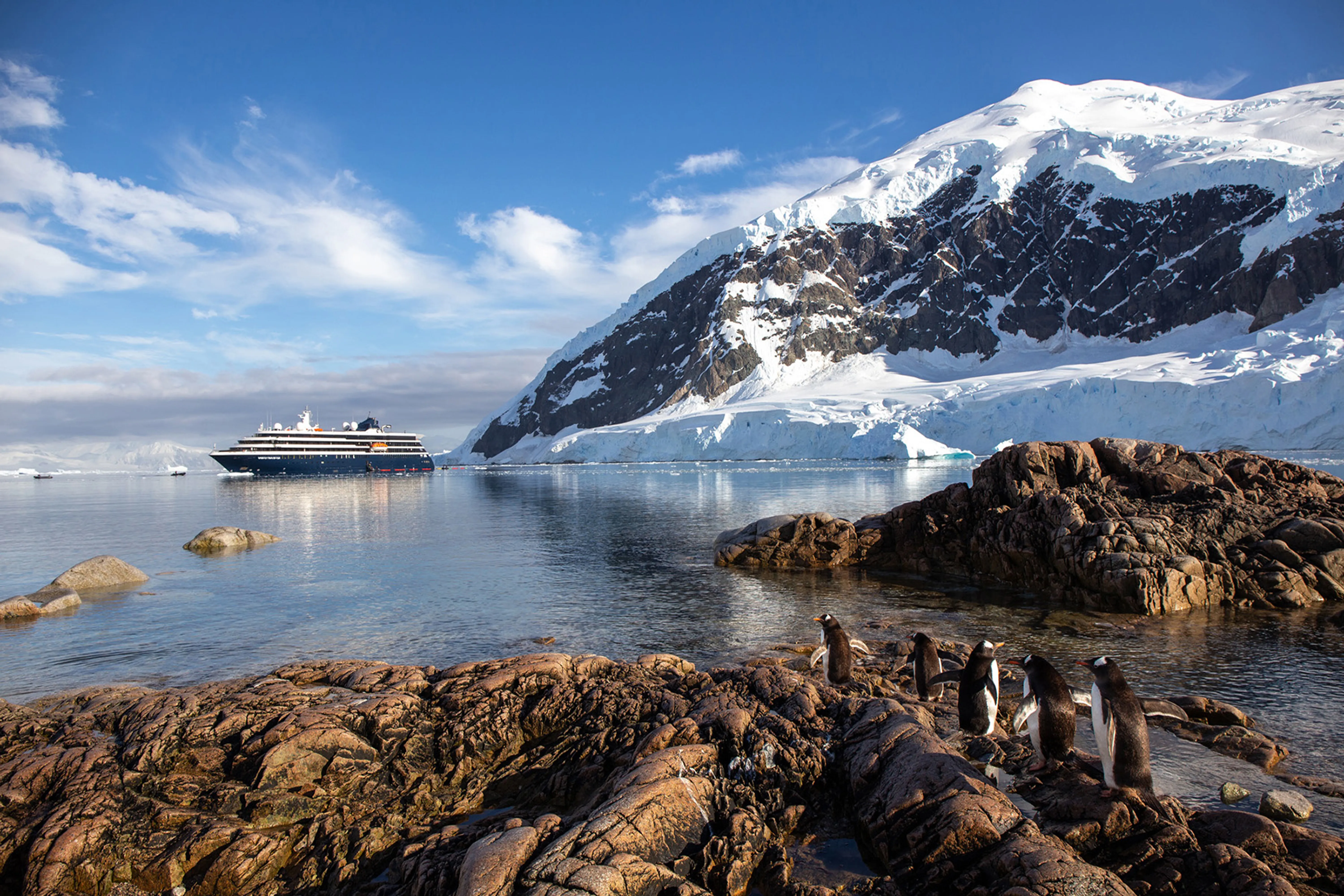
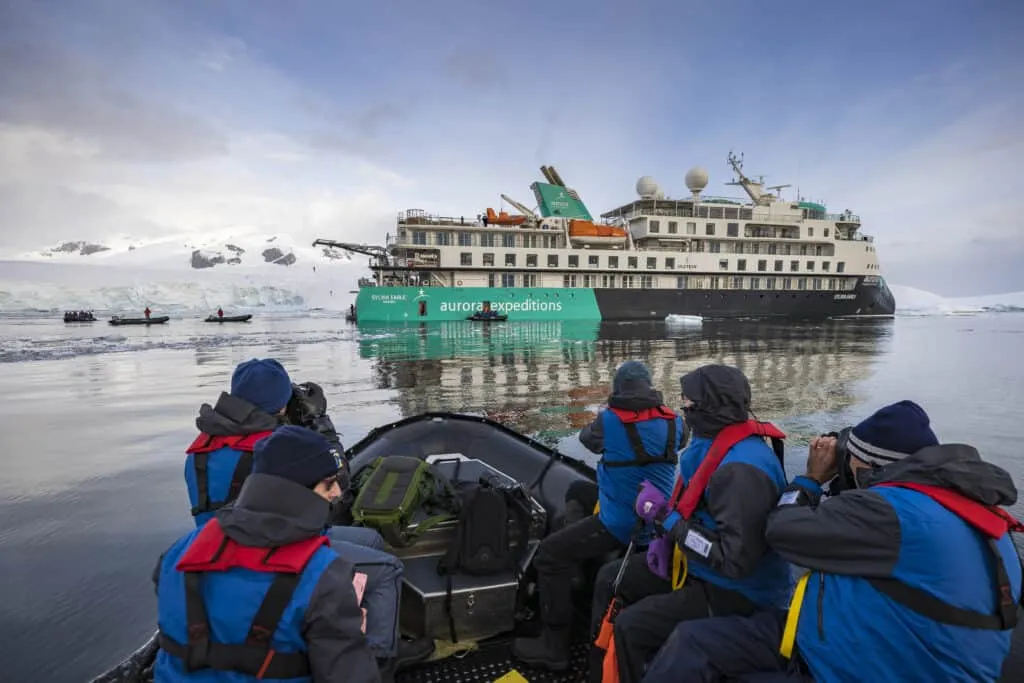
Ponant’s identity is French luxury expedition. Rebranded as Ponant Explorations Group in March 2025 and owned by Groupe Artémis (the Pinault family investment holding that also controls Kering, Christie’s, and Château Latour), Ponant operates thirteen ships — from the 32-guest sailing yacht Le Ponant to Le Commandant Charcot, the only luxury icebreaker afloat with PC2 ice class capable of reaching the Geographic North Pole. Six Explorer-class ships carry Zodiac fleets and the signature Blue Eye underwater multi-sensory lounge. The Ducasse Conseil culinary partnership (since 2016) brings Michelin-star heritage to the galley. Henri Abelé Brut Champagne flows freely from an included open bar. Announcements arrive in French first, then English. The passenger mix is approximately fifty per cent French, with significant Australian and European contingents. Ponant does not merely visit remote destinations — it was engineered for them, with ice-strengthened hulls, expedition leaders, and the logistical infrastructure to operate sixteen Kimberley sailings, year-round French Polynesia, and the first-ever circumnavigation of Antarctica.
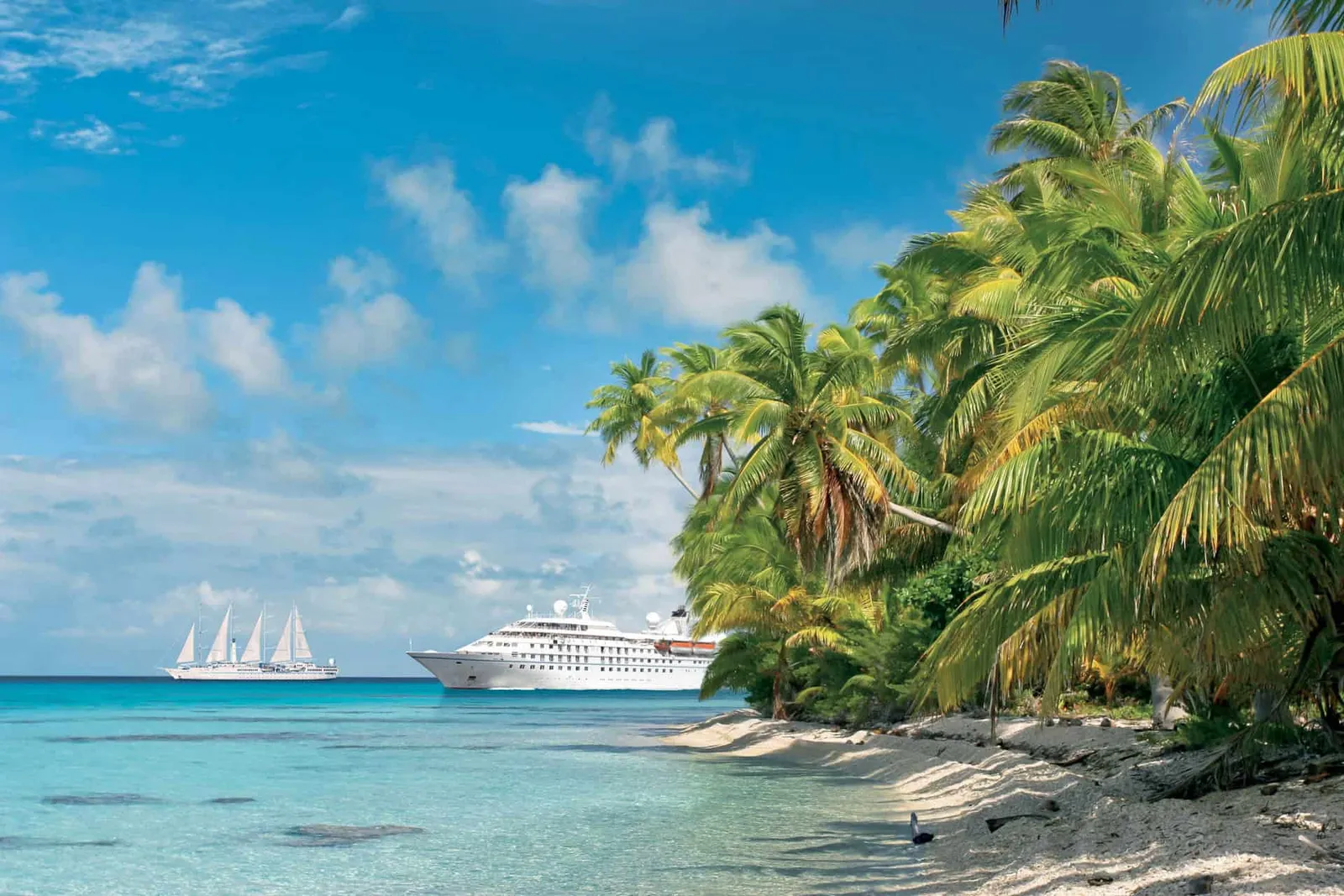
Windstar’s identity is barefoot luxury sailing. Three of its seven ships — Wind Surf (342 guests), Wind Star (148 guests), and Wind Spirit (148 guests) — are motorised sailing yachts carrying four or five masts of computer-controlled sails that unfurl during every departure and deploy whenever wind conditions permit. The line’s tagline, “180 degrees from ordinary,” captures a philosophy of relaxed elegance, watersport marina platforms that lower directly into the ocean, and access to small harbours that even Ponant’s expedition ships might bypass. The James Beard Foundation culinary partnership, now spanning more than eleven years, anchors a dining programme that emphasises chef-driven creativity and the signature Candles open-air dining under the stars. Owned by Xanterra Parks and Resorts (a subsidiary of The Anschutz Corporation), Windstar is growing — Star Seeker debuted in December 2025 with an ice-strengthened hull and 224 guests, and Star Explorer follows in December 2026. But the heart of Windstar remains the masted sailing yacht silhouetted against open ocean, the sound of canvas catching wind, and a cocktail on the open deck as the sails billow overhead.
For Australian travellers, the choice between these lines crystallises around two questions. First: do you want expedition access to places like the Kimberley, Antarctica, and the Arctic — destinations where only Ponant can take you? Second: do you want to sail under canvas, swim from the back of the ship, and feel the romance of wind-powered cruising at a lower per-diem? The answer to those two questions will determine your line.
What is actually included
Both lines market themselves as inclusive small-ship experiences, but the specifics differ meaningfully — and the details matter when calculating total cost from an Australian wallet.
Ponant’s inclusion model is generous at the base fare level. The fare covers all dining, an open bar available at all hours (beer, wine, spirits, Henri Abelé Brut Champagne, coffee, and soft drinks), a daily-restocked minibar, unlimited Wi-Fi, and 24-hour room service. On expedition sailings — which includes the Kimberley, Antarctica, French Polynesia, and all Explorer-class itineraries — one guided excursion per port per day is included, covering Zodiac outings, shore landings, and expert-led naturalist activities. What Ponant does not include: gratuities (voluntary but suggested at approximately EUR 10–12 per person per day), shore excursions on non-expedition itineraries (primarily Mediterranean sailings on the Sistership class), spa treatments, and premium wines or spirits beyond the standard open bar selection. Flights are separate unless booked as part of a Fly, Stay & Cruise package.
Windstar’s base fare covers all dining across every restaurant without surcharges, 24-hour room service, non-alcoholic beverages including speciality coffees, complimentary watersport marina access (kayaks, paddleboards, snorkelling gear, water skiing, and sailing dinghies), group fitness classes, and onboard enrichment events. What Windstar does not include in the base fare: alcoholic beverages, Wi-Fi, and crew gratuities (USD $16 per person per day). The All-In package bundles unlimited beer, wine, cocktails, and spirits, unlimited Wi-Fi for two devices, and prepaid gratuities for USD $99 per person per day when purchased before sailing (USD $109 if added onboard). An 18 per cent beverage service charge applies to individual drink purchases outside the package.
The net effect for Australian travellers is significant. Ponant’s included open bar — champagne, spirits, and cocktails from morning to night without signing — is worth approximately AUD $150 to $200 per person per day based on typical consumption patterns. On a ten-night voyage, that represents AUD $1,500 to $2,000 per person in included beverage value. Windstar’s All-In package costs roughly AUD $160 per person per day, delivering similar beverage coverage but as an add-on rather than an inclusion. For non-drinkers or light drinkers, Ponant’s inclusion is less impactful, and Windstar’s lower base fare delivers better value. For regular drinkers, Ponant’s all-inclusive pricing simplifies budgeting. The key differentiator beyond beverages is Ponant’s included expedition excursions — on a Kimberley or Polynesia sailing, daily Zodiac outings, guided hikes, and naturalist-led activities are covered in the fare. Windstar includes its watersport marina (genuinely valuable for active travellers) but charges for organised shore excursions at every port.
Dining and culinary experience
Both lines boast genuine culinary pedigree backed by globally recognised partnerships — Ducasse for Ponant, the James Beard Foundation for Windstar. The dining experience, however, reflects fundamentally different philosophies about food at sea.
Ponant is a French kitchen. The Ducasse Conseil partnership since 2016 focuses depth over breadth. On Explorer-class ships, Le Nautilus serves à la carte four-course dinners with amuse-bouche and regional French wines selected by the onboard sommelier. Le Grill offers poolside casual dining accommodating up to seventy guests for lunch and relaxed evenings. On Le Commandant Charcot, the flagship Nuna restaurant — named from the Inuit word for “Earth” — is widely cited as one of the finest restaurants at sea, with Bernardaud porcelain, Ligne Roset furniture, and menus featuring soft-boiled eggs with Kaviari caviar, saffron fettuccine with seafood, and a French cheese selection rivalling any brasserie in Lyon. The bread across the fleet is consistently described as boulangerie-quality — crusty baguettes, croissants, and pain au chocolat baked fresh each morning. Pierre Hermé macarons appear at afternoon tea. The wine list favours French appellations, and the included Henri Abelé champagne is a credible house pour. Reviews of the Ducasse partnership are polarised, however — some guests describe the food as refined and exceptional, others find it repetitive across multi-night voyages with just two restaurant options. The breadth simply is not there.
Windstar is a chef’s table. The James Beard Foundation partnership, now spanning more than eleven years, places James Beard Award-recognised chefs aboard select sailings for cooking demonstrations, hosted dinners with wine pairings, and local market tours in port. On every Windstar sailing — not just culinary-themed departures — the dinner menu at Amphora (the main restaurant) features a rotating “Signature Recipe” from the cruise’s resident James Beard Foundation-affiliated chef, built around local market ingredients wherever possible. The signature experience is Candles — Windstar’s open-air restaurant on the Star Deck where guests dine on steak and seafood under the stars, surrounded by flickering candlelight and the sound of the ocean. Candles is widely and consistently cited as one of the most romantic dining settings at sea, and it has no equivalent on Ponant or any other line in this segment. On the Star Plus class motor yachts, additional venues include Cuadro 44 (Spanish-influenced cuisine by Michelin-recognised chef Anthony Sasso) and Stella Bistro. Star Seeker, which debuted in December 2025, introduces five dining venues including Basil + Bamboo (Asian-Mediterranean fusion) — the most comprehensive dining programme in Windstar’s history. All restaurants across the fleet are included without surcharges.
The dining comparison comes down to concentration versus variety. Ponant delivers two restaurants of focused French excellence with outstanding bread, pastry, and wine — plus the benefit of included beverages throughout the day. Windstar delivers three to five venues (depending on the ship) with broader culinary range, the James Beard chef rotation bringing fresh perspectives to each sailing, and the incomparable atmosphere of Candles under the stars. For travellers who want a wine-paired French dining experience with champagne flowing freely, Ponant. For travellers who want variety, alfresco romance, and the creativity of rotating guest chefs, Windstar.
Suites and accommodation
The accommodation comparison reveals a surprising result — Windstar, often perceived as the more modest line, offers significantly more space per cabin than Ponant’s expedition fleet at comparable price points.
Ponant’s Explorer-class cabins are designed for expedition, not sprawling suites. The standard Deluxe Balcony stateroom is 161 square feet of interior space plus a 43-square-foot balcony — functional but compact, reflecting a philosophy that guests spend their days on Zodiacs, at shore landings, and in the Blue Eye lounge rather than in their stateroom. Prestige Suites offer 291 square feet. The Owner’s Suite tops out at 485 square feet of interior with a spectacular 323-square-foot private terrace and outdoor Jacuzzi. On the four Sisterships (Le Boreal, L’Austral, Le Soleal, Le Lyrial), accommodation is comparable in size though with slightly different configurations across 224 to 264 guests. On Le Commandant Charcot, accommodation is genuinely generous: Prestige Staterooms start at 300 square feet plus a 55-square-foot balcony, and the Owner’s Suite spans 1,240 square feet of interior plus a staggering 2,000-square-foot terrace — the most impressive private outdoor space on any expedition ship afloat. Duplex Suites on Charcot are two-level apartments with private dining rooms seating six.
Windstar’s Star Plus class ships (Star Breeze, Star Legend, Star Pride) are all-suite vessels with entry-level suites starting at 277 square feet — nearly 72 per cent larger than Ponant’s Explorer-class entry cabin. These ships were originally built for Seabourn and completely rebuilt during the USD $250 million Star Plus Initiative, receiving lengthened hulls, new suites, remodelled public spaces, and the watersport marina platform. Classic Suites offer 400 square feet with separate bedroom and living areas. The Owner’s Suite spans 820 square feet. The Grand Owner’s Suite, created by combining adjoining suites, reaches 1,374 square feet.
Windstar’s sailing yachts are more compact but competitive with Ponant’s expedition fleet. Wind Surf offers deluxe ocean-view suites at 376 square feet with two bathrooms — more than double Ponant’s Explorer-class entry cabin. Wind Star and Wind Spirit carry staterooms at approximately 188 square feet with portholes rather than windows or balconies — still larger than Ponant’s Explorer-class standard cabin.
Star Seeker (224 guests, December 2025) sets a new Windstar benchmark. The Deluxe Suite runs 380 square feet plus a 110-square-foot balcony. The Horizon Owner’s Suite spans 796 square feet with wrap-around verandah and separate living and dining areas. Twelve suite categories offer genuine choice, from Oceanview Suites to the Grand Owner’s Suite. Most suites feature walk-in mosaic glass showers and fully stocked minibars; the top four categories add Illy espresso machines, canapé service, and fresh flowers.
The accommodation verdict is unambiguous on space: Windstar offers more square footage at every comparable price point except at the very top of Ponant’s Charcot range. However, space is not the only consideration. Ponant’s staterooms feature French design sensibility — neutral palettes, clean lines, quality materials — and every Explorer-class cabin has a private balcony. The balcony on an Antarctic or Kimberley expedition is not merely pleasant; it is transformative, offering a private vantage point for watching icebergs drift past or dolphins ride the bow wave at sunrise. Windstar’s sailing yacht cabins have portholes rather than balconies, which suits the warm-climate ports where the marina platform and open decks are the preferred vantage points.
Pricing and value
The pricing gap between these lines is substantial on comparable itineraries — and it narrows, but does not close, when Ponant’s more generous inclusions are factored in.
Ponant’s per-diem varies enormously by ship and destination. Explorer-class expedition cruises average roughly AUD $900 to $1,500 per person per night. A ten-night Kimberley Fly, Stay & Cruise package starts from approximately AUD $13,670 per person including return flights from Australian capitals, a two-night hotel stay, all meals, open bar, and daily guided excursions. Mediterranean sailings on Explorer-class ships run approximately AUD $7,500 to $9,200 per person for eight to ten-night themed voyages. Le Commandant Charcot polar voyages command a significant premium — the 2028 circumnavigation of Antarctica starts from USD $147,360 per person for sixty-two days. French Polynesia on Paul Gauguin ranges from approximately AUD $5,000 to $8,000 per person for seven nights, depending on season and cabin category.
Windstar’s per-diem is significantly lower on comparable itineraries. Wind Class sailing yachts start from approximately USD $250 to $400 per person per night for seven-night Mediterranean or Caribbean itineraries before add-ons. Wind Surf from Rome starts from approximately USD $4,450 per person for seven nights. Star Plus class ships command a modest premium. Adding the All-In package (USD $99 per person per day) for drinks, Wi-Fi, and gratuities brings the total per-diem to approximately AUD $500 to $750 per person — roughly forty to fifty per cent less than Ponant’s Explorer-class equivalent for Mediterranean sailings. French Polynesia on Wind Spirit, while not the cheapest product in the region, typically undercuts Ponant’s Paul Gauguin by fifteen to twenty-five per cent for comparable seven-night Society Islands itineraries.
For a direct Mediterranean comparison: a ten-night Ponant Explorer-class sailing costs roughly AUD $9,000 to $15,000 per person with the open bar, daily minibar, Wi-Fi, and room service included. A comparable Windstar Star Plus class sailing with the All-In package costs roughly AUD $7,000 to $9,500 per person. The gap is AUD $2,000 to $5,500 per person — meaningful money that buys Ponant’s smaller ship (184 versus 312 guests), the Blue Eye underwater lounge, and Zodiac-equipped expedition capability. Whether that premium is justified depends on your priorities.
For French Polynesia specifically — the most direct competitive battleground — Windstar’s Wind Spirit offers seven-night Society Islands sailings at per-diems roughly twenty per cent below Paul Gauguin, with the sailing yacht experience and watersport marina as differentiators. Ponant counters with the included open bar, Zodiac excursions, the Blue Eye lounge, and (from the 2026–2027 season) a broader itinerary programme across six archipelagos including the rarely visited Marquesas, Gambier, and Austral Islands. Paul Gauguin’s year-round Papeete deployment since 1998 gives Ponant deeper regional knowledge, but Wind Spirit has been the most established Western luxury sailing vessel in Tahiti for over a decade.
The value equation is clear: for comparable Mediterranean and Caribbean itineraries, Windstar delivers stronger per-diem value. For expedition itineraries — the Kimberley, Antarctica, the Arctic, subantarctic islands — no Windstar comparison exists. For French Polynesia, the choice depends on whether you value Ponant’s expedition infrastructure and drink inclusions or Windstar’s sailing heritage and lower price point.
Spa and wellness
Both lines offer spa facilities reflecting their different ship sizes and philosophies — but the real wellness comparison lies in what happens beyond the treatment room.
Ponant’s spa offering varies significantly by ship. On Explorer-class vessels, compact spas operated by Sothys or Clarins offer massage cabins, a hammam (Turkish bath), and a modest fitness centre. The spaces are well-appointed but not expansive — two to three treatment rooms and a small relaxation area. The signature wellness experience on Explorer-class ships is the Blue Eye underwater multi-sensory lounge — not a spa in the traditional sense, but a genuinely unique space with two whale-eye-shaped glass portholes below the waterline, hydrophones capturing ocean acoustics in real time, and Body Listening Sofas that vibrate with the sounds of the underwater environment. It is meditative, immersive, and available nowhere else at sea.
On Le Commandant Charcot, Ponant elevates the spa experience dramatically. The Nuan Wellness Lounge features Biologique Recherche treatments across three spa cabins, the Ikuma sauna with floor-to-ceiling Arctic views, and the Siku snow room for cold-plunge therapy. The centrepiece is the Blue Lagoon — a heated outdoor pool maintained at 27 to 37 degrees Celsius where guests swim surrounded by polar ice. An indoor saltwater pool with counter-current swim jets and floor-to-ceiling windows viewing the Antarctic or Arctic landscape completes a facility that is genuinely world-class. Swimming in a heated pool while icebergs drift past the window is not merely a spa treatment — it is one of the most extraordinary wellness experiences available anywhere.
Windstar’s spa offering reflects the fleet’s intimate scale but compensates with active ocean wellness that Ponant’s expedition fleet cannot match. On Star Plus class ships, the World Spa features treatment rooms, a sauna, a steam room, therapy showers, heated loungers, and dedicated male and female changing rooms. Services include massages, facials, body treatments, Chinese medicine therapies, and manicures. On the sailing yachts, spas are more compact — treatment rooms, a sauna, and basic fitness equipment appropriate for vessels carrying just 148 guests. Star Seeker introduces a more substantial full-service spa accessed via a grand staircase from the deck above, with expanded treatment rooms and a modern fitness facility.
Where Windstar genuinely distinguishes itself is the watersport marina platform. This retractable platform at the stern lowers directly into the ocean, creating a private water sports centre at every anchored port. Complimentary kayaks, stand-up paddleboards, snorkelling gear, sailboats, windsurfers, water trampolines, and even water skiing are available. In the Caribbean, Central America, and French Polynesia, PADI-certified diving is offered. The marina operates on all anchored days, weather permitting, and is consistently cited by guests as the single most unexpected highlight of a Windstar cruise. Paddleboarding across a glassy Polynesian lagoon at sunrise, then kayaking into a secluded bay in the afternoon — this is active wellness, and no Ponant ship offers anything comparable. Ponant’s expedition ships carry Zodiacs for naturalist-guided excursions, which serve a different purpose: getting to shore for expert-led exploration rather than recreational water play from the ship itself.
The distinction is clear. Ponant offers experiential wellness that leverages its expedition positioning — swimming among icebergs on Charcot, listening to whale song through the hull in the Blue Eye. Windstar offers active ocean wellness — swimming, kayaking, and paddleboarding directly from the ship in warm tropical waters. Both are genuine and both are excellent. The choice depends on whether your definition of wellness involves heated pools surrounded by polar ice or paddleboards gliding across turquoise lagoons.
Entertainment and enrichment
Neither line operates floating theatres — both prioritise intimate evenings and destination-focused programming over production shows. But the enrichment philosophies reflect their different identities clearly.
Ponant’s enrichment programme is expedition-driven. Onboard naturalists, ornithologists, marine biologists, geologists, and historians deliver daily briefings and lectures before each landing — and the quality of these presentations is consistently praised as among the best in expedition cruising. National Geographic Expeditions partnerships (since 2018) place National Geographic experts and photographers onboard select sailings. Smithsonian Journeys collaborations add two Smithsonian specialists per voyage on family-oriented Mediterranean and Great Lakes itineraries. The Explorers Club partnership (expanded November 2025) brings speakers including mountaineer Peter Hillary and marine scientist Diego Cardenosa. On the Kimberley, Indigenous cultural encounters and specialist guides add depth that cannot be replicated onshore. Evenings feature a musical duo or small acoustic performance in the main lounge, cocktails from the included open bar, and the signature Soirée Blanche (White Party) on warm-climate sailings — an all-white dress event with music and dancing on the outer decks. The dress code is “Casual Chic” most evenings with one or two gala evenings per sailing requiring cocktail dress or dark suit. The enrichment programme is the entertainment — and on expedition itineraries, it is genuinely compelling.
Windstar’s enrichment programme is destination-focused and experiential rather than academic. The James Beard Foundation culinary-themed sailings bring guest chefs aboard for cooking demonstrations, local market tours in port, and exclusive hosted dinners with paired wines — but these occur on select departures, not every sailing. On every voyage, the daily “Signature Recipe” from a James Beard-affiliated chef adds culinary storytelling to dinner at Amphora. Local musicians board in port, cultural dancers perform regional traditions, and acoustic artists fill the lounges in the evening. The signature sail-away ceremony — watching the computer-controlled sails unfurl as the ship departs, accompanied by the 1492 soundtrack — is a moment of genuine theatre that has no equivalent on any other cruise line. The deck barbecue on warm-weather itineraries adds casual social energy. There are no production shows, no casino, and no formal nights. The dress code is “Yacht Casual” — sundresses, collared shirts, sandals — throughout the voyage. Star Seeker introduces expanded entertainment spaces and enrichment programming, but the philosophy remains unchanged: evenings aboard Windstar are intimate, unhurried, and centred on the ocean and the setting rather than scheduled spectacle.
The difference is this: Ponant makes the destination the curriculum, with lectures, briefings, and expert-led activities that prepare you for each day’s expedition. Windstar makes the sailing experience the spectacle — the unfurling of the sails, the sound of canvas catching wind, dinner under the stars. Neither delivers Broadway-calibre entertainment, and neither pretends to. If evening programming matters, you should be looking at a different segment entirely. But if you want to understand the ecology of a Kimberley gorge before your Zodiac enters it, Ponant’s naturalists are unmatched. And if you want to stand on the bow of a four-masted sailing yacht watching the sails catch the Mediterranean sunset, Windstar delivers a nightly moment that no motorised expedition ship can replicate.
Fleet and destination coverage
The fleet comparison reveals two lines with surprisingly different scales of operation — Ponant’s broad expedition armada versus Windstar’s focused boutique fleet.
Ponant operates thirteen ships across five distinct classes. Le Ponant (32 guests, three-masted sailing yacht, 1991) is the original vessel — ultra-intimate and primarily used for charter and boutique sailings. The four Sisterships (Le Boreal, L’Austral, Le Soleal, Le Lyrial, 224–264 guests each, 2010–2015) are ice-strengthened expedition vessels deployed to the Kimberley, Mediterranean, Asia, and subantarctic islands. Six Explorer-class ships (Le Champlain, Le Jacques Cartier, Le Bougainville, Le Dumont-d’Urville, Le Bellot, Le Commandant Charcot, 184–245 guests, 2018–2021) carry Zodiac fleets, the Blue Eye underwater lounge, and expedition-grade equipment. Le Commandant Charcot stands alone as a PC2 icebreaker with LNG-electric hybrid propulsion — the only luxury icebreaker afloat. Paul Gauguin (332 guests, 1998) operates year-round in French Polynesia from Papeete with dedicated Tahitian cultural hosts. Additionally, Ponant holds majority ownership of Aqua Expeditions (river and ocean vessels in the Amazon, Mekong, Galapagos, and Indonesia) and has launched Ponant Yachting — ultra-intimate catamarans for just ten guests each, targeting the barefoot luxury and yacht charter market. The fleet breadth allows simultaneous deployment across the Mediterranean, Kimberley, French Polynesia, both polar regions, subantarctic islands, Asia, the Great Lakes, Papua New Guinea, and the Amazon.
Windstar operates seven ships across three classes (growing to nine with Star Explorer in December 2026). The Wind Class sailing yachts — Wind Surf (342 guests, five masts, 1990), Wind Star (148 guests, four masts, 1986), and Wind Spirit (148 guests, four masts, 1988) — define the brand with their masted silhouettes and computer-controlled sails. Wind Surf is the world’s largest motor-sailing vessel. The Star Plus class motor yachts — Star Breeze, Star Legend, Star Pride (312 guests each, originally built for Seabourn, stretched and renovated during the USD $250 million Star Plus Initiative) — deliver all-suite modern yacht cruising. Star Seeker (224 guests, December 2025) is the first purpose-built new Windstar vessel, featuring an ice-strengthened hull, Rolls-Royce diesel-electric hybrid propulsion, twelve suite categories, and five dining venues. Star Explorer (224 guests, December 2026) will be the ninth ship, based year-round in Europe. The fleet deploys across the Mediterranean, Caribbean, Tahiti and French Polynesia, Alaska, Japan, Southeast Asia, Costa Rica and the Panama Canal, Canada and New England, and seasonally to Australia and New Zealand — visiting over 330 ports worldwide.
The destination overlap is narrower than you might expect. Both lines operate extensively in the Mediterranean, and both deploy year-round in French Polynesia. Beyond those two regions, they largely do not compete. Ponant sails the Kimberley, Antarctica, the Arctic, the Geographic North Pole, subantarctic islands, and Papua New Guinea — destinations Windstar has no ships equipped to reach. Windstar sails the Caribbean (a major strength with multiple ships deployed), Alaska (Star Seeker), Japan, and Central America — regions where Ponant has minimal or no presence. For Australian travellers, this means the choice between lines is often made by destination rather than preference: if you want the Kimberley or Antarctica, Ponant is the only option from this pairing. If you want the Caribbean, Alaska, or Japan, Windstar is the stronger choice.
Where each line excels
Ponant excels in:
- Expedition access. Thirteen ships reaching the Kimberley, Antarctica, the Arctic, the Geographic North Pole, subantarctic islands, Papua New Guinea, French Polynesia, and the Indonesian archipelago. Zodiac fleets, ice-class hulls, and onboard naturalists enable landings in places where no pier exists and no other luxury ship ventures.
- French Polynesia depth. Paul Gauguin has operated year-round from Papeete since 1998 — the longest-serving luxury vessel in the region. From the 2026–2027 season, Ponant will deploy up to three ships across six Polynesian archipelagos including the rarely visited Marquesas, Gambier, and Austral Islands. No other luxury line matches this regional coverage.
- The Kimberley. Sixteen sailings for the 2026 season with a new West Coast Odyssey (Broome to Fremantle) — one of the most comprehensive Kimberley programmes of any cruise line, with Fly, Stay & Cruise packages from five Australian capitals.
- Polar capability. Le Commandant Charcot is the only luxury ship to have reached the Geographic North Pole and the first to visit the northern pole of inaccessibility. The 2028 circumnavigation of Antarctica is a world first.
- Inclusions. The open bar with Henri Abelé champagne, daily-restocked minibar, unlimited Wi-Fi, and daily included expedition excursions make Ponant the more all-inclusive of the two lines at the base fare level.
Windstar excels in:
- Sailing heritage. The only cruise line operating three motorised sailing yachts with computer-controlled sails. The sail-away ceremony, the sound of canvas catching wind, and the sight of masted sails against open ocean create an emotional connection that no motor-driven expedition ship can replicate — not even Ponant’s Le Ponant, which carries just 32 guests.
- Per-diem value. Significantly cheaper on comparable Mediterranean and Caribbean itineraries. Total per-diems with the All-In package run AUD $500 to $750 versus Ponant’s AUD $900 to $1,500 on Explorer-class ships. For budget-conscious travellers who want small-ship cruising without the expedition premium, Windstar is the clear winner.
- Watersport marina. The retractable platform offering complimentary kayaking, paddleboarding, snorkelling, sailing, water skiing, and PADI-certified diving is a genuine differentiator. No Ponant ship offers recreational ocean access from a marina platform — Ponant’s Zodiacs serve expedition purposes, not watersport recreation.
- Cabin space. Larger staterooms at every comparable price point. Star Plus entry suites at 277 square feet and Star Seeker Deluxe Suites at 380 square feet significantly outpace Ponant’s Explorer-class standard at 161 square feet.
- Caribbean and Alaska. Windstar’s multi-ship Caribbean deployment and Star Seeker’s Alaska programme represent destinations where Ponant has minimal or no presence. For Australians combining a Caribbean beach holiday with a cruise, Windstar offers itineraries Ponant simply does not.
Standout itineraries for Australian travellers
Ponant
Le Jacques Cartier: Kimberley (10 nights, May–September 2026, Broome to Darwin) — Sixteen sailings with Fly, Stay & Cruise packages from approximately AUD $13,670 per person including return flights from five Australian capitals, a two-night hotel stay, all meals, open bar, and daily guided excursions. One included excursion per port per day covers Zodiac landings at King George Falls, Montgomery Reef, and Indigenous cultural encounters. The Explorer-class ship carries 184 guests — intimate enough for every passenger to participate in every landing without queuing.
Paul Gauguin: French Polynesia (7–14 nights, year-round, roundtrip Papeete) — The longest-serving luxury vessel in French Polynesia, operating year-round since 1998 with dedicated Tahitian cultural hosts, water sports off a private islet (Motu Mahana), and deep regional knowledge. Air Tahiti Nui operates direct Sydney–Papeete flights in approximately eight hours. The 332-guest ship is purpose-built for the shallow lagoons and intimate harbours of the Society Islands, Tuamotu, and Marquesas.
Le Jacques Cartier: French Polynesia (7–14 nights, September 2026–March 2027, roundtrip Papeete) — From the 2026–2027 season, Ponant adds its Explorer-class ship to the Polynesia deployment alongside Paul Gauguin, extending coverage to six archipelagos including the Gambier, Austral, Cook Islands, Fiji, and Tonga. The Blue Eye underwater lounge and daily Zodiac excursions included. This is the expedition alternative to Paul Gauguin’s more traditional cruise format.
Le Commandant Charcot: Antarctica Circumnavigation (62 nights, departing Ushuaia 11 January 2028) — The first-ever full circumnavigation of Antarctica. From USD $147,360 per person. For the most ambitious Australian polar traveller, this is the defining voyage of the decade — the only luxury ship capable of reaching the most remote Antarctic coastlines.
Le Soleal: West Coast Odyssey (10 nights, Broome to Fremantle, July–August 2026) — A brand-new itinerary exploring Western Australia’s coastline: Shark Bay (UNESCO World Heritage), Jurien Bay, the Abrolhos Islands, Montebello Islands, and Murujuga National Park. Domestic flights only. A uniquely Australian product with no international equivalent, and no Windstar competition.
Windstar
Wind Spirit: Tahiti and French Polynesia (7 nights, year-round, roundtrip Papeete) — The signature Windstar experience and the most direct competitor to Ponant’s Polynesia programme. The 148-guest sailing yacht explores Moorea, Raiatea, Taha’a, Bora Bora, and Huahine under sail. The watersport marina deploys in crystal-clear lagoons — kayak, paddleboard, snorkel, or swim directly from the ship. Candles under-the-stars dining with Polynesian skies overhead is unforgettable. Air Tahiti Nui direct from Sydney in approximately eight hours. The per-diem undercuts Paul Gauguin by roughly fifteen to twenty-five per cent for comparable cabin categories.
Star Seeker: Alaska (7–12 nights, May–August 2026, Vancouver to Juneau or Seward) — Windstar’s new-build 224-guest vessel brings an ice-strengthened hull and Signature Expeditions (hiking, kayaking, skiff outings in small groups) to Alaska. The intimate ship size accesses ports that larger expedition ships bypass. Australians connect via Air Canada, United, or Qantas to Vancouver. Ponant does not operate in Alaska.
Star Breeze: Australia and New Zealand (various itineraries, seasonal deployment from Sydney, Melbourne, and Cairns) — The most accessible Windstar experience for Australian travellers, eliminating international flights entirely. The 312-guest all-suite motor yacht sails the Australian coast and across the Tasman to New Zealand. Entry-level suites from 277 square feet. The watersport marina deploys at anchor stops along the Great Barrier Reef and in New Zealand’s sounds.
Wind Surf: Mediterranean (7 nights, multiple departures, roundtrip Rome or Athens) — The world’s largest motor-sailing vessel exploring the Italian and French Rivieras, Greek islands, and Dalmatian coast under five masts of billowing sail. Seven-night voyages from approximately USD $4,450 per person. For Australians wanting a shorter European sailing experience with genuine romance, Wind Surf is the flagship choice at a fraction of Ponant’s Mediterranean per-diem.
Ship-by-ship recommendations
Ponant
Le Jacques Cartier (184 guests, 2020) — The most versatile Explorer-class ship for Australian travellers, deployed to both the Kimberley and French Polynesia across the annual calendar. Blue Eye underwater lounge, Zodiac fleet, Ducasse-trained cuisine, and the included open bar. Start here for the definitive Ponant experience without the Charcot premium.
Paul Gauguin (332 guests, 1998) — A separate experience entirely, operating year-round in French Polynesia with Tahitian cultural hosts, a dedicated private islet, and deep regional expertise accumulated over more than twenty-five years. Not an expedition ship in the traditional sense but purpose-built for the region. Choose for the most immersive Polynesian cruise available.
Le Commandant Charcot (245 guests, 2021) — For serious polar expedition only. PC2 ice class, LNG-electric hybrid propulsion, the Nuna restaurant (arguably the finest at sea), and the Blue Lagoon heated outdoor pool surrounded by polar ice. Commands a significant premium but delivers experiences available on no other passenger ship afloat. This is not a ship you choose lightly — it is a once-in-a-lifetime decision.
Le Soleal or Le Lyrial (264 guests, 2013/2015) — Sistership-class vessels that are the Kimberley and Mediterranean workhorses. Slightly larger and older than Explorer-class but proven expedition performers with ice-strengthened hulls. A solid entry point to the Ponant fleet at slightly lower per-diems than the newer Explorer-class ships.
Windstar
Wind Spirit (148 guests, 1988, regularly refurbished) — The year-round Tahiti yacht and the purest Windstar experience. Four masts of computer-controlled sails, 101 crew for 148 guests, and the watersport marina in lagoon waters. Choose for French Polynesia. The direct competitor to Paul Gauguin at a lower price point, trading Ponant’s included drinks and expedition infrastructure for sailing heritage and the marina platform.
Wind Surf (342 guests, 1990) — The flagship sailing yacht and the world’s largest motor-sailing vessel. Five masts, seven sails reaching 221 feet high. Candles restaurant, expanded deck space, and deluxe ocean-view suites at 376 square feet. Choose for Mediterranean and Caribbean — the most spacious and well-equipped sailing yacht in the fleet.
Star Breeze, Star Legend, or Star Pride (312 guests each) — The all-suite motor yachts, completely rebuilt during the Star Plus Initiative. Entry-level suites from 277 square feet. No sails, but the most spacious accommodation in the existing fleet. Star Breeze has been deployed for Australian and New Zealand itineraries — choose for the closest-to-home Windstar experience without international flights.
Star Seeker (224 guests, December 2025) — The first purpose-built Windstar vessel with ice-strengthened hull, Rolls-Royce diesel-electric hybrid propulsion, twelve suite categories, five dining venues, and the reimagined watersport marina platform. Debuts in the Caribbean before Alaska and Japan deployments in 2026. For Australians planning ahead, the Alaska or Japan itineraries represent the most compelling way to experience the newest and most capable ship in the fleet.
For Australian travellers specifically
Both lines court the Australian market, but with significantly different levels of local presence, infrastructure, and strategic commitment.
Ponant’s Australian operation is the more established and deeply invested. The North Sydney office (1300 737 178) manages the Asia-Pacific region under CEO APAC Deb Corbett, who serves on the CLIA Australasia Executive Committee. Ponant’s Australian presence was built over nearly a decade by Sarina Bratton AM — described as “Australia’s First Lady of Cruising” — who grew the APAC operation from less than one per cent of global revenue to approximately twenty per cent. That figure is remarkable: roughly one in five Ponant guests worldwide is Australian, giving Australian travellers genuine influence on deployment decisions, itinerary design, and onboard service standards. The Kimberley is Ponant’s second most popular cruise region for Australian guests. Fly, Stay & Cruise packages from five Australian capitals (Sydney, Melbourne, Brisbane, Adelaide, Perth) simplify Kimberley and Polynesia bookings. Ponant runs Discovery Sessions in Australian cities with exclusive cruise offers, flight credits, and early access to new itineraries for Australian and New Zealand travellers. The 2026 West Coast Odyssey (Broome to Fremantle) is a uniquely Australian product designed for the local market with no international equivalent.
Windstar’s Australian representation is handled through Travel the World Group, the line’s General Sales Agent in Australia for more than thirty-eight years — a long relationship but a fundamentally different model from Ponant’s direct office. Windstar operates an Australian website (windstar.com.au) with AUD pricing and locally relevant promotions. Star Breeze has been deployed for Australia and New Zealand seasons with itineraries departing from Sydney, Melbourne, and Cairns — including Cairns to Sydney coastal voyages and Auckland roundtrip itineraries. The Australian deployment is seasonal and less established than Ponant’s year-round local presence. However, Windstar’s accessibility for Tahiti cruises — direct Air Tahiti Nui flights from Sydney to Papeete in approximately eight hours — makes the year-round French Polynesia programme highly relevant for Australian travellers seeking a short-haul luxury sailing escape.
The flight factor shapes the practical decision for Australians. For the Kimberley, Ponant is the only choice from this pairing — domestic flights to Broome or Darwin, no international routing needed. For French Polynesia, both lines depart year-round from Papeete, accessible via the same direct eight-hour Air Tahiti Nui flight from Sydney — making Tahiti the most level playing field for comparison. For the Mediterranean, both lines require positioning flights from Australia (approximately twenty to twenty-four hours), but Windstar’s lower per-diem on Med itineraries means the total holiday cost (flights plus cruise) favours Windstar significantly. For Alaska, Windstar’s Star Seeker programme from Vancouver is accessible from Australian gateways via Air Canada, United, or Qantas — Ponant does not operate in Alaska. For Antarctica, only Ponant’s Le Commandant Charcot provides luxury icebreaker access; Windstar has no polar programme.
The loyalty pathway diverges. Ponant’s Yacht Club programme offers lifetime status with no requalification requirement, and the December 2025 cross-brand status match extends recognition across Ponant Explorations, Paul Gauguin Cruises, and Aqua Expeditions — a growing ecosystem of expedition and river cruise brands. For Australians who discover they love expedition cruising, Ponant’s loyalty programme creates a pathway into the Amazon (via Aqua Expeditions), the Mekong, the Galapagos, and Indonesian waters. Windstar’s Yacht Club is a standalone four-tier programme earning points per cruise day, with benefits escalating from a five per cent fare discount to complimentary Wi-Fi, laundry, and onboard credits at the top tier. The programme does not extend to any partner line but delivers meaningful cumulative value for repeat Windstar guests.
Ponant Yachting versus Windstar deserves mention. Ponant’s 2024 launch of ultra-intimate catamarans for just ten guests each directly targets the barefoot luxury and yacht charter segment where Windstar has historically been strongest. These vessels — crewed, all-inclusive, and operating in the Mediterranean and Caribbean — represent Ponant’s strategic move into Windstar’s territory. It is too early to assess the product, but the competitive intent is unmistakable.
The onboard atmosphere
These two lines create distinct emotional experiences — and choosing correctly on atmosphere matters as much as choosing correctly on destination.
Ponant’s atmosphere is the French yacht. With never more than 264 guests on the main fleet (excluding Paul Gauguin), the intimacy is pronounced — the Captain and travel ambassador are visible daily, often dining with guests. The passenger mix is approximately fifty per cent French, followed by Australians, Europeans, and a smaller North American contingent. Announcements and expedition briefings are delivered in French first, then English — and some English-speaking guests report that the French version is longer and more detailed, leaving them feeling they have missed nuance. The menu descriptions are in French and English. Wine selections favour French appellations. The cultural DNA is unmistakably Gallic, and that is either deeply appealing or mildly frustrating depending on your perspective. The dress code is “Casual Chic” most evenings with one or two gala evenings per sailing requiring cocktail dress or dark suit. The Soirée Blanche (White Party) on warm-climate sailings is a signature event — an all-white dress gathering with music and dancing on the outer decks under the stars. The expedition briefings add intellectual energy to the day: a morning lecture on the geology of a Kimberley gorge, an afternoon Zodiac landing to observe it firsthand, and an evening recap with the expedition leader over champagne. The rhythm is purposeful, stimulating, and distinctly European.
Windstar’s atmosphere is the private sailing yacht. With never more than 342 guests — and often just 148 on the sailing ships — the intimacy is different in character from Ponant’s: less intellectual, more sensual. Staff know your name by the second day, your wine preference by the third. The passenger mix is predominantly English-speaking — North American, British, European, and Australian guests in roughly equal measure — with no language barrier and no bilingual announcements. The age skew is slightly younger than Ponant, with couples in their late 40s to early 60s alongside honeymooners attracted to the sailing yachts and the romantic atmosphere. The dress code is “Yacht Casual” throughout — sundresses, collared shirts, sandals. No formal nights, no jackets required, no gala evenings, no pretension. Evenings are defined by the setting: a cocktail on the open deck watching the sails catch the last light, dinner at Candles under a canopy of stars, acoustic music drifting from the lounge. There is no casino. The cultural vibe is barefoot, adventurous, and quietly romantic. The sail-away ceremony — sails unfurling as the ship departs each port — creates a moment of collective awe that sets the emotional tone for Windstar above anything else.
The atmospheric difference is fundamental. Ponant wraps expedition in French elegance — champagne before the Zodiac landing, a cheese course after the glacier lecture. Windstar wraps sailing in barefoot romance — bare feet on teak decks, the sound of wind in the rigging, the ocean close enough to touch from the marina platform. For Australians accustomed to the English-speaking cruise market, Windstar’s atmosphere will feel immediately familiar. Ponant’s French-first environment requires a degree of cultural openness — and for many Australian travellers, that French polish is precisely the appeal.
The bottom line
Ponant and Windstar share more common ground than most luxury cruise comparisons — small ships, intimate atmospheres, rejection of the mega-ship model, and year-round French Polynesia from Papeete. But the experience aboard each line is so different that choosing the wrong one will leave you disappointed regardless of the objective quality.
Choose Ponant for genuine expedition access — the Kimberley from Broome, Antarctica from Ushuaia, the Geographic North Pole from Longyearbyen, and French Polynesia across six archipelagos from Papeete. Choose it for intimate French culinary excellence backed by the Ducasse Conseil partnership, an included open bar with Henri Abelé champagne, daily-restocked minibar, and the Blue Eye underwater lounge. Choose it for the intellectual stimulation of world-class naturalists, National Geographic and Smithsonian partnerships, and daily expedition briefings that transform a cruise into an education. Choose it for a fleet of thirteen ships deploying simultaneously across more remote destinations than any other luxury line. Accept that cabins on the Explorer-class are compact at 161 square feet, that per-diems are significantly higher than Windstar on comparable itineraries, that the passenger mix is predominantly French with bilingual announcements, and that the evening atmosphere — while elegant — is intimate rather than varied.
Choose Windstar for the romance of sailing — computer-controlled sails unfurling at every departure, the sound of canvas catching the Mediterranean breeze, and the sight of masted yachts silhouetted against open ocean. Choose it for the most intimate passenger counts at sea (just 148 guests on the sailing yachts), the James Beard Foundation culinary partnership, Candles under-the-stars dining, and the watersport marina platform that turns the ocean into your swimming pool. Choose it for significantly lower per-diems on comparable Mediterranean and Caribbean itineraries — roughly forty to fifty per cent less than Ponant’s Explorer-class fleet. Choose it for larger staterooms at every comparable price point, an English-speaking atmosphere with no language barrier, and Star Seeker’s ice-strengthened new-build expanding the fleet’s capability into Alaska and beyond. Accept that the sailing yachts are three to four decades old (though regularly refurbished), that the dining venue count is lower than Ponant’s expedition fleet, that staterooms on the Wind Class ships have portholes rather than balconies, and that alcoholic drinks, Wi-Fi, and gratuities cost extra unless you purchase the All-In package.
For French Polynesia — the one destination where these lines compete directly and on equal terms — the choice is genuinely difficult. Ponant offers the included open bar, Zodiac excursions, the Blue Eye lounge, deeper regional coverage across six archipelagos, and more than twenty-five years of continuous Tahiti operation through Paul Gauguin. Windstar offers the sailing experience under canvas, the watersport marina in lagoon waters, a lower price point, an English-speaking atmosphere, and the arguably unmatched romance of a 148-guest sailing yacht anchored in Bora Bora’s lagoon. My advice for Australians torn between the two in Tahiti: if you want the more comprehensive and inclusive product with expedition infrastructure, book Ponant’s Paul Gauguin or Le Jacques Cartier. If you want the more romantic, active, and affordable experience with the sails overhead and the ocean at your fingertips, book Windstar’s Wind Spirit. Both are excellent. Neither will disappoint.
For everywhere else, the lines rarely compete — and the choice makes itself. Kimberley, Antarctica, the Arctic, Papua New Guinea: Ponant, full stop. Caribbean, Alaska, Japan, Central America: Windstar. Mediterranean: both operate, but Windstar delivers stronger per-diem value while Ponant offers the more inclusive fare. And for the Australian traveller who wants both worlds — expedition depth and sailing romance — a Ponant Kimberley followed by a Windstar Tahiti is not an unusual combination. It delivers the best of both lines, and it keeps the frequent flyer points to a minimum.