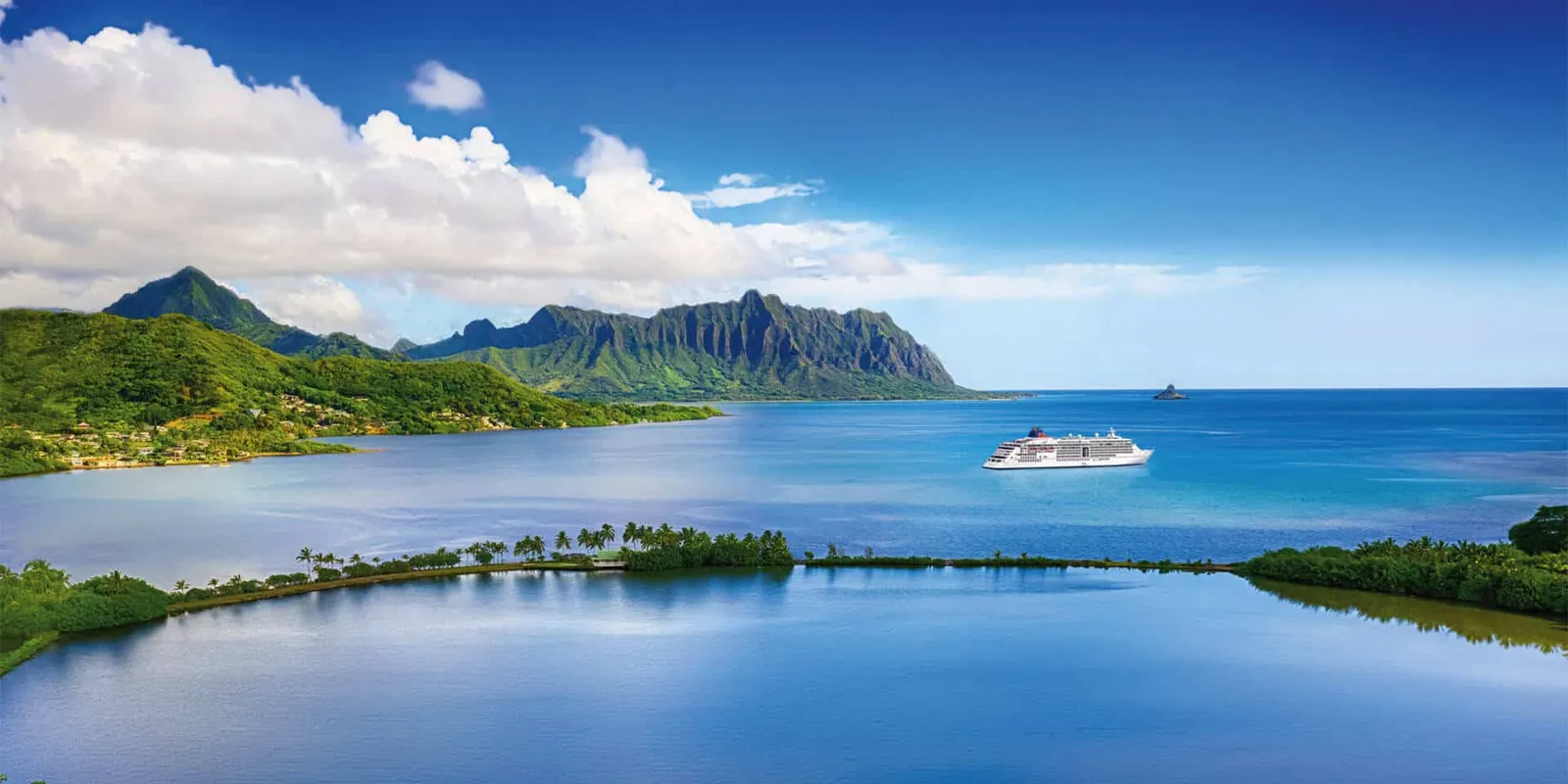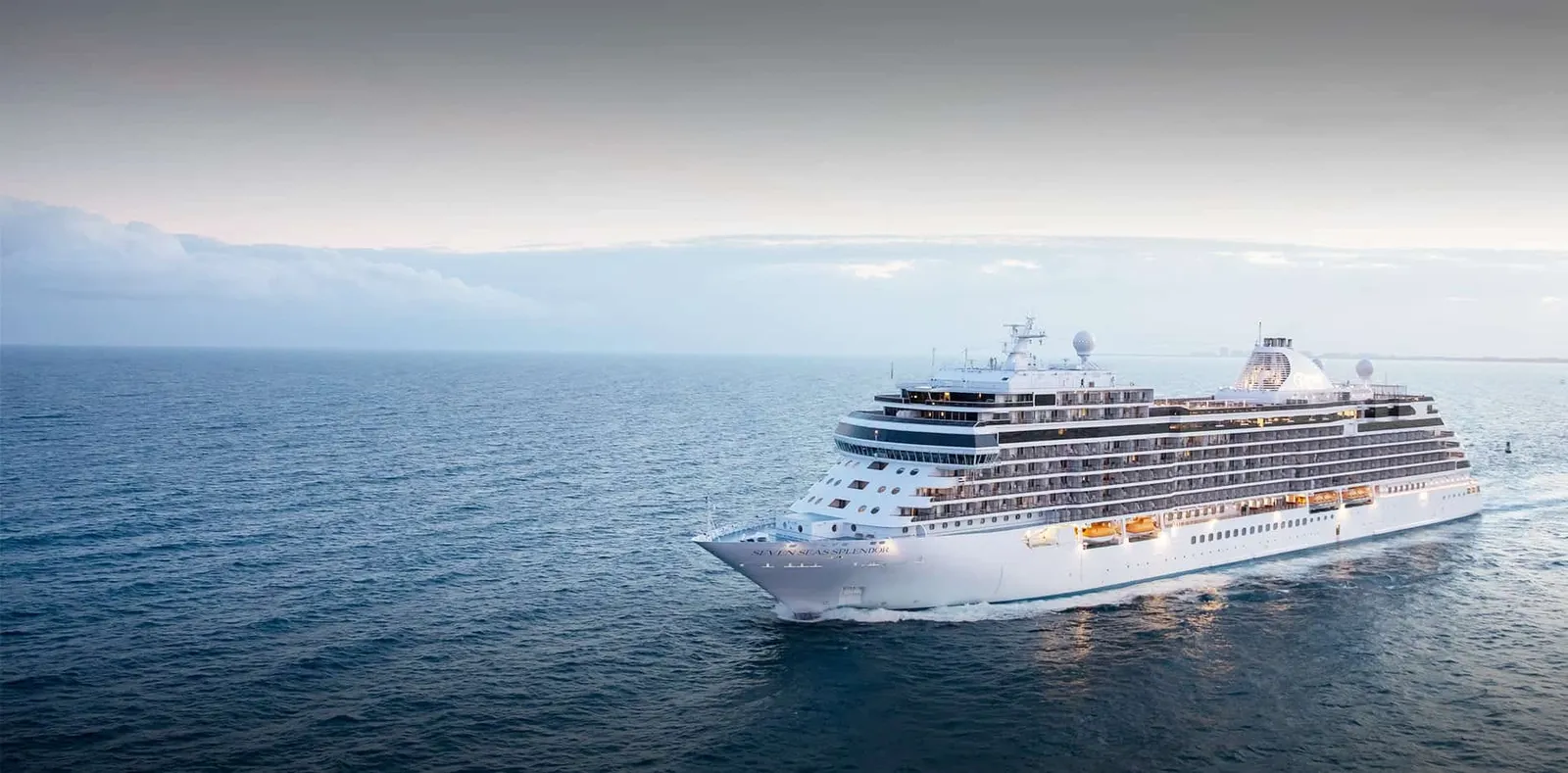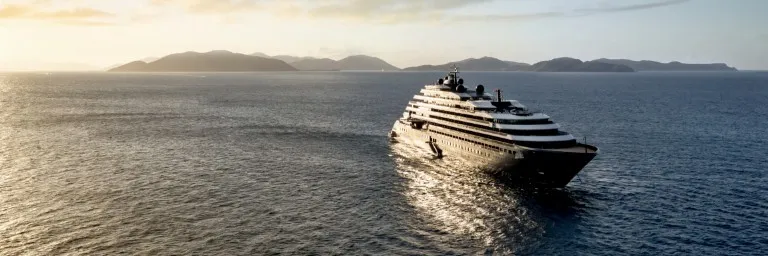
The Ritz-Carlton Yacht Collection and Sea Cloud Cruises both deliver intimate, yacht-scale voyaging for fewer than 230 guests — but one is a purpose-built ultra-luxury superyacht backed by Marriott, the other a fleet of heritage tall ships where crew hand-set sails just as they did in 1931. Jake Hower compares two radically different philosophies of luxury at sea.
| The Ritz-Carlton Yacht Collection | Sea Cloud Cruises | |
|---|---|---|
| Category | Yacht-Style / Ultra-Luxury | Yacht-Style |
| Rating | ★★★★★ | ★★★★☆ |
| Fleet size | 3 ships | 3 ships |
| Ship size | Yacht (under 300) | Yacht (under 140) |
| Destinations | Mediterranean, Caribbean, Northern Europe, Central America | Mediterranean, Caribbean, Northern Europe |
| Dress code | Casual elegance | Elegantly casual |
| Best for | Ultra-luxury yacht lifestyle travellers | Tall-ship sailing romantics |
These lines occupy entirely different corners of yacht cruising and rarely compete for the same booking. The Ritz-Carlton Yacht Collection suits travellers who want a floating five-star hotel with Michelin-level dining, superyacht aesthetics, and Marriott Bonvoy loyalty integration — all in an all-inclusive package. Sea Cloud suits romantics captivated by authentic tall-ship sailing, maritime heritage, and the visceral spectacle of 29 hand-set sails unfurling above a vessel built in 1931. For Australian Marriott loyalists seeking polished ultra-luxury with modern suites, choose Ritz-Carlton. For travellers who value authenticity, heritage, and the rhythm of wind over every modern convenience, choose Sea Cloud.
The core difference
The Ritz-Carlton Yacht Collection and Sea Cloud Cruises represent two philosophies of luxury at sea so distinct that comparing them risks the absurd — and yet both sit within the yacht category, both carry fewer than 230 guests, and both attract well-travelled couples who have rejected conventional cruising. The comparison matters because an Australian traveller researching intimate yacht-scale voyages will encounter both names, and understanding what each actually delivers prevents an expensive mismatch between expectation and experience.
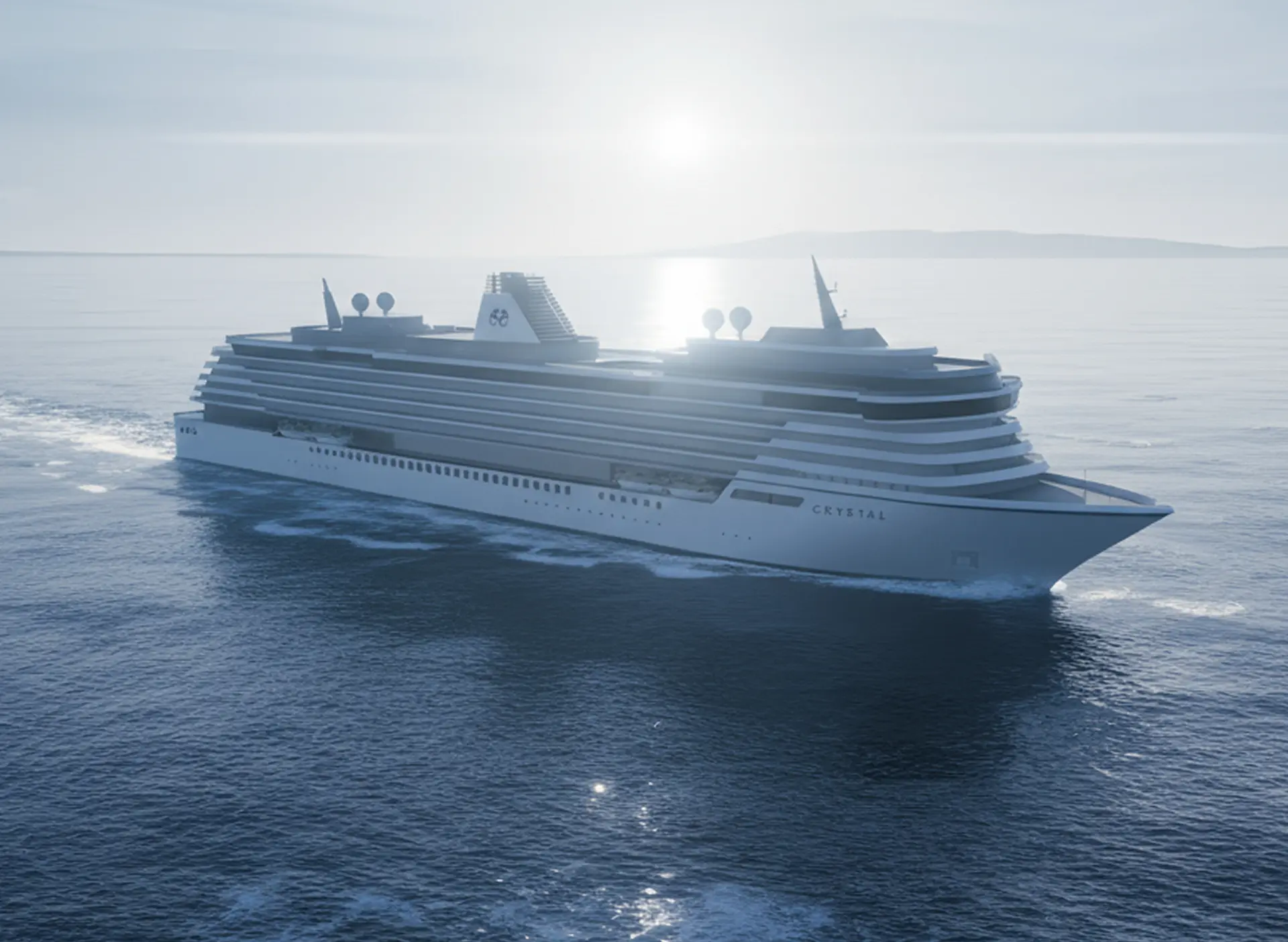
The Ritz-Carlton Yacht Collection is Marriott International’s entry into ultra-luxury cruising, and it has been deliberately engineered to feel nothing like a cruise line. Three purpose-built superyachts — Evrima (149 suites, launched 2022), Ilma (224 suites, launched 2024), and Luminara (226 suites, launching 2025) — deliver the hushed, anticipatory service of a Ritz-Carlton hotel on the water. There is no buffet, no public-address system, no cruise director, and no casino. Five restaurants include S.E.A., serving seven-course tasting menus conceived by Chef Sven Elverfeld of the three-Michelin-star Aqua at The Ritz-Carlton Wolfsburg. Ilma was named Cruise Critic’s Luxury Ship of the Year for 2024, boasting the highest space-per-guest ratio at sea — over 104 cubic feet per passenger. The guest profile skews younger than most ultra-luxury lines, with roughly half having never cruised before and around forty per cent already loyal to the Ritz-Carlton brand.
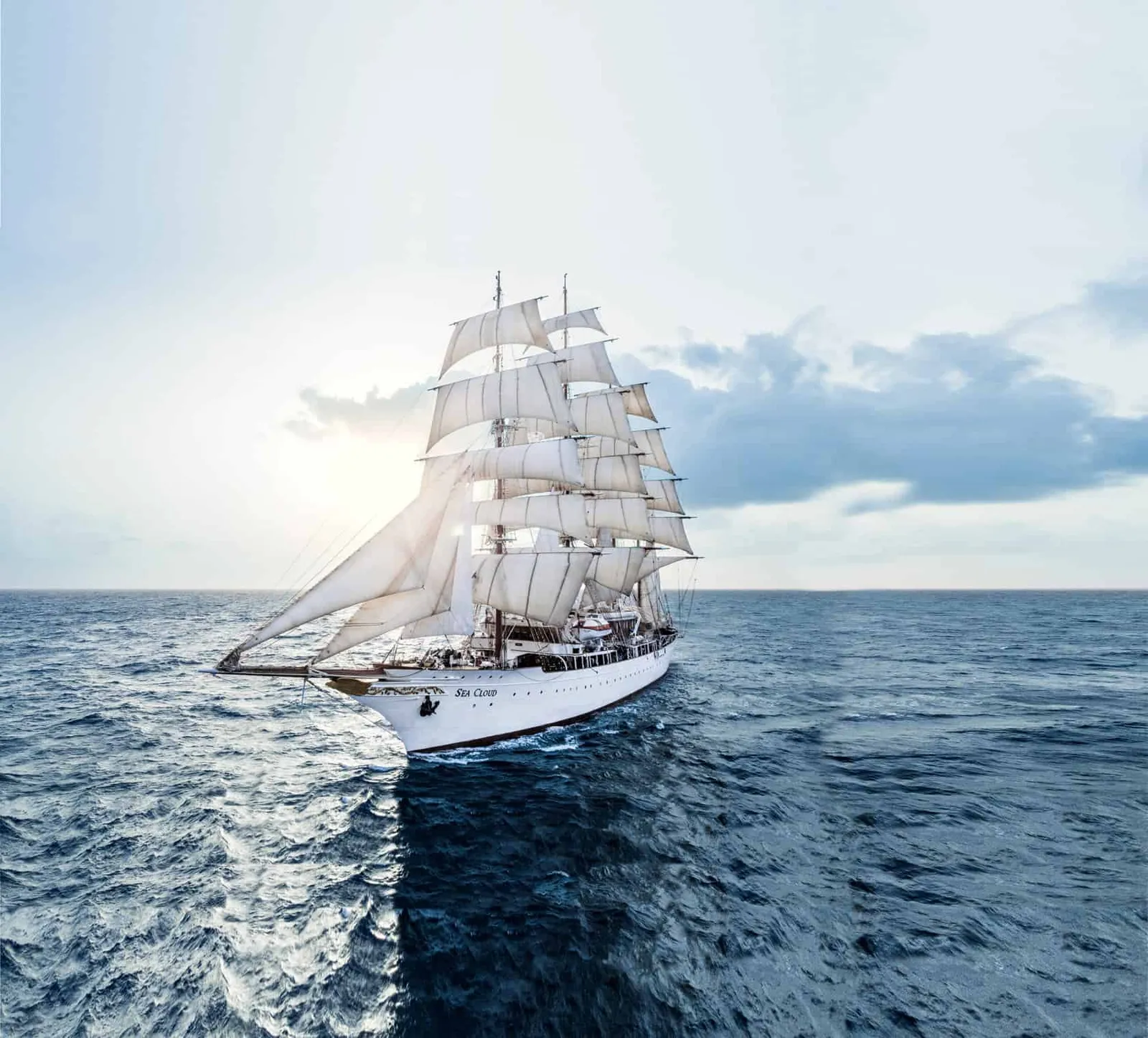
Sea Cloud Cruises is a Hamburg-based company operating the world’s only fleet of luxury tall sailing ships. The original Sea Cloud, built in 1931 for cereal heiress Marjorie Merriweather Post, carries just 64 guests in cabins retaining their original mahogany panelling, marble fireplaces, and gold-plated bathroom fixtures. Sea Cloud II (2001) carries 94 guests, and Sea Cloud Spirit (2021) carries up to 136 passengers. On every vessel, the sails are raised and managed entirely by hand — watching the crew unfurl 29 sails across 3,000 square metres of canvas aboard the original ship is one of the most extraordinary spectacles in travel. There is no casino, no swimming pool, no pickleball court. The focus is on wind, water, and the camaraderie of a small group aboard a vessel with genuine heritage.
For Australian travellers, the choice is not between good and bad but between fundamentally different definitions of luxury. Ritz-Carlton offers the polished perfection of a modern superyacht with every conceivable amenity included. Sea Cloud offers something money cannot manufacture — a living connection to the golden age of sail aboard a vessel that has been plying the world’s oceans for nearly a century.
What is actually included
The inclusion models differ substantially, and understanding the detail prevents surprises when the bill arrives — particularly relevant for Australian travellers calculating total cost including international flights.
The Ritz-Carlton Yacht Collection operates a genuinely comprehensive all-inclusive model. The fare covers all dining across five restaurants without surcharges, premium beverages including champagne, wines, spirits, and cocktails, Wi-Fi throughout the vessel, crew gratuities, and access to the marina watersports platform. Shore excursions, spa treatments, and speciality retail are additional. The all-inclusive beverage programme is particularly generous — premium spirits and wines are available throughout the day without limit or signing. For a couple on a seven-night voyage, the included beverages alone represent AUD $2,000 to $3,500 in value compared to purchasing à la carte on other lines.
Sea Cloud Cruises operates a more traditional European inclusion model. The fare covers full board dining — breakfast, lunch, afternoon tea, and dinner — plus basic table wines with meals and non-alcoholic beverages. Premium wines, spirits, cocktails, and champagne are charged separately. Wi-Fi is available but limited and charged. Gratuities are discretionary and not included. Shore excursions are additional. The onboard lecture programme and the sailing experience itself — including the opportunity to assist with sail handling — are included. Sea Cloud Spirit’s spa and wellness facilities carry treatment charges.
The net result for Australian travellers is a meaningful gap in total onboard spend. A Ritz-Carlton voyage is effectively cashless once aboard — everything except spa treatments and shore excursions is covered. A Sea Cloud voyage will accumulate a bar tab, Wi-Fi charges, and gratuities that can add AUD $150 to $250 per person per day depending on drinking habits. When comparing published fares, the Ritz-Carlton figure is closer to the true total cost, while Sea Cloud’s published fare understates the all-in expense.
Dining and culinary experience
Both lines take dining seriously, but the scale, philosophy, and execution differ as dramatically as the vessels themselves.
The Ritz-Carlton Yacht Collection delivers a multi-venue dining programme anchored by genuine Michelin-pedigree talent. S.E.A. — the signature restaurant aboard all three yachts — serves seven-course tasting menus conceived by Chef Sven Elverfeld, whose Aqua restaurant at The Ritz-Carlton Wolfsburg holds three Michelin stars. Additional venues include the main restaurant, a pool grill, a sushi bar, and various casual options — five dining experiences in total, all included without surcharges. The culinary ambition is evident in every detail, from the quality of ingredients to the presentation and wine pairings. Ilma’s dining programme benefits from the highest space-per-guest ratio at sea, ensuring every restaurant feels unhurried even at full occupancy.
Sea Cloud Cruises offers a single-venue dining experience that reflects the intimate scale of the ships and their European heritage. Meals are served in one main restaurant with open seating, and the cuisine is classical European with regional influences drawn from the sailing region — Mediterranean herbs and seafood in summer, Caribbean spices in winter. The cooking is genuinely excellent for vessels of this size, with menus changing daily and the chef sourcing locally where possible. Table wines are included with dinner. The atmosphere is convivial rather than formal — shared tables encourage conversation, and the Captain typically dines with guests.
The comparison is not about quality but about choice. Ritz-Carlton offers five distinct dining experiences with a Michelin-starred culinary director overseeing the programme. Sea Cloud offers one beautifully executed restaurant where the intimacy of 64 to 136 guests ensures personal attention from the kitchen. Foodies seeking variety, tasting menus, and contemporary gastronomy will prefer Ritz-Carlton. Travellers who value a communal table, a single excellent kitchen, and the simplicity of one superb meal shared with fellow guests under sail will prefer Sea Cloud.
Suites and accommodation
The accommodation gap is perhaps the starkest contrast in this comparison, shaped by the ninety-year age difference between the oldest vessels in each fleet.
The Ritz-Carlton Yacht Collection offers purpose-built suites designed by Tillberg Design of Sweden with interiors reflecting superyacht aesthetics. Evrima’s 149 suites start with Terrace Suites at approximately 300 square feet with private terraces — though these are more studio than suite, and upgrading at least one category is advisable. Ilma and Luminara expand the suite programme substantially, with entry-level suites offering more generous proportions and the highest categories exceeding 1,000 square feet with separate living areas, dining spaces, and wrap-around terraces. Every suite features a private outdoor space, marble bathrooms, and the refined residential design language that characterises Ritz-Carlton properties worldwide.
Sea Cloud’s accommodation spans nearly a century of naval architecture. The original 1931 vessel’s Owner’s Cabins — numbered 1 through 4 — are museum-quality spaces with original mahogany panelling, marble fireplaces, gold-plated fixtures, and antique furnishings that belonged to Marjorie Merriweather Post herself. These are genuine historical artefacts as much as hotel rooms. Standard cabins aboard the original ship are compact and nautically themed — functional rather than spacious. Sea Cloud II offers slightly more contemporary accommodation with larger cabins. Sea Cloud Spirit represents the most modern option, with balcony cabins, a wellness area, and cabin sizes that approach mainstream cruise standards while retaining the tall-ship character.
For travellers who prioritise modern suite design, private terraces, and generous living space, Ritz-Carlton delivers a standard that Sea Cloud cannot approach. For travellers who value sleeping in a cabin that has hosted European royalty, where the original marble fireplace dates to 1931 and the mahogany has been polished for nearly a century, Sea Cloud’s Owner’s Cabins offer something no modern ship can replicate — authentic history you can touch.
Pricing and value
The pricing comparison requires honesty about what each line costs in total, not merely what the published fare suggests — and for Australians, the flight component is significant for both.
The Ritz-Carlton Yacht Collection commands ultra-luxury pricing. Seven-night Mediterranean voyages on Evrima start from approximately USD $5,000 to $8,000 per person for entry-level Terrace Suites, with Ilma and Luminara pricing similar or slightly higher given their newer build. Higher suite categories escalate substantially. However, these fares are genuinely all-inclusive — dining, premium beverages, Wi-Fi, and gratuities are covered. The per-diem works out to roughly AUD $1,200 to $2,000 per person per night depending on suite category and itinerary, with minimal additional onboard spend required.
Sea Cloud Cruises pricing varies significantly by vessel and cabin category. The original Sea Cloud’s Owner’s Cabins command premium pricing commensurate with their historical significance — comparable to Ritz-Carlton’s higher suite categories. Standard cabins on Sea Cloud and Sea Cloud II start from approximately EUR $3,000 to $5,000 per person for a seven-night voyage. Sea Cloud Spirit cabins with balconies run higher. Once premium beverages, Wi-Fi, gratuities, and excursions are added, the total per-diem sits at roughly AUD $700 to $1,400 per person per night — generally below Ritz-Carlton for comparable cabin tiers, but the gap narrows substantially for Sea Cloud’s premium categories.
For Australian travellers, flights to European or Caribbean embarkation ports run AUD $2,000 to $4,000 per person return regardless of which line is chosen. Neither line offers Australian departures. The total holiday cost — flights, pre- and post-cruise hotels, and the voyage itself — positions both lines firmly in the premium travel bracket, with Ritz-Carlton typically AUD $3,000 to $6,000 more per person per week when comparing equivalent comfort levels.
Spa and wellness
The spa and wellness offerings reflect each line’s broader philosophy — modern resort luxury versus maritime heritage and simplicity.
The Ritz-Carlton Yacht Collection provides full-service spas aboard all three yachts, consistent with the brand’s hotel spa standards. Treatment rooms, saunas, steam rooms, and fitness centres are complemented by the Ritz-Carlton spa menu of facials, massages, body treatments, and beauty services. Ilma’s spa, benefiting from the highest space-per-guest ratio at sea, offers a particularly serene environment. The marina watersports platform provides active wellness through kayaking, paddleboarding, and swimming. The fitness centre features modern cardio and strength equipment with ocean views.
Sea Cloud Cruises takes a more restrained approach. The original Sea Cloud and Sea Cloud II have minimal spa facilities — the ships’ heritage construction leaves limited space for treatment rooms. Sea Cloud Spirit, the newest vessel, introduced a dedicated wellness and spa area with treatment rooms, a fitness centre, and a swimming platform. On all three ships, the primary wellness experience is the sailing itself — the rhythm of the sea, the absence of digital distraction, and the physical engagement of watching (or assisting with) the hand-setting of sails. Guests seeking a digital detox will find Sea Cloud’s limited connectivity a feature rather than a flaw.
For travellers who expect a full resort spa experience with professional treatments, modern facilities, and a fitness centre, Ritz-Carlton delivers without compromise. For those who define wellness as disconnection, fresh sea air, the meditative rhythm of a vessel under sail, and the simplicity of a life uncluttered by spa menus and appointment schedules, Sea Cloud offers a different but genuinely restorative experience.
Entertainment and enrichment
Neither line is a floating theatre — both attract travellers who consider the absence of production shows a selling point. But the evening philosophies differ meaningfully.
The Ritz-Carlton Yacht Collection provides sophisticated, low-key entertainment in the style of a luxury hotel lounge. Live acoustic musicians, pianists, and small ensembles perform in the ship’s public spaces. The atmosphere is social rather than programmed — cocktails in the lounge, conversation on the terrace, stargazing from the deck. There is no casino, no production show, and no cruise director in the traditional sense. Enrichment is woven into the destination programme rather than delivered as onboard lectures. The overall feel is a private yacht party hosted by very capable staff who anticipate rather than announce.
Sea Cloud Cruises offers an enrichment programme rooted in maritime heritage and cultural exploration. Onboard lecturers provide context for destinations visited — historians, naturalists, and regional experts add depth to shore excursions. The primary entertainment is the sailing itself: watching the crew hand-set sails is a spectacle that never dulls, and guests are invited to participate in sail handling and learn basic seamanship. Evenings are intimate — perhaps a classical musician performing in the lounge, conversation over port, or simply standing on deck watching the stars through the rigging. The Captain’s dinner is a highlight of every voyage.
The entertainment distinction mirrors the broader identity of each line. Ritz-Carlton delivers polished, understated sophistication with the social energy of an exclusive members’ club. Sea Cloud delivers the organic, unprogrammed atmosphere of a private yacht under sail, where the vessel and the sea are the spectacle and fellow guests become friends through shared experience.
Fleet and destination coverage
The fleets differ in size, age, and destination range — and the differences matter for Australian travellers planning when and where to sail.
The Ritz-Carlton Yacht Collection operates three purpose-built superyachts. Evrima (149 suites, 2022) was the inaugural vessel, sailing Mediterranean, Caribbean, and Northern European itineraries. Ilma (224 suites, 2024) expanded capacity substantially and earned Cruise Critic’s Luxury Ship of the Year. Luminara (226 suites, 2025) adds further capacity and introduces Alaska to the collection’s itinerary portfolio in 2026. The fleet is young, modern, and growing — but limited to three vessels covering the Mediterranean, Caribbean, Northern Europe, Central America, and Alaska.
Sea Cloud Cruises operates three tall ships spanning ninety years of maritime history. The original Sea Cloud (1931, 64 guests) is a genuine maritime treasure. Sea Cloud II (2001, 94 guests) expanded the concept. Sea Cloud Spirit (2021, 136 guests) added modern amenities while preserving the sailing experience. The fleet sails the Caribbean in winter and the Mediterranean, Canary Islands, and Northern Europe in summer, with itineraries ranging from four to nineteen nights. The shallow draft of the sailing vessels accesses small harbours and anchorages unreachable by Ritz-Carlton’s larger yachts.
For Australian travellers, neither line offers domestic departures. Both require international flights to European or Caribbean embarkation ports. Ritz-Carlton’s broader destination range — including the new Alaska programme — provides slightly more itinerary diversity. Sea Cloud’s smaller vessels access ports that even Ritz-Carlton’s purpose-built yachts cannot reach. The choice depends on whether destination range or harbour intimacy matters more.
Where each line excels
The Ritz-Carlton Yacht Collection excels in:
- Modern ultra-luxury standards. Purpose-built superyachts with the highest space-per-guest ratio at sea, suites with private terraces in every category, and residential design by Tillberg. The hardware is new, refined, and optimised for comfort in a way that heritage vessels cannot match.
- All-inclusive simplicity. Five restaurants, premium beverages, Wi-Fi, and gratuities included without add-on packages or surcharges. The voyage is effectively cashless from embarkation to disembarkation.
- Michelin-pedigree dining. Chef Sven Elverfeld’s three-Michelin-star influence across five dining venues delivers culinary ambition that Sea Cloud’s single restaurant, however excellent, cannot replicate in breadth.
- Marriott Bonvoy integration. Points earning, elite night credits, and status recognition for the millions of travellers — including many Australians — invested in the Marriott loyalty ecosystem.
- First-time cruiser appeal. Roughly half of Ritz-Carlton guests have never cruised before. The experience is designed to feel like a hotel, not a ship — removing the barriers that deter luxury hotel guests from trying the sea.
Sea Cloud Cruises excels in:
- Authentic sailing heritage. The only fleet of luxury tall sailing ships in the world. Watching crew hand-set 29 sails on a vessel built in 1931 is a spectacle no modern superyacht can approach. The sailing is real, not decorative.
- Historical authenticity. Cabins aboard the original Sea Cloud retain their 1931 fittings — mahogany panelling, marble fireplaces, gold-plated fixtures. Sleeping where Marjorie Merriweather Post entertained European royalty is an experience that cannot be manufactured.
- Intimate scale. Sixty-four guests on the original Sea Cloud creates an intimacy that even Evrima’s 149 suites cannot replicate. At this scale, every guest knows every other guest by the second evening.
- Harbour access. The tall ships’ shallow draft and compact size allows access to anchorages and harbour towns that no purpose-built superyacht can enter.
- Maritime romance. The sound of wind in the rigging, the sight of canvas against open sky, the feel of a wooden deck underfoot — Sea Cloud delivers an emotional, sensory experience that no amount of modern luxury can replicate.
Standout itineraries for Australian travellers
The Ritz-Carlton Yacht Collection
Ilma: Mediterranean (7-10 nights, multiple departures, 2026) — The Cruise Critic Luxury Ship of the Year exploring the western and eastern Mediterranean with the highest space-per-guest ratio at sea. Ports favour quieter coves and smaller harbours — Corsica, the Dalmatian coast, Greek islands — over congested cruise terminals. Five dining venues and the all-inclusive programme make this the most effortless ultra-luxury Mediterranean experience available. Fly from Australian gateways via Singapore, the Middle East, or London.
Luminara: Alaska (2026 inaugural season) — Ritz-Carlton’s newest yacht brings superyacht luxury to Alaska for the first time. At 226 suites, this is intimate by Alaskan cruise standards, and the itineraries will emphasise smaller ports and scenic cruising rather than the congested stops favoured by mega-ships. A genuinely differentiated way to experience Alaska for travellers willing to invest at the ultra-luxury level. Connect via Los Angeles, San Francisco, or Vancouver from Australian cities.
Evrima: Caribbean (7-10 nights, winter season) — The intimate 149-suite yacht exploring the Grenadines, the Windward Islands, and Central American coastline. The marina platform deploys in warm Caribbean waters for kayaking, paddleboarding, and swimming. The smaller vessel size accesses harbours that Ilma and Luminara cannot enter. Fly to San Juan or Barbados via the United States from Australian east coast cities.
Sea Cloud Cruises
Sea Cloud: Caribbean (7-14 nights, winter season) — The original 1931 vessel under full sail through the Windward and Leeward Islands. Just 64 guests aboard the most historically significant passenger vessel still in regular service. The Owner’s Cabins with their original 1931 fittings are bucket-list accommodation. Book well in advance — with only 32 cabins, the ship sells out rapidly. Fly to Barbados or Antigua via London or the United States.
Sea Cloud Spirit: Mediterranean (7-14 nights, summer season) — The newest vessel brings balcony cabins, a spa, and modern amenities to the tall-ship sailing experience. Up to 136 guests explore the western Mediterranean, Greek islands, and Dalmatian coast under sail. The most accessible Sea Cloud vessel for travellers wanting the sailing experience with contemporary comfort. Fly to Barcelona, Rome, or Athens via the Middle East or Singapore.
Sea Cloud II: Canary Islands and Northern Europe (various lengths, spring and autumn) — Repositioning and themed voyages that take the 94-guest barque through the Canary Islands, the Atlantic coast of Europe, and into the Baltic. These itineraries attract Sea Cloud’s most experienced repeat guests and offer the deepest immersion in the tall-ship sailing lifestyle.
Ship-by-ship recommendations
The Ritz-Carlton Yacht Collection
Evrima (149 suites, 2022) — The inaugural vessel and the most intimate of the three. At 149 suites, Evrima delivers the closest experience to a private superyacht. Note that the entry-level Terrace Suites are more studio than suite — upgrading at least one category is advisable for travellers accustomed to generous hotel rooms. Choose Evrima for the most intimate Ritz-Carlton yacht experience and Caribbean itineraries where the smaller size accesses hidden harbours.
Ilma (224 suites, 2024) — Cruise Critic’s Luxury Ship of the Year with the highest space-per-guest ratio at sea. Even at full occupancy, Ilma feels serenely uncrowded. The expanded restaurant programme and larger spa make this the most polished vessel in the collection. Choose Ilma for the Mediterranean, where the ship’s size and facilities match the demands of port-intensive itineraries.
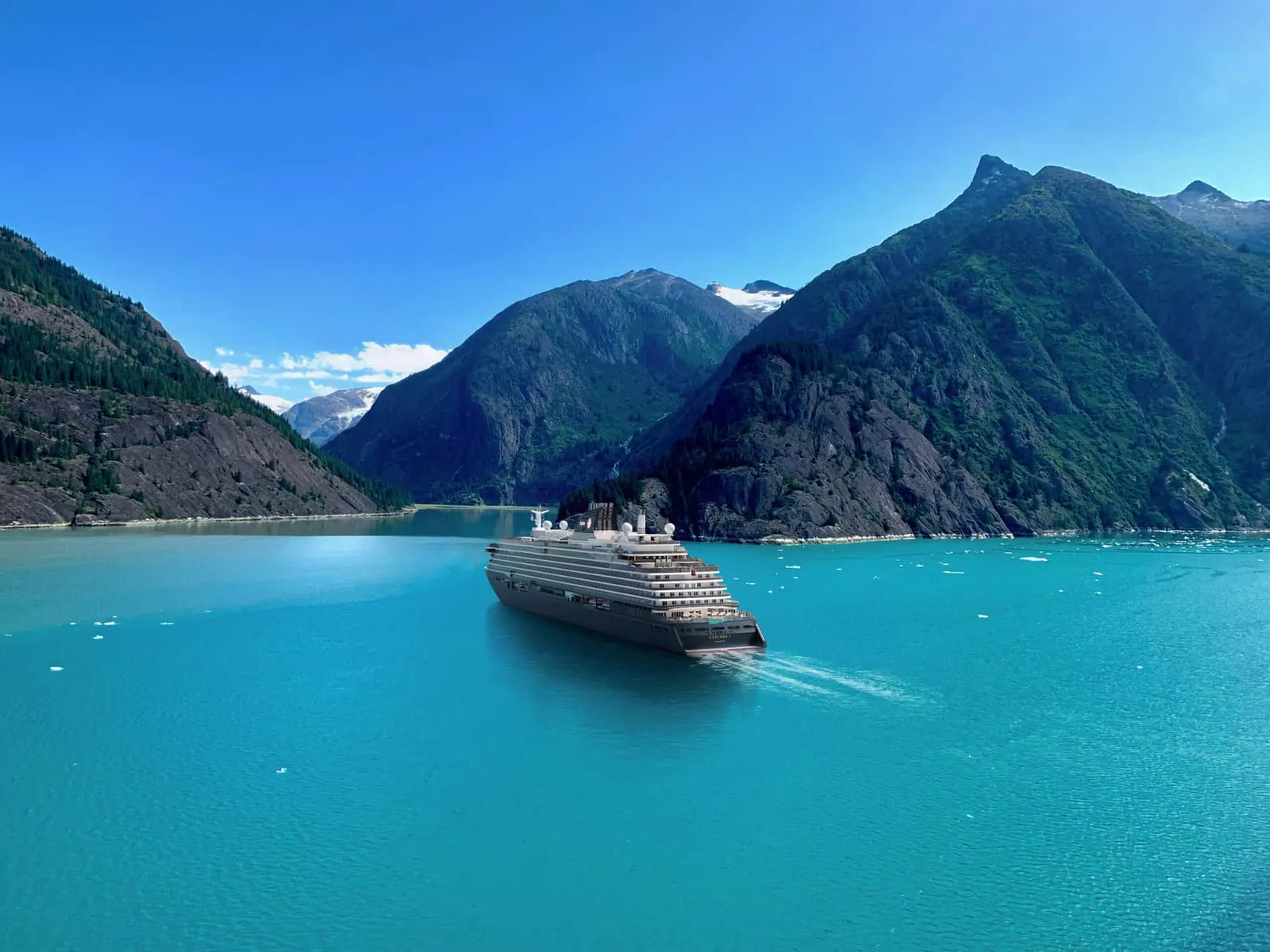
Luminara (226 suites, 2025) — The newest yacht, sister to Ilma, introducing Alaska to the collection’s portfolio in 2026. For Australian travellers, the Alaska inaugural season represents a rare opportunity to experience a new vessel in a new destination before demand peaks. Choose Luminara for Alaska or European itineraries where the newest hardware matters.
Sea Cloud Cruises
Sea Cloud (64 guests, 1931) — The original and irreplaceable. Nothing else afloat compares. Choose for the Caribbean, where warm-weather sailing maximises time under canvas and the Owner’s Cabins deliver accommodation that is literally museum-quality. Accept the compact standard cabins, the absence of modern amenities, and the steep companionways as the price of sailing aboard a vessel with nearly a century of history.
Sea Cloud II (94 guests, 2001) — A slightly more spacious and contemporary interpretation of the tall-ship experience, with improved cabin sizes and modern safety systems. Choose for European voyages, repositioning sailings, and themed itineraries where the slightly larger capacity creates a more diverse social dynamic.
Sea Cloud Spirit (136 guests, 2021) — The most modern vessel, with balcony cabins, a spa, a swimming platform, and a fitness centre. The closest Sea Cloud gets to mainstream cruise comfort while retaining the authentic sailing experience. Choose as a first Sea Cloud experience, particularly for travellers who want the sailing heritage but are not ready to sacrifice modern cabin amenities.
For Australian travellers specifically
Neither line has a significant Australian presence, and this is worth stating plainly. Both require international flights from Australian gateways to European or Caribbean embarkation ports, typically involving 20 to 30 hours of travel each way.
The Ritz-Carlton Yacht Collection benefits from the broader Marriott International infrastructure. Australian travellers with Marriott Bonvoy status — earned through stays at local properties including The Ritz-Carlton Melbourne, W Brisbane, Westin Perth, and the extensive Marriott and Sheraton network — will find their loyalty recognised aboard. Points earning, elite night credits, and status-matched benefits create a tangible loyalty pathway that Sea Cloud cannot offer. Ritz-Carlton’s reservations infrastructure, multi-language support, and global brand recognition also simplify the booking process for Australians accustomed to dealing with Marriott properties.
Sea Cloud Cruises is a Hamburg-based family operation with a predominantly European client base. Australian representation is limited, and booking typically requires working through specialist cruise agents — including Pan Australian Travel — who maintain relationships with the European head office. The passenger mix aboard is heavily European, particularly German, with a smaller contingent of British, American, and international guests. Australian travellers will be a minority, which may appeal to those seeking a distinctly European atmosphere or may feel isolating for those who prefer a broader international mix.
The flight factor is identical for both lines — Australian travellers face 20-plus hours of travel to reach European embarkation ports regardless of which line they choose. For Caribbean itineraries, flights route through the United States or London. Pre- and post-cruise hotel stays are advisable for both lines given the distances involved. Australian specialist agents can arrange flight routings, hotel stays, and transfers that the European or American head offices of either line may not provide with the same local knowledge.
The onboard atmosphere
The atmospheric difference between these lines is the widest of any comparison in this series — and understanding it prevents the most consequential booking mistake.
The Ritz-Carlton Yacht Collection delivers the atmosphere of an exclusive, modern boutique hotel set on the water. Wide, wood-panelled corridors. Hushed public spaces. An almost one-to-one crew-to-guest ratio delivering the anticipatory, unobtrusive service that defines the Ritz-Carlton brand. The guest profile skews younger than most ultra-luxury lines — couples in their 40s and 50s alongside older luxury travellers — with roughly half having never cruised before. The social energy is sophisticated and contemporary: cocktails in the lounge, dinner at S.E.A., nightcaps on the terrace. Dress is casually elegant. The absence of a cruise director, public-address system, and casino reinforces the feeling that you are aboard a private yacht rather than a passenger vessel.
Sea Cloud Cruises delivers the atmosphere of a private sailing yacht from another era. The creak of timber, the snap of canvas, the rhythm of a vessel responding to wind rather than engines. The guest profile is older and more traditionally European — couples in their 50s to 70s who have travelled extensively and value cultural depth, maritime heritage, and the absence of modern distraction. The social dynamic is intimate and convivial: shared tables at dinner, conversation on deck as the sails are set, and the natural bonding that occurs when 64 to 136 guests share the extraordinary experience of sailing under canvas aboard a vessel built before most of their parents were born.
The choice between these atmospheres is deeply personal. Ritz-Carlton offers the polish, the design, and the social currency of a recognised luxury brand. Sea Cloud offers something rarer — the sense of being transported not just to a destination but to a different time, where the technology of travel is wind and canvas rather than diesel and steel, and the luxury is not in the thread count but in the privilege of the experience itself.
The bottom line
The Ritz-Carlton Yacht Collection and Sea Cloud Cruises are not competitors in any practical sense — they attract different travellers, deliver different experiences, and define luxury through entirely different lenses. The comparison matters because both appear in the yacht category and both carry intimate guest counts, creating the illusion of direct competition where none truly exists.
Choose The Ritz-Carlton Yacht Collection for the most polished ultra-luxury yacht experience afloat. Choose it for purpose-built superyachts with the highest space-per-guest ratio at sea, suites with private terraces, five restaurants including a three-Michelin-star culinary director, and a genuinely all-inclusive fare covering premium beverages, Wi-Fi, and gratuities. Choose it for the Marriott Bonvoy loyalty pathway that rewards Australian hotel loyalists with points, elite nights, and status recognition at sea. Choose it for the feeling of boarding a private floating estate where every detail has been designed rather than inherited. Accept that the experience is modern, curated, and intentionally detached from maritime tradition — and that this is precisely the point for travellers who want a luxury hotel that happens to move.
Choose Sea Cloud Cruises for an experience that no modern ship can replicate and no amount of money can manufacture elsewhere. Choose it for the spectacle of 29 hand-set sails unfurling above a vessel built in 1931, for Owner’s Cabins with original mahogany and marble from the golden age of private yachting, and for the visceral connection to maritime heritage that only a working tall ship can deliver. Choose it for 64 to 136 guests under canvas, for the sound of wind in the rigging, and for the simplicity of a voyage where the technology is centuries old and the luxury is in the authenticity. Accept that cabins are compact on the older vessels, that the inclusion model is less comprehensive, that the Australian presence is minimal, and that the ships require a tolerance for the charming imperfections of heritage vessels. For the traveller who has experienced every modern luxury and now craves something with soul, Sea Cloud is in a category of one.