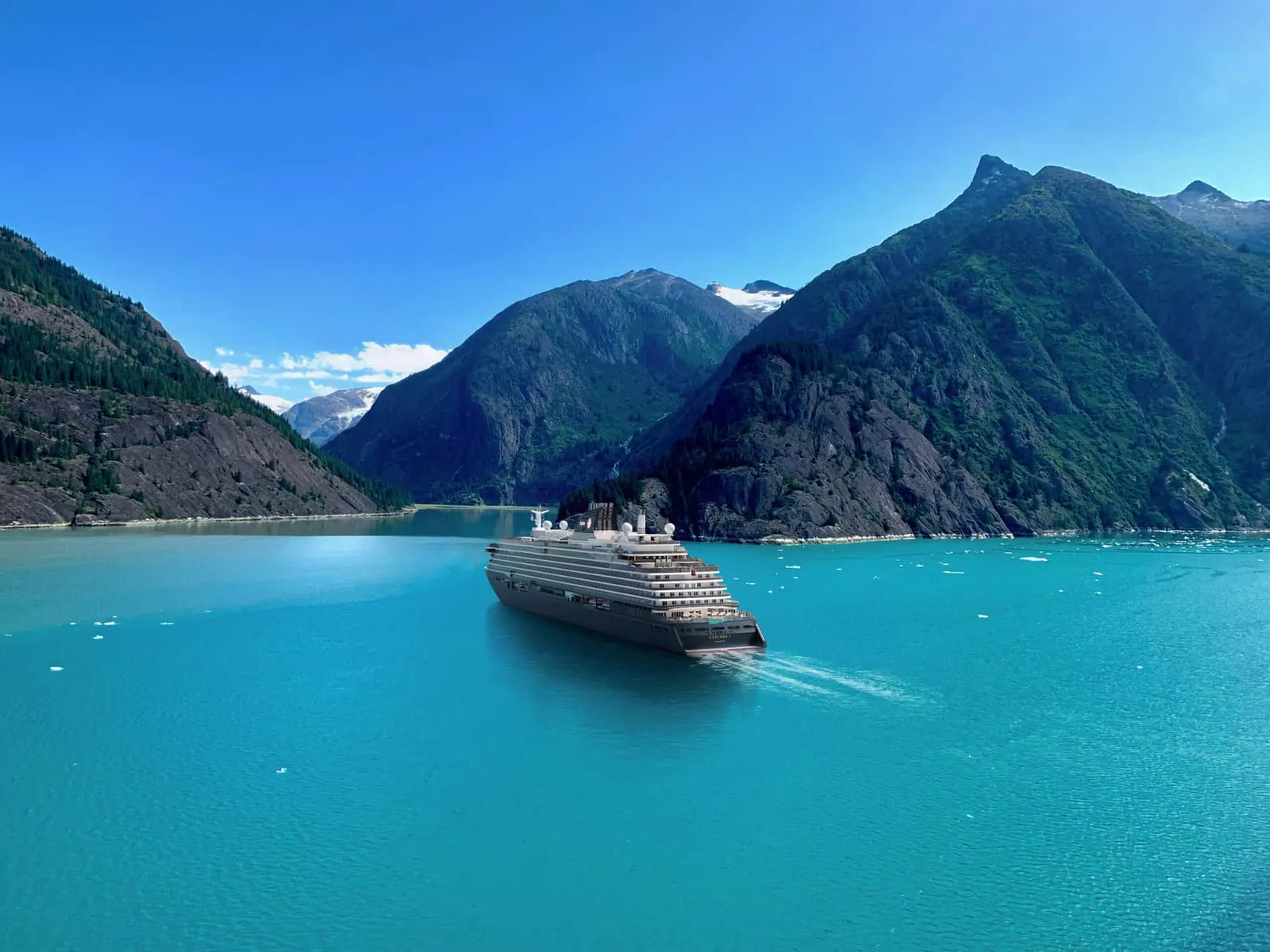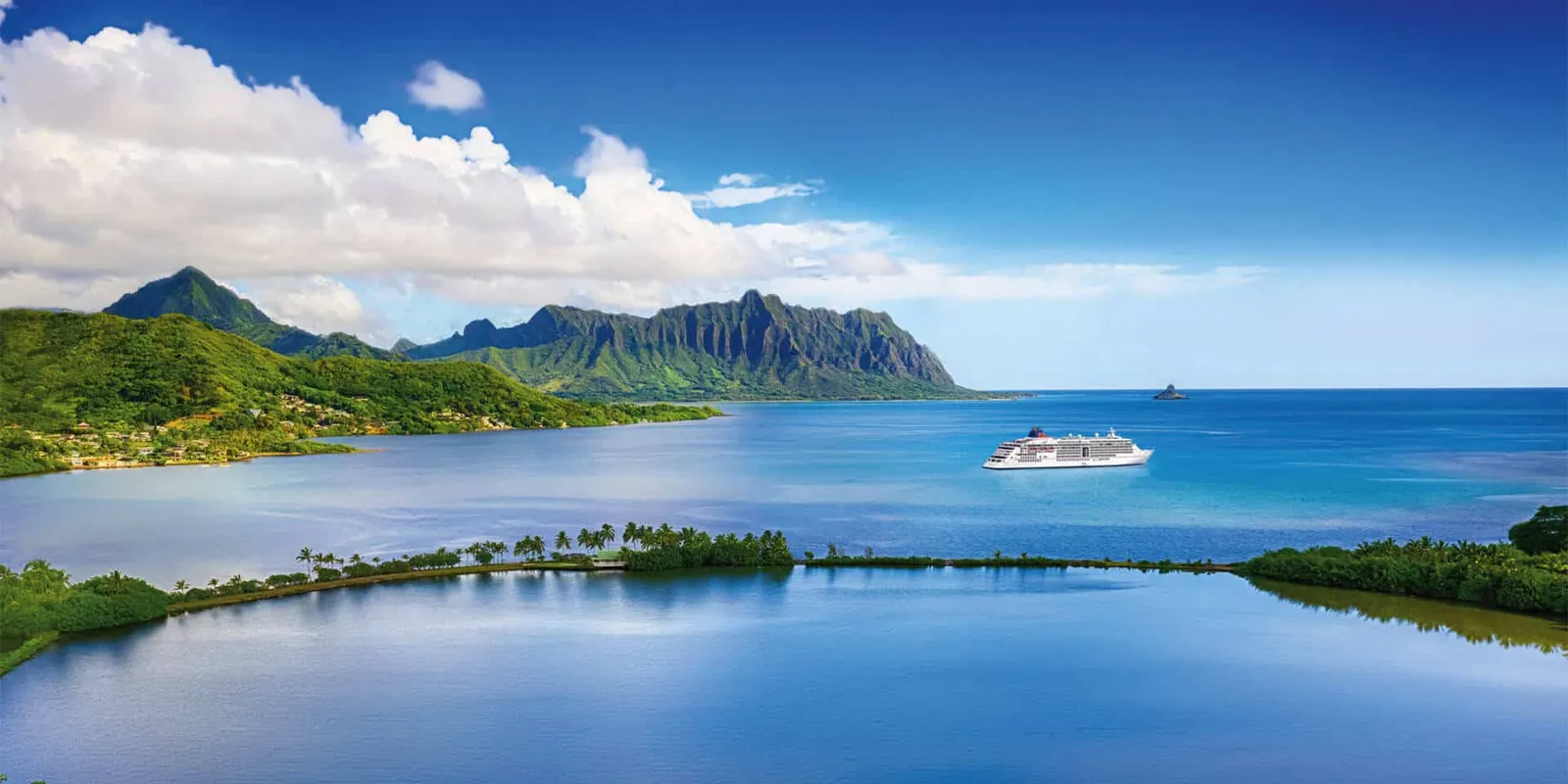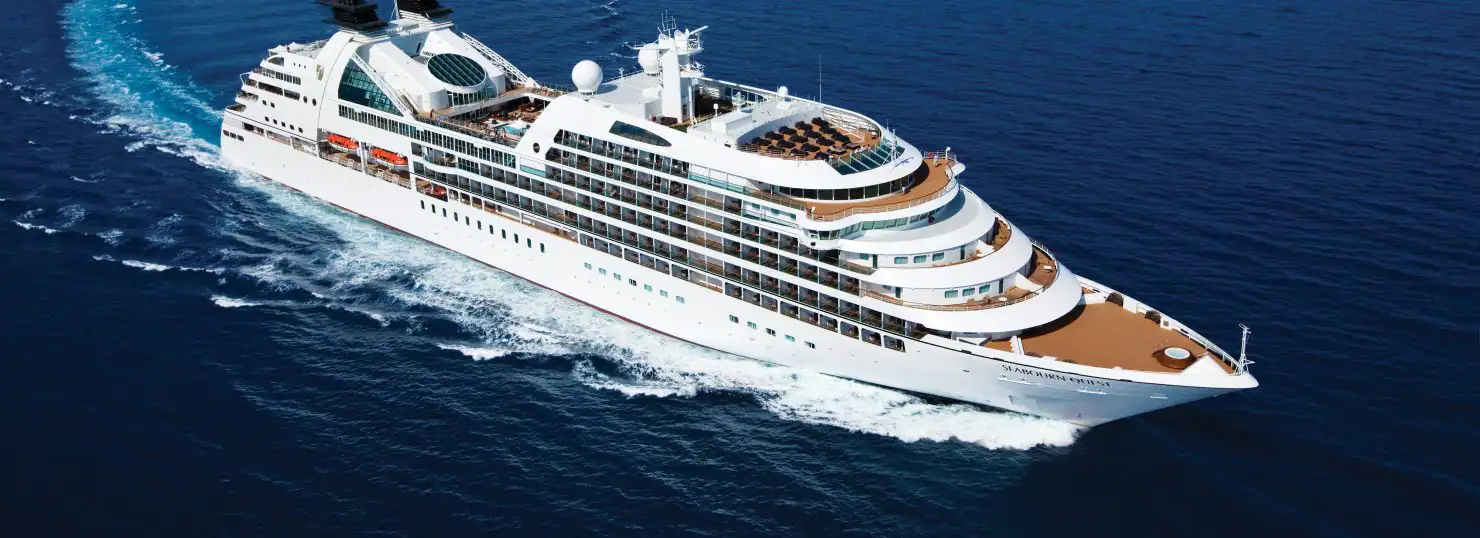
| Seabourn | The Ritz-Carlton Yacht Collection | |
|---|---|---|
| Category | Expedition / Ultra-Luxury | Yacht-Style / Ultra-Luxury |
| Rating | ★★★★★ | ★★★★★ |
| Fleet size | 5 ships | 3 ships |
| Ship size | Small (under 1,000) | Yacht (under 300) |
| Destinations | Mediterranean, Caribbean, Antarctica, Northern Europe | Mediterranean, Caribbean, Northern Europe, Central America |
| Dress code | Casual elegance | Casual elegance |
| Best for | Ultra-luxury intimate ship enthusiasts | Ultra-luxury yacht lifestyle travellers |
This is ultra-luxury cruising's most fascinating generational contrast — the established expedition pioneer against the luxury hotel brand that went to sea. Seabourn brings 39 years of ocean heritage, a dual fleet spanning refined ocean ships (450–600 guests) and PC6 expedition vessels with custom submarines (264 guests), Thomas Keller dining, the Dr. Andrew Weil spa programme, and Kimberley expeditions from Australian ports. Ritz-Carlton brings the newest fleet afloat — three purpose-built superyachts (298–452 guests) with Forbes Five-Star recognition, a water sports marina unique to the segment, no buffet, no casino, no cruise director, and Marriott Bonvoy integration attracting guests who would never consider a traditional cruise. For Australians, Seabourn has the stronger local presence with dedicated Kimberley expedition seasons from Darwin and Broome. Ritz-Carlton has no Australian sailings but has opened a Sydney headquarters and sails from Singapore — 7.5 hours from Sydney. Choose Seabourn for expedition capability, culinary pedigree, and Australian access. Choose Ritz-Carlton for the newest hardware, the marina, contemporary design, and the hotel-brand atmosphere.
The core difference
This comparison reveals ultra-luxury cruising’s most compelling generational tension — a line that has defined the segment for nearly four decades against a luxury hotel brand that rejected cruise conventions entirely when it went to sea.
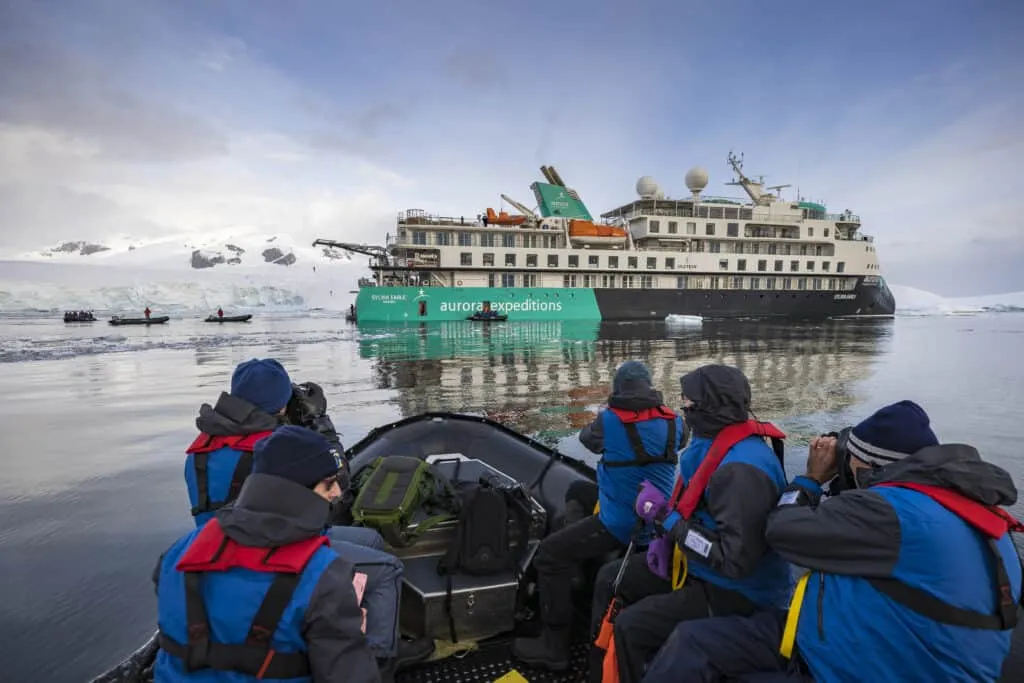
Seabourn was founded in 1986 by Norwegian shipping magnate Atle Brynestad with a vision for intimate, all-inclusive luxury cruising that has shaped the industry ever since. The line now operates five ships across two distinct product lines: three ocean vessels (Ovation, Encore, and Sojourn, carrying 450–600 guests) delivering refined all-inclusive cruising with The Grill by Thomas Keller, Caviar in the Surf, and the Dr. Andrew Weil Spa & Wellness programme; and two purpose-built expedition ships (Venture and Pursuit, carrying 264 guests each) equipped with PC6 ice-strengthened hulls, custom-built submarines, Zodiacs, and 26-person expedition teams reaching Antarctica, the Arctic, the Amazon, and the Kimberley. Owned by Carnival Corporation, Seabourn has accumulated 45 industry awards in 2024 alone. The brand’s DNA is exploration married to elegance — champagne and caviar on a beach in the morning, a submarine dive in the afternoon.
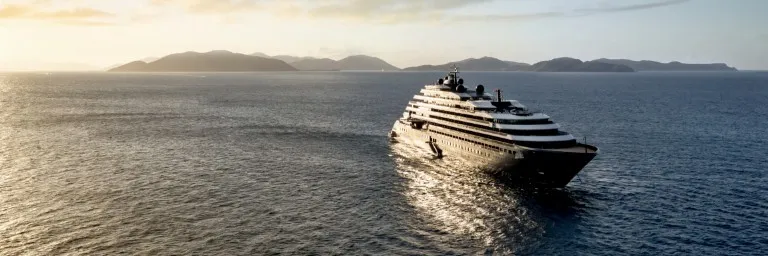
The Ritz-Carlton Yacht Collection launched in 2022 with a fundamentally different premise: bring the Forbes Five-Star hotel experience to the ocean, and in doing so, attract travellers who would never consider a cruise. Three purpose-built superyachts — Evrima (149 suites, 298 guests), Ilma (224 suites, 448 guests), and Luminara (226 suites, 452 guests) — were designed without a buffet, without a public-address system, without a cruise director, and without a casino. The water sports marina — a hydraulic platform deploying paddleboards, kayaks, Seabobs, and swimming directly from the stern — has no equivalent on Seabourn or any other ultra-luxury ocean line. Approximately 50 per cent of Ritz-Carlton guests have never cruised before; roughly 40 per cent are existing Ritz-Carlton hotel loyalists. Ilma became the first cruise vessel in the 68-year history of Forbes Travel Guide to receive a Five-Star rating in February 2026.
For Australian travellers, two questions dominate. First, do you want expedition capability? Seabourn has submarines and Zodiacs; Ritz-Carlton has a watersports marina. These are profoundly different things. Second, can you reach the ship? Seabourn sails from Darwin and Broome for Kimberley expeditions; Ritz-Carlton’s nearest departure is Singapore (7.5 hours from Sydney).
What is actually included
Both lines are all-inclusive at their core, with meaningful differences in scope and emphasis.
Seabourn includes: premium spirits, wines, champagne, and cocktails throughout the ship; all dining at all restaurants without surcharges (including The Grill by Thomas Keller); all gratuities; Wi-Fi (basic tier included, premium available); 24-hour in-suite dining; and personalised service from a nearly 1:1 crew ratio. On expedition ships, all Zodiac excursions, expert-guided landings, expedition gear, and naturalist lectures are included. Submarine dives are available at additional cost.
Ritz-Carlton includes: premium spirits, wines, cocktails, and champagne; high-speed Wi-Fi via Starlink; all gratuities; Personal Concierge service in every suite category; 24-hour in-suite dining; the complimentary water sports marina (all equipment and activities); four of five dining venues without surcharge; and port-to-city shuttle services in select ports.
The three critical differences:
Dining surcharges. All Seabourn dining is included — The Grill by Thomas Keller carries no supplement. On Ritz-Carlton, four of five restaurants are included, but the signature experience — Seta su Ilma by Fabio Trabocchi or S.E.A. by Sven Elverfeld on Evrima — costs USD $250–$350 per person. A couple dining once at the signature restaurant pays approximately AUD $800–$1,100. Over a voyage, this adds up.
Expedition infrastructure. Seabourn’s Venture and Pursuit include all Zodiac excursions, expert-led wildlife encounters, expedition lectures, and polar gear in the fare. Ritz-Carlton has no expedition capability and includes no shore excursions of any kind.
Neither line includes flights, airport transfers, or shore excursions on ocean voyages. Seabourn includes expedition landings on its two expedition ships. Ritz-Carlton includes the water sports marina — a complimentary active experience that Seabourn’s ocean fleet does not offer.
Dining and culinary experience
Both lines feature world-class chef partnerships — and both have legitimate claims to ultra-luxury cruising’s finest tables. The approaches differ in philosophy, surcharge structure, and cuisine style.
Seabourn’s culinary centrepiece is The Grill by Thomas Keller — the only Thomas Keller restaurant at sea. Keller’s The French Laundry in Napa Valley holds three Michelin stars and is routinely named among the world’s finest restaurants. The menu at sea emphasises premium American steaks, Dover sole, lobster thermidor, and classic dishes elevated by Keller’s precision and sourcing philosophy. The experience is clubby, intimate, and timeless — tableside preparations, sommelier service, and an atmosphere of quiet excellence. Critically, The Grill carries no surcharge whatsoever — every guest can dine there every night without restriction. Beyond The Grill, Seabourn offers The Restaurant (open seating, rotating menus), The Colonnade (Mediterranean), Sushi, and Earth & Ocean (expedition ships). The signature Caviar in the Surf — champagne and caviar served on a secluded beach — is one of cruising’s most memorable culinary experiences. All dining is included.
Ritz-Carlton’s culinary strategy centres on celebrity chef brand partnerships. On Ilma: Seta su Ilma by Fabio Trabocchi (James Beard Award-nominated) serves a ten-course modern Italian tasting menu for 28 guests. Beach House by Michael Mina (James Beard Award winner) offers open-air Pan-Latin and Caribbean cuisine. Memori features a 12-seat sushi bar. Tides is the included main dining room. Mistral serves poolside Mediterranean. On Evrima: S.E.A. by Sven Elverfeld (three Michelin stars at Aqua, The Ritz-Carlton Wolfsburg) serves European tasting menus. Each ship has five restaurants — four included, one with a surcharge of USD $250 per person without wine pairing or USD $350 with.
The surcharge question is decisive. Seabourn’s Thomas Keller restaurant is included for every guest, every night, without restriction. Ritz-Carlton’s pinnacle dining experience costs USD $500–$700 per couple per visit. Over a voyage, a couple wanting two visits to the signature restaurant on Ritz-Carlton faces approximately AUD $1,600–$2,200 in dining surcharges — a meaningful cost that Seabourn guests never encounter. Both lines deliver exceptional culinary quality; Seabourn delivers it without the supplementary calculation.
Suites and accommodation
Both lines offer all-suite accommodation, with differences in size, design philosophy, and what “suite” means to each brand.
Seabourn’s entry-level Veranda Suite on ocean ships is approximately 269–295 square feet with a private veranda. Penthouse Suites reach approximately 436 square feet. The Penthouse Spa Suite (approximately 530 square feet) includes a dedicated spa-themed bathroom. The Grand Wintergarden Suite — Seabourn’s top ocean category — spans approximately 1,399 square feet with a solarium, dining area, and two bathrooms. On expedition ships, Veranda Suites start from approximately 255 square feet, reflecting the expedition infrastructure’s space requirements. All suites are ocean-facing with private verandas (except select interior categories on expedition ships).
Ritz-Carlton’s entry-level Terrace Suite on Ilma is approximately 294 square feet plus a 52–108-square-foot private terrace. The Signature Suite rises to 409 square feet. Grand Suites offer 560 square feet. The Owner’s Suite on Ilma spans 1,033 square feet with a private hot tub on an expansive terrace. On Evrima, the unique two-storey Loft Suites (611 square feet) offer a split-level layout — living area above, bedroom below — a design no other cruise line has attempted. Every suite has a terrace.
The comparison is close. Entry-level suites are nearly identical in size — Ritz-Carlton’s Ilma Terrace Suite and Seabourn’s Veranda Suite are within 30 square feet of each other. At the top end, Seabourn’s Grand Wintergarden Suite (1,399 square feet) is larger than Ritz-Carlton’s Owner’s Suite (1,033 square feet). Where Ritz-Carlton decisively wins is in public space per guest — Ilma achieves approximately 104 gross tonnes per guest versus approximately 75–85 on Seabourn’s ocean ships. This translates to wider corridors, less crowded pool decks, and an exceptionally spacious feel throughout the yacht.
Design philosophy differs. Ritz-Carlton’s suites are contemporary and residential — neutral palettes of grey, taupe, and sandstone, clean lines, and a deliberately hotel-like aesthetic. Seabourn’s suites are refined and classical — warm woods, deeper colour palettes, and a traditional luxury feel. If you stay at modern boutique hotels and prefer clean contemporary design, Ritz-Carlton’s aesthetic will feel like home. If you prefer the warmth of traditional luxury interiors, Seabourn will appeal.
Pricing and value
The per-diem comparison is broadly similar for ocean voyages, but the total-cost picture differs based on where you sail and what you need.
Seabourn’s per-diem for ocean voyages runs approximately USD $500–$900 per person per night. Expedition voyages command a premium: Kimberley sailings run approximately AUD $800–$1,500 per night; Antarctic voyages start from approximately USD $800–$1,400 per night. Caviar in the Surf, Thomas Keller dining, and all bar service are included in every fare.
Ritz-Carlton’s per-diem runs approximately USD $500–$1,000 per person per night on Ilma and Luminara for Mediterranean sailings. Caribbean sailings run USD $500–$900. Singapore-departing Asia-Pacific voyages on Luminara run USD $500–$800. The pinnacle dining surcharge adds USD $250–$350 per person per visit.
Total cost for an Australian couple on a 10-night Mediterranean voyage:
Seabourn (Veranda Suite on Ovation): approximately AUD $16,000–$26,000 for the cruise fare. Add business-class flights from Sydney to Europe (AUD $10,000–$18,000). Add shore excursions (AUD $1,500–$3,500). Add transfers (AUD $500–$1,000). Total: approximately AUD $28,000–$48,500.
Ritz-Carlton (Terrace Suite on Ilma): approximately AUD $16,000–$28,000 for the cruise fare. Add business-class flights from Sydney to Europe (AUD $10,000–$18,000). Add shore excursions (AUD $1,500–$3,500). Add one Seta su Ilma dinner for two (AUD $800–$1,100). Add transfers (AUD $500–$1,000). Total: approximately AUD $28,800–$50,600.
The total costs are remarkably similar for Mediterranean ocean voyages. The marginal difference is Ritz-Carlton’s dining surcharge and slightly higher peak-season fares. But the real value divergence for Australians is not in the Mediterranean — it is in the Pacific.
Where Seabourn offers unique Australian value: Kimberley expeditions from Darwin and Broome. A 10-day Kimberley voyage on Pursuit costs approximately AUD $8,500–$15,000 per person, with domestic flights from east coast capitals adding AUD $800–$2,000. Total for a couple: approximately AUD $18,000–$32,000 — for a submarine-equipped expedition along one of the world’s most spectacular wilderness coastlines. Ritz-Carlton has no equivalent.
Where Ritz-Carlton offers unique value for Australians: Luminara from Singapore. The 7.5-hour direct flight (approximately AUD $3,000–$6,000 per couple in business class) makes this the most accessible Ritz-Carlton experience, with total costs for a 7-night voyage starting from approximately AUD $14,000–$22,000 per couple including flights.
Spa and wellness
Both lines invest significantly in wellness, with distinct philosophies and branded partnerships.
Seabourn’s Spa & Wellness with Dr. Andrew Weil is the segment’s most intellectually grounded wellness programme. Dr. Weil, the founder of integrative medicine at the University of Arizona, designed a programme extending beyond treatments into daily life — guided meditation, yoga, wellness seminars on anti-inflammatory nutrition and healthy ageing, and destination-focused wellness excursions. The spa features thermal suites, treatment rooms, and a well-equipped fitness centre. The philosophy is holistic: wellness as a dimension of the voyage rather than a separate service.
Ritz-Carlton’s spa carries the hotel brand’s name and pedigree. Ilma and Luminara each feature 11 treatment rooms, including rooms with outdoor treatment options and private terraces. Products are by ESPA, 111SKIN, and Pisterzi. Daily wellness classes operate in three tiers: Renewal (sunrise stretch, meditation), Balanced (moderate), and Power (circuits, high-intensity). Personal training starts from USD $75 per session. There is no complimentary thermal spa area.
The marina as active wellness: Ritz-Carlton’s water sports marina doubles as a wellness offering — paddleboarding, kayaking, electric foiling, and ocean swimming are physical activities that complement the spa in a way Seabourn’s ocean fleet cannot match. On a calm Mediterranean morning, a paddleboard session from the marina followed by a spa treatment is a unique wellness experience.
The comparison: Seabourn wins on wellness philosophy and programme depth — the Dr. Weil partnership creates a more integrated, intellectually grounded approach. Ritz-Carlton wins on contemporary facilities (11 treatment rooms versus Seabourn’s smaller spa) and the active-wellness dimension of the marina. Treatment pricing is comparable on both lines.
Entertainment and enrichment
Both lines reject mega-ship spectacle, but their alternatives differ in structure and spirit.
Seabourn’s approach blends intimate entertainment with destination focus. The Grand Salon hosts live performances, guest speakers, and themed evenings. Seabourn Conversations brings thought leaders, authors, and experts aboard. Music is acoustic and small-ensemble rather than production-scale. On expedition ships, the enrichment is extraordinary — daily expert-led briefings by naturalists and marine biologists, wildlife lectures, photography workshops, and the profound experience of submarine dives and Zodiac landings in the world’s most remote places. The Caviar in the Surf beach event is entertainment unto itself.
Ritz-Carlton deliberately avoids cruise conventions. There is no cruise director, no public-address system, no casino, and no production shows. The Living Room features a resident pianist. The Observation Lounge hosts late-night dancing and cocktails. La Rumba on Ilma and Luminara provides Latin-influenced poolside music with DJs. Themed evenings (En Blanc, Havana Nights), wine tastings, and art-focused experiences create ambience rather than programming. A Sotheby’s auction voyage launches in late 2026. The philosophy rewards guests who enjoy creating their own entertainment.
The demographic difference shapes the atmosphere. Ritz-Carlton’s younger guest profile (median age 53) means livelier evenings in the lounges and a more contemporary social energy. Seabourn’s slightly older ocean demographic (60–68) creates a gentler pace. On Seabourn’s expedition ships, the demographic skews younger (55–65) and more engaged — guests who have paid to reach Antarctica or the Kimberley are not looking for evening entertainment; they are processing the day’s extraordinary experiences over cocktails.
Fleet and destination coverage
The fleet comparison spans established breadth against focused modernity.
Seabourn operates five ships across two product lines: three ocean ships — Ovation (2018, 600 guests), Encore (2016, 600 guests), and Sojourn (2010, 458 guests) — and two expedition ships — Venture (2022, 264 guests) and Pursuit (2023, 264 guests). The ocean fleet covers the Mediterranean, Caribbean, Northern Europe, Asia, and world cruises. The expedition fleet reaches Antarctica, the Arctic, the Amazon, West Africa, and the Kimberley. The dual-fleet model is unique among ultra-luxury lines — offering both refined ocean cruising and genuine expedition exploration under one brand.
Ritz-Carlton operates three ships — Evrima (2022, 298 guests), Ilma (2024, 448 guests), and Luminara (2025, 452 guests). The fleet covers the Mediterranean, Caribbean, Northern Europe, Central America, and — from 2025 — Asia-Pacific from Singapore. Luminara debuts in Alaska in 2026 — an inaugural season bringing the yacht experience to America’s most scenic coastline. Plans call for eight to ten yachts within the coming years, with ships four and five in the planning phase. Every ship was purpose-built to a modern standard within a three-year window — no fleet lottery, no ship-class variation.
What this means for destination coverage: Seabourn covers more regions simultaneously — five ships in five different areas. Ritz-Carlton covers fewer regions but with consistent modernity across every vessel. Seabourn can take you to Antarctica and the Kimberley; Ritz-Carlton cannot. Ritz-Carlton can deliver a Forbes Five-Star yacht experience with a marina; Seabourn cannot. The fleets are complementary rather than directly competitive — and many experienced luxury travellers will sail both.
Where each line excels
Seabourn excels in:
- Expedition capability. Two PC6 ice-strengthened ships with custom submarines, Zodiacs, and 26-person expedition teams. Antarctica, the Arctic, the Amazon, and the Kimberley. No Ritz-Carlton equivalent exists.
- Culinary prestige without surcharges. Thomas Keller’s restaurant included for every guest, every night, without restriction. The Caviar in the Surf beach experience. All dining at zero supplement.
- Wellness philosophy. The Dr. Andrew Weil Spa & Wellness programme integrates mind-body wellness into the voyage.
- Heritage and consistency. Thirty-nine years of ultra-luxury cruising experience. Forty-five awards in 2024 alone. A crew culture built over decades.
- Australian access. Kimberley expeditions from Darwin and Broome — one of Australia’s most extraordinary wilderness experiences, accessible with domestic flights only.
Ritz-Carlton excels in:
- Fleet modernity. The youngest fleet in ultra-luxury cruising — every ship built between 2022 and 2025.
- Space per guest. Ilma achieves approximately 104 gross tonnes per guest — one of the highest ratios afloat.
- The water sports marina. The only ultra-luxury ocean line offering complimentary paddleboarding, kayaking, Seabobs, electric foiling, and swimming from a deployable stern platform.
- Forbes Five-Star recognition. Ilma is the first cruise vessel to receive this distinction.
- Marriott Bonvoy integration. Five points per dollar on cruise fare, elite night credits, and status progression for hotel loyalists.
- Attracting non-cruisers. Approximately 50 per cent of guests have never cruised before — Ritz-Carlton removes the psychological barrier of “going on a cruise” for luxury hotel travellers.
Standout itineraries for Australian travellers
Seabourn
Kimberley expedition (10–12 days, May–September on Seabourn Pursuit, Darwin to Broome or reverse) — The standout Australian itinerary. Zodiac landings at King George Falls, Montgomery Reef, Horizontal Waterfalls, and Indigenous rock art sites. Optional submarine dives exploring Kimberley reef systems. Domestic flights only. An expedition experience no other ultra-luxury line delivers from Australian ports except Silversea.
Antarctica expedition (12–22 days on Seabourn Venture, departing Ushuaia) — PC6 ice-strengthened hull, two submarines, Zodiac landings on the Antarctic Peninsula. Fly via Buenos Aires or Santiago. The most luxurious way to experience the seventh continent alongside Silversea’s Silver Endeavour.
Mediterranean ocean voyage (7–14 nights on Ovation or Encore) — Thomas Keller dining, Caviar in the Surf at a Greek island beach, and Dr. Weil spa. Fly from Australia to Europe via the Middle East or Asia — approximately 22–24 hours.
Ritz-Carlton
Luminara: Singapore departures (7–10 nights, from 2025) — The most accessible Ritz-Carlton experience for Australians. Fly Sydney to Singapore direct (7.5 hours on Qantas or Singapore Airlines), embark the brand-new Luminara, cruise Southeast Asia with the marina deployed at tropical anchorages. Total cost from approximately AUD $14,000–$22,000 per couple including flights.
Luminara: Alaska (7–10 nights, inaugural season 2026) — Ritz-Carlton’s first Alaska deployment. The yacht experience meets glacier country. Fly via Los Angeles or Vancouver.
Ilma: Mediterranean (7–10 nights, summer 2026) — The Forbes Five-Star flagship in its signature territory. Seta su Ilma by Fabio Trabocchi, the water sports marina at Croatian and Greek anchorages, and the highest space-per-guest ratio at sea.
Ship-by-ship recommendations
Seabourn
Seabourn Ovation (600 guests, 2018) — The newest and most refined ocean ship. The Grill by Thomas Keller, Dr. Weil spa, and an intimate atmosphere. The recommended ocean ship for a first Seabourn experience.
Seabourn Pursuit (264 guests, 2023) — The expedition specialist for Australians. Two custom submarines, 24 Zodiacs, and a 26-person expedition team. Choose for Kimberley, Amazon, and diverse expedition routes.
Seabourn Venture (264 guests, 2022) — Near-identical to Pursuit. Tends to deploy to Antarctica and the Arctic. Choose based on itinerary.
Seabourn Sojourn (458 guests, 2010) — The most intimate ocean ship. Smaller scale creates a notably quiet atmosphere. Best for world cruise segments and extended voyages.
Ritz-Carlton
Ilma (448 guests, 2024) — The Forbes Five-Star flagship. Five restaurants, the largest Ritz-Carlton spa at sea, and the marina at its most refined. The recommended ship for a first Ritz-Carlton experience. Cruise Critic Luxury Ship of the Year 2024.
Luminara (452 guests, 2025) — Near-identical to Ilma with treatments themed to Asia-Pacific itineraries. The best option for Australians due to Singapore embarkation and the inaugural Alaska season in 2026.
Evrima (298 guests, 2022) — The original yacht and the most intimate. S.E.A. by Sven Elverfeld (three Michelin stars). The unique two-storey Loft Suites. Best for guests who prioritise small-ship intimacy — Evrima’s 298 guests create an atmosphere closer to Seabourn’s expedition ships than its ocean fleet.
For Australian travellers specifically
Neither line has the comprehensive Australian programme that Regent or Silversea offers — but both have genuine local relevance.
Seabourn’s Australian proposition centres on the Kimberley. Seabourn Pursuit operates dedicated Kimberley expedition seasons from Darwin and Broome, typically May to September. These 10–12-day voyages feature Zodiac landings, submarine dives, naturalist-led excursions, and all-suite luxury along one of Australia’s most spectacular and inaccessible coastlines. Darwin and Broome are reached by domestic flights — no passport required, no long-haul journey, no jet lag. Ocean ships visit Australian and New Zealand waters periodically on repositioning voyages. Seabourn has an Australian sales presence and is distributed through luxury travel agencies.
Ritz-Carlton’s Australian proposition is emerging. The Asia-Pacific headquarters opened in Sydney’s Australia Square Tower in 2025, led by Vice President Seb Seward with plans for up to twelve staff and a five-year lease. Australian Dollar pricing has been implemented. The reservations team has grown from two to five agents. Luminara sails from Singapore (7.5 hours from Sydney on Qantas or Singapore Airlines), bringing the brand within easy reach for the first time. Evrima debuts in French Polynesia from winter 2026–2027, accessible via Auckland. Seward has confirmed the itinerary planning team is “actively” analysing potential Australian destinations. But no Ritz-Carlton ship has visited Australian waters, and no Australian sailing has been announced.
Loyalty pathways for Australians: Ritz-Carlton’s Marriott Bonvoy integration is valuable for Australians embedded in the Marriott hotel ecosystem — earning points and elite nights at sea that count toward hotel status. Seabourn’s loyalty programme is standalone within Carnival Corporation and does not currently offer formal cross-brand status with sister lines like Holland America, Princess, or Cunard. Neither line has a direct Qantas Frequent Flyer partnership.
The honest assessment: For Australians wanting ultra-luxury expedition cruising, Seabourn’s Kimberley programme is exceptional and requires only a domestic flight. For Australians wanting the newest ultra-luxury hardware with a contemporary hotel atmosphere, Ritz-Carlton from Singapore is the most accessible option — 7.5 hours rather than 22. Both lines require international flights for Mediterranean and Caribbean voyages. Neither matches Regent’s or Silversea’s comprehensive Australian deployment.
The onboard atmosphere
These lines attract meaningfully different demographics — and that shapes every aspect of the onboard experience.
Seabourn’s atmosphere is refined, understated, and exploration-minded. The ocean fleet passenger base averages 60–68, predominantly American and British, with a mix of experienced luxury cruisers and destination-focused travellers. The dress code is “Casual Elegance” — polished but comfortable, no black-tie requirements. The Grill by Thomas Keller serves as a social anchor. The Caviar in the Surf events create shared memories. On expedition ships, the atmosphere shifts toward intellectual curiosity and genuine adventure — guests who choose the Kimberley or Antarctica are not seeking entertainment but encounters with the extraordinary. The crew culture, built over nearly four decades, creates a warmth that newer lines must earn over time.
Ritz-Carlton’s atmosphere is contemporary, understated, and hotel-sophisticated. The median guest age is approximately 53 — significantly younger than Seabourn’s ocean fleet. Approximately 50 per cent have never cruised before; they are hotel loyalists, affluent professionals, and luxury travellers who would not consider a traditional cruise. The absence of formal nights, a cruise director, overhead announcements, and a casino creates an environment closer to a floating private members’ club. Families are welcome — Ritz Kids operates for ages four to twelve. The Observation Lounge and La Rumba bring energy to the evenings. The atmosphere is self-assured and contemporary — guests dress well because they want to, not because the ship requires it.
The key question: Do you want to be among people who love luxury cruising and expedition — travellers who have chosen Seabourn for its heritage, its Thomas Keller dining, and its ability to reach the Kimberley by submarine? Or do you want to be among people who love luxury hotels and are experiencing the ocean through a brand they already trust — younger, many sailing for the first time, and drawn by the Ritz-Carlton name rather than cruise industry reputation?
The bottom line
Seabourn and The Ritz-Carlton Yacht Collection are both exceptional — and this is one of ultra-luxury cruising’s most genuinely complementary pairings, where each line offers something the other structurally cannot.
Choose Seabourn if expedition capability is any part of your interest. Custom submarines beneath Antarctic ice. Zodiac landings on Kimberley beaches inaccessible by any other means. Thomas Keller’s restaurant at sea, included for every guest without surcharge. The Dr. Andrew Weil wellness programme. Caviar in the Surf on a secluded beach. Thirty-nine years of service heritage and a crew culture that newer lines cannot replicate overnight. For Australians specifically, the Kimberley programme from Darwin and Broome is one of the finest expedition experiences available from any domestic port — no passport, no long-haul flight, no jet lag.
Choose Ritz-Carlton if what matters most is the newest hardware afloat, the highest space-per-guest ratio at sea, and a contemporary hotel atmosphere that rejects every cruise convention. The water sports marina transforms days at anchor. Forbes Five-Star recognition validates the brand’s quality with external authority. Marriott Bonvoy integration rewards hotel loyalists at sea. The younger demographic and contemporary design appeal to travellers who want luxury without tradition. For Australians, Luminara from Singapore — 7.5 hours direct — puts the Ritz-Carlton experience within practical reach without the 22-hour journey to European embarkation ports.
For Australians who can sail both — and many in this segment can — the combination is compelling. Seabourn for the Kimberley expedition, a voyage that belongs on every Australian traveller’s lifetime list. Ritz-Carlton from Singapore for the contemporary yacht experience, the marina, and the feeling of discovering something genuinely new in luxury travel. Together, they cover what neither achieves alone.