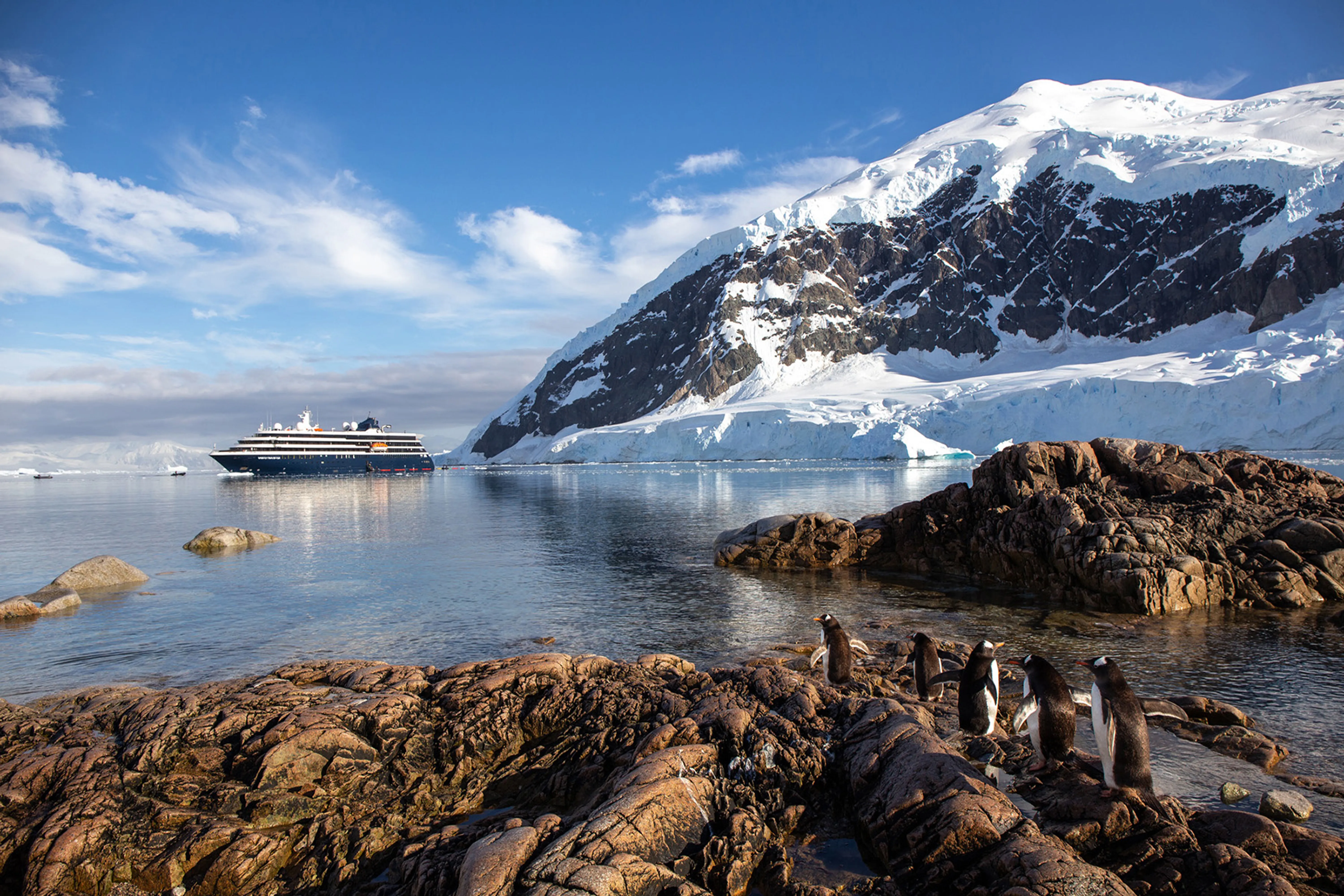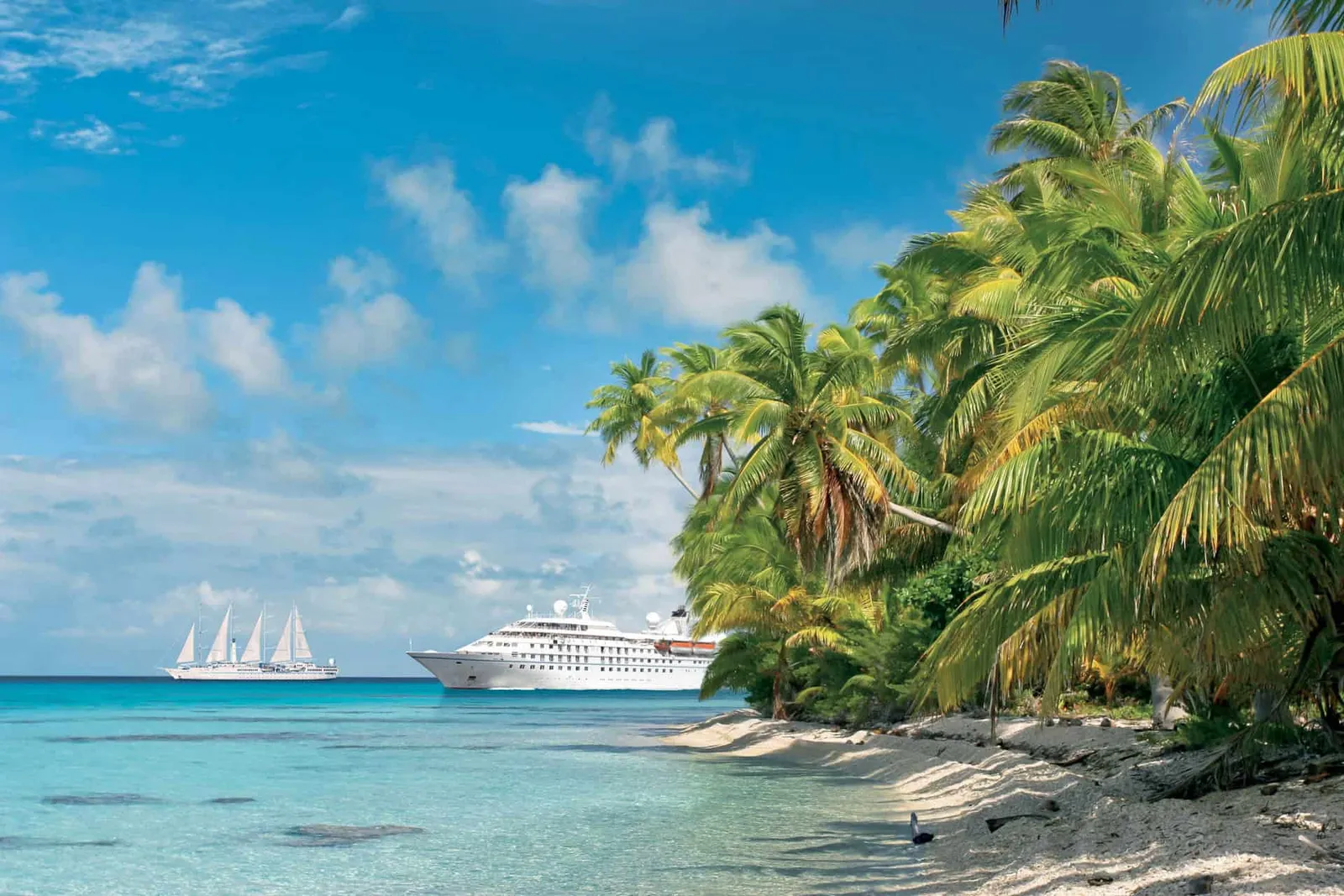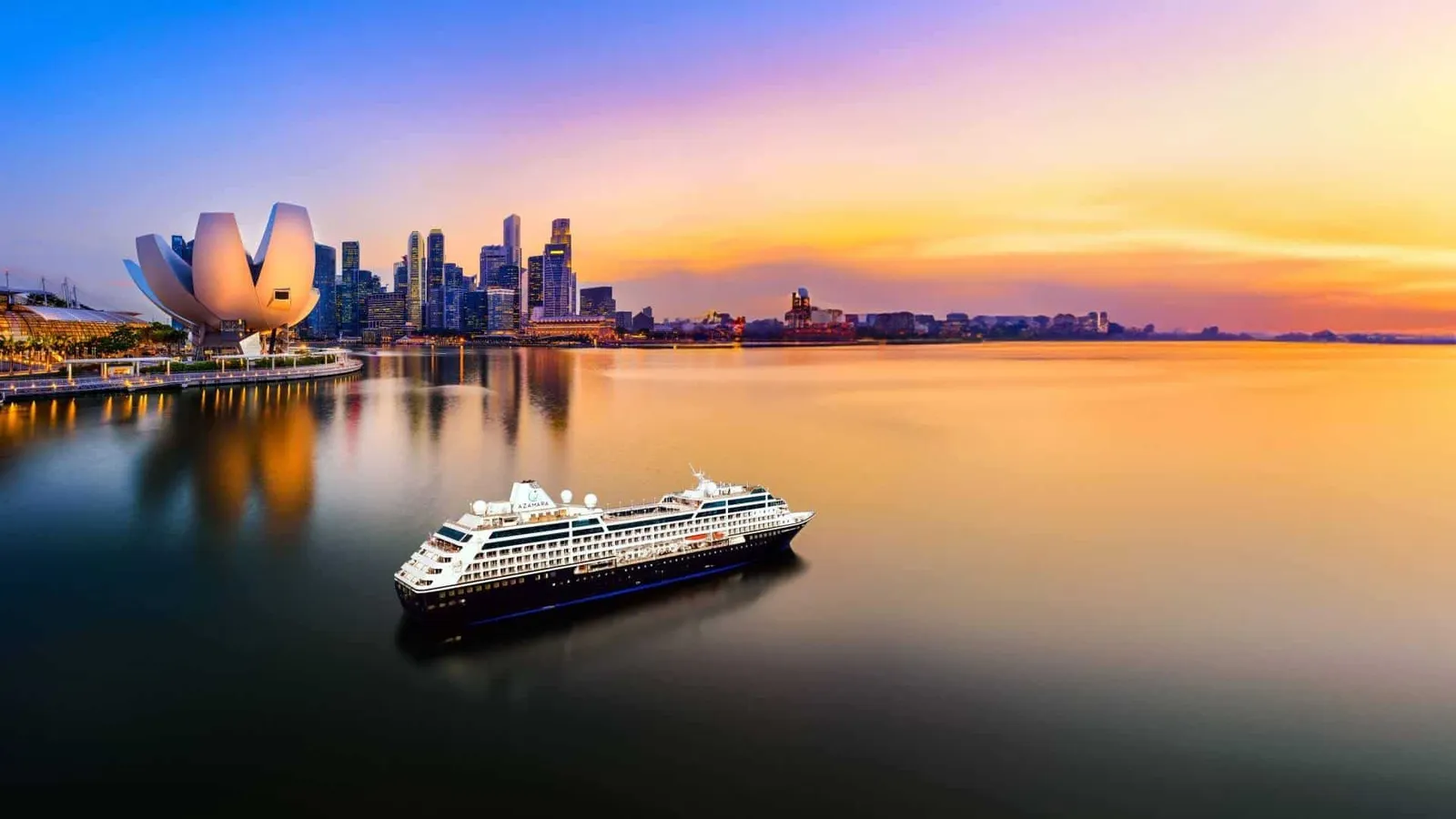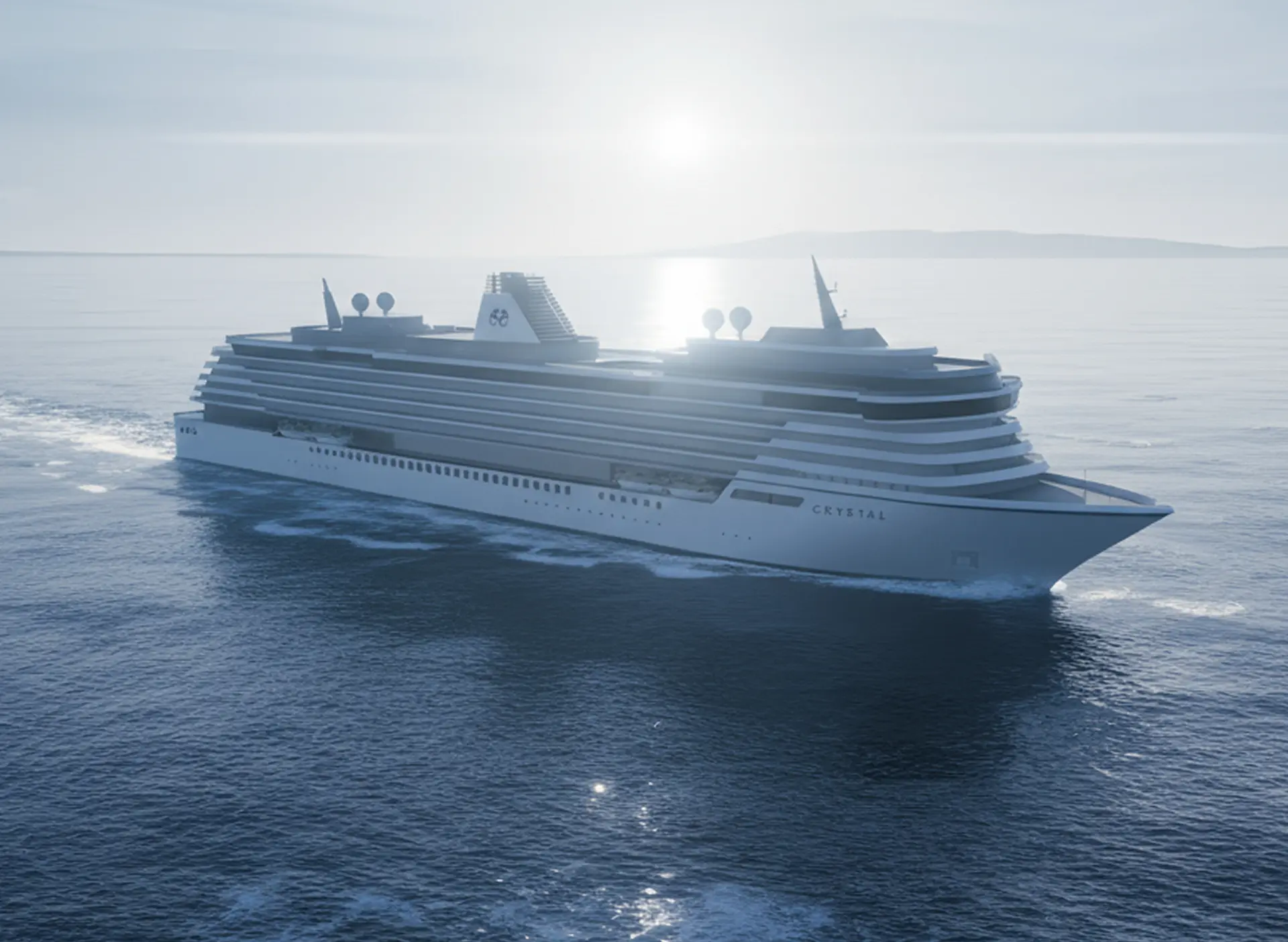
SeaDream Yacht Club and Windstar Cruises both promise intimate, yacht-style cruising with no formal nights and marina platforms off the stern — but one is a twin-yacht operation carrying just 112 guests with a near-perfect crew ratio, the other a seven-ship fleet with genuine sailing heritage and computer-controlled sails. Jake Hower compares their inclusions, dining, fleet, and value for Australian travellers.
| SeaDream Yacht Club | Windstar Cruises | |
|---|---|---|
| Category | Yacht-Style / Ultra-Luxury | Yacht-Style / Luxury |
| Rating | ★★★★☆ | ★★★★☆ |
| Fleet size | 2 ships | 7 ships |
| Ship size | Yacht (under 120) | Yacht (under 300) |
| Destinations | Caribbean, Mediterranean, Northern Europe | Mediterranean, Caribbean, Alaska, French Polynesia |
| Dress code | Casual elegance | Resort casual |
| Best for | Ultra-intimate yacht lifestyle travellers | Romantic small-ship and sailing enthusiasts |
SeaDream is the ultimate mega-yacht experience — just 112 guests on twin vessels with a near 1:1 crew ratio, an included open bar with premium wines and champagne, complimentary water sports from the marina platform, Balinese Dream Beds under the stars, and first-name service from the second morning. Windstar counters with authentic sailing heritage across three masted yachts, the James Beard Foundation culinary partnership, a growing fleet of eight ships reaching Tahiti year-round, Alaska, Japan, and seasonally Australian waters — all at a lower per-diem. For Australians wanting the most intimate all-inclusive yachting experience afloat with no compromises on drinks or service, choose SeaDream. For Australians drawn to wind-powered romance, broader destination coverage, and the ability to sail from Australian ports, choose Windstar.
The core difference
SeaDream Yacht Club and Windstar Cruises share more DNA than any other pairing in luxury small-ship cruising — and the overlap is precisely what makes this comparison so consequential. Both carry fewer than 350 guests. Both operate casual, no-formal-nights environments. Both have marina platforms that lower into the ocean for water sports. Both attract well-travelled couples who have tried the large ships and want something fundamentally different. And yet the experience aboard is distinct enough that booking the wrong one will leave you questioning whether you even like small-ship cruising — when in fact you simply chose the wrong version of it.
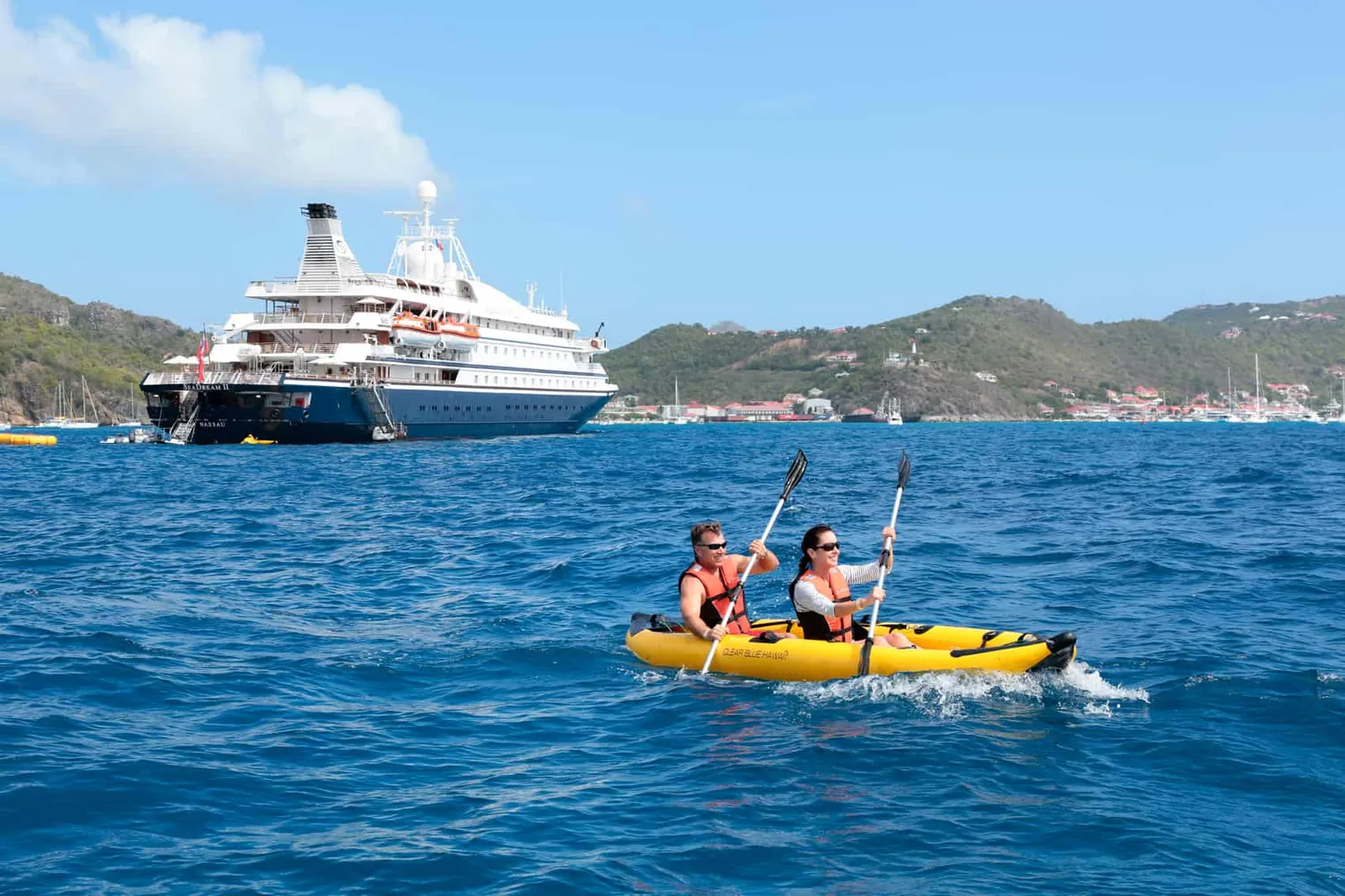
SeaDream’s identity is mega-yacht intimacy. Founded in 2001 by Atle Brynestad — the Norwegian entrepreneur who also founded Seabourn — SeaDream purchased the former Sea Goddess I and Sea Goddess II from Carnival Corporation and reimagined them as the only true mega-yachts in the passenger cruise market. Two twin vessels, SeaDream I and SeaDream II, each carry a maximum of 112 guests served by 95 crew, delivering a near-perfect 1:1 crew-to-guest ratio that no cruise ship of any size can match. The founding principle — “It’s yachting, not cruising” — is not a marketing conceit but an operational philosophy visible in every detail: no fixed seating at dinner, no announcements over the PA system, no production shows, no queues, no formal nights. The open bar runs from morning to the small hours with premium wines, champagne, spirits, and cocktails. The marina platform deploys jet skis, kayaks, paddleboards, wakeboards, Hobie Cat catamarans, and snorkelling gear. Balinese Dream Beds on the top deck invite guests to sleep under the stars as the yacht sails through the night. At 4,253 gross tonnes and 355 feet, these yachts access harbours, anchorages, and marina berths that even Windstar’s smallest ships cannot enter. In 2026, SeaDream celebrates its twenty-fifth anniversary — a quarter-century of redefining what luxury at sea means at the smallest possible scale.
Windstar’s identity is sailing romance. Three of its seven ships — Wind Surf (342 guests), Wind Star (148 guests), and Wind Spirit (148 guests) — are motorised sailing yachts carrying four or five masts of computer-controlled sails that unfurl during every departure and deploy whenever wind conditions permit, capable of generating speeds up to twelve knots without engine power. The line’s tagline, “180 degrees from ordinary,” captures a philosophy of barefoot elegance that extends from the sail-away ceremony to the watersport marina platform lowering into Caribbean lagoons and Polynesian atolls. The Star Plus class motor yachts (Star Breeze, Star Legend, Star Pride, each carrying 312 guests after the USD $250 million Star Plus Initiative renovation) and the new-build Star Seeker (224 guests, arriving December 2025, with ice-strengthened hull) round out a diverse fleet that never exceeds 342 guests on any vessel. The James Beard Foundation culinary partnership, now spanning more than eleven years, anchors a dining programme emphasising chef-driven creativity and the signature Candles open-air dining under the stars. Owned by Xanterra Parks and Resorts (a subsidiary of The Anschutz Corporation), Windstar is headquartered in Miami and growing — Star Explorer arrives in December 2026, bringing the fleet to eight ships covering the Mediterranean, Caribbean, Tahiti year-round, Alaska, Japan, and seasonally Australian and New Zealand waters.
For Australian travellers, the practical question is often straightforward. If you want the most intimate luxury experience afloat — 112 guests, a 1:1 crew ratio, an open bar from dawn to the small hours, and the kind of first-name recognition that only a yacht can deliver — SeaDream is peerless. If you want to feel the sails catch the wind, choose from seven ships across a dozen regions, sail year-round in Tahiti, and occasionally board from an Australian port, Windstar delivers breadth and romance that SeaDream’s twin-yacht operation simply cannot.
What is actually included
Both lines market themselves as inclusive yacht-style experiences, but the specifics differ in ways that matter when calculating total cost — and the details reveal different philosophies about what a luxury fare should cover.
SeaDream’s all-inclusive model is the more comprehensive at the base fare level. The fare covers an open bar available at all hours — premium wines, champagne, spirits, cocktails, beer, and soft drinks served anywhere on the yacht from the Top of the Yacht Bar’s 360-degree panorama to your sun lounger by the pool. All dining is included without restriction, whether in the Dining Salon or at the Topside Restaurant’s al fresco setting. Crew gratuities are fully covered — tipping is neither required nor expected. The marina platform’s full complement of water sports equipment — jet skis, kayaks, paddleboards, wakeboards, Hobie Cat catamarans, snorkelling gear, and the floating trampoline — is complimentary. What SeaDream does not include: Wi-Fi (charged at USD $35 per day or USD $99 per week for unlimited satellite access), shore excursions (Yachting Land Adventures are priced separately), spa treatments, premium reserve wines beyond the standard open bar, and flights.
Windstar’s base fare covers all dining across every restaurant without surcharges, 24-hour room service, non-alcoholic beverages including speciality coffees, complimentary watersport marina access (kayaks, paddleboards, snorkelling gear, water skiing, and sailing dinghies), group fitness classes, and onboard enrichment events. What Windstar does not include in the base fare: alcoholic beverages, Wi-Fi, and crew gratuities (USD $16 per person per day). The All-In package bundles unlimited beer, wine, cocktails, and spirits, unlimited Wi-Fi for two devices, and prepaid gratuities for USD $99 per person per day when purchased before sailing (USD $109 if added onboard). An 18 per cent beverage service charge applies to individual drink purchases outside the package.
The net effect for Australian travellers is meaningful. SeaDream’s open bar represents genuine, tangible value — champagne, spirits, and cocktails from dawn to the small hours without signing a single chit. On a seven-night voyage, a couple ordering freely could easily consume AUD $1,500 to $2,500 in beverages that SeaDream includes at the base fare. Windstar’s All-In package at USD $99 per person per day delivers similar beverage coverage but as a paid add-on — roughly AUD $1,600 per person for a ten-night cruise. Windstar’s All-In advantage is Wi-Fi inclusion (SeaDream charges USD $35 per day or USD $99 per week), which partially offsets the difference for digitally connected travellers. SeaDream includes gratuities in the fare; Windstar includes them only with the All-In package.
For drinks-inclusive peace of mind without any add-on decisions, SeaDream wins clearly. For travellers who want a single package covering drinks, Wi-Fi, and gratuities, Windstar’s All-In bundle is transparent and competitive. For non-drinkers or light drinkers, Windstar’s lower base fare without the All-In package delivers better value. Both lines include their watersport marina platforms — a genuine shared strength that distinguishes both from conventional cruise lines.
Dining and culinary experience
Both lines boast genuine culinary credentials backed by recognised partnerships and accolades — but the dining experience aboard is as different as a private chef’s table and a curated restaurant collection.
SeaDream is a private kitchen. The yacht carries a single culinary team preparing everything a la minute — made to order, fresh, with no pre-preparation or batch cooking. The Dining Salon on Deck 2 seats 110 for multi-course dinners with amuse-bouche, and the Topside Restaurant offers al fresco dining where all 112 guests can eat outdoors simultaneously — a claim no cruise ship can make. SeaDream holds the distinction of being rated the “Highest Rated Restaurant at Sea” by Conde Nast Johansens and earned Forbes Travel Guide’s four-star dining recognition. The signature Le Menu de Degustation presents a multi-course tasting menu with wine pairings — highlights include Terrine de Foie Gras with pear compote and port wine sauce, grilled halibut with gingered white asparagus and caviar beurre blanc, and the celebrated 24-Carat Gold Leaf-Topped Fondant au Chocolat with vanilla ice cream. SeaDream also offers the only raw food or “living food” menu at sea — entirely plant-based dishes prepared with raw, organic ingredients, none heated above 48 degrees Celsius. Dietary accommodations span vegetarian, vegan, gluten-free, pescatarian, keto-friendly, and high-protein menus. Wine pairings at dinner are included, drawn from a thoughtfully curated list of Old and New World selections. An exclusive 12-tea selection prepared by a master blender in Kent rounds out the beverage programme.
Windstar is a chef’s table. The James Beard Foundation partnership, now spanning more than a decade, places James Beard Award-recognised chefs aboard select sailings for cooking demonstrations, hosted dinners with wine pairings, and local market tours. On every Windstar sailing — not just culinary-themed departures — the dinner menu at Amphora (the main restaurant) features a rotating “Signature Recipe” from the cruise’s resident James Beard Foundation-affiliated chef, built around local market ingredients wherever possible. The crown jewel is Candles, the signature open-air restaurant on the Star Deck where guests dine on steak and seafood under the stars — widely cited as one of the most romantic dining experiences at sea and a setting that SeaDream’s Topside Restaurant approaches but cannot quite replicate in terms of theatre. On Star Plus class ships, additional venues include Cuadro 44 by Michelin-recognised chef Anthony Sasso (transitioning to Basil + Bamboo offering Asian and Mediterranean fare on Star Seeker and during upcoming refurbishments), Stella Bistro, and the Veranda. Star Seeker introduces five dining venues in total, all included without surcharges.
The dining count tells part of the story. SeaDream offers two venues — the Dining Salon and Topside Restaurant — on each yacht. Windstar offers three to five venues depending on the vessel, with Star Seeker reaching five. But SeaDream’s single kitchen cooking everything to order for 112 guests achieves a level of made-to-order precision that Windstar, even on the 148-guest sailing yachts, cannot quite match at the same ratio. The gold-leaf chocolate fondant is not merely a dessert — it is a statement of intent about what 95 crew can achieve for 112 guests.
The verdict is clear by purpose. SeaDream delivers the most intimate culinary experience afloat — a single kitchen preparing everything a la minute with wine included, in a setting that feels like a private dinner party rather than a restaurant. Windstar delivers more variety, the prestige of the James Beard Foundation partnership, and the unforgettable experience of dining under the stars at Candles with masted sails silhouetted above. For food-motivated travellers who value intimacy and made-to-order precision, SeaDream. For those who want more venue choice, chef-driven storytelling, and the best alfresco dining setting at sea, Windstar.
Suites and accommodation
This comparison is shaped by the age and purpose of the vessels being compared — SeaDream’s 1984-built mega-yachts offer compact but immaculately refurbished staterooms, while Windstar’s fleet spans forty years of design philosophy from porthole-only sailing cabins to modern suites with wrap-around verandahs.
SeaDream’s accommodation reflects the yachts’ 1984 and 1985 origins and their comprehensive USD $10-million-per-yacht refurbishment in 2022. Yacht Club Staterooms average 195 square feet across Decks 2, 3, and 4 — no balconies in any category, but ocean views through picture windows (Decks 3 and 4) or twin 17-inch round portholes (Deck 2). The 2022 renovation stripped staterooms back to bare steel and rebuilt everything: new 55-inch flat-screen televisions, USB charging, Nespresso machines in suites, marble-lined bathrooms with multi-jet showers, Elm Organics bath products, and luxury robes and slippers. Commodore Suites are created by combining two Yacht Club Staterooms, averaging 390 square feet with two full bathrooms — a practical option for those wanting space. The Admiral’s Suite (375 square feet, Deck 4) features three picture windows, a separate living and dining area, and a soaking tub. The Owner’s Suite (447 square feet, mid-ship Deck 3) includes a separate master bedroom, a soaking tub with ocean views, and a dining area for entertaining. Across all 56 suites, the standard is high — but no SeaDream stateroom offers a private outdoor space.
Windstar’s accommodation varies significantly by ship class. The sailing yachts Wind Star and Wind Spirit carry staterooms of approximately 188 square feet with portholes rather than windows or balconies — marginally smaller than SeaDream’s Yacht Club Staterooms and similarly without private outdoor space. Wind Surf offers deluxe ocean-view suites at 376 square feet with two bathrooms — actually more spacious than anything on SeaDream except the combined Commodore Suites. The Star Plus class motor yachts (Star Breeze, Star Legend, Star Pride) are all-suite vessels completely rebuilt during the USD $250 million Star Plus Initiative: entry-level suites start at 277 square feet, Classic Suites offer 400 square feet with separate bedroom and living areas, and the Owner’s Suites span 820 square feet — nearly double SeaDream’s largest accommodation. Star Seeker (arriving December 2025) introduces twelve suite categories, from Oceanview Suites to the Horizon Owner’s Suites at 796 square feet with wrap-around verandahs and separate living and dining areas. Deluxe Suites run 380 square feet plus a 110-square-foot balcony. Most Star Seeker suites feature private verandas or floor-to-ceiling infinity windows — a level of modern suite design that SeaDream’s heritage yachts simply cannot match.
The tradeoff is philosophical. SeaDream’s compact cabins reflect a yacht way of life where the communal decks — the pool, the Balinese Dream Beds, the Top of the Yacht Bar, the marina platform — are the primary living spaces. Guests spend their days on deck, in the water, or ashore, returning to the stateroom primarily to sleep and shower. Windstar’s sailing yachts share this compact philosophy, but the Star Plus class and Star Seeker offer genuinely modern suite accommodation with private verandas that SeaDream cannot provide. If a private balcony is non-negotiable, Windstar’s newer vessels deliver. If the absence of a balcony is irrelevant because you plan to spend every waking hour on the open decks of a 112-guest yacht, SeaDream’s philosophy makes perfect sense.
Pricing and value
The pricing gap between these lines is significant on paper but reveals a more nuanced picture when comparing total cost — and the calculation depends on how you drink, how many ships you want to choose from, and how far you are willing to fly.
SeaDream’s per-diem runs approximately AUD $900 to $1,200 per person per night for Yacht Club Staterooms, with seven-night Caribbean voyages starting from roughly USD $4,500 to $7,000 per person and Mediterranean sailings from approximately USD $5,500 per person. Commodore Suites command roughly AUD $1,300 per night; the Owner’s Suite approximately AUD $2,300 per night. These fares include the open bar, all dining, gratuities, and water sports — a genuinely comprehensive package where the only meaningful add-ons are Wi-Fi, shore excursions, and spa treatments. Norwegian fjord voyages, which sell out years in advance, typically command a premium of 15 to 25 per cent over comparable Mediterranean departures.
Windstar’s per-diem varies by ship class and destination. Entry-level pricing on Wind Class sailing yachts starts from approximately USD $250 to $400 per person per night for seven-night Mediterranean or Caribbean itineraries — often significantly lower than SeaDream before add-ons. Star Plus class ships command a slight premium. Star Seeker pricing reflects its new-build status and modern suite accommodation. Adding the All-In package (USD $99 per person per day) for drinks, Wi-Fi, and gratuities adds roughly AUD $1,600 per person for a ten-night cruise. The total per-diem with All-In typically falls in the AUD $500 to $750 range — materially below SeaDream’s floor even after adjusting for similar inclusions.
For a direct seven-night Mediterranean comparison: SeaDream in a Yacht Club Stateroom costs roughly AUD $6,300 to $8,400 per person with open bar, dining, gratuities, and water sports included. A comparable Windstar Wind Surf sailing with the All-In package costs roughly AUD $4,500 to $6,000 per person with drinks, Wi-Fi, gratuities, and marina access included. The premium for SeaDream — roughly AUD $1,800 to $2,400 per person after adjusting for comparable inclusions — buys a dramatically different experience: 112 guests versus 342, a near 1:1 crew ratio versus approximately 1:2.3, Balinese Dream Beds, jet skis on the marina platform, and access to smaller harbours. On Windstar’s 148-guest sailing yachts (Wind Star and Wind Spirit), the base fare is lower still, and the intimacy gap with SeaDream narrows considerably — 148 guests is genuinely intimate, though not 112.
For Australian travellers, additional costs matter. SeaDream’s embarkation ports (Barcelona, Athens, Dubrovnik, San Juan, Barbados, Oslo) all require international flights — typically AUD $2,000 to $4,000 per person return to Europe or the Caribbean. Windstar embarkation ports are similar for European and Caribbean sailings, but Windstar offers occasional Australian departures from Sydney, Melbourne, and Cairns via Star Breeze, and the year-round Tahiti programme departs from Papeete — a direct eight-hour flight from Sydney on Air Tahiti Nui. When accessibility from Australia is factored in, Windstar holds an advantage that SeaDream cannot match.
Neither line is cheap. But SeaDream delivers the most comprehensive all-inclusive yacht experience at sea, while Windstar delivers the broadest destination range and strongest per-diem value in the intimate small-ship segment. The price difference is real — and it reflects genuinely different products rather than merely different marketing.
Spa and wellness
Both lines offer spa facilities and active wellness programmes, but at scales and with philosophies that mirror their broader identities — one rooted in Thai-certified authenticity, the other in ocean-based activity.
SeaDream’s Asian Spa and Wellness Centre is the only Thai-certified spa service at sea — a distinction that reflects the line’s commitment to authentic technique over branded product. Highly trained Thai-certified therapists offer Traditional Thai Massage, Sisley Paris facial treatments, detoxifying body wraps, and soothing aroma massages for individuals and couples. The spa houses two treatment rooms, three steam showers, a sauna, and an open-air private massage area on deck where treatments are delivered with ocean breezes and sea views — weather permitting. The Fitness Centre on Deck 4 carries treadmills, elliptical and recumbent bikes, and free weights with ocean views. Complimentary sunrise yoga and tai chi sessions are offered daily on deck — with six participants rather than sixty. Sixteen laps around Deck 6 equals one mile for walking or running. The therapist-to-guest ratio on a yacht carrying just 112 passengers means availability is rarely an issue, and the personalisation of treatment is exceptional.
Windstar’s spa offering varies across the fleet. On Star Plus class ships, the World Spa features treatment rooms, a sauna, a steam room, a therapy shower, heated loungers, and separate male and female changing rooms. High-tech workout equipment and fitness classes are available. On the sailing yachts, spas are more compact — treatment rooms, a sauna, and basic fitness equipment. Services across the fleet include massages, facials, body treatments, Chinese medicine, teeth whitening, hair styling, manicures, and pedicures. Star Seeker elevates the spa experience with a full-service spa accessed via a grand entrance from the deck above, alongside a modern fitness facility designed for the active traveller.
Where both lines distinguish themselves from conventional cruise ships is the watersport marina platform — and here SeaDream and Windstar share genuine common ground. Both lower retractable platforms at the stern to create private ocean-access centres. SeaDream’s marina offers jet skis, kayaks, paddleboards, wakeboards, Hobie Cat catamarans, snorkelling gear, a water slide, and a floating trampoline. Windstar’s marina provides kayaks, paddleboards, snorkelling gear, sailing dinghies, windsurfers, and water skiing, with PADI-certified diving offered in the Caribbean, Central America, and French Polynesia. SeaDream’s inclusion of jet skis and Hobie Cat catamarans gives it a slight edge in equipment variety; Windstar’s PADI diving programme gives it a meaningful edge for certified divers exploring tropical waters. Both marinas are complimentary — and both represent a category of active wellness that no spa treatment can replicate.
The difference in spa philosophy is clear. SeaDream delivers intimate, authentic Thai-certified treatments on a yacht where the therapist already knows your name. Windstar delivers a broader range of spa services across a larger fleet, with more modern facilities on the newer Star Plus and Star Seeker vessels. For wellness through active ocean engagement — swimming, kayaking, paddleboarding directly from the ship — both lines deliver equally, and both are exceptional.
Entertainment and enrichment
Neither line is a floating theatre — and both attract travellers who consider that a feature rather than a flaw. But the evening philosophies differ in ways that matter, and understanding the distinction prevents disappointment.
SeaDream’s evening atmosphere is the quieter of the two — deliberately so, and by design. Entertainment is intentionally minimal: a pianist in the Piano Bar, occasional guitarists and singers at the Top of the Yacht Bar bringing their own distinctive sound, and late-night DJ sets that add a lively vibe on warmer evenings. Trivia games appear in the daily programme, and the Casino offers a blackjack table and modest gaming. But the signature SeaDream evening is unstructured — conversation over champagne at the Top of the Yacht Bar with its 360-degree views, stargazing from the open deck, or retreating to a Balinese Dream Bed with a nightcap and falling asleep under the stars while the yacht sails to her next port. There are no production shows, no enrichment lectures in a formal sense, no scheduled programming that demands attendance. The daily programme is delivered to your stateroom each evening, but the unspoken message is clear: your time is your own. The signature Champagne and Caviar Splash — where crew set up champagne and caviar on a secluded beach or on the marina platform — is the closest SeaDream comes to an organised event, and it is universally cited as a highlight.
Windstar’s enrichment programme is destination-focused and more structured. The James Beard Foundation culinary-themed sailings bring guest chefs aboard for cooking demonstrations, local market tours, and exclusive hosted dinners with paired wines — though these occur on select departures, not every sailing. On every voyage, the daily “Signature Recipe” from a James Beard-affiliated chef adds culinary storytelling to dinner. Local musicians perform in ports, acoustic artists and cultural dancers bring regional flavour aboard, and resident musicians fill the lounges in the evening. The signature sail-away ceremony — watching the computer-controlled sails unfurl as the ship departs port, sometimes to the sound of the Vangelis “1492” score — is a moment of genuine theatre that no other cruise line offers and that SeaDream’s motorised yachts cannot replicate. The deck barbecue on warm-weather itineraries adds casual social energy. There are no production shows, no casino, and no formal nights. The dress code is “Yacht Casual” — sundresses, collared shirts, relaxed elegance without pretension.
The distinction is one of degree rather than kind. SeaDream makes the setting the entertainment — the yacht, the sea, the open bar, the company of 111 other guests who feel like co-conspirators on a private voyage. Windstar makes the sails and the destination the spectacle — the unfurling of canvas against a Mediterranean sunset, the chef who visited the local market that morning, the cultural performers who boarded at the last port. If evening enrichment and curated programming matter to you, Windstar provides more. If your ideal evening is champagne on the top deck under a blanket of stars with no itinerary and no expectations, SeaDream provides the setting. Neither line will satisfy travellers who want production shows, comedy clubs, or Broadway-style entertainment — and that is precisely the point.
Fleet and destination coverage
The fleet comparison reveals the starkest difference between these lines — SeaDream’s focused twin-yacht operation versus Windstar’s diverse and growing armada.
SeaDream operates two ships — and only two. SeaDream I (launched 1984 as Sea Goddess I) and SeaDream II (launched 1985 as Sea Goddess II) are identical twins: 4,253 gross tonnes, 355 feet long, 56 suites, 112 guests maximum, 95 crew. Both received a comprehensive USD $10-million refurbishment in 2022, stripping staterooms to bare steel and rebuilding with modern amenities. The yachts deploy seasonally: Caribbean from November through April (33 itineraries covering 39 destinations in the 2026 season), Mediterranean from May through September (27 voyages visiting 82 ports in 14 countries for 2026), and Norwegian fjords in summer — a programme that sold out more than two years in advance, prompting doubled capacity for 2026. Transatlantic repositioning voyages connect the seasons. SeaDream’s small size allows access to harbours that even Windstar’s sailing yachts may not enter: downtown Venice via the historic waterway, overnight anchorages in Capri, direct docking in the Corinth Canal, and the intimate coves of the Grenadines. The limitation is absolute — two ships means finite availability, a narrow seasonal window in each region, and no presence in the Pacific, Alaska, Asia, or Australian waters.
Windstar operates seven ships across three distinct classes (growing to eight with Star Explorer in December 2026). The Wind Class sailing yachts — Wind Surf (342 guests, 1990, 14,745 gross tonnes), Wind Star (148 guests, 1986, 5,307 gross tonnes), and Wind Spirit (148 guests, 1988, 5,307 gross tonnes) — define the brand with their masted silhouettes and computer-controlled sails. The Star Plus class motor yachts — Star Breeze, Star Legend, and Star Pride (312 guests each, originally built for Seabourn, stretched and renovated 2020-2021 during the USD $250 million Star Plus Initiative) — deliver all-suite modern yacht cruising with suites starting at 277 square feet. Star Seeker (224 guests, December 2025) is the first purpose-built Windstar vessel with an ice-strengthened hull, Rolls-Royce diesel-electric hybrid propulsion, and twelve suite categories. Star Explorer (224 guests, December 2026) will be based year-round in Europe. The fleet deploys across the Mediterranean, Caribbean, Tahiti and French Polynesia (Wind Spirit year-round from Papeete), Alaska, Japan, Southeast Asia, Costa Rica and the Panama Canal, Canada and New England, and seasonally to Australia and New Zealand — visiting over 330 ports worldwide.
For Australian travellers, the destination breadth gap is decisive. SeaDream offers two regions with seasonal rotation — the Caribbean and Mediterranean, plus Norwegian fjords — and requires international flights from every Australian gateway. Windstar offers a dozen regions, year-round Tahiti access via direct Sydney flights, occasional Australian departures, and the ability to combine multiple destinations across a single year without leaving one fleet. SeaDream counters with something no fleet of seven ships can replicate: the feeling that you have boarded a private yacht rather than a passenger vessel, in harbours where even Windstar’s smallest ships are too large to anchor.
Where each line excels
SeaDream excels in:
- Intimacy and service ratio. Ninety-five crew for 112 guests creates a near 1:1 ratio that no cruise ship matches. Crew learn your name on the first day, remember your drink preference by the second, and greet you as family by the third. Seventy to eighty per cent of guests on any given voyage are repeat travellers — a loyalty rate unmatched in the industry.
- All-inclusive beverages. The open bar is genuinely premium and genuinely all-hours — champagne with breakfast, cocktails by the pool, wine pairings with the degustation menu, a nightcap at the Top of the Yacht Bar. No signing, no packages, no add-on decisions, no limits on what is “included.”
- Harbour access. At 4,253 gross tonnes and 355 feet, SeaDream’s yachts access ports that are physically impossible for Windstar’s larger vessels: downtown Venice via the historic waterway, the Corinth Canal, overnight in Capri’s harbour, and the intimate anchorages of the Grenadines.
- Balinese Dream Beds. Sleeping under the stars on the top deck — with custom-embroidered pyjamas and linens — is unique in cruising. No other line, including Windstar, offers the experience of falling asleep on deck as the yacht sails through the night.
- Made-to-order dining precision. A single kitchen preparing everything a la minute for 112 guests, with the Forbes Travel Guide four-star rating and Conde Nast Johansens’ “Highest Rated Restaurant at Sea” distinction. The gold-leaf chocolate fondant is not merely a dessert — it is an expression of what a 1:1 crew ratio can achieve in the galley.
Windstar excels in:
- Sailing heritage. The only cruise line operating motorised sailing yachts with computer-controlled sails on four or five masts. The sail-away ceremony, the sound of canvas catching wind, and the sight of masted sails against open ocean create an emotional connection that no motor-driven vessel — including SeaDream’s — can replicate.
- Fleet breadth and destination coverage. Seven ships (growing to eight) across the Mediterranean, Caribbean, Tahiti, Alaska, Japan, Southeast Asia, Australia and New Zealand, and more. SeaDream’s two yachts cover two seasonal regions. Windstar covers a dozen year-round.
- Tahiti year-round. Wind Spirit operates year-round from Papeete, accessible via a direct eight-hour Air Tahiti Nui flight from Sydney. SeaDream has no Pacific presence whatsoever.
- Modern suite accommodation. Star Plus class Owner’s Suites at 820 square feet, Star Seeker suites with private verandas and wrap-around verandahs at 796 square feet — modern accommodation with private outdoor space that SeaDream’s heritage yachts cannot offer.
- Australian accessibility. Star Breeze deploys seasonally from Sydney, Melbourne, and Cairns. Windstar operates an Australian website with AUD pricing. Travel the World Group has served as Australian GSA for more than thirty-eight years. SeaDream requires international flights from every Australian departure point.
- The James Beard Foundation partnership. Rotating award-winning chefs aboard select sailings, with Signature Recipes on every departure and the Candles open-air dining experience under the stars that is widely cited as one of the most romantic settings at sea.
Standout itineraries for Australian travellers
SeaDream
SeaDream I or II: Grand Mediterranean and Adriatic Explorer (14 nights, 2026) — SeaDream’s first-ever two-week Mediterranean itineraries, visiting St Tropez, Corsica, Taormina, Valletta, Dubrovnik, an overnight in Capri, and calling directly in downtown Venice. The extended format allows deeper immersion in the yacht experience and maximises the marina platform’s deployment in warm Adriatic and Tyrrhenian waters. At 112 guests, you will visit harbours that every other cruise line — including Windstar — bypasses entirely. Fly to Barcelona or Athens from Australian gateways via Singapore Airlines, Emirates, or Qatar Airways.
SeaDream II: Best of the Secluded Caribbean (10 nights, San Juan to Barbados, January-April 2026) — The quintessential SeaDream voyage through the islands the mega-yachts were designed for. The US and British Virgin Islands, Anguilla, St Barts (with an overnight in Gustavia), St Kitts and Nevis, and the Grenadines. The marina platform deploys at virtually every anchorage for jet skiing, kayaking, paddleboarding, and the signature Champagne and Caviar Splash on a secluded beach. Fly to San Juan via Dallas or Miami from Australian east coast cities.
SeaDream II: Yachting the Norwegian Fjords (7 nights, July-August 2026) — The programme that sells out years in advance. Oslo, Bergen, Alesund, and the secluded fjord villages of Maloy, Kalvag, and Olden. Kayaking through Ulvesundet, RIB adventures in the Sognefjord, and fjord fishing. At 112 guests, the yacht penetrates deep into fjord channels where even Windstar’s 148-guest sailing yachts would struggle. The doubled 2026 capacity indicates SeaDream’s commitment to a deployment that has become a cult favourite. Fly to Oslo via a single connection in the Middle East or London from Australian capitals.
Windstar
Wind Spirit: Tahiti and French Polynesia (7 nights, year-round, roundtrip Papeete) — The signature Windstar experience and arguably the most compelling itinerary for Australian travellers in this entire comparison. The 148-guest sailing yacht explores Moorea, Raiatea, Taha’a, Bora Bora, and Huahine under sail. The watersport marina deploys in crystal-clear lagoons for kayaking, paddleboarding, and snorkelling. Candles dining under Polynesian skies overhead. Air Tahiti Nui operates direct Sydney to Papeete flights in approximately eight hours — making this one of the most accessible luxury South Pacific cruises available from Australia. SeaDream has no Pacific presence, making this Windstar’s clearest competitive advantage.
Star Seeker: Alaska (7-12 nights, May-August 2026, Vancouver to Juneau or Seward) — Windstar’s new-build 224-guest vessel brings an ice-strengthened hull and expedition leaders to Alaska. Signature Expeditions include hiking, kayaking, and skiff outings in small groups. The intimate ship size accesses ports that no SeaDream yacht has ever visited — and SeaDream does not deploy to Alaska. Australians connect via Air Canada, United, or Qantas to Vancouver.
Star Breeze: Australia and New Zealand (various lengths, seasonal deployment) — The all-suite Star Plus class motor yacht deploys seasonally from Sydney, Melbourne, and Cairns with itineraries including Cairns to Sydney coastal voyages and Auckland roundtrip itineraries visiting both New Zealand islands. Suites start at 277 square feet with modern amenities. For Australians wanting an intimate yacht experience without leaving the region, this is the only option from either line — SeaDream does not sail in Australian waters.
Wind Surf: Mediterranean (7 nights, multiple departures, roundtrip Rome or Athens) — The flagship sailing yacht exploring the Italian and French Rivieras, Greek islands, and Dalmatian coast under sail. Five masts of computer-controlled sails, 342 guests, and the full Candles dining experience. Seven-night voyages from approximately USD $4,450 per person suit Australians wanting a shorter European sailing experience. Where SeaDream offers deeper harbour access, Wind Surf offers the romance of sailing under canvas through the same waters.
Ship-by-ship recommendations
SeaDream
SeaDream I or SeaDream II (112 guests each, 1984/1985, refurbished 2022) — The twin yachts deliver an identical experience. Both carry the same 56 suites, the same 95 crew, the same marina platform, the same Dining Salon and Topside Restaurant. Choose by itinerary rather than ship: typically one yacht covers the Caribbean while the other covers the Mediterranean, with both offering Norwegian fjord deployments in summer. For a first SeaDream experience, the Caribbean is the ideal testing ground — calmer seas suit the yacht’s smaller 4,253-tonne displacement, the marina platform gets maximum use in warm waters, and the Champagne and Caviar Splash on a beach in the Grenadines is the signature experience the line is built around.
For travellers considering the Owner’s Suite (447 square feet, mid-ship Deck 3) or Admiral’s Suite (375 square feet, near the Library on Deck 4), note that these are the only accommodations with soaking tubs and substantially more living space. The Commodore Suite option — combining two Yacht Club Staterooms into approximately 390 square feet with two full bathrooms — is a practical choice for couples wanting additional space without the premium of the named suites. Book early — with only 56 suites per yacht and a 60 to 70 per cent repeat guest rate, top categories sell out rapidly, particularly for Norwegian fjord departures.
Windstar
Wind Spirit (148 guests, 1988, refurbished 2020) — The year-round Tahiti yacht and the purest Windstar experience. Four masts of computer-controlled sails, 101 crew for 148 guests, and the watersport marina in lagoon waters. This is the ship that most directly competes with SeaDream on intimacy — at 148 guests, the crew-to-guest ratio approaches 1:1.5, and the social dynamic is genuinely personal. Choose for French Polynesia and the closest Windstar experience to SeaDream’s yacht philosophy.
Wind Surf (342 guests, 1990) — The flagship sailing yacht and the world’s largest motor-sailing vessel. Five masts, seven sails reaching 221 feet high, and a passenger space ratio of 47.5 — nearly double many large cruise ships. The Candles restaurant, expanded deck space, and deluxe ocean-view suites at 376 square feet make Wind Surf the most spacious sailing yacht option. Choose for Mediterranean and Caribbean when sailing heritage matters more than the absolute smallest guest count.
Star Breeze, Star Legend, or Star Pride (312 guests each) — The all-suite motor yachts, completely rebuilt during the Star Plus Initiative. Entry-level suites from 277 square feet, mid-ship Owner’s Suites at 820 square feet with separate bedroom, living, and dining areas. No sails, but the most modern accommodation in the fleet until Star Seeker — and crucially, Star Breeze has been deployed for Australian and New Zealand itineraries. Choose for the closest-to-home Windstar experience and the most spacious suites in the fleet.
Star Seeker (224 guests, December 2025) — The first purpose-built Windstar vessel with an ice-strengthened hull, Rolls-Royce diesel-electric hybrid propulsion, twelve suite categories, five dining venues, and the reimagined watersport marina platform. Debuts in the Caribbean before Alaska and Japan deployments in 2026. For Australians planning ahead, the Japan deployment from September to November 2026 represents the most compelling way to experience the newest ship in the fleet — and a destination SeaDream has never visited.
For Australian travellers specifically
Both lines are accessible from Australia, but the depth of local presence and the ease of reaching embarkation ports differ meaningfully — and for a market that sits 20 to 30 hours of flying from most departure ports, these practical details matter.
SeaDream’s Australian presence is growing but nascent. The line offers a freephone number for Australia (+61 1800 290 785) and has appointed dedicated APAC sales leadership to expand a market that currently represents a small fraction of global business. SeaDream does not sail in Australian waters — every voyage requires international flights. Caribbean embarkation from San Juan, Barbados, or Palm Beach means connecting through the United States (typically Dallas, Los Angeles, or Miami). Mediterranean embarkation from Barcelona, Athens, Dubrovnik, or the French Riviera connects through the Middle East, London, or Singapore. Norwegian fjord voyages embark from Oslo or Bergen. Australian specialist cruise agents — including Pan Australian Travel — are the recommended booking channel, offering expertise in itinerary selection, flight routing, and pre- and post-cruise hotel arrangements that the line’s Norwegian and Miami offices may not provide with the same Australian-specific knowledge.
Windstar’s Australian representation is more established. Travel the World Group has served as the line’s General Sales Agent in Australia for more than thirty-eight years — one of the longest GSA relationships in the Australian cruise market. Windstar operates an Australian website (windstar.com.au) with AUD pricing and locally relevant promotions. Star Breeze has been deployed for Australia and New Zealand seasons with itineraries departing from Sydney, Melbourne, and Cairns — including Cairns to Sydney coastal voyages and Auckland roundtrip itineraries visiting both New Zealand islands. The Australian deployment is seasonal and smaller than those of major lines, but it eliminates the long-haul flight entirely for some itineraries. The year-round Tahiti programme is highly relevant for Australian travellers — Air Tahiti Nui’s direct Sydney to Papeete service in approximately eight hours makes Wind Spirit’s Polynesian sailings one of the most accessible international luxury cruise experiences from Australian shores.
The flight factor is a critical differentiator. Windstar offers two pathways that SeaDream cannot: Australian-waters departures (via Star Breeze) and short-haul Tahiti access (via Wind Spirit from Papeete). SeaDream requires minimum 20-hour journeys from Australian gateways to every embarkation port without exception. For Mediterranean sailings, both lines embark from similar European ports, so flight costs and transit times are comparable. For Caribbean sailings — where both lines operate strong programmes — Australians face 24 to 30 hours of travel each way through the United States. The Caribbean yacht experience is exceptional on both lines, but the journey to reach it is not trivial from Australian gateways.
The loyalty pathway matters differently. SeaDream’s Club is standalone with no cross-brand partnerships — automatic enrolment after the first voyage, with USD $500 savings on select sailings, 10 to 15 per cent onboard booking discounts, and early access to new itineraries. The most telling metric is not a programme benefit but a behavioural statistic: 60 to 70 per cent of guests on any SeaDream voyage are repeat travellers, a loyalty rate that suggests the experience itself is the programme. Windstar’s Yacht Club is a four-tier programme earning points per cruise day, with benefits escalating from a five per cent fare discount at the entry One Star tier to complimentary Wi-Fi, laundry, and USD $100 onboard credit per sailing at the top Four Star tier. For Australians planning repeat sailings with either line, both programmes reward loyalty — but neither extends to any partner brand.
The onboard atmosphere
These two lines feel more similar than most pairings in this comparison series — and that is precisely what makes choosing correctly so important. Both are casual, intimate, yacht-like, and oriented around couples who value food, service, and destination over onboard spectacle. The differences are real but subtle, and they matter most to the traveller who has already decided on small-ship cruising and is now choosing which version.
SeaDream’s atmosphere is the private yacht. With a maximum of 112 guests, the intimacy is immediate and inescapable — in the best possible way. The Captain dines with guests, walks with them ashore, and is a visible daily presence. Crew call you by name from the first morning. The passenger mix is well-travelled and international — predominantly American and European with a notable Scandinavian contingent reflecting founder Atle Brynestad’s Norwegian heritage — and skews slightly older than Windstar, with a core demographic of couples aged 45 to 65 alongside older repeat guests who have sailed ten, fifteen, even twenty times. The dress code is “resort casual” — even more relaxed than most people expect from luxury. No formal evenings, no jacket expectations, no dress codes beyond the reasonable request to avoid denim and flip-flops at dinner. The evening rhythm is organic: champagne at the Top of the Yacht Bar as the sun sets, dinner al fresco at Topside, a nightcap with new friends who were strangers two days ago, and — for the adventurous — a Balinese Dream Bed for the night. The atmosphere is often described as a house party on a yacht owned by a very generous friend. Conversation flows easily because with only 112 guests, anonymity is impossible and genuine connection is inevitable.
Windstar’s atmosphere is the sailing club. With never more than 342 guests — and often just 148 on the sailing yachts — the intimacy is pronounced, though less intense than SeaDream’s. Staff know your name by the second day, your wine preference by the third. The Captain is visible and approachable. The passenger mix skews slightly younger — couples in their late 40s to early 60s — with a more diverse international blend of North American, British, European, and Australian guests. Honeymooners are attracted to the sailing yachts and the Tahiti programme. The dress code is “Yacht Casual” — sundresses, collared shirts, sandals. No formal nights, no jackets, no pretension. Evenings are intimate rather than programmed: a cocktail on the open deck watching the sails catch the last light, dinner at Candles under the stars, acoustic music in the lounge. There is no casino. The cultural vibe is barefoot, adventurous, and quietly romantic. The sailing heritage creates a different social dynamic — guests bond over the shared spectacle of watching the sails unfurl, over the communal experience of the deck barbecue, and over the active engagement of the watersport marina.
The size difference creates the key distinction. On SeaDream, you will know every guest aboard by the third evening — and most of the crew by name before that. On Windstar’s sailing yachts (148 guests), you will know most fellow travellers by mid-cruise. On Wind Surf (342 guests) or Star Plus class ships (312 guests), you will recognise familiar faces but retain the option of gentle anonymity. For travellers who thrive on deep social connection and the feeling of a private yacht, SeaDream’s 112-guest format is unmatched. For those who enjoy intimacy but want the option of a larger social circle and the ability to retreat, Windstar’s varied ship sizes offer more flexibility.
The bottom line
SeaDream and Windstar occupy the same corner of the luxury cruise market — intimate, casual, yacht-like, marina-equipped, couple-oriented — and that proximity is what makes this comparison so consequential. These are not fundamentally different products like a mega-ship and an expedition vessel. These are two excellent interpretations of the same philosophy: small ships, great food, no pretension, and the ocean as the main event. Choosing wrong is not disastrous — but choosing right transforms a holiday into the kind of experience you measure every subsequent trip against.
Choose SeaDream for the most intimate luxury experience afloat. Choose it for 112 guests maximum, a near 1:1 crew ratio, an open bar included from the base fare without add-ons or packages, and the kind of first-name recognition that only a yacht carrying fewer guests than most restaurants can deliver. Choose it for the Champagne and Caviar Splash on a Caribbean beach, the Balinese Dream Beds under a canopy of stars, the Forbes four-star dining where everything is prepared a la minute for 112 guests, and the harbours — downtown Venice, Capri overnight, the Corinth Canal, the Norwegian fjords — that no other yacht in this comparison can reach. Choose it for a line founded by Atle Brynestad, the man who also created Seabourn, now celebrating twenty-five years of defining what luxury at sea means at the smallest possible scale. Accept that staterooms are compact with no balconies, that Wi-Fi costs extra, that you must fly internationally from Australia to reach every embarkation port, that only two ships means limited availability and narrow seasonal windows, and that programmes sell out years in advance — particularly Norway.
Choose Windstar for the romance of sailing under canvas — computer-controlled sails unfurling at every departure, the sound of wind filling the rigging, and the sight of masted yachts silhouetted against open ocean. Choose it for the broadest destination range of any small-ship line in this comparison — Tahiti year-round, Alaska, Japan, Mediterranean, Caribbean, Australia and New Zealand — across seven ships growing to eight. Choose it for the James Beard Foundation culinary partnership and Candles dining under the stars. Choose it for modern suites with private verandas on Star Plus and Star Seeker vessels. Choose it for Australian accessibility — Star Breeze from Sydney and Cairns, Wind Spirit from Papeete via a direct eight-hour flight. Choose it for the strongest per-diem value in the intimate small-ship segment. Accept that the sailing yachts are three to four decades old (though regularly refurbished), that alcoholic drinks, Wi-Fi, and gratuities require the All-In add-on, that the largest ships carry 342 guests (intimate by any standard but not 112), and that the motor yachts in the fleet — however excellent — do not offer the sailing experience that defines the brand.
For many Australian travellers, these lines complement rather than compete. A SeaDream Caribbean for the most intimate yacht experience money can buy, followed by a Windstar Tahiti for sailing under canvas in the South Pacific, is not an unusual combination — and it delivers the best of both worlds. The traveller who insists on choosing just one will not go wrong with either. But the traveller who experiences both will understand something essential about small-ship cruising: that 112 guests on a mega-yacht and 148 guests under billowing sails are not the same holiday — and both are worth having at least once.