Disney Cruise Line
Mainstream Cruising
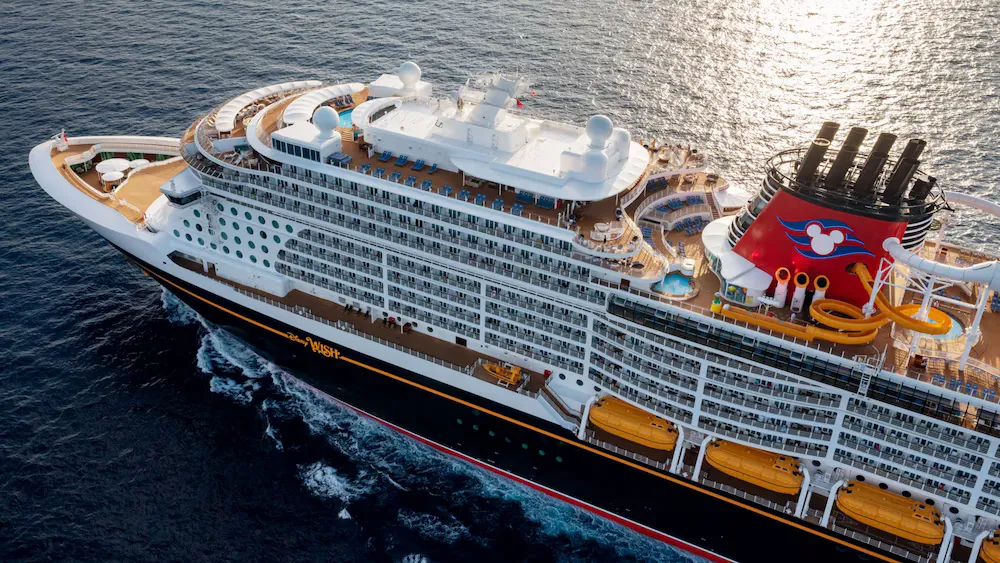
Disney Cruise Line is in a class of its own for families, and I say that as someone who's sailed with them multiple times. The newer Wish-class ships — Disney Wish, Disney Treasure, and the recently launched Disney Destiny — are genuinely impressive, with the AquaMouse water coaster, stunning Grand Hall atriums, and Broadway-calibre shows. What sets Disney apart is the details: rotational dining means your waitstaff follows you through three uniquely themed restaurants each evening, so by night two they already know your children's names and favourite drinks. The kids' clubs are the best at sea, hands down, with programming from age six months through to seventeen. Castaway Cay and the newer Lookout Cay at Lighthouse Point in the Bahamas are two private island destinations that are hard to beat. For Australian families, these are typically Caribbean fly-cruise holidays, and the premium pricing does reflect genuine quality — the ships are immaculately maintained and the entertainment is world-class. It is not the cheapest option, but for that once-in-a-lifetime family cruise, Disney delivers something no other line can replicate.
Disney Cruise Line occupies a genuinely unique position in the cruise market. It is classified as mainstream by category but commands premium-to-luxury pricing — a seven-night Caribbean sailing typically costs two to three times what you would pay for a comparable cabin on Carnival or Norwegian. That premium buys something no competitor can replicate: the full weight of Disney's storytelling, character experiences, and obsessive attention to detail applied to every aspect of the cruise experience, from the ship horn that plays "When You Wish Upon a Star" to the Broadway-calibre musicals performed nightly in the Walt Disney Theatre.
The fleet has expanded rapidly. What began as a two-ship operation out of Port Canaveral in 1998 now comprises seven active vessels, with the massive Disney Adventure launching from Singapore in early 2026 as the eighth. The Wish-class ships — Disney Wish, Disney Treasure, and the recently debuted Disney Destiny — represent the current flagship experience, each themed around a distinct Disney narrative and carrying innovations like the AquaMouse interactive water ride, the immersive Grand Hall atrium, and the Star Wars Hyperspace Lounge. The original Magic-class ships remain charming and more intimate, while the Dream-class vessels strike an appealing balance between scale and refinement. Every ship is maintained to Disney theme park standards, and it shows — you will notice the difference the moment you step aboard.
What makes Disney genuinely different from every other family-friendly line is not any single feature but the integration. The kids' clubs are the best at sea. The entertainment is the best at sea in the mainstream segment. The rotational dining concept is unique. The two private Bahamas islands are consistently rated above every competitor's private destination. The character experiences are authentic and meticulously managed. And the atmosphere — wholesome, polished, and deliberately free of casinos and late-night party culture — is something Disney cultivates intentionally. Whether that combination justifies the significant price premium is the central question for every family considering a Disney cruise, and the answer depends entirely on how much the Disney magic matters to you.
The base fare on Disney Cruise Line covers more than most mainstream competitors include, though it falls well short of the all-inclusive approach you would find on a luxury line. Your stateroom, all meals in the three rotational dining restaurants, the buffet and quick-service venues, and room service are included. So too are the Broadway-calibre stage shows, deck parties including the signature Pirate Night with fireworks at sea, all character meet-and-greet experiences, the Oceaneer Club and youth programmes for children aged three and over, pools and waterslides, and the fitness centre. On private island days at Castaway Cay or Lookout Cay, beach access, loungers, umbrellas, and barbecue lunch are all part of the fare. The Navigator App provides free onboard messaging between guests without needing to purchase a Wi-Fi package.
What costs extra is where the bill can escalate. Alcoholic beverages are pay-as-you-go with no unlimited drink package available — a significant point of difference from Royal Caribbean, Carnival, and Norwegian. Specialty dining at the adults-only restaurants carries surcharges of US$55 per person at Palo and Palo Steakhouse, and US$145 at the fine-dining venues Remy and Enchante. Wi-Fi runs from approximately US$26 per day for basic internet to US$34 for streaming-capable speeds. Spa treatments, port excursions branded as Port Adventures, photo packages, nursery care for under-threes, and private island cabanas are all additional. Gratuities of around US$16 per person per night for standard staterooms are pre-added to your booking. For a family of four on a seven-night sailing, these extras can comfortably add US$1,500 to US$3,000 to the total cost depending on your habits, so it is important to budget beyond the headline fare.
The centrepiece of Disney's dining experience is the rotational system, and it genuinely deserves its reputation. Each evening, your family moves to a different themed restaurant — three in total across the voyage — while your dedicated serving team follows you. Your head server and assistant server learn your names, your children's preferences, your dietary restrictions, and your drink orders. By the third night, everything feels effortlessly personal. On the Wish-class ships, the three rotational restaurants are 1923 (an elegant Art Deco tribute to Disney's founding year), Worlds of Marvel (an interactive Avengers-themed dining experience), and Arendelle: A Frozen Dining Adventure, which wraps a full dinner show into the meal. The Dream-class and Magic-class ships offer their own distinctive themed trios. No other cruise line attempts anything comparable to this concept, and for families it transforms dinner from a nightly chore into one of the voyage's highlights.
The adults-only specialty restaurants deserve attention. Palo and Palo Steakhouse operate across the fleet, serving reliable Italian and prime steaks respectively at a US$55 surcharge. The fine-dining tier — Remy on the Dream-class ships and Enchante on the Wish-class, the latter overseen by three-Michelin-starred chef Arnaud Lallement — operates at US$145 per person and approaches genuine fine-dining quality. These adult venues are an important escape on a family-dominated ship, and I recommend booking at least one specialty dinner on any sailing of five nights or longer. Character dining, particularly the character breakfast experiences, is another Disney exclusive that families with younger children find irresistible.
The honest assessment of food quality is that rotational dining room cuisine sits above Carnival and roughly on par with Royal Caribbean — good, well-presented, and generous in portion, but not gourmet. Some passengers describe it as elevated theme park food, and that is not entirely unfair. Menus can feel repetitive on seven-night sailings, particularly at breakfast. Where Disney excels is in the service, the dietary accommodation (allergy management is superb and a genuine relief for families), and the theatre of the themed dining environments. The specialty restaurants are the culinary high point. The casual and buffet options — Cabanas, Marceline Market, and poolside quick-service — are standard for a mainstream line and serve their purpose without distinction.
The demographic reality on a Disney cruise is straightforward: families with children dominate the passenger mix, and on school-holiday sailings the proportion of under-fourteens is higher than on any other mainstream line. The median passenger age skews younger than the industry average, and the vast majority of guests on US-based sailings are American. Multi-generational groups — grandparents, parents, and children travelling together — are a significant presence. Couples without children do sail, particularly on off-peak departures when school is in session, but they are a distinct minority. Solo travellers are rare, partly because the 100 per cent single supplement makes it prohibitively expensive.
The atmosphere is wholesome and meticulously curated. There is no casino, no raucous pool-deck DJ culture, and no aggressive alcohol promotion. Evening entertainment peaks around 10 PM and the ship is notably quiet by 11. The dress code is relaxed — cruise casual most nights, with Pirate Night encouraging full costume participation and no traditional formal nights at all. This is a deliberate brand choice, and for families it creates an environment where children can roam safely and the overall tone feels controlled without being sterile. Character appearances throughout the day, fireworks at sea during Pirate Night, and themed seasonal sailings for Halloween and Christmas add layers of spectacle that children remember for years.
I will be direct about who should not book a Disney cruise. If you are an adult couple without children and without a strong emotional connection to the Disney brand, the premium pricing is very difficult to justify. The adults-only areas — Quiet Cove pool, specialty restaurants, the bar district — are well appointed but compact relative to what Celebrity, Virgin Voyages, or even Royal Caribbean's suite-class complexes offer for similar or lower fares. If late-night nightlife, a casino, or unlimited drink packages are priorities, look elsewhere. If you actively dislike being surrounded by children, a school-holiday Disney sailing will test your patience. But if you are travelling with kids aged three to twelve and want an experience they will talk about for the rest of their childhood, nothing else at sea comes close.
The Castaway Club is Disney's loyalty programme, structured around completed sailing count rather than points or spending. Four tiers apply: Silver after one sailing, Gold at five, Platinum at ten, and Pearl at twenty-five. Benefits are weighted toward early access rather than tangible onboard rewards — higher tiers unlock earlier booking windows for new itineraries (one to three days before the general public), earlier reservation windows for Port Adventures and onboard activities, and expedited online check-in. Platinum members receive a complimentary Palo dinner per sailing, which is a welcome perk but modest compared to what competing programmes offer at equivalent loyalty levels.
The programme has a five-year expiration clause — if no eligible cruise is booked or completed within five years, membership lapses. Disney does not offer status matching from any other cruise line, and each sailing counts as one credit regardless of duration, meaning a three-night Bahamas run earns the same credit as a fourteen-night transatlantic crossing. Compared to Royal Caribbean's Crown and Anchor Society, which offers meaningful discounts, complimentary internet, and suite lounge access at its upper tiers, the Castaway Club is notably less generous. Disney can afford this because demand for their product consistently outstrips supply — they have little incentive to discount for loyalty when ships sail full at published fares.
Disney Cruise Line departed Australian waters after the 2025-26 season, when the Disney Wonder completed its final local sailing in February 2026. The three seasons of Australian deployments from Sydney, Melbourne, and Auckland were well received, but the fleet has been redeployed to support expanding Caribbean and European programmes alongside the Disney Adventure's launch from Singapore. Disney has indicated that Australian deployments remain under consideration for the future, but no return date has been announced and no ships appear on the regional schedule for 2026-27.
The most accessible Disney cruise option for Australian families is now the Disney Adventure, homeported at Marina Bay Cruise Centre in Singapore. Direct flights from Sydney, Melbourne, Brisbane, and Perth reach Singapore in seven to nine hours, and the Adventure operates shorter three-to-four-night itineraries — making it considerably more affordable and logistically simpler than a Caribbean fly-cruise. For the full Disney Caribbean experience including Castaway Cay, families will need to fly to Port Canaveral or Fort Lauderdale in Florida, a journey of roughly twenty hours with at least one stopover. Alaska sailings depart from Vancouver, and Mediterranean itineraries from Barcelona. Total cost for a family of four on a seven-night Caribbean sailing in verandah staterooms, including return flights from Australia, can realistically reach A$25,000 to A$40,000 — which positions Disney firmly as a once-in-a-lifetime holiday for most Australian households rather than a repeat annual trip.
Combining a Disney cruise with a Walt Disney World or Disneyland visit is a natural option that many families pursue, particularly given the proximity of Port Canaveral to Orlando. We regularly build these as multi-week fly-cruise-and-theme-park packages. Travel insurance is essential given the distance, the non-refundable deposit structure, and the fact that any disruption to connecting flights can mean a missed embarkation with no recourse.
Disney Cruise Line is expensive. There is no way to soften that reality, and the line makes no apology for its pricing. A seven-night Caribbean sailing in a verandah stateroom typically costs 50 to 100 per cent more per person than an equivalent cabin on Royal Caribbean or Norwegian. Short Bahamas sailings on the Wish-class ships can approach US$300 per person per night for an inside cabin during peak season. Concierge-level suites on popular holiday sailings command rates that rival ultra-luxury lines. Add gratuities, beverages, Wi-Fi, and a couple of specialty dinners, and the all-in cost climbs further still. The deposit was reduced from 20 to 10 per cent of the voyage fare in mid-2025, which lowers the upfront barrier, but the total outlay remains substantial.
The question of whether the premium is justified comes down to what you value. If you are travelling with children aged three to twelve and the Disney brand resonates with your family, the answer from most returning guests is an emphatic yes. The Oceaneer Club alone — with its Marvel Super Hero Academy, Star Wars Cargo Bay, and Disney Imagineering Lab — is a calibre of children's programming that no competitor matches. The entertainment, the character integration, the private islands, and the rotational dining all contribute to a product that feels genuinely differentiated rather than merely branded. If you are travelling without children or are price-sensitive, the calculus shifts dramatically. Royal Caribbean, Celebrity, and even Norwegian deliver excellent mainstream cruises at fares that make the Disney premium look excessive by comparison — and they include drink packages.
Solo travellers face the steepest penalty. Disney charges the full double-occupancy rate for single occupants, amounting to a 100 per cent supplement, and offers no dedicated solo cabins or cabin-share programme. Cancellation terms are relatively standard for the mainstream segment — full refund minus the 10 per cent deposit at 120-plus days for longer voyages, scaling to full forfeiture within 14 days of departure. Concierge deposits are non-refundable. Last-minute discounting is rare because Disney ships consistently sail at high occupancy, so the best strategy is to book early during wave season for promotional offers or to secure opening-day fares when new itineraries are released.
Share your dates and preferences and we will come back with Disney Cruise Line cabin options, pricing, and insider tips.