Polar Latitudes Expeditions
Expedition Cruising
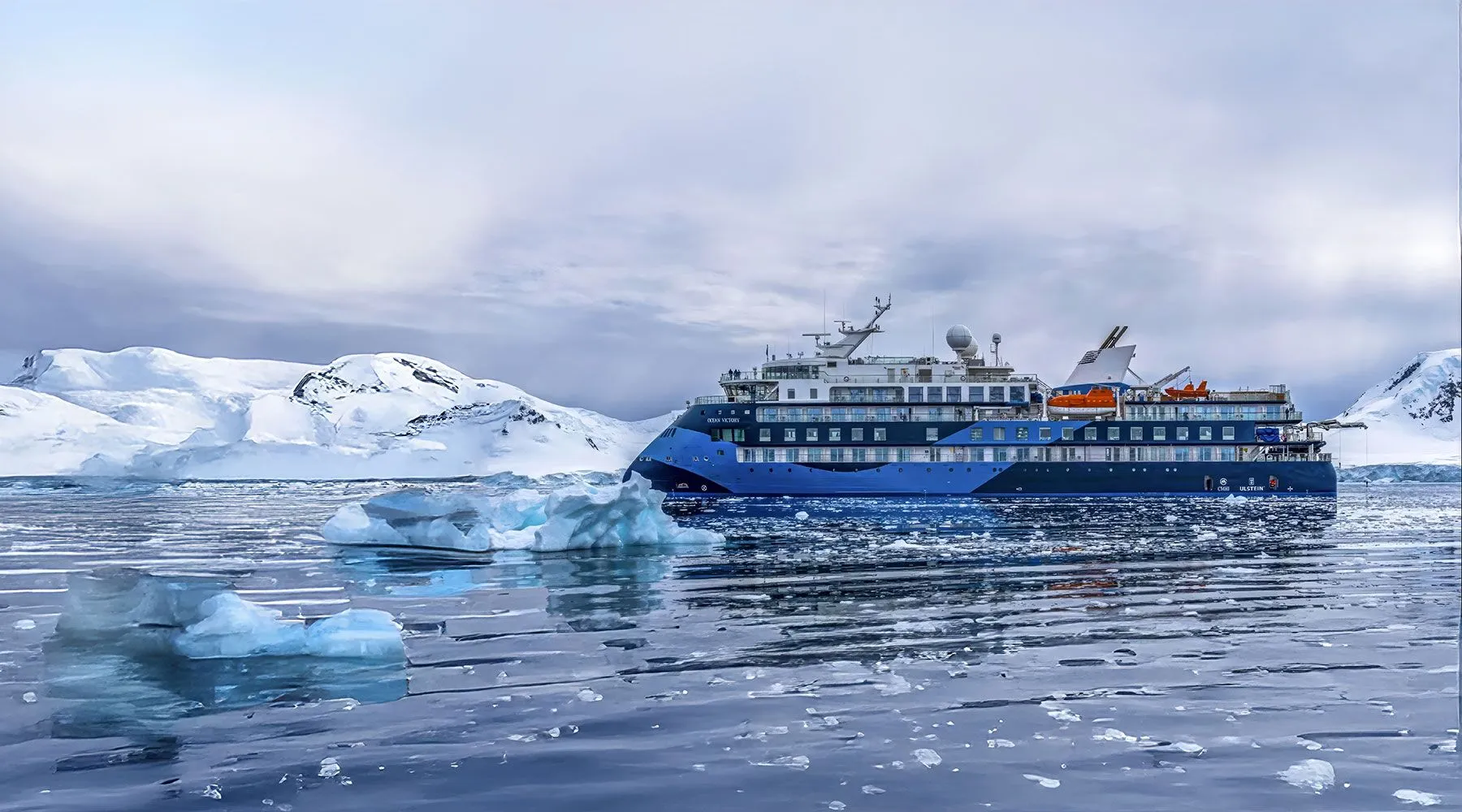
Polar Latitudes Expeditions is a name I trust for clients who want a genuine polar expedition rather than a floating hotel that happens to visit Antarctica. The merger of Polar Latitudes and Albatros Expeditions has created a four-ship fleet that gives real flexibility — the Ocean Albatros and Ocean Victory are modern Ulstein X-BOW vessels with Ice Class 1A Super ratings, balcony cabins, and a noticeably smoother ride across the Drake Passage, while the Seaventure and Ocean Nova offer a more intimate, classic expedition feel with no more than 78 to 139 guests. What sets them apart is the citizen science programme — guests contribute to real research on whale feeding, penguin populations, and phytoplankton in partnership with Woods Hole Oceanographic Institution. The passenger-to-staff ratio of around 7:1 means you are spending serious time off the ship, averaging six hours a day in Zodiacs and on landings. For clients who want substance over sparkle, Polar Latitudes delivers.
Polar Latitudes Expeditions is one of only a handful of operators whose entire identity is polar — every voyage sails to Antarctica or the Arctic, and nothing in between. Founded in 2010 by John McKeon and a team of veteran polar specialists, the company was built on a deliberate rejection of the trend toward larger expedition ships. McKeon's founding philosophy was small-ship, immersive polar travel where passengers spend more time on the ice than in the dining room. That ethos has survived the company's growth intact, even as it merged with Albatros Expeditions in 2025 to form a four-vessel operation under the Polar Latitudes Expeditions banner.
The merger, under the Nordic Expedition Cruise and Travel parent group, expanded the fleet from a single dedicated vessel to four ice-strengthened ships, each carrying no more than 185 guests. Critically, the company maintained its IAATO Category 1 status across the fleet — meaning every ship is small enough to land all passengers without the rotation delays that plague larger expedition vessels. McKeon himself now chairs the IAATO Executive Committee, the highest governance role in Antarctic tourism, and continues to drive Zodiacs alongside the expedition team on selected voyages. That owner-operator culture, combined with the lowest staff turnover rate in the polar expedition industry, gives the operation a personal quality that larger competitors cannot replicate.
The expedition team is the engine room of a Polar Latitudes voyage. Multi-disciplinary teams of marine biologists, ornithologists, glaciologists, polar historians, photographers, and citizen science coordinators maintain a guide-to-guest ratio of approximately 1:7 to 1:8 — among the best in the industry and noticeably better than the 1:15 or 1:25 ratios on larger expedition ships. This translates into smaller Zodiac groups, more personal attention during landings, and expedition staff who genuinely know your name by the second day. Team members routinely dine with passengers, and multiple reviewers describe the guides as the best they have encountered in decades of travel.
The programme is built around maximising time off the ship. Expect two excursions per day — morning and afternoon — each lasting between ninety minutes and three hours, depending on conditions. Activities included in the fare range from guided shore landings and Zodiac cruises to snowshoeing, the polar plunge, expert lectures, and the pioneering citizen science programme that has run on every voyage since 2014. Paid add-on activities include sea kayaking in two tiers, polar camping for one night ashore, and an immersive photography programme limited to 18 participants with a dedicated award-winning instructor. The camping experience, in particular, is consistently described by passengers as the single biggest highlight of the entire voyage.
Passengers should be realistic about the physical demands. You need to be capable of stepping in and out of a Zodiac from a moving platform — sometimes in a swell — and walking on uneven ground including snow, ice, rocky beaches, and mud. There is no formal fitness test, but the ships are not wheelchair accessible and the landing programme is inherently physical. Passengers with limited mobility should have a candid discussion with the company before committing.
The fare inclusions are more generous than most competitors at this price point. Your cabin, all meals, complimentary beer, wine, and soft drinks with meals and from an in-cabin minibar, all Zodiac excursions and guided shore landings, citizen science participation, expert lectures, basic photography coaching, 200 MB of satellite Wi-Fi, and onboard medical care are all covered. You receive a custom-designed waterproof expedition jacket to keep and insulated rubber boots on loan for the duration of the voyage. Port and landing fees are included.
Where Polar Latitudes distinguishes itself from most mid-range expedition operators is the pre-voyage hotel accommodation — typically two nights in Ushuaia for Antarctic sailings — and airport transfers on arrival and group departure. For Australian travellers arriving after an 18-to-24-hour journey from Melbourne or Sydney, having a hotel waiting at the other end, included in the fare, is a genuinely appreciated logistical cushion.
What is not included: international airfare to the embarkation port, the domestic flight from Buenos Aires to Ushuaia, travel and evacuation insurance (mandatory), visas and passport expenses, staff gratuities, personal expenses, laundry, premium spirits beyond the included selection, and the paid adventure add-ons — kayaking, camping, and immersive photography. The drinks policy warrants a note: beer, wine, and soft drinks are clearly included, but the exact scope of the open bar for premium spirits beyond meals is not fully transparent from published materials. This is worth clarifying with us at the time of booking.
The small-ship scale defines everything about life on board. With a maximum of 185 guests on the largest vessel and just 78 on the smallest, you are part of an intimate community, not a crowd. Passengers recognise each other by the first evening, the expedition team joins guests at dinner, and the atmosphere is informal, intellectually engaged, and centred on the polar environment rather than onboard entertainment. Dress code is relaxed throughout — there are no formal nights, no gala evenings, and no expectation of anything beyond clean expedition wear at dinner.
The passenger demographic skews toward well-travelled couples in their fifties through seventies, with a growing segment of solo travellers drawn by the cabin-share programme. Nationalities are mixed — North American, British, European, and Australian, with the Australian contingent growing through the Chimu Adventures partnership. The common thread is genuine interest in wildlife, science, and remote places rather than luxury trappings. If you are looking for a spa day, a choice of speciality restaurants, or entertainment programming beyond the occasional recital or documentary screening, this is not the right line. If you want substance, expert company, and time on the ice, it very much is.
Onboard amenities are functional rather than lavish. All ships have a single open-seating restaurant, a bar and lounge, a lecture theatre, and outdoor observation decks. The newer vessels offer heated pools and saunas. Cabins on the Ocean Albatros and Ocean Victory are modern, with ninety per cent featuring private balconies — a genuine pleasure for early-morning wildlife spotting from your room. The Seaventure and Ocean Nova are more traditional expedition vessels: well-maintained and comfortable, but not ships you choose for the cabin experience. On an expedition ship, you are in your room to sleep and to change between excursions — and for that purpose, every vessel in the fleet is entirely fit for the job.
Antarctica is closer to Australia in spirit than in geography. All Polar Latitudes Antarctic voyages depart from Ushuaia, at the southern tip of Argentina, which means Australian travellers face a substantial journey before the expedition even begins. The standard routing from Sydney or Melbourne runs through Santiago on LATAM Airlines — roughly 18 to 24 hours including the connection — followed by a domestic flight to Ushuaia of about three and a half hours. It is a long travel day, and the included two-night pre-voyage hotel stay in Ushuaia exists precisely to absorb the jet lag and logistical fatigue before you board. LATAM flights earn Qantas Frequent Flyer points through the oneworld alliance, which softens the sting slightly.
Polar Latitudes has direct Australian market access through Chimu Adventures, an Australian-owned adventure travel company headquartered in Sydney that holds a board-level stake in the parent group. This means Australian travellers can book through a locally regulated operator with genuine expertise in Latin American logistics, and Chimu can organise pre- and post-cruise extensions to Patagonia and Buenos Aires. For Arctic voyages, embarkation is typically Longyearbyen in Svalbard or Reykjavik in Iceland, requiring connections through a European hub — again, worth discussing with us early so we can map out the most comfortable routing.
Polar Latitudes sits in the mid-range expedition segment — more inclusive than budget operators, but not positioned as luxury. On a per-diem basis, an entry-level Antarctic Peninsula voyage works out broadly comparable to Quark Expeditions and slightly below Aurora Expeditions, while sitting well under the luxury tier occupied by Ponant and Silversea. The key distinction is what the fare actually includes: pre-voyage hotel nights, complimentary beverages, expedition jacket, boots, citizen science, and Wi-Fi are all bundled in, whereas several competitors at similar price points charge separately for some of those elements. When you compare the true cost of the experience — not just the headline fare — Polar Latitudes offers strong value for money.
Early booking discounts of up to 20 per cent are regularly available, and promotional fares of up to 30 per cent off have appeared on select departures. The "All-Access" voyages, which bundle every add-on activity into the fare, represent genuine savings over purchasing kayaking, camping, and photography individually. Solo travellers benefit from the cabin-share programme at no extra cost, or can opt for a private cabin at 1.7 times the per-person rate — competitive with the industry norm. A handful of dedicated single cabins on Ocean Albatros and Ocean Nova attract no supplement at all, though availability is limited.
Booking terms follow the expedition industry standard: a 20 per cent deposit at the time of booking, final payment due 120 days before departure, and a cancellation scale that reaches full forfeiture at 120 days or less. The 120-day cliff is tighter than mainstream cruising, and comprehensive travel insurance with trip cancellation cover is not just recommended but effectively essential. Adventure add-ons require their own 20 per cent non-refundable deposit to hold space — and given that camping and immersive kayaking sell out quickly, securing them at the time of your initial booking is the safest approach.
Share your dates and preferences and we will come back with Polar Latitudes Expeditions cabin options, pricing, and insider tips.